Author name: Tariq Ahmad

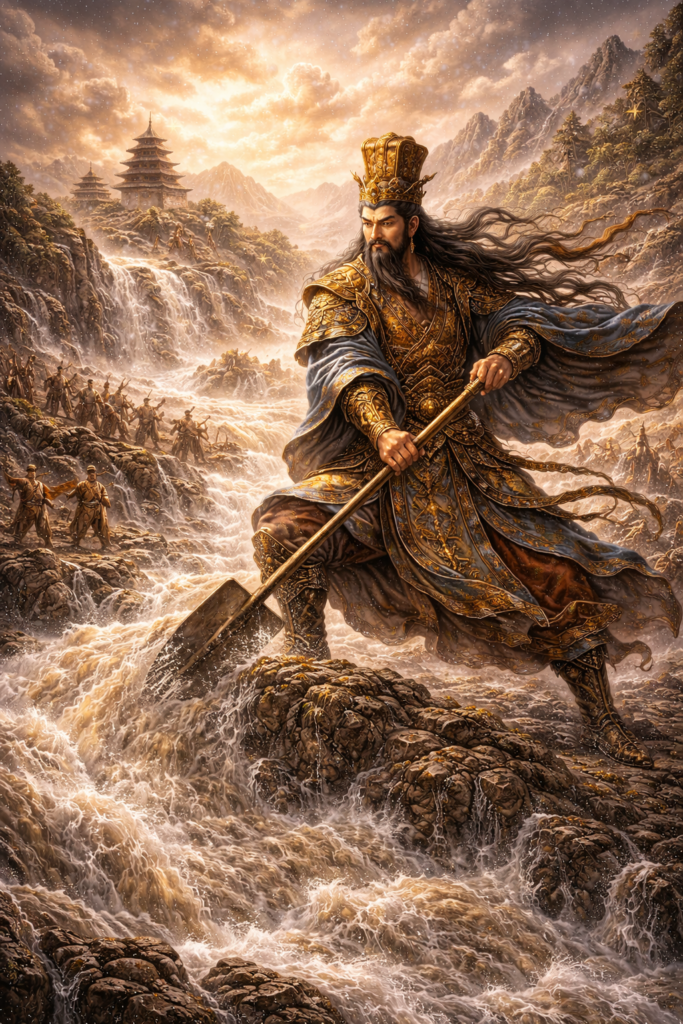
Mythic image of Yu the Great directing floodwaters across a rugged landscape with rushing rivers, laborers, mountains, and early structures of rule

Yu the Great, Flood Control, and the Birth of Political Order

Yu the Great occupies a decisive place in Chinese legendary history because he stands at the point where environmental mastery, territorial ordering, and political legitimacy converge. In the transmitted tradition, he is remembered not chiefly as a distant sage, but as the figure who traversed mountains and rivers, opened channels, disciplined waters, and made political order materially possible. This article examines Yu within the Chinese Myth, Legend, and Folklore knowledge series as the legendary ruler through whom Chinese civilization linked flood control, geographic intelligibility, public labor, and the birth of dynastic order. Under Yu’s name, the realm becomes governable because the landscape itself has been made habitable.
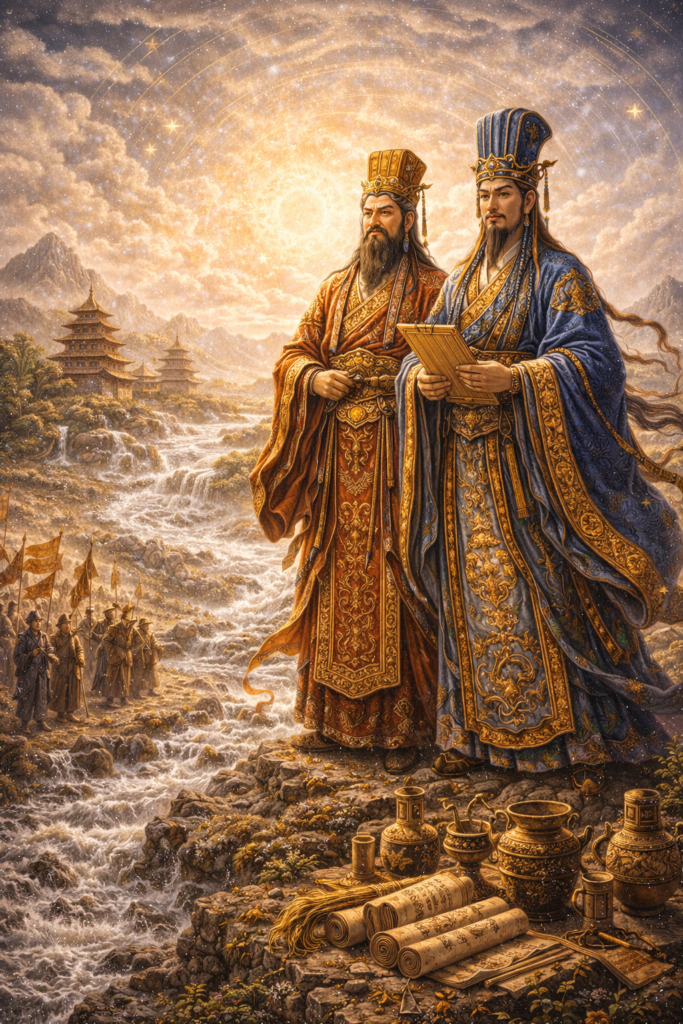
Mythic image of Yao and Shun as sage-kings in ceremonial robes beside flowing waters, ritual vessels, scrolls, and a cosmically ordered landscape

Yao, Shun, and the Sage-Kings in Legendary History

Yao and Shun occupy a central place in Chinese legendary history because they represent a vision of rulership grounded in moral authority, ritual order, administrative discernment, and responsiveness to the conditions of the world. In transmitted sources such as the Shangshu and the Shiji, they appear not chiefly as conquerors or mythic warriors, but as sage-kings whose legitimacy rests on luminous virtue, calendrical and cosmological alignment, just governance, and the recognition of worth in others. This article examines Yao and Shun within the Chinese Myth, Legend, and Folklore knowledge series as figures through whom Chinese tradition imagines the highest form of early kingship. Their stories reveal that the beginnings of political order are not only matters of force, territory, or ancestry, but of moral judgment, public responsibility, and the exemplary conduct of rule itself.

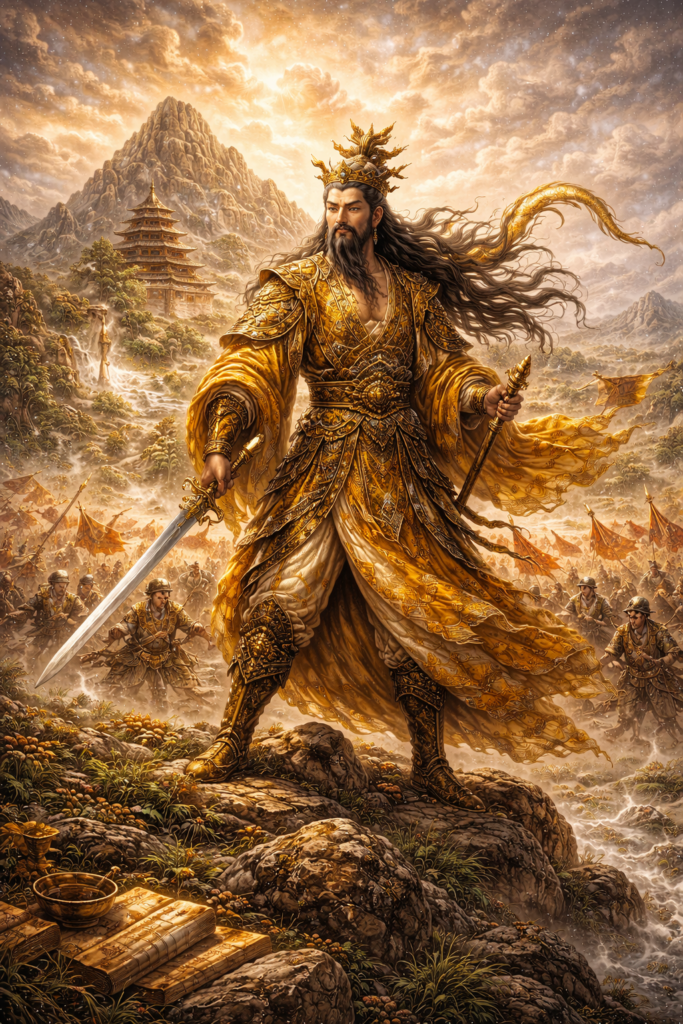
Mythic image of the Yellow Emperor in golden armor overlooking battle, sacred mountains, ritual objects, and the political founding of early China

The Yellow Emperor and the Mythic Politics of Chinese Origins

The Yellow Emperor, Huangdi, occupies a singular place in Chinese mythology because he stands at the intersection of myth, rulership, ancestry, warfare, ritual order, and the political imagination of origins. In transmitted sources such as the Shiji and the Shanhaijing, he appears not merely as a legendary sovereign, but as the figure through whom early Chinese tradition imagines the consolidation of power, the defeat of rival forces, the ordering of territory, and the establishment of political centrality under cosmic sanction. This article examines Huangdi within the Chinese Myth, Legend, and Folklore knowledge series as a mythic founder whose significance lies not only in heroic memory, but in the formation of legitimacy itself. In Huangdi, Chinese mythology preserves a vision of origins in which political order is won through conflict, structured through ritual, and remembered as the beginning of civilization under rule.

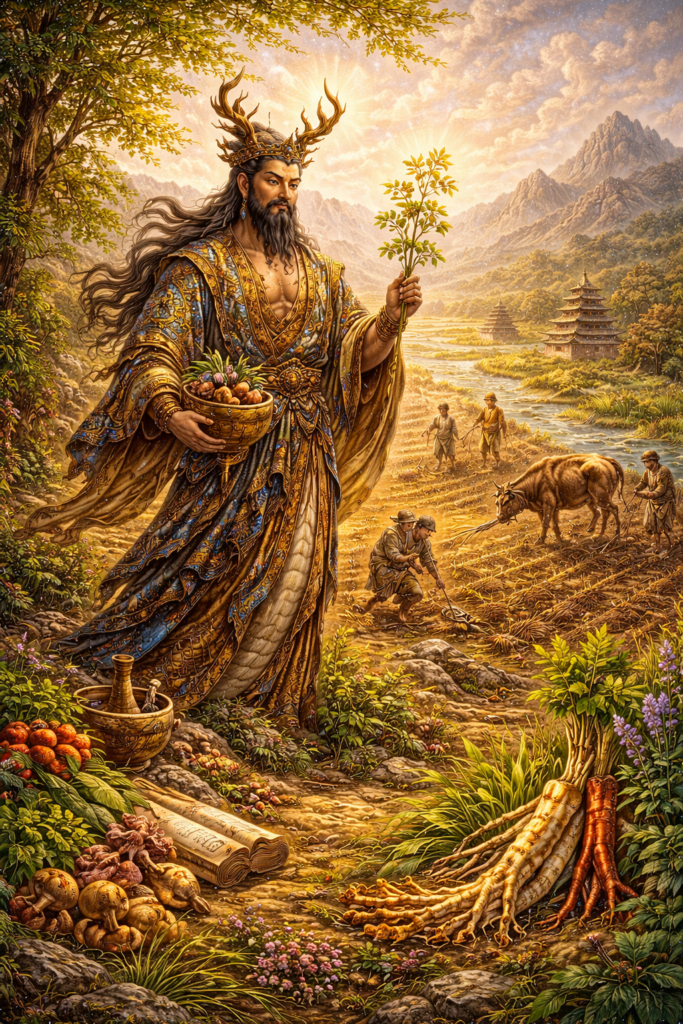
Mythic scene of Shennong in a fertile agricultural landscape holding plants and medicinal roots while farmers plow fields behind him

Shennong and the Invention of Agriculture, Medicine, and Rule

Shennong occupies a decisive place in Chinese mythology because he stands at the point where the human world becomes materially sustainable. In the transmitted tradition, he is associated with the beginnings of cultivation, the ordering of subsistence, the discernment of medicinal plants, and the kind of rule bound to the care of human life. This article examines Shennong as the figure through whom food production, herbological knowledge, and political stewardship are brought into a single civilizational frame. Read within the Chinese Myth, Legend, and Folklore knowledge series, Shennong reveals that a habitable world is not fully human until it can feed, heal, and sustain a people across time.

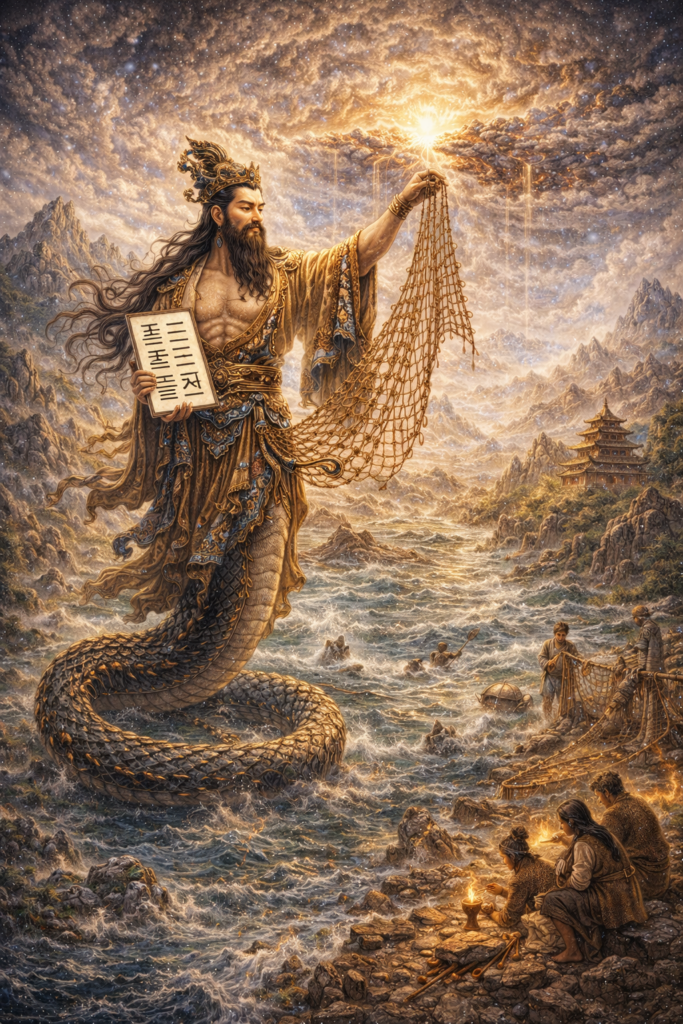
Mythic scene of Fuxi in serpent-bodied form holding a patterned tablet and net above early human civilization, river waters, and a sacred mountain landscape

Fuxi and the Myth of Cultural Order

Fuxi is one of the foundational figures of Chinese mythology because he stands at the threshold where the world becomes not only habitable, but culturally ordered and symbolically intelligible. Associated with marriage regulation, hunting and fishing techniques, the making of nets, and the revelation of the trigrams, Fuxi represents the emergence of patterned human life within an already structured cosmos. This article examines Fuxi within the Chinese Myth, Legend, and Folklore knowledge series as a mythic organizer of civilization, showing how Chinese tradition links cosmic order to social order, technical invention, and symbolic understanding. Rather than a creator in the narrow sense, Fuxi appears as a culture hero through whom the human world becomes regulated, legible, and enduring.

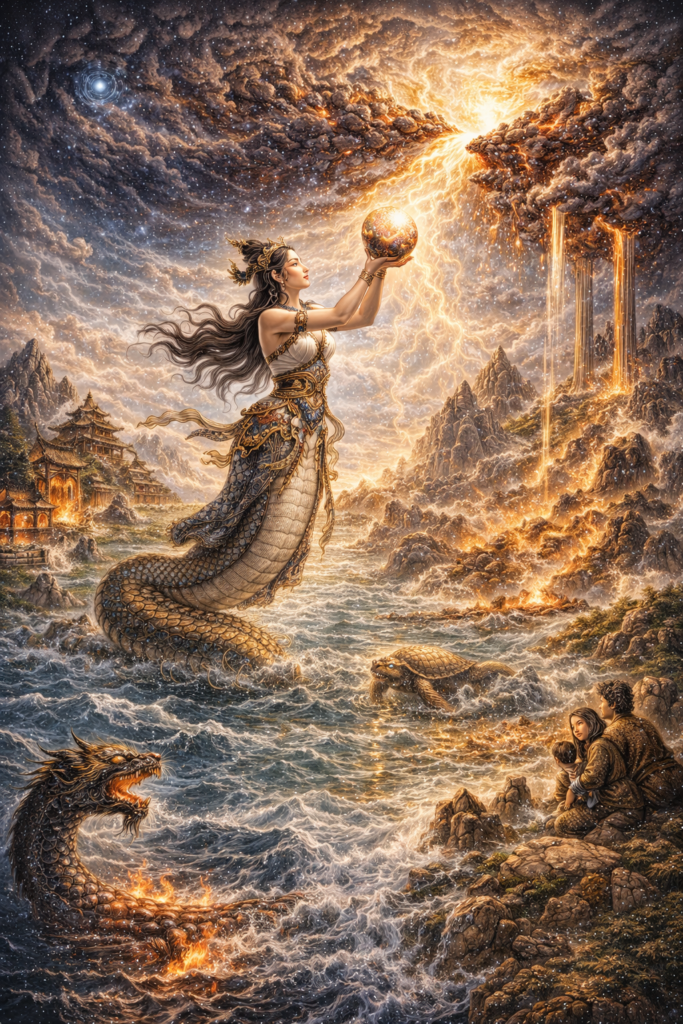
Mythic scene of Nüwa with serpent body repairing the broken sky above floodwaters, fire, and a threatened human world

Nüwa: Creation, Repair, and the Human World

Nüwa is one of the most profound figures in Chinese mythology because she stands at the intersection of creation, repair, social order, and the making of a human world. In different strands of the tradition, she appears as a primordial being associated with human origins, marriage norms, and the formation of society, while in the Huainanzi she emerges as the great cosmic restorer who repairs the broken sky, re-establishes the supports of the world, halts the flood, and protects human life from catastrophic disorder. This article examines Nüwa within the Chinese Myth, Legend, and Folklore knowledge series as a figure who expands the meaning of creation itself: a world fit for life is not only brought into being, but mended when it breaks. Through her layered appearances across classical, philosophical, and later traditional sources, Nüwa reveals that Chinese cosmogony is inseparable from fragility, care, restoration, and the symbolic foundations of the human order.

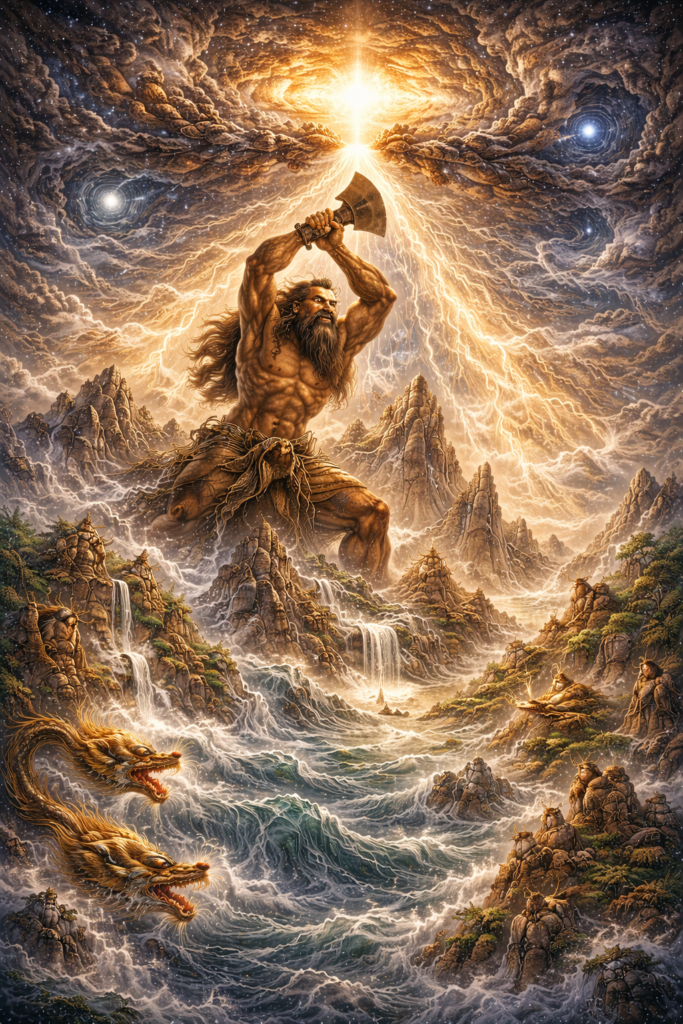
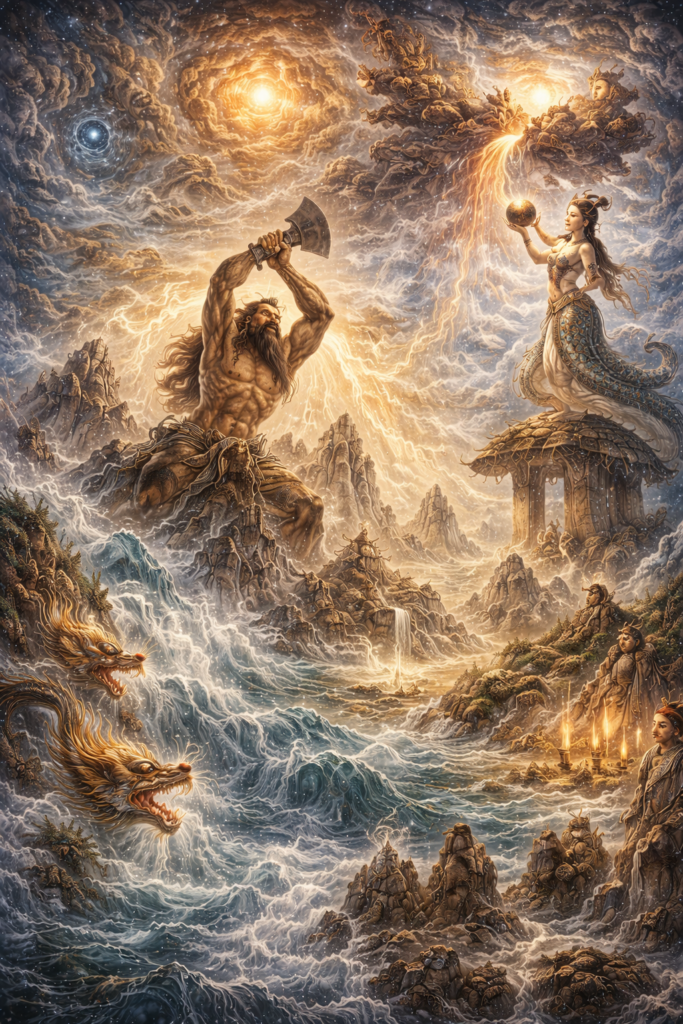
Mythic scene of Pangu raising an axe beneath a storming cosmic sky as heaven and earth divide, with mountains, torrents, and dragon forms below

Pangu and the Separation of Heaven and Earth

Pangu is one of the most powerful figures in Chinese creation myth, remembered as the primordial being who emerges from chaos and separates heaven and earth to make an ordered world possible. Yet his significance extends beyond the image of a cosmic strongman at the beginning of time. This article situates Pangu within the wider plurality of Chinese cosmogony, showing how his myth expresses the themes of differentiation, vertical order, bodily transformation, and the sustained labor required to turn primal enclosure into a habitable cosmos. Read within the Chinese Myth, Legend, and Folklore knowledge series, the story of Pangu reveals that Chinese origin myth is not only concerned with creation, but with the ongoing establishment and maintenance of structure, relation, and world order.

Mythic Chinese creation scene with cosmic storm, Pangu separating heaven and earth, Nüwa repairing the sky, floodwaters, and emerging world order

Chaos, Cosmos, and the Origins of the World in Chinese Myth

Chinese myth does not preserve a single unified creation story, but a layered archive of cosmogonic traditions concerned with primal chaos, cosmic differentiation, world-repair, flood, celestial instability, and the emergence of habitable order. This article examines how Chinese origin myths imagine the making of the world not simply as a first beginning, but as a process of separation, stabilization, and restoration. Through figures such as Pangu and Nüwa, and through cosmological ideas associated with hundun, qi, yin and yang, and the repair of a broken sky, the article shows that Chinese cosmogony is best understood as a plural reflection on how disorder becomes cosmos. Read within the Chinese Myth, Legend, and Folklore knowledge series, it argues that world-origin in Chinese myth is inseparable from fragility, maintenance, and the continual labor of making reality fit for life.

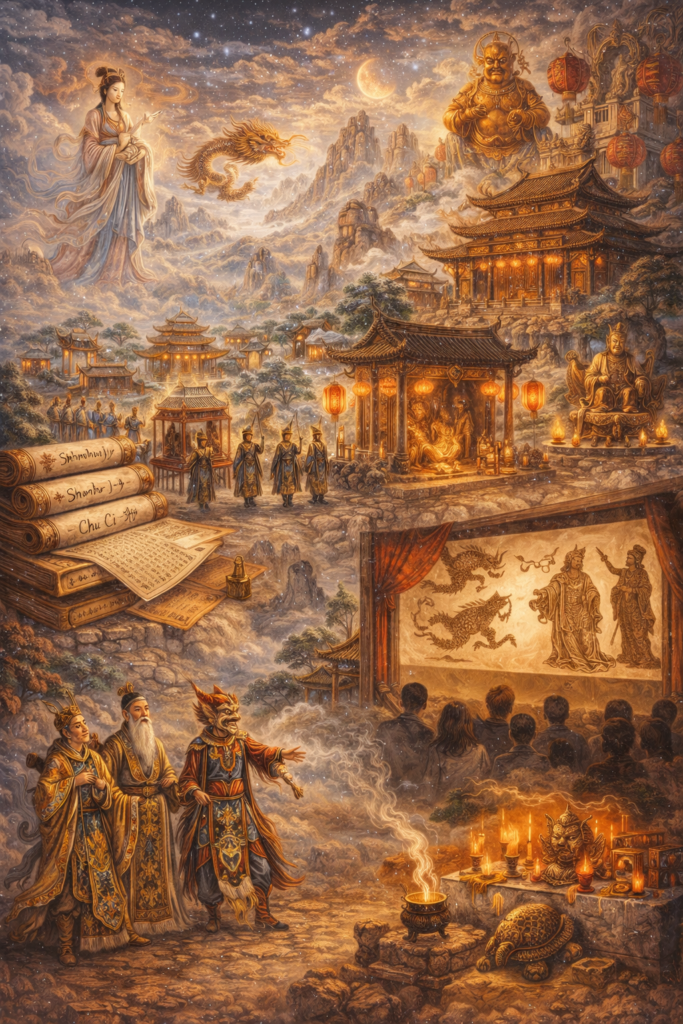
Detailed mythic Chinese scene showing classical texts, temples, ritual life, shadow puppetry, divine figures, and folklore performance across a sacred landscape

From Classical Text to Folkloric Archive: How Chinese Myth Survived

Chinese myth survived not through a single canonical epic, but through a layered process of transmission that carried mythic materials from classical texts into religion, ritual, temple culture, local cults, folklore, performance, visual art, and seasonal observance. This article examines how the Chinese mythic archive endured by moving across media and institutions rather than remaining fixed in one literary container. From the fragmentary preservation of early myth in works such as the Shanhaijing, Chu Ci, and Huainanzi to its afterlives in popular religion, anomaly tales, shadow puppetry, sacred landscapes, and festival calendars, the article shows that Chinese mythology survived as a living civilizational memory. Read within the Chinese Myth, Legend, and Folklore knowledge series, it argues that the durability of Chinese myth lies precisely in its adaptability, plurality, and continual reinvention across textual, ritual, and folkloric worlds.

Scroll to Top