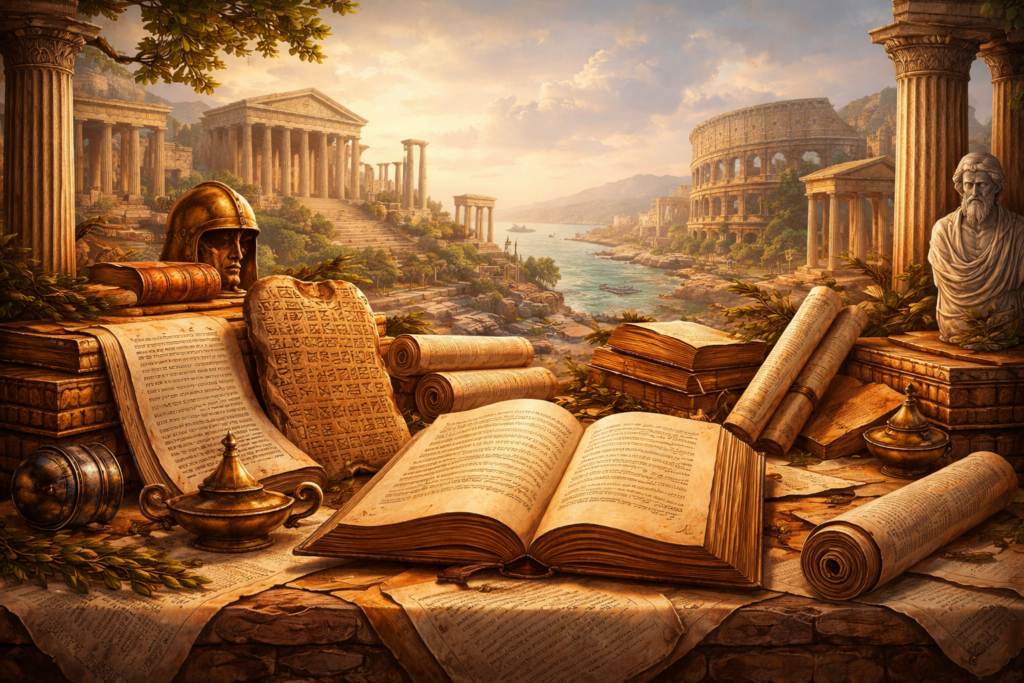
Classical Literature and Civilizational Memory: Epic, Tragedy, History, and Canon
Classical literature preserves the memory structures through which ancient civilizations narrated origins, war, law, grief, eros, empire, mortality, and the search for lasting name. From The Epic of Gilgamesh to Homer, Greek tragedy, Hellenistic scholarship, Roman epic, satire, historiography, and Suetonius’ The Twelve Caesars, the classical archive carried forward the symbolic forms by which societies understood power, virtue, catastrophe, and inheritance. This article approaches classical literature not simply as a canon of great works, but as a durable civilizational system of transmission shaped by performance, education, commentary, translation, and reinterpretation across centuries.