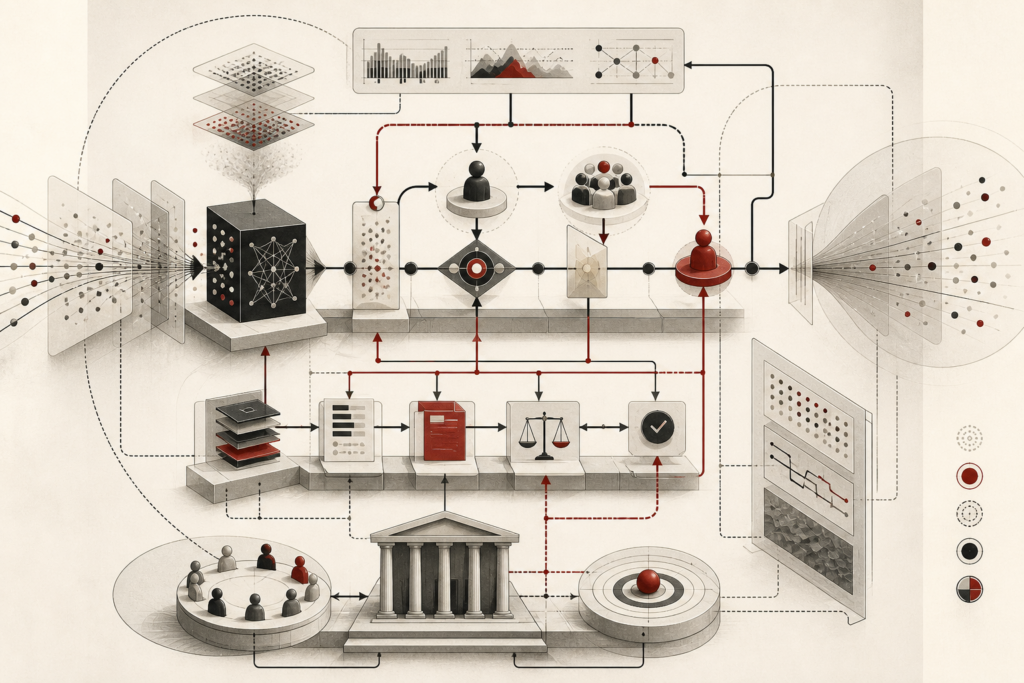
Abstract editorial illustration of AI accountability as a governed decision architecture with evidence trails, human review checkpoints, appeal pathways, correction loops, monitoring layers, and institutional oversight.

Human Oversight, Contestability, and AI Accountability

Human oversight, contestability, and AI accountability determine whether artificial intelligence systems remain subject to human judgment, institutional responsibility, and public challenge. Oversight is not meaningful when people merely approve automated outputs without time, authority, context, or power to intervene. Contestability requires that affected people can question, appeal, correct, or refuse AI-mediated decisions, especially in high-stakes domains such as healthcare, education, finance, employment, public administration, infrastructure, and law. Accountability connects technical design to governance: model documentation, audit trails, escalation paths, impact review, incident response, and clear responsibility for harms. Responsible AI is therefore not only a matter of accuracy or efficiency. It depends on systems that can be explained, challenged, corrected, paused, and governed in the public interest.
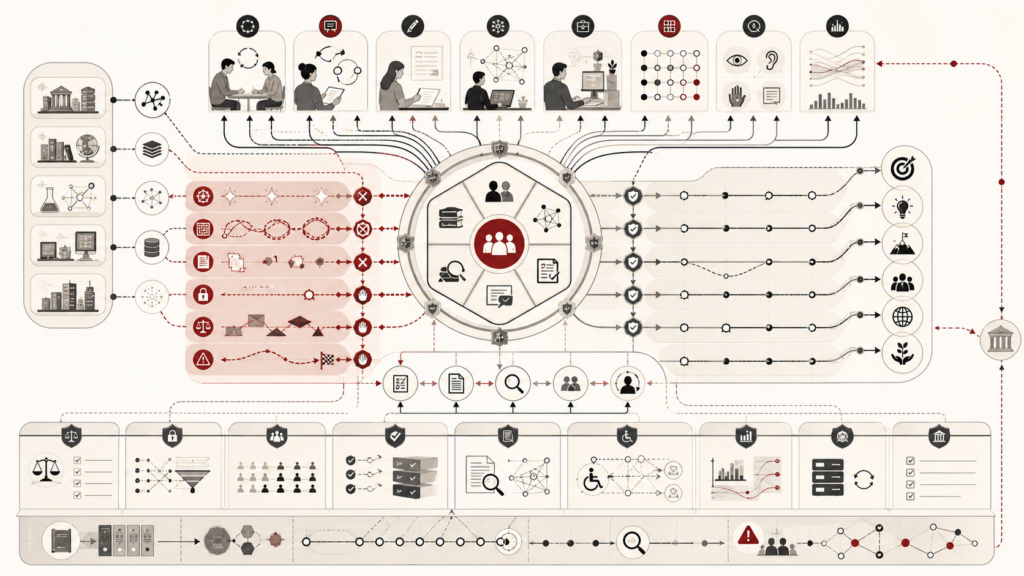
Wide editorial infographic showing AI in education and knowledge work as a governed learning system connecting teaching, tutoring, feedback, assessment, research, accessibility, privacy, equity, monitoring, and institutional governance.

AI in Education, Knowledge Work, and Learning Systems

AI in education, knowledge work, and learning systems refers to the use of artificial intelligence to support teaching, learning, assessment, research, writing, tutoring, feedback, accessibility, curriculum design, institutional operations, professional development, and workplace knowledge production. These systems can summarize documents, generate practice questions, provide feedback, adapt instruction, support language learning, analyze learning data, recommend resources, automate administrative work, retrieve institutional knowledge, and assist workers in drafting, coding, researching, designing, and deciding. This article explains AI tutoring, adaptive feedback, assessment redesign, academic integrity, writing support, learning analytics, workplace knowledge systems, teacher agency, student agency, AI literacy, privacy, accessibility, bias, equity, monitoring, and governance. It argues that AI in education should be governed as a learning system, not merely as a productivity tool.

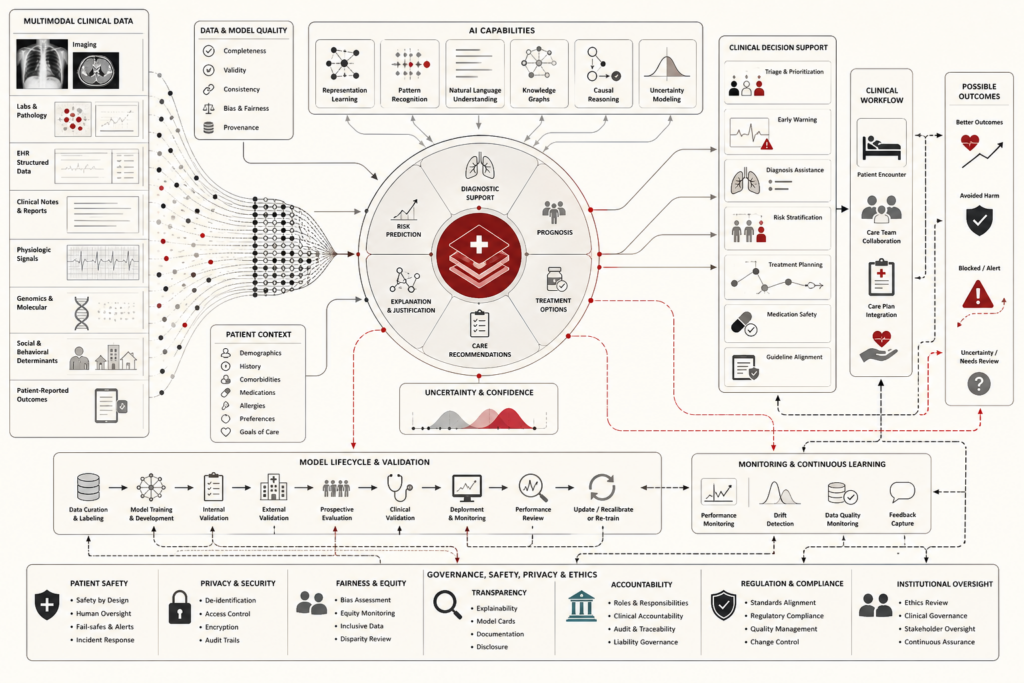
Wide editorial infographic showing AI in healthcare as a clinical decision support system connecting multimodal patient data, model capabilities, diagnostic support, risk prediction, treatment recommendations, clinical workflow, monitoring, validation, patient safety, privacy, fairness, regulation, and institutional governance.

AI in Health, Medicine, and Clinical Decision Support

AI in health, medicine, and clinical decision support refers to the use of artificial intelligence systems to assist clinical reasoning, diagnosis, triage, imaging interpretation, risk prediction, treatment planning, documentation, workflow coordination, population health, biomedical research, and patient-facing health services. These systems can identify patterns in images, laboratory data, electronic health records, waveforms, genomics, clinical notes, sensor streams, and patient histories. This article explains clinical decision support, diagnostic AI, imaging systems, risk prediction, early warning models, large language models in clinical workflows, privacy, security, bias, equity, regulation, validation, monitoring, drift, change control, and governance. It argues that clinical AI should be treated as a medical, technical, organizational, ethical, and regulatory system because patient safety, professional responsibility, and institutional trust are central to responsible deployment.

Abstract editorial illustration showing AI planning as a governed sequential decision system, with state-space grids, branching search trees, simulation rollouts, policy pathways, constraint gates, human-review checkpoints, rollback routes, monitoring structures, and governance architecture.

Planning, Search, and Sequential Decision Systems

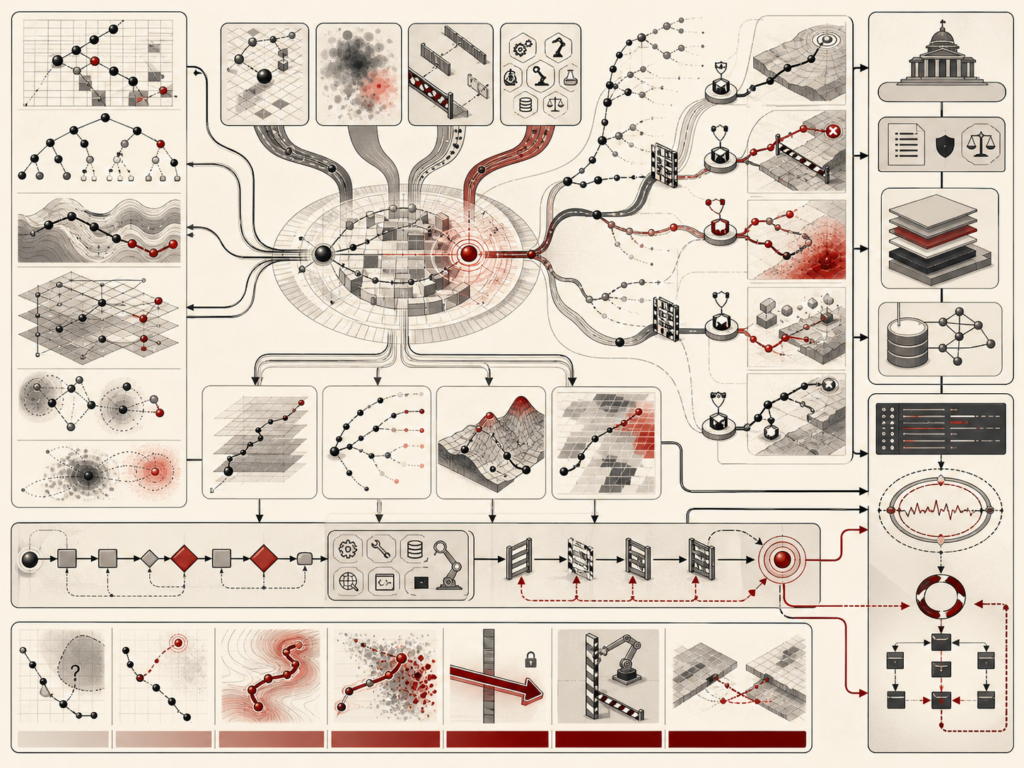
Planning, search, and sequential decision systems describe how artificial intelligence systems choose actions over time, not merely predictions at a single moment. A classifier estimates what something is, but a planner asks what should be done next, what sequence of actions may achieve a goal, what tradeoffs exist among alternatives, and how decisions should adapt as new evidence arrives. This article explains state-space search, heuristic search, A* search, dynamic programming, Bellman recursion, Markov decision processes, partially observable decision systems, reinforcement learning, tree search, Monte Carlo search, receding-horizon control, LLM agent planning, tool-use workflows, safety constraints, human approval gates, rollback, monitoring, and governance. It argues that planning should be treated as a governed systems capability because action sequences shape real-world consequences.

Abstract editorial illustration showing synthetic data and simulation as governed AI evaluation infrastructure, with real-data sources, synthetic generation chambers, simulation worlds, digital-twin structures, benchmark grids, privacy filters, fidelity checks, stress tests, sim-to-real validation, monitoring, documentation, and governance controls.

Synthetic Data, Simulation, and AI Evaluation Environments

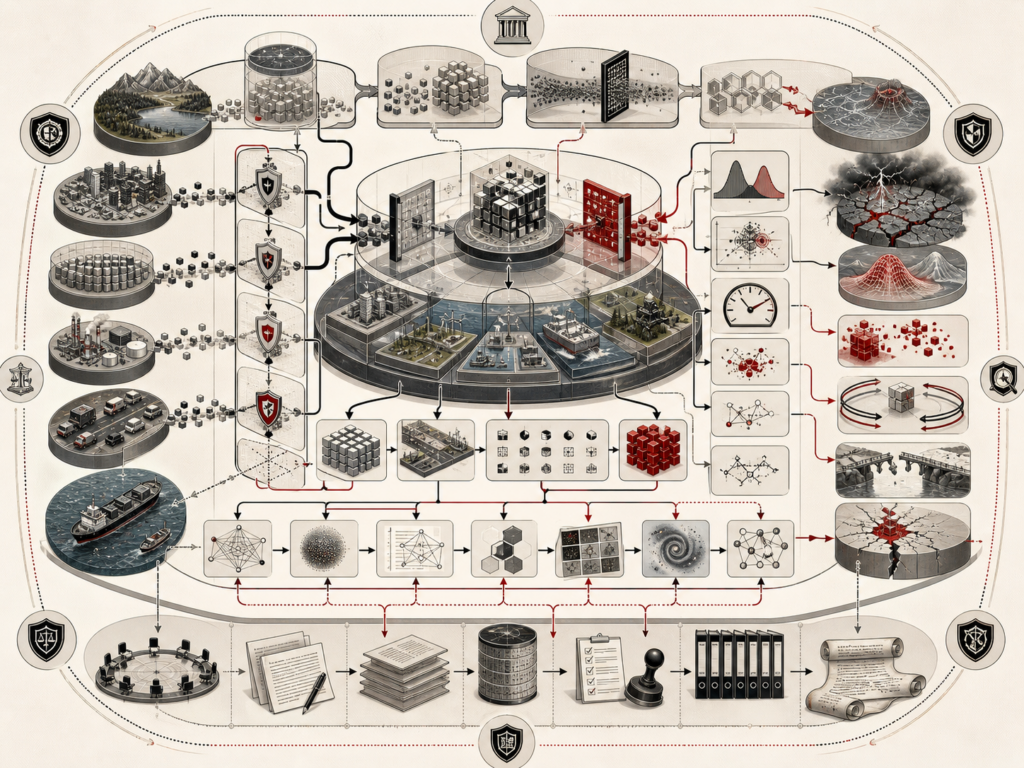
Synthetic data, simulation, and AI evaluation environments describe the constructed worlds through which artificial intelligence systems are trained, tested, stressed, compared, and governed. Synthetic data can expand limited datasets, protect sensitive records, balance rare cases, generate edge conditions, and support controlled experimentation. Simulation can create environments where agents, robots, decision systems, infrastructure models, and safety controls can be evaluated before deployment. This article explains synthetic data generation, simulation environments, digital twins, benchmark design, domain randomization, sim-to-real gaps, privacy and disclosure risk, fidelity, task utility, rare-case coverage, synthetic evaluation for LLMs, RAG systems, AI agents, stress testing, documentation, and governance. It argues that synthetic environments are useful only when their relationship to reality is measured, validated, and governed.

Abstract editorial illustration showing an AI system embedded in a probability-aware architecture with calibration diagnostics, uncertainty pathways, threshold gates, abstention routes, monitoring layers, feedback loops, recalibration processes, and governance controls.

Calibration, Uncertainty, and Probability in AI Systems

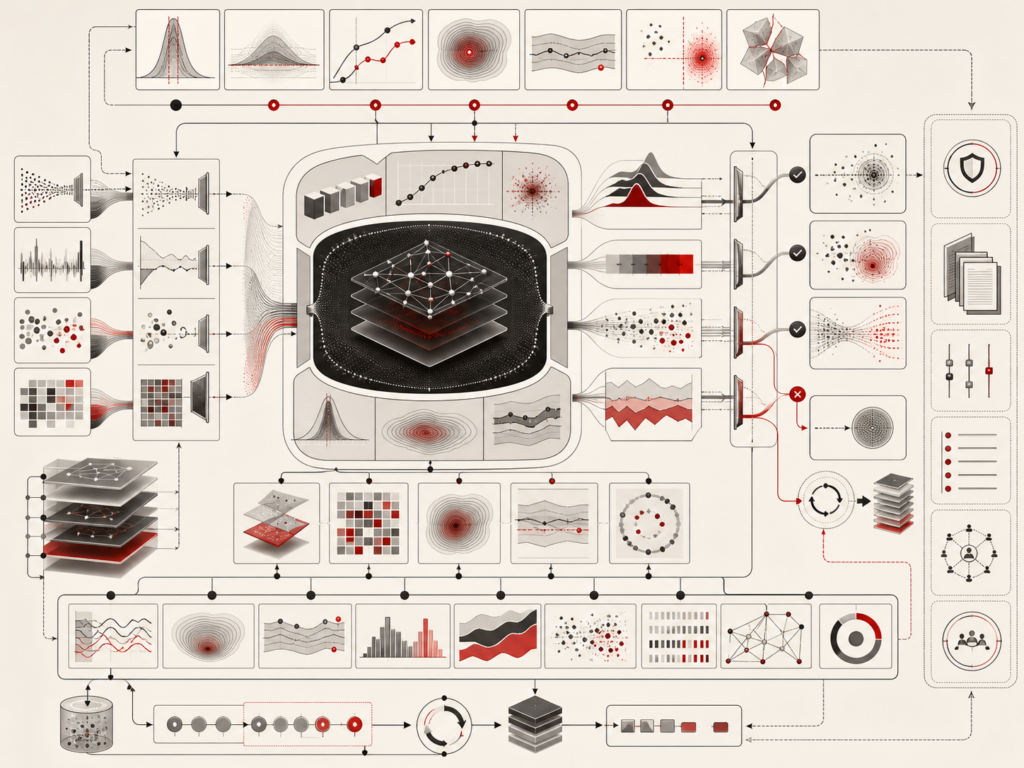
Calibration, uncertainty, and probability in AI systems describe how models express confidence, how reliable that confidence is, and how probabilistic outputs should be used in decisions, monitoring, and governance. A classifier may assign a case a 90 percent probability, a risk model may rank users by predicted likelihood, and a decision-support system may recommend action based on thresholded scores. But confidence is not the same as correctness. This article explains probabilistic calibration, expected calibration error, Brier score, negative log likelihood, entropy, aleatoric and epistemic uncertainty, conformal prediction, temperature scaling, Bayesian models, ensembles, decision thresholds, abstention, human review, LLM and RAG uncertainty, monitoring, recalibration, and governance. It argues that probability should make uncertainty visible, not create a false aura of precision.

Abstract editorial illustration showing a deployed AI system inside a production observability architecture with monitoring layers for data quality, drift detection, prediction review, delayed labels, alerting, retraining, rollback, incident response, and governance.

Model Monitoring, Drift, and AI Observability

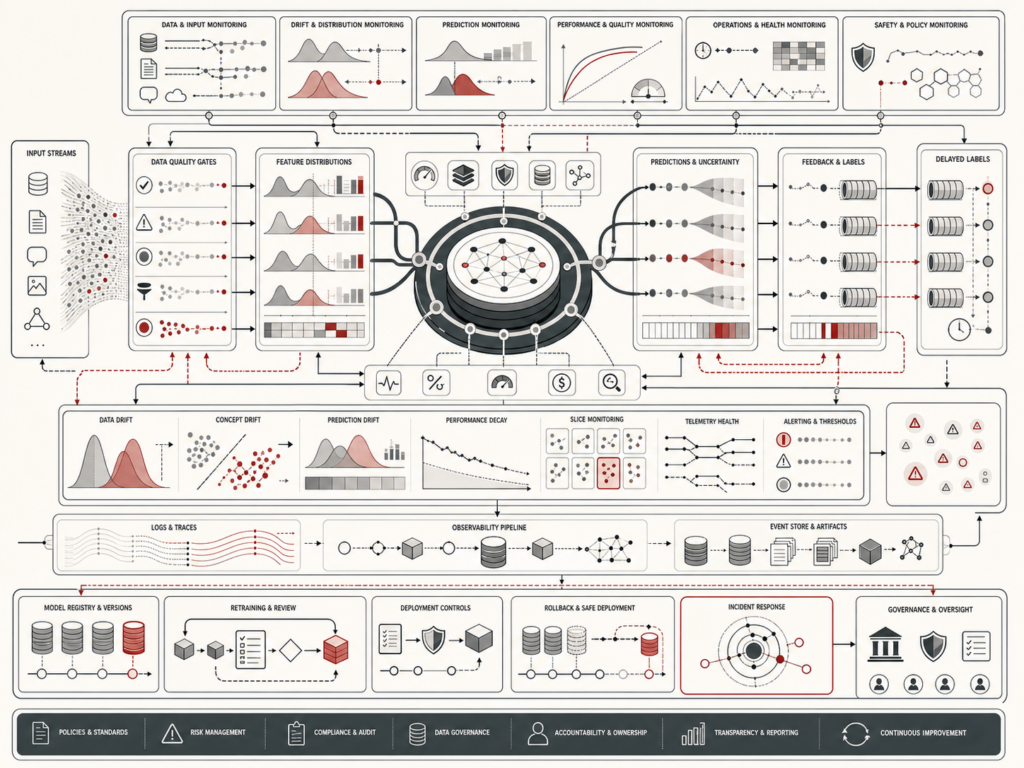
Model monitoring, drift, and AI observability describe the operational discipline required to keep artificial intelligence systems reliable after deployment. A model that performs well in offline evaluation can degrade in production when input data changes, user behavior shifts, sensors drift, labels become delayed, downstream systems change, prompts evolve, retrieval indexes become stale, or the social context around the system changes. This article explains data drift, concept drift, label drift, feature monitoring, prediction monitoring, delayed-label performance, slice-level monitoring, fairness review, LLM and RAG observability, agent traces, alerting, retraining governance, rollback readiness, incident response, and auditability. It argues that trustworthy AI requires operational visibility: telemetry, thresholds, owners, monitoring signals, escalation paths, and governance records that convert hidden model failure into visible institutional responsibility.

Abstract editorial illustration showing AI agents as governed workflow systems connecting model reasoning, task planning, tool selection, function calling, bounded execution, memory, retrieval, permissions, human review, monitoring, rollback, and governance.

AI Agents, Tool Use, and Workflow Automation

AI agents, tool use, and workflow automation describe a shift from models that only generate responses to systems that can plan, call tools, retrieve information, update state, coordinate tasks, and participate in multi-step workflows. An AI agent may search a knowledge base, call an API, write and execute code, inspect a file, update a ticket, summarize an email thread, schedule a meeting, query a database, run a calculation, generate a report, or route a task to a human reviewer. This article explains agent architecture, tool registries, function calling, planning loops, memory and state management, workflow automation, multi-agent coordination, sandboxing, permissions, prompt-injection risks, human-in-the-loop review, evaluation, monitoring, and governance. It argues that agentic AI should be treated as bounded, observable, permissioned workflow infrastructure—not autonomous magic.

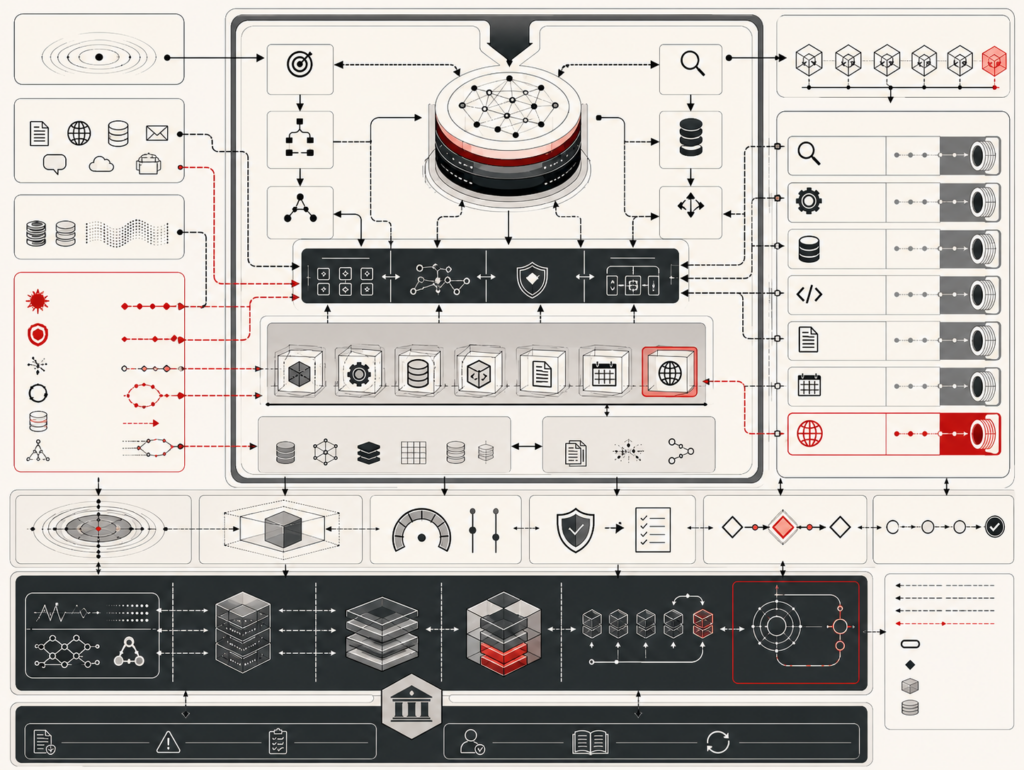
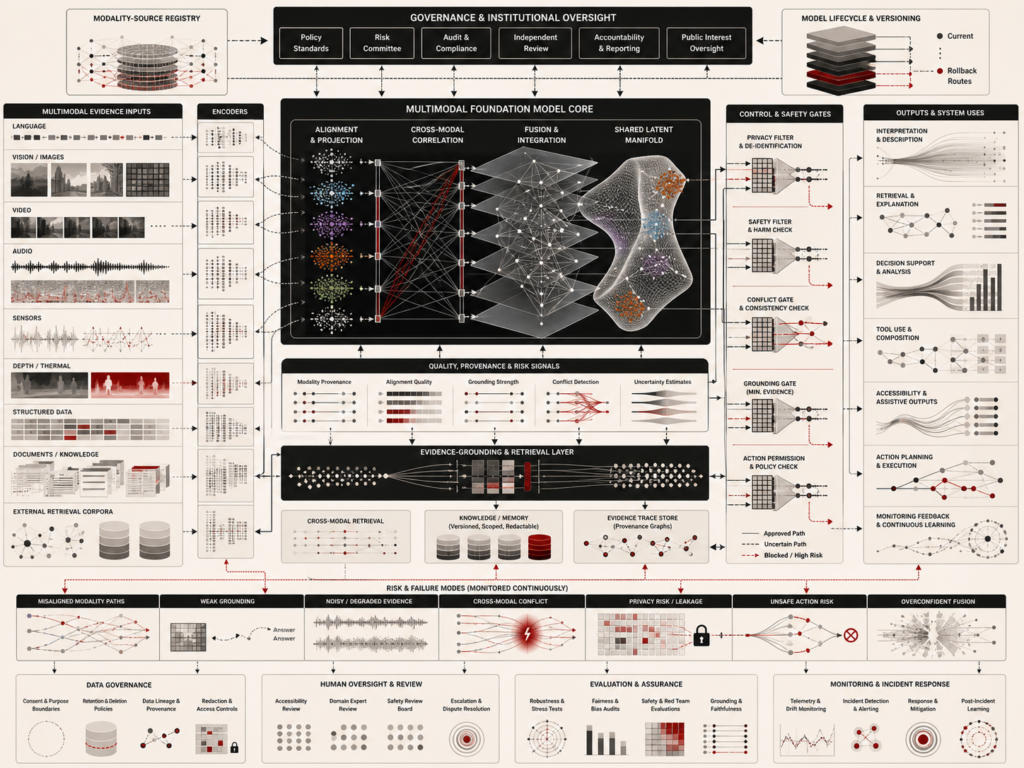
Abstract editorial illustration showing multimodal AI as a governed system architecture connecting language, vision, audio, video, sensors, structured data, cross-modal alignment, fusion layers, retrieval, safety gates, action controls, monitoring, and governance.

Multimodal AI: Language, Vision, Audio, and Action

Multimodal AI systems connect language, vision, audio, video, sensors, structured data, and action into shared computational architectures that can perceive, interpret, reason, generate, and operate across different forms of information. Instead of treating text, images, sound, movement, and measurement as separate domains, multimodal systems learn relationships among modalities: an image and caption, a spoken command and transcript, a video and action sequence, a chart and explanation, a robot observation and motor command, or a sensor stream and written interpretation. This article explains cross-modal alignment, modality-specific encoders, fusion architectures, vision-language systems, audio-language systems, video understanding, embodied AI, multimodal retrieval, evaluation, privacy, accessibility, and governance. It argues that multimodal AI is not just an interface feature, but a systems discipline for coordinating evidence, uncertainty, action, and accountability.

Scroll to Top