Insight and Creative Problem Solving
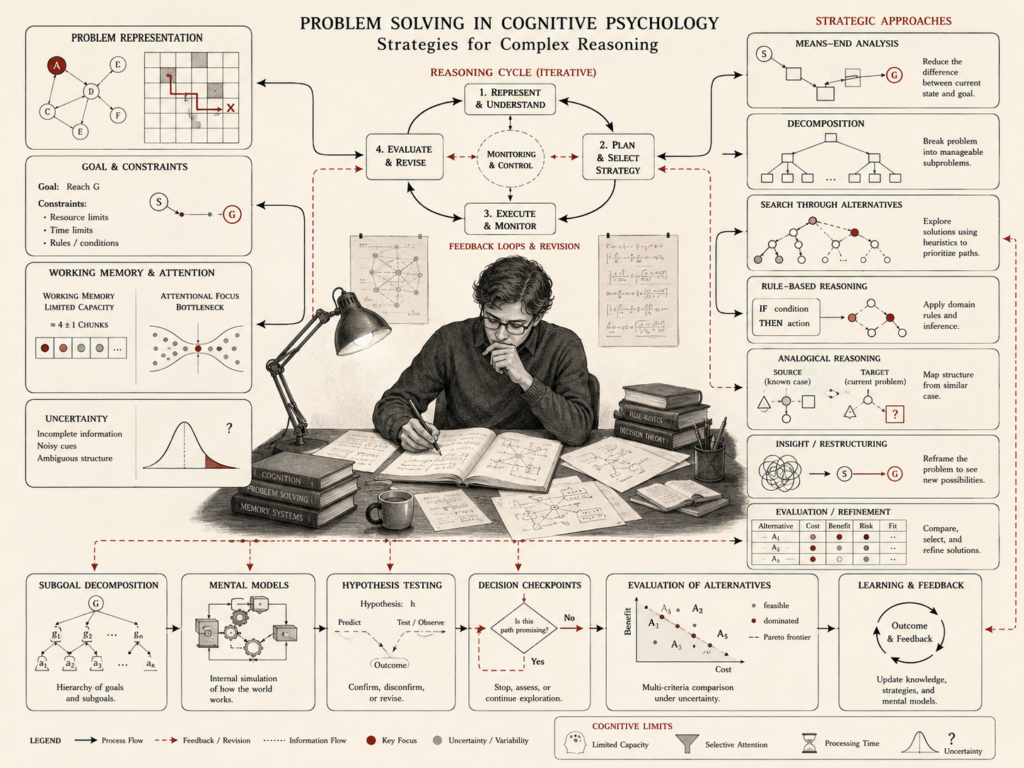
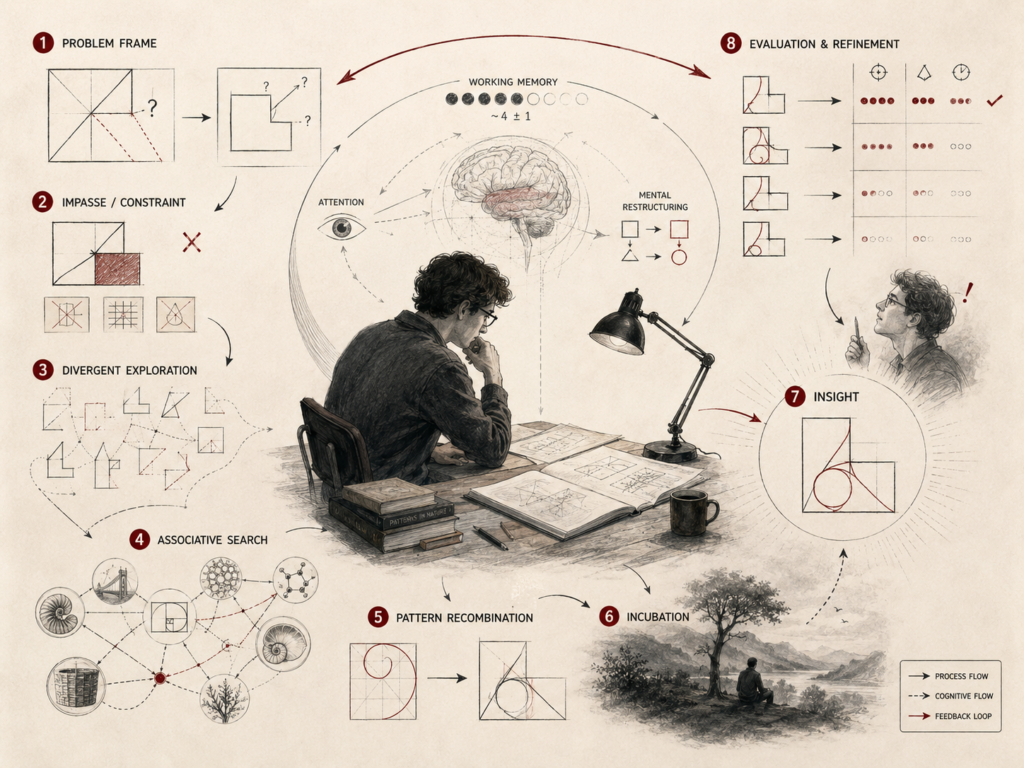
Insight refers to the sudden restructuring of a problem in a way that makes a solution newly visible without the feeling of having arrived there through a straightforward sequence of steps. In cognitive psychology, this makes insight one of the clearest examples of non-linear thought. Rather than extending an existing strategy one move at a time, the mind reaches a point at which the underlying representation of the problem changes, and with that change, what had seemed blocked or invisible becomes intelligible. Insight is therefore not simply a dramatic moment of realization. It is a cognitive event in which confusion is transformed by representational reorganization, constraint relaxation, and the sudden recognition of a new relation or possibility. This is why insight occupies such an important place in the study of creative problem solving. It helps explain how people overcome fixation, escape unproductive assumptions, and generate solutions that are not just incrementally better, but qualitatively different from what their earlier reasoning allowed. In this way, insight reveals that some of the mind’s most important advances do not come from thinking harder along the same path, but from learning to see the problem differently altogether.