Decision-Making in Institutional Systems: Cognition, Incentives, and Organizational Choice
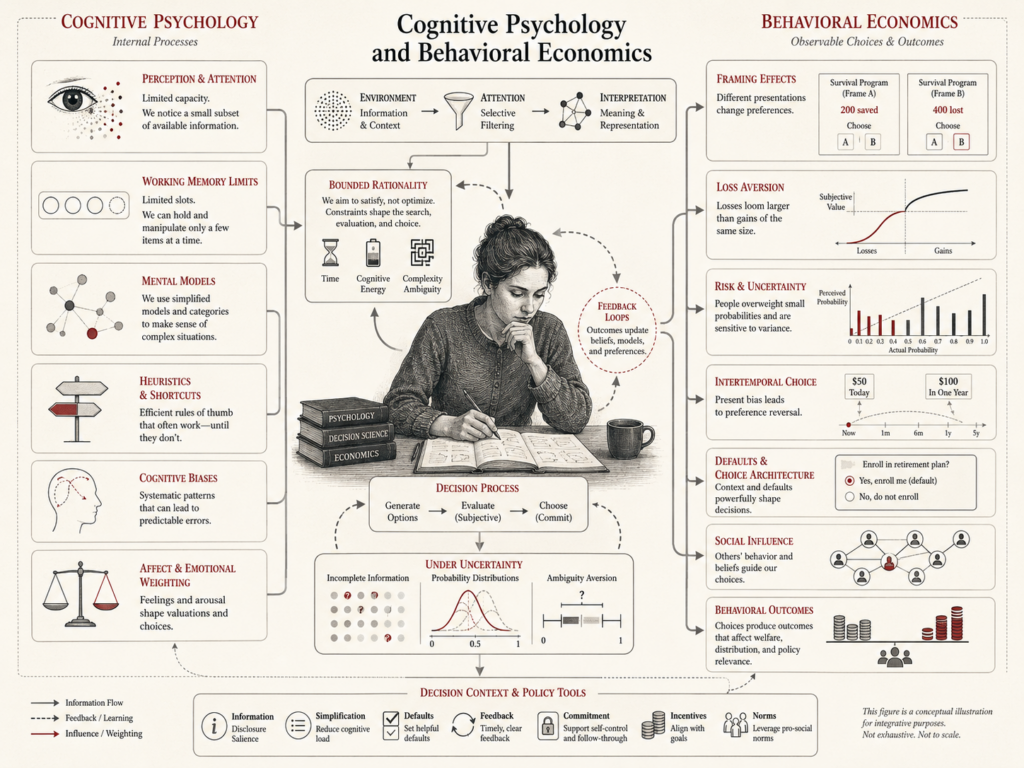
Decision-making in institutional systems examines how organizations, agencies, committees, platforms, and governance bodies turn information into action. This article shows why institutional decisions are not made by perfectly rational actors, but through distributed cognition, bounded rationality, incentives, hierarchy, authority, communication systems, memory, legitimacy, and power. It explains how decision quality depends on what information becomes visible, who can interpret it, which risks are prioritized, whose burdens are recognized, and whether feedback can revise assumptions over time. The article foregrounds justice by asking who helps define the decision problem, whose evidence counts, and who bears the cost when institutions are wrong. Mathematical, R, Python, and GitHub-based tools model decision quality, bounded-rationality pressure, information flow, incentive alignment, legitimacy, uncertainty management, corrective capacity, justice-sensitive voice, fragile decision environments, and high-distortion decision systems.