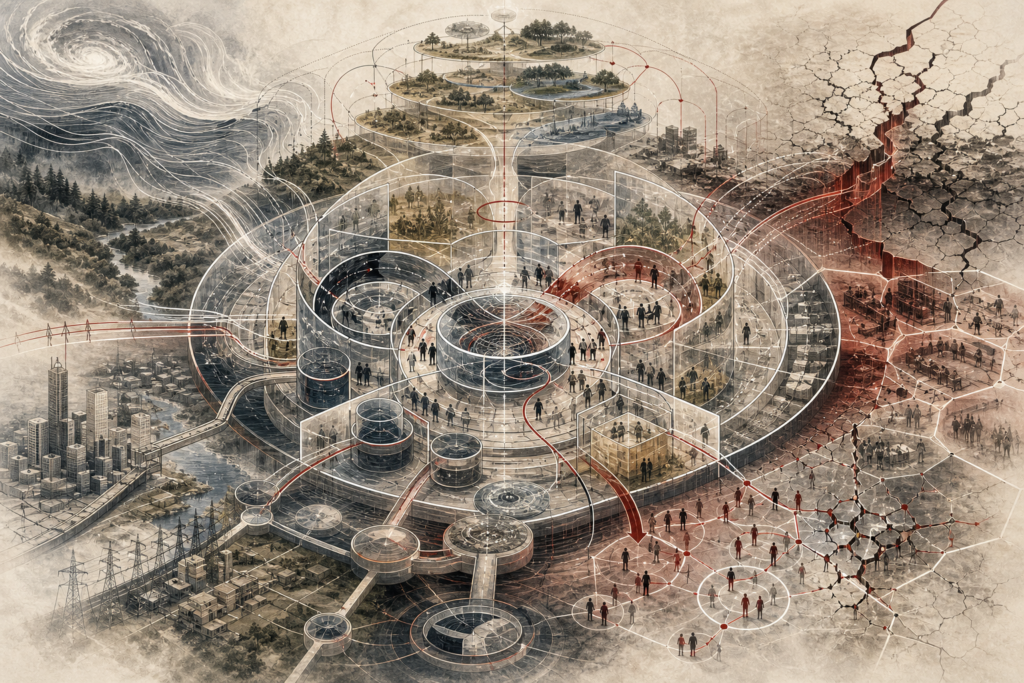
Adaptive Capacity in Complex Systems: Learning, Flexibility, and Resilience
Adaptive Capacity in Complex Systems examines the room systems have to learn, adjust, and reorganize before disturbance becomes breakdown. The article argues that resilience depends not only on absorbing shocks, but on preserving enough flexibility, diversity, governance capacity, learning ability, and slack to respond intelligently when conditions change. It distinguishes adaptive capacity from robustness, shows why highly ordered systems can become fragile when response options narrow, and explores how adaptation operates across ecological systems, communities, institutions, governance, and climate strategy. It also emphasizes that adaptive capacity sits between persistence and transformation, helping determine whether systems can reconfigure deliberately rather than collapse into forced change. The article includes an evergreen mathematical lens, along with advanced R and Python workflows for comparing adaptive-capacity profiles and simulating viability under repeated disturbance.