Proof and the Logic of Mathematical Justification
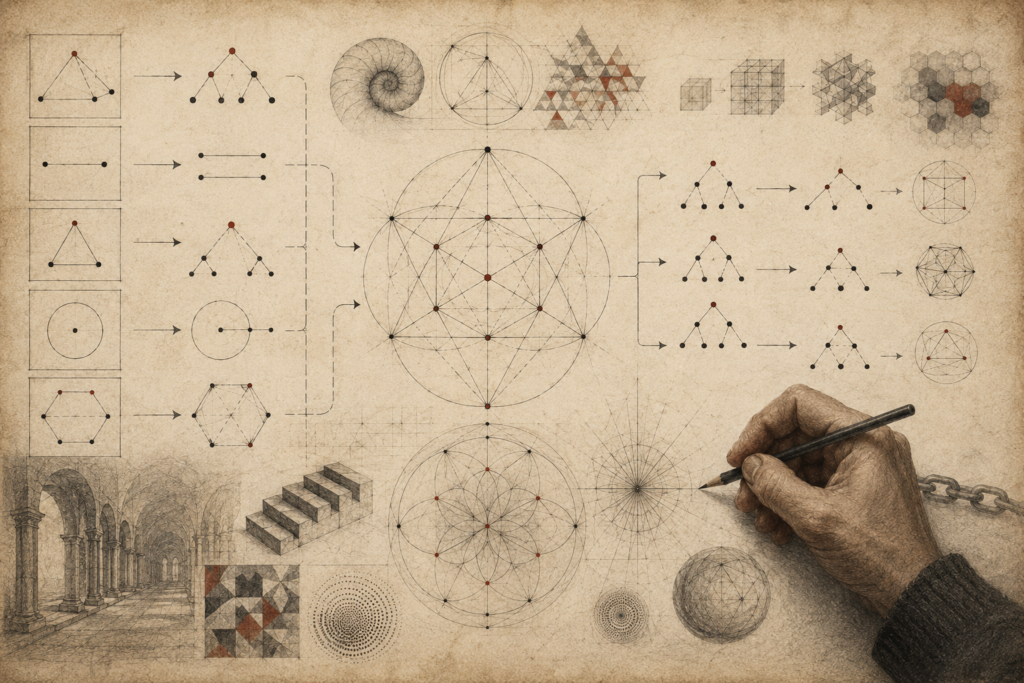
Proof and the Logic of Mathematical Justification examines proof as the central standard by which mathematics turns patterns, conjectures, and examples into justified knowledge. The article explains why proof is more than persuasion: it is accountable reasoning that names assumptions, applies definitions, traces inference, and establishes conclusions under stated conditions. It explores direct proof, contradiction, induction, construction, counterexample, invariance, proof architecture, formalization, proof assistants, and the distinction between finite evidence and universal justification. By treating proofs as dependency structures, the article connects classical mathematical reasoning with modern computational workflows for theorem metadata, proof graphs, induction audits, counterexample records, and formalization planning. It also considers the ethical limits of mathematical justification in modeling, AI, economics, risk systems, and public decision-making, where a formally valid result may still depend on assumptions that require empirical, institutional, moral scrutiny, and careful public accountability.