Design Thinking

Design thinking is a human-centered approach to innovation and problem solving. Originally developed within design and engineering disciplines, it has expanded into fields such as business strategy, public policy, education, and organizational development.

The core premise of design thinking is that effective solutions emerge from a deep understanding of human experiences and needs. Rather than beginning with technical constraints or existing systems, the process begins with empathy for users and stakeholders.

Design thinking typically follows an iterative cycle that includes understanding user needs, defining problems, generating ideas, prototyping solutions, and testing them in real-world contexts. This process encourages experimentation, rapid learning, and continuous refinement.

Because many contemporary challenges involve complex social and technological systems, design thinking has become a widely used framework for addressing problems that lack clear definitions or predetermined solutions. By combining creative ideation with systematic experimentation, design thinking enables organizations to explore innovative approaches while remaining grounded in real-world user experiences.

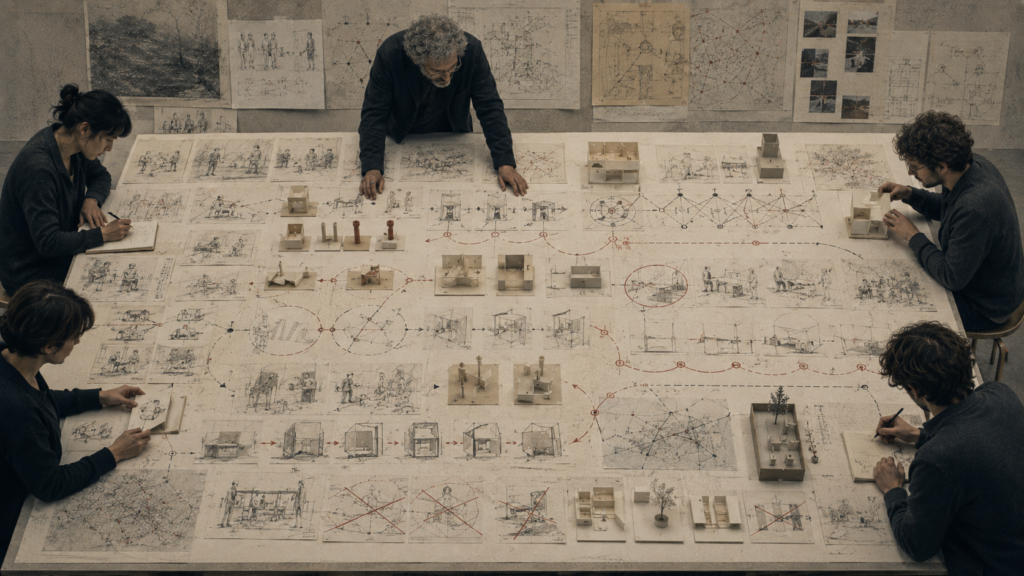
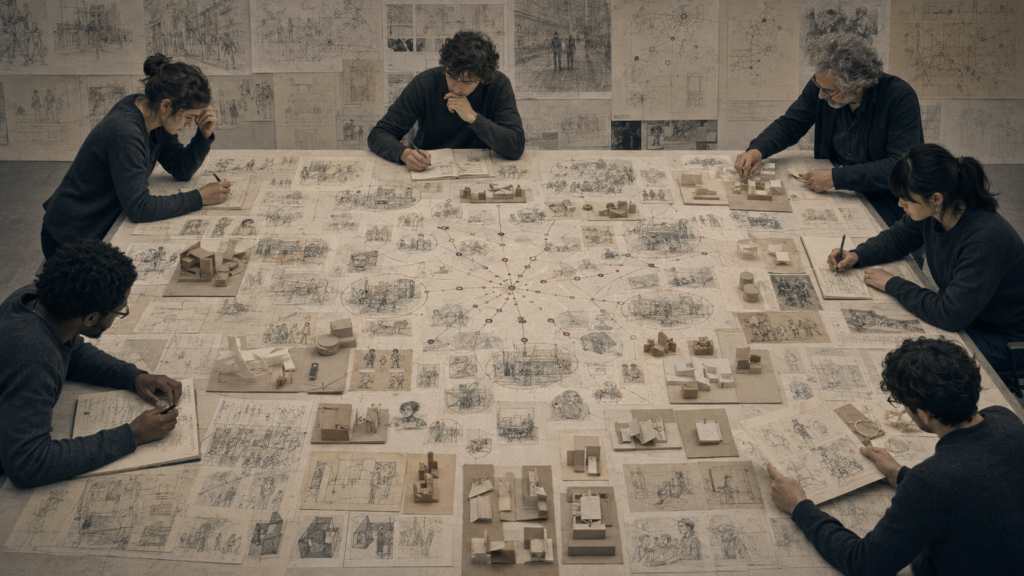
Editorial illustration of a design studio table covered with branching idea maps, exploratory sketches, concept clusters, paper prototypes, and small model variations.

Ideation and Creative Problem Solving in Design Thinking

Ideation in Design Thinking examines how design teams deliberately expand the solution space before narrowing toward more credible interventions. The article argues that ideation is not casual brainstorming or generic creativity, but a structured method for resisting premature convergence, challenging inherited assumptions, and surfacing alternatives that would not emerge through ordinary planning. It explores divergent thinking, How Might We questions, collaborative creativity, productive constraints, convergence, complex-system ideation, and the organizational conditions that either widen or suppress possibility. It also connects ideation to bias, judgment, and group dynamics, showing why idea generation must be disciplined as well as imaginative. The article includes a mathematical lens for modeling idea value and exploratory breadth, along with advanced R and Python workflows for comparing idea portfolios and analyzing uncertainty in early-stage concept selection.
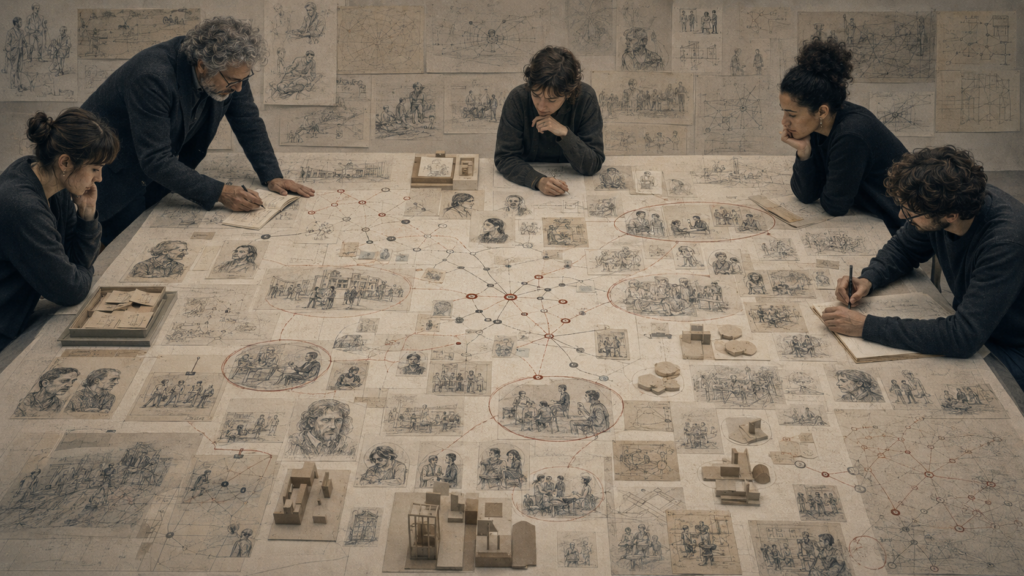
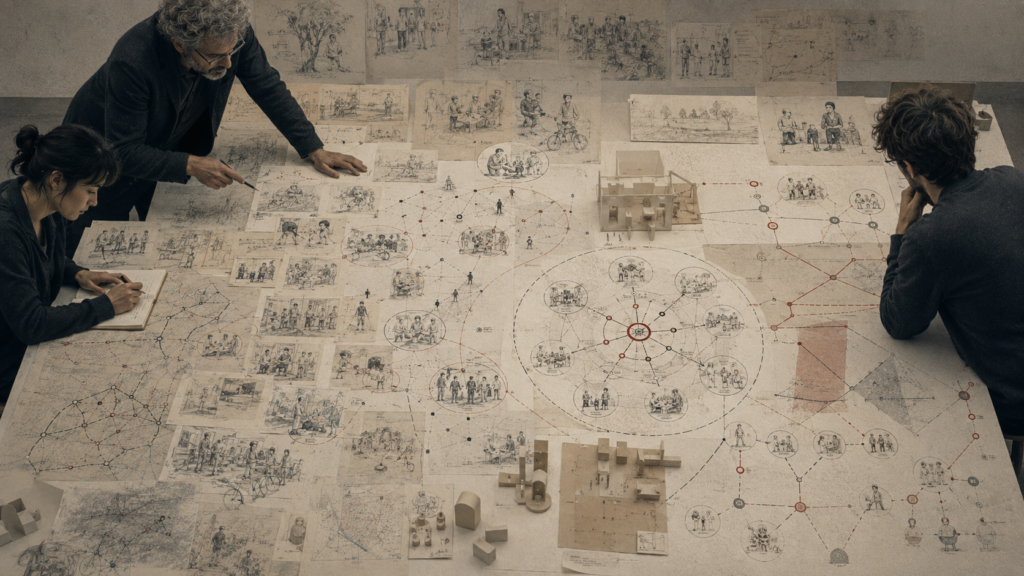
Editorial illustration of a design research table covered with portrait sketches, field observations, clustered themes, network diagrams, synthesis maps, and small prototype models.

Insight Generation in Design Thinking

Insight Generation in Design Thinking examines how designers move from raw observation to meaningful understanding through pattern recognition, interpretation, and research synthesis. The article argues that insights do not arise automatically from interviews, field notes, or stakeholder maps, but must be constructed through disciplined interpretation that identifies underlying needs, tensions, contradictions, and opportunities for intervention. It explores the distinction between observations and insights, affinity mapping, insight statements, opportunity formation, interpretive risk, and the role of systems thinking in more complex environments. The article also connects insight generation to bias, overconfidence, and reasoning under uncertainty, showing why synthesis must be methodical as well as imaginative. It includes a mathematical lens for modeling insight quality, along with advanced R and Python workflows for pattern scoring, insight prioritization, and uncertainty analysis in research synthesis.

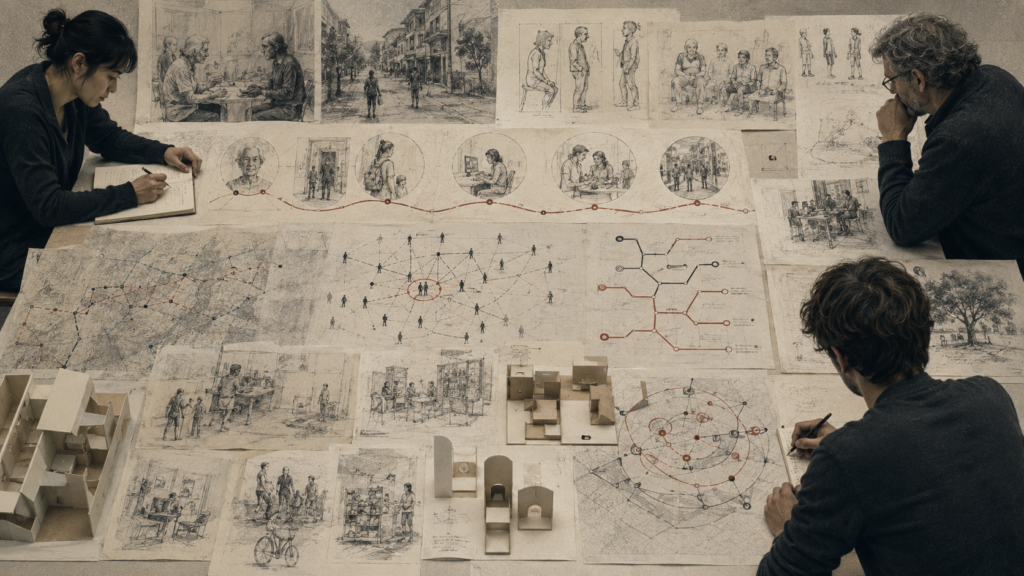
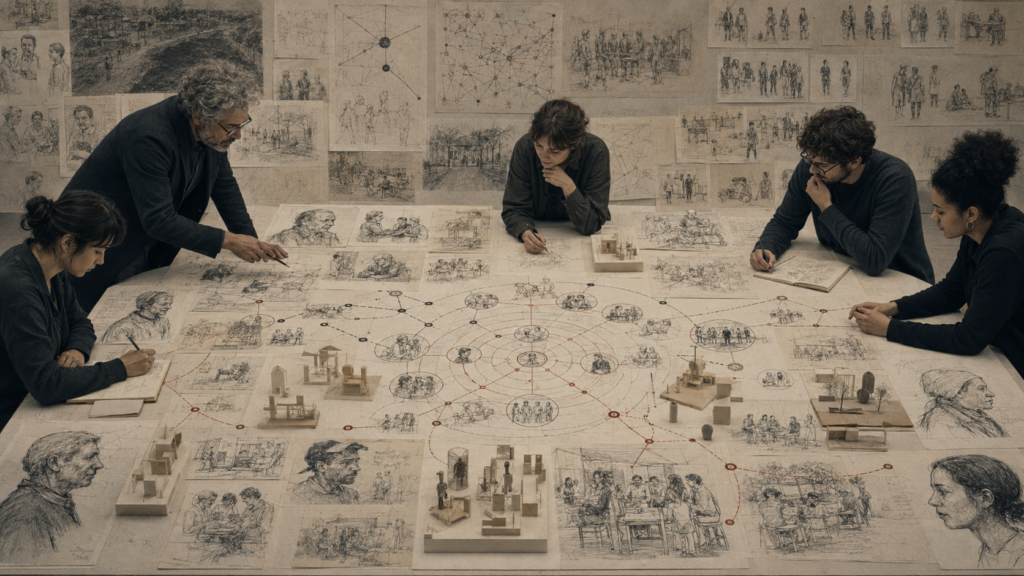
Editorial illustration of a design research table covered with stakeholder portraits, interview scenes, community observations, relationship maps, journey pathways, and paper prototypes.

Empathy and Stakeholder Research in Design Thinking

Empathy and Stakeholder Research in Design Thinking examines how designers ground innovation in lived experience rather than institutional assumption. The article argues that empathy in design is not sentimental identification, but a disciplined method for understanding how people interpret systems, navigate constraints, form workarounds, and absorb hidden burdens in ordinary life. It expands the discussion from individual users to wider stakeholder networks and explores interviews, observation, journey mapping, stakeholder mapping, synthesis, and the limits of self-report. It also addresses bias, interpretive discipline, unequal legibility, and the role of power in shaping whose experiences become visible in research. The article includes a mathematical lens for modeling research coverage and insight value, along with advanced R and Python workflows for evaluating stakeholder research quality and analyzing uncertainty in research prioritization.

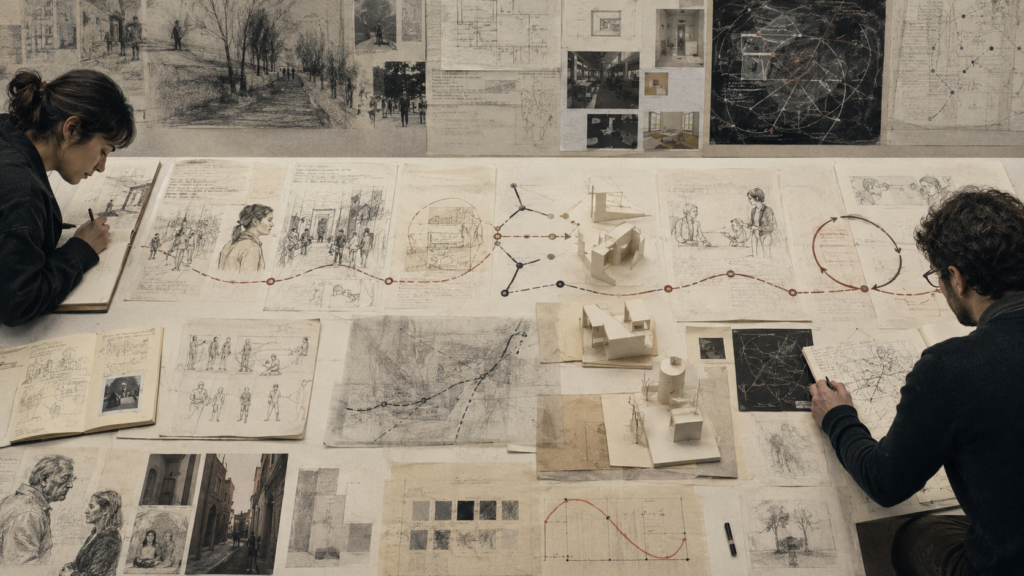
Editorial illustration of a design studio table covered with prototype variations, sketches, feedback loops, crossed-out concepts, diagrams, and paper models.

Iteration and Experimentation in Design Thinking

Iteration and Experimentation in Design Thinking examines how design teams learn through repeated cycles of prototyping, testing, feedback, and revision rather than relying on prediction alone. The article argues that iteration is not simply repeated change and experimentation is not random trial, but a disciplined method for improving judgment under uncertainty. It explores iterative innovation, bounded experiments, failing early to learn faster, feedback as a mechanism of refinement, experimentation in complex systems, organizational culture, and the cognitive value of testing ideas against reality. It also addresses the limits of iteration when conditions are high-risk, politically constrained, or structurally resistant to small-scale learning. The article includes a mathematical lens for modeling experiment value and update cycles, along with advanced R and Python workflows for comparing learning strategies and analyzing uncertainty in experimental design choices.

Editorial illustration of a design research table covered with field sketches, community observations, systems maps, clustered insights, boundary diagrams, and prototype models.

Problem Framing in Design Thinking

Problem Framing in Design Thinking examines how teams define, interpret, and repeatedly reframe challenges before attempting to solve them. The article argues that many innovation failures begin not with weak execution, but with a misdiagnosed problem: one framed too narrowly, too conveniently, or too early around visible symptoms rather than deeper causes. It explores the importance of defining the right problem, wicked problems, design challenges, reframing through human-centered research, the role of insight generation, and the strategic consequences of framing in organizations and institutions. It also addresses bias, power, stakeholder coverage, and the political dimensions of framing. The article includes a mathematical lens for modeling frame quality, along with advanced R and Python workflows for comparing alternative frames and analyzing uncertainty in problem-definition decisions.

Editorial illustration of a collaborative research table covered with human-centered sketches, interview scenes, journey maps, systems diagrams, and paper prototypes.

Human-Centered Problem Solving

Human-Centered Problem Solving examines how design begins from lived experience rather than institutional assumption. The article argues that many failures in products, services, policies, and organizational systems arise not because technical solutions are impossible, but because designers misunderstand how people actually navigate constraints, interpret processes, and absorb hidden burdens. It explores the shift from technology-centered to human-centered design, empathy as a research method, people within systems, underlying needs, applications across disciplines, and critiques related to power, access, and structural inequality. It also emphasizes that human-centered design must be paired with systems awareness and methodological rigor rather than reduced to sentiment or surface usability. The article includes a mathematical lens for modeling human-centered value, along with advanced R and Python workflows for comparing design options and analyzing uncertainty in stakeholder-centered priorities.

Editorial illustration of a design research studio table covered with sketches, diagrams, field notes, paper prototypes, and feedback loops, with two focused practitioners working through an iterative design process.

What Is Design Thinking?

What Is Design Thinking? introduces design thinking as a human-centered, iterative, and interdisciplinary approach to problem solving for situations where challenges are ambiguous, evolving, and shaped by multiple stakeholders. The article argues that design thinking is not simply a toolkit for creativity workshops, but a serious methodology for learning under uncertainty through observation, insight generation, reframing, ideation, prototyping, testing, and implementation. It traces the intellectual origins of the field, explains its relationship to human-centered innovation and wicked problems, and examines its use across business, public policy, healthcare, education, and sustainability. It also addresses critiques concerning superficiality, structural blindness, and the limits of user-centeredness. The article includes a mathematical lens for modeling design value, along with advanced R and Python workflows for comparing design pathways and analyzing uncertainty in strategic design choices.

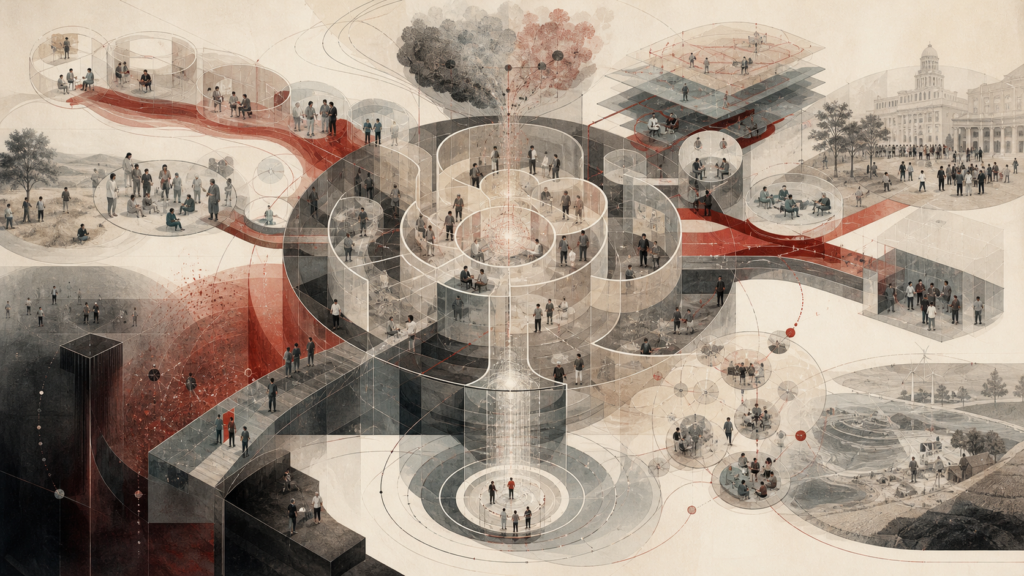
Editorial scientific illustration of design thinking as a human-centered problem-solving systems architecture, showing empathy research, problem framing, ideation, prototyping, testing, implementation, inclusion, systems feedback, sustainability, and responsible revision.

Design Thinking: Human-Centered Innovation for Complex Problem Solving

Design Thinking examines the field as a rigorous method for inquiry and intervention under uncertainty rather than a simplified creativity framework. The article argues that design thinking is strongest when understood as a linked process of human-centered research, interpretive synthesis, problem framing, ideation, prototyping, testing, and implementation, all shaped by systems, institutions, and real-world constraints. It explains why the method matters for ambiguous and multi-stakeholder problems, maps the logic of the series from foundations to advanced applications, and expands the pillar with planned articles on co-design, service design, behavioral design, strategy, and ethics, power, and inclusion. It also includes an evergreen mathematical lens, along with advanced R and Python workflows for comparing design pathways and analyzing uncertainty in strategic design choices.

Scroll to Top