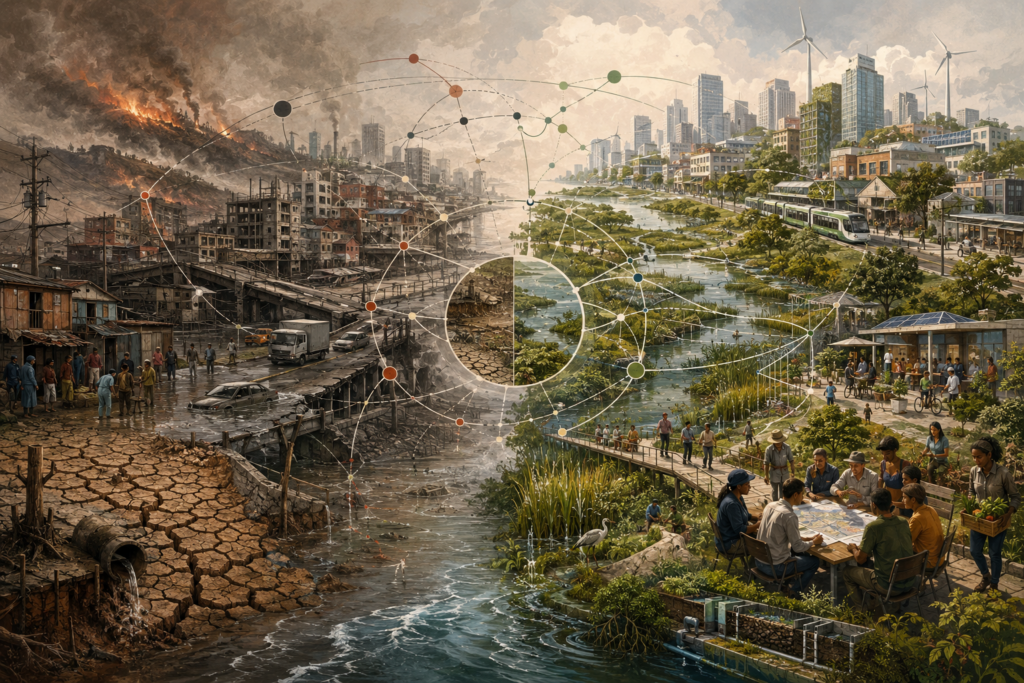
Fragility and the Hidden Accumulation of Stress
Fragility is dangerous because it often grows beneath visible performance. A system can continue to meet targets, deliver services, and appear stable while buffers erode, maintenance is deferred, standards drift, ecological support weakens, and vulnerable people absorb hidden burdens. This article explains fragility as the quiet accumulation of stress across infrastructure, institutions, ecosystems, communities, and technological systems before breakdown becomes visible. It shows why coping should not be mistaken for resilience, why output metrics can conceal declining margins, and why systems may appear strong precisely because hidden workarounds are keeping them alive. True resilience requires detecting stress early, restoring buffers, repairing maintenance backlogs, resisting normalized decline, protecting those carrying invisible burdens, and rebuilding the margins that allow systems to absorb disturbance without consuming their own future.