
Last Updated May 24, 2026
Urban farming infrastructure is often misunderstood as a lifestyle movement: community gardens, rooftop agriculture, hydroponic warehouses, school gardens, neighborhood greenhouses, or weekend farmers’ markets. These initiatives matter, but the deeper question is structural. In an era of climate volatility, supply-chain disruption, food-price instability, land pressure, and geopolitical uncertainty, local food production should increasingly be understood as a form of civic infrastructure.
The central policy question is not whether cities can replace industrial agriculture. They cannot. Urban farms will not produce the world’s staple grains at the scale of global agricultural systems. They will not eliminate the need for rural production, regional trade, cold chains, fertilizer systems, storage infrastructure, ports, rail corridors, trucking networks, or global food markets. But replacement is the wrong benchmark.
Main Library
Publications
Article Map
Risk & Resilience
Related Topic
Sustainable Development
Related Topic
Infrastructure Systems
Related Topic
Stewardship & Ethics
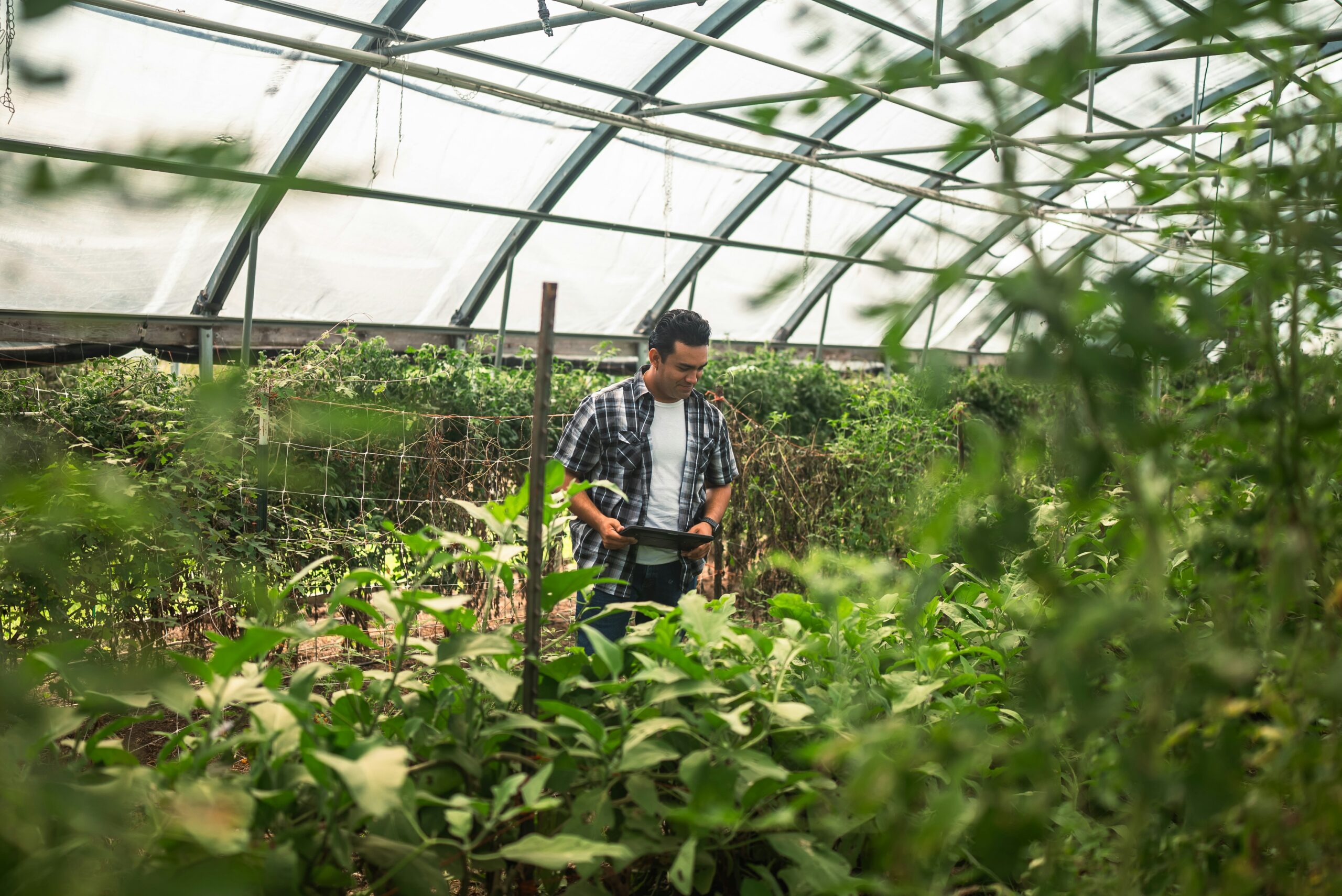
The more important question is whether cities can strengthen food-system resilience by distributing some production, processing, storage, knowledge, and governance closer to population centers. Under that frame, urban farming becomes less about gardening and more about infrastructure design. It becomes a question of redundancy, proximity, traceability, food access, land use, water efficiency, energy demand, waste cycling, public health, neighborhood resilience, and institutional capacity.
Urban farming infrastructure can function as a distributed layer within the broader food system. It can shorten some supply chains, increase visibility, provide limited buffer capacity during disruptions, strengthen food literacy, support neighborhood-level access to fresh produce, create circular nutrient flows, and provide living laboratories for resilient urban planning. Its value is not that it replaces global food networks. Its value is that it can make them less brittle.
This article examines urban farming infrastructure as a Risk & Resilience problem. It argues that cities should evaluate local food production not as symbolic greening, not as boutique sustainability, and not as a fantasy of total food self-sufficiency, but as a measurable, governed, distributed infrastructure layer that can strengthen food-system resilience when designed honestly.
The Infrastructure Question Behind Urban Farming
Urban farming is often framed in cultural or lifestyle terms: neighborhood gardens, rooftop greenhouses, community-supported agriculture, school food programs, farmers’ markets, vertical farms, hydroponic systems, aquaponics, or local-food movements. These frames are not wrong. Urban agriculture can build community, reconnect people with food production, support education, beautify vacant land, and provide fresh produce in places where food access is limited.
But a lifestyle frame can obscure the deeper systems question. Food is not only a consumer product. It is a life-support system. Cities cannot function without reliable food access, just as they cannot function without water, energy, sanitation, transportation, health care, housing, telecommunications, and emergency services. A disruption in food supply does not remain an agricultural problem. It can become a public-health problem, an economic problem, a social-stability problem, and a governance problem.
Urban farming infrastructure asks cities to treat food production as part of a broader civic systems architecture. This does not mean turning every city into a self-sufficient agricultural island. It means recognizing that food-system resilience improves when production, distribution, storage, processing, knowledge, and governance are not concentrated in a single fragile chain.
The distinction matters. A community garden can be a meaningful social space. A rooftop greenhouse can produce vegetables. A vertical farm can demonstrate controlled-environment agriculture. A composting system can recapture nutrients. A neighborhood food hub can shorten distribution. But when these elements are coordinated, measured, governed, and connected to food-access policy, they become more than isolated projects. They become infrastructure.
Infrastructure is not defined only by scale. It is defined by function. If a system supports public health, continuity, access, resilience, and essential services, it deserves to be evaluated as infrastructure. Urban farming infrastructure should therefore be judged by what it contributes to the food system: not by sentiment, not by novelty, but by measurable resilience value.
The Structural Fragility of Centralized Food Systems
Modern food systems are highly productive, specialized, and globally integrated. Agricultural production is often geographically concentrated in regions suited to particular crops. Processing facilities are optimized for scale. Supply chains extend across continents. Inputs such as fertilizer, fuel, seeds, packaging, refrigeration, labor, and logistics are coordinated through global markets. Retail distribution depends on trucking networks, warehouses, ports, cold chains, inventory systems, and just-in-time delivery.
This system has produced enormous gains in output, variety, affordability, and year-round availability for many consumers. But the same architecture also concentrates risk. Efficiency often reduces redundancy. Specialization can increase vulnerability when key regions, inputs, or transport corridors are disrupted. Long supply chains can hide fragility until a shock reveals it.
Potential disruption points include:
- droughts, floods, heatwaves, wildfires, hurricanes, and other climate shocks affecting major agricultural regions;
- fertilizer supply disruptions or price spikes;
- fuel volatility affecting mechanized farming, refrigeration, and transport;
- labor shortages in harvesting, processing, logistics, food service, and retail;
- port congestion, trucking bottlenecks, rail disruption, or geopolitical conflict;
- crop disease, livestock disease, invasive pests, or ecosystem stress;
- cyber or operational failures affecting logistics, warehousing, or retail systems;
- food-price inflation that reduces household access even when food remains physically available.
Centralized food systems can absorb some shocks because they are large and interconnected. Trade can shift supply from one region to another. Storage can buffer temporary disruptions. Global markets can reallocate commodities. But interconnectedness also allows disturbances to propagate. A drought in one region, a conflict affecting fertilizer or grain exports, an energy-price shock, or a port disruption can influence prices and availability far from the original event.
Food-system fragility is therefore not only about physical scarcity. It is also about distribution, affordability, logistics, institutional capacity, and unequal exposure. A city may have food in warehouses while low-income households cannot afford it. A region may have calories but lack fresh produce. A neighborhood may be near food abundance but lack access because of transportation, retail gaps, or income inequality.
Urban farming infrastructure cannot solve all of these problems. But it can add resilience where the centralized system is weakest: proximity, visibility, redundancy, community capacity, fresh-food access, waste recapture, and local adaptive capacity.
Urban Farming Infrastructure as a Distributed Layer
Urban farming infrastructure does not replace industrial agriculture. It introduces distributed production nodes within metropolitan environments. These nodes may be small, but their value lies in their position within the system. They are closer to consumers, closer to neighborhoods, closer to waste streams, closer to public institutions, and closer to local governance.
Distributed nodes may include:
- small-scale farms on vacant or underused urban land;
- rooftop greenhouses and rooftop gardens;
- community gardens and cooperative growing spaces;
- school gardens and educational farms;
- hydroponic, aquaponic, and vertical farming operations;
- greenhouses integrated into public buildings, housing developments, or institutions;
- peri-urban farms at the edge of metropolitan regions;
- food forests, edible landscapes, and public orchards;
- composting and nutrient-recovery systems linked to production;
- local aggregation, processing, storage, and distribution hubs.
From a systems perspective, these distributed nodes perform several functions:
- They shorten some supply chains. Food grown closer to consumers can reduce transport distance for certain products, especially fresh produce.
- They increase local visibility. Production practices become more observable and socially embedded.
- They create partial redundancy. They provide limited buffer capacity during disruptions in larger supply networks.
- They support adaptive learning. Cities can test water reuse, composting, controlled-environment agriculture, heat adaptation, and community distribution models.
- They strengthen food literacy. Residents gain practical understanding of growing conditions, seasonality, inputs, labor, and waste.
- They connect food to planning. Land use, water, energy, waste, public health, and resilience become part of the same civic design problem.
Distributed systems are rarely optimized for maximum short-term efficiency. Their value lies in adaptability and resilience. Similar design principles appear in electrical grids, cloud computing, public health, emergency management, finance, and water systems. Redundancy may appear inefficient under normal conditions, but it becomes essential during disruption.
A food system with no redundancy is efficient only until it fails. Urban farming infrastructure adds small but meaningful layers of redundancy where cities are otherwise dependent on long, opaque supply chains.
Food as Civic Infrastructure
Cities routinely invest in water systems, energy networks, transportation, parks, schools, hospitals, waste management, telecommunications, drainage, and emergency services. These systems are recognized as essential to economic and social stability. Food systems rarely receive the same structural treatment in urban planning, even though food access is foundational to public health, labor productivity, education, community wellbeing, and social order.
Food is often treated as a private market problem: supermarkets, restaurants, distributors, wholesalers, farms, households, and consumers. Markets are essential, but they do not eliminate public responsibility. Cities shape food systems through zoning, transportation, land use, waste policy, public procurement, schools, health departments, emergency planning, social services, and economic development. Whether cities acknowledge it or not, they already govern food access indirectly.
Urban farming infrastructure makes this governance visible. It asks whether food production and distribution should be integrated into civic planning alongside other essential systems. That integration might include:
- zoning that protects space for community food production;
- public land policies that support food access and stewardship;
- school and institutional procurement programs;
- water-reuse and composting rules that support safe circular resource flows;
- food hubs that connect small producers with neighborhoods, schools, clinics, and emergency networks;
- resilience plans that include fresh-food access during disruption;
- measurement systems that track neighborhood-level food vulnerability.
Food as civic infrastructure does not mean the state must produce all food. It means that public institutions should treat food-system resilience as a legitimate planning concern. A city that plans for roads but not food access is planning only part of urban life.
A Mathematical Lens: Redundancy, Buffer Capacity, and Food-System Resilience
Urban farming infrastructure can be understood through a simple supply-resilience lens. A city’s food availability for a particular category of food can be represented as the sum of external supply, regional supply, local production, stored reserves, and emergency distribution, adjusted for losses.
S_t = E_t + R_t + L_t + B_t – W_t
\]
Interpretation: Available supply \(S_t\) at time \(t\) can be represented as external supply \(E_t\), regional supply \(R_t\), local urban production \(L_t\), buffer reserves \(B_t\), minus waste or losses \(W_t\). Urban farming usually contributes only part of total supply, but it can improve resilience by adding a local layer that is less dependent on long-distance logistics.
Food-system stress emerges when available supply falls below essential demand, especially for vulnerable populations.
S_t \geq D_t
\]
Interpretation: A food system remains service-stable when available supply \(S_t\) meets or exceeds essential demand \(D_t\). When supply falls below demand, shortages, price increases, reduced diet quality, and emergency interventions may occur.
The contribution of urban farming can also be represented as a local redundancy ratio:
\rho = \frac{L_t}{D_t}
\]
Interpretation: The local redundancy ratio \( \rho \) measures the share of essential demand that could be met by local urban production for a given food category. For most cities, this number will be small for total calories, but it may be meaningful for fresh herbs, leafy greens, certain vegetables, seedlings, culturally important crops, or emergency fresh-food access.
A disruption scenario can be expressed as a reduction in external supply:
S_{shock} = (1-\alpha)E_t + R_t + L_t + B_t – W_t
\]
Interpretation: During a supply shock, \( \alpha \) represents the fraction of external supply disrupted. Urban farming infrastructure cannot usually offset major staple-food disruptions, but it can reduce the size of the gap for specific foods and neighborhoods, especially when combined with regional supply, storage, food hubs, and emergency distribution.
These equations are simplified, but they clarify the argument. The point of urban farming infrastructure is not total substitution. It is resilience through layered capacity. A small local production layer can still matter if it provides fresh food, neighborhood access, community distribution, education, or emergency flexibility when larger systems are stressed.
The same logic applies across other infrastructure systems. A backup generator does not replace the electrical grid. A rain garden does not replace stormwater infrastructure. A neighborhood clinic does not replace a hospital system. Their value lies in distributed capacity, early response, proximity, and redundancy. Urban farming infrastructure should be evaluated through the same systems lens.
Forms of Urban Farming Infrastructure
Urban farming infrastructure is not a single model. It includes a range of production systems, each with different land, water, energy, labor, capital, governance, and resilience characteristics. Treating them as interchangeable leads to poor planning. A community garden, a rooftop greenhouse, a hydroponic warehouse, a peri-urban farm, and a school garden all contribute differently.
| Form | Primary contribution | Key constraints | Best resilience role |
|---|---|---|---|
| Community gardens | Fresh produce, social cohesion, food literacy, neighborhood stewardship | Limited scale, volunteer dependence, land tenure uncertainty | Community capacity, fresh-food access, education, emergency distribution nodes |
| Vacant-lot farms | Productive reuse of underused land | Soil contamination, tenure, water access, zoning | Neighborhood production and land-stewardship infrastructure |
| Rooftop agriculture | Use of underutilized urban surfaces | Structural load, access, irrigation, heat, cost | Distributed production in dense areas where ground land is scarce |
| Rooftop greenhouses | Protected cultivation and season extension | Capital cost, building integration, energy demand | Reliable fresh produce close to consumers and institutions |
| Vertical farms | High-density controlled-environment production | Energy intensity, capital cost, crop limitations | Year-round production of selected high-value or high-nutrient crops |
| Hydroponic systems | Water-efficient controlled production | Nutrient inputs, energy, technical maintenance | Efficient local production where soil access is limited |
| Peri-urban farms | Larger production near metropolitan markets | Land conversion pressure, transport, land cost | Regional resilience bridge between rural production and urban demand |
| Institutional farms | Food production linked to schools, hospitals, universities, or public agencies | Procurement rules, staffing, long-term funding | Public procurement, education, health, emergency preparedness |
The right design depends on the city’s needs. A dense city with limited land may prioritize rooftops, controlled environments, food hubs, and peri-urban protection. A city with vacant land may prioritize soil remediation, community farms, and neighborhood production. A hot, water-stressed city may prioritize water-efficient hydroponics, shade, drought-tolerant crops, and treated-water reuse. A city facing food-access inequity may prioritize gardens, food hubs, public procurement, and distribution networks in underserved neighborhoods.
Urban farming infrastructure should therefore be planned as a portfolio. Different production forms perform different resilience functions. No single form should be romanticized as the solution.
Measuring Urban Farming Infrastructure
If urban farming infrastructure is to be treated as genuine infrastructure rather than symbolic activity, it must be evaluated using rigorous metrics. Good intentions are not enough. A project may be socially meaningful but agriculturally inefficient. Another may have high yields but excessive energy use. Another may provide food access but lack stable land tenure. Another may reduce waste but fail to serve vulnerable communities.
The central issue is not ideology but evidence. Distributed food systems should be evaluated based on their measurable contribution to resilience, food access, environmental performance, and civic value.
| Metric category | Example indicators | Why it matters |
|---|---|---|
| Production | Yield per square meter, crop diversity, seasonal output, harvest reliability | Shows whether the system produces meaningful food output |
| Resource efficiency | Water use per kilogram, energy use per kilogram, nutrient efficiency, land-use efficiency | Tests whether production is environmentally and economically defensible |
| Resilience | Local redundancy ratio, emergency distribution capacity, supply-buffer contribution, diversity of production nodes | Evaluates whether the system strengthens food-system stability under stress |
| Access and equity | Neighborhood distribution, affordability, culturally appropriate crops, proximity to underserved areas | Measures whether benefits reach communities most exposed to food insecurity |
| Circularity | Compost use, food-waste recovery, nutrient cycling, stormwater integration, wastewater reuse where safe | Connects urban farming to broader urban metabolism and waste reduction |
| Governance | Land tenure, public participation, maintenance funding, accountability, data transparency | Determines whether the system can persist beyond short-term enthusiasm |
| Public health | Fresh-produce availability, nutrition programming, school participation, community food literacy | Connects food infrastructure to wellbeing, education, and prevention |
Metrics should be context-specific. A community garden should not be judged by the same output standards as a commercial vertical farm. A school garden may produce modest food volume but high educational value. A hydroponic greenhouse may produce large quantities of greens but require careful energy analysis. A peri-urban farm may provide stronger production capacity but face development pressure.
What matters is honest evaluation. Urban agriculture should neither be dismissed because it cannot replace industrial agriculture nor celebrated without evidence. It should be measured for what it actually does.
Water, Energy, Land, and Circular Resource Flows
Urban farming infrastructure sits at the intersection of food, water, energy, land, and waste systems. This makes it powerful, but also complicated. A resilient food infrastructure strategy must account for these resource relationships explicitly.
Water is central. Urban agriculture can strain municipal water systems if poorly designed, especially in water-stressed regions. But it can also support water-smart practices through drip irrigation, rainwater capture, soil moisture monitoring, drought-tolerant crops, hydroponics, aquaponics, greywater reuse where safe and legal, and stormwater integration. Water productivity matters: how much nutrition or food value is produced per unit of water?
Energy is especially important for controlled-environment agriculture. Vertical farms and indoor hydroponic systems can produce food in dense spaces, but lighting, cooling, ventilation, pumps, and climate control can be energy-intensive. If powered by carbon-intensive electricity, they may shift environmental burden rather than reduce it. Energy intensity must therefore be measured honestly.
Land is both opportunity and constraint. Vacant lots, rooftops, public land, brownfields, underused industrial spaces, schoolyards, and peri-urban edges may all support production. But land access is political. Urban land is valuable, contested, and shaped by zoning, development pressure, ownership, contamination history, and neighborhood inequality. Without secure land tenure, urban agriculture can be displaced just as it becomes socially useful.
Waste and nutrients create another opportunity. Cities produce enormous volumes of food waste, yard waste, organic residues, and wastewater. Safely managed composting and nutrient recovery can support circular food systems, reduce landfill burden, and improve soil health. But circularity requires public-health safeguards, contamination controls, regulatory clarity, and community trust.
The strongest urban farming systems do not treat food production in isolation. They connect it to urban metabolism: the flows of water, energy, materials, nutrients, waste, heat, land, labor, and information that shape city life.
Proximity, Transparency, and Food Governance
Urban agriculture can reduce the informational distance between producers and consumers. In global food supply chains, traceability often depends on certification regimes, regulatory oversight, shipping records, private audits, documentation systems, and retailer standards. These systems can be useful, but they are also complex and opaque to ordinary consumers.
When food production occurs within neighborhoods, schools, institutions, rooftops, public spaces, or nearby peri-urban farms, traceability can become more visible and socially embedded. People may observe production practices directly, ask questions about inputs, participate in growing, understand seasonality, and develop relationships with producers. Proximity does not automatically guarantee quality, sustainability, or justice, but it can reduce opacity.
Reduced opacity improves governance. A more visible food system can make it easier to ask:
- How is food grown?
- Who controls the land?
- Who benefits from production?
- Which neighborhoods receive fresh food?
- What water and energy inputs are used?
- Are soils safe?
- How are nutrients managed?
- Are workers paid fairly?
- Does the project strengthen community control or accelerate displacement?
Food governance is not only about safety and inspection. It is about accountability across the food system. Urban farming infrastructure can make some parts of that system more visible, but only if institutions preserve transparency, prevent greenwashing, and support public participation.
A local food system can still be inequitable, extractive, or inefficient. Proximity is an opportunity for accountability, not a guarantee of it.
Structural Limits of Urban Agriculture
Urban farming infrastructure should not be romanticized. Its limits are real and must be acknowledged clearly.
Most cities cannot produce enough staple calories within their boundaries to replace regional, national, or global agriculture. Wheat, rice, maize, soy, oil crops, livestock feed, and many bulk commodities require land, water, climate conditions, mechanization, and scale that urban systems generally cannot provide. Even when production is technically possible, the economics and resource requirements may not be favorable.
Controlled-environment agriculture can produce high yields per square meter, but crop range is often limited. Leafy greens, herbs, microgreens, and some vegetables may be well suited to indoor or hydroponic production. Staple grains are generally not. Energy costs, capital costs, maintenance, labor, and technology dependency can be substantial.
Community gardens and vacant-lot farms provide important social and nutritional benefits, but they may face land-tenure uncertainty, soil contamination, water access issues, volunteer burnout, uneven distribution, and limited production volume. Rooftop agriculture may face structural constraints, wind exposure, heat stress, insurance barriers, and access challenges. Peri-urban farms may be threatened by real estate development.
These limits do not invalidate urban farming infrastructure. They define its proper role. Infrastructure does not need to be comprehensive to be valuable. Stormwater gardens do not replace sewer systems. Solar rooftops do not replace the entire grid. Community clinics do not replace hospitals. Distributed systems contribute by adding resilience, access, flexibility, and redundancy at specific points.
Urban farming infrastructure should therefore be evaluated by realistic functions:
- improving access to fresh fruits, vegetables, herbs, and culturally relevant crops;
- diversifying local food supply;
- supporting food literacy and public education;
- creating limited buffer capacity during supply disruptions;
- strengthening neighborhood-scale distribution networks;
- supporting circular waste and nutrient systems;
- providing green space, cooling, and social infrastructure where appropriate;
- linking food policy to urban resilience planning.
The strongest case for urban farming is not utopian self-sufficiency. It is practical resilience.
Food Access, Equity, and Neighborhood Resilience
Food-system fragility is experienced unequally. When prices rise, supply chains strain, or fresh food becomes less available, low-income households are often affected first. Neighborhoods with limited grocery access, poor transportation, high housing-cost burdens, low household savings, or historic disinvestment may experience food insecurity even when the broader city appears well supplied.
Urban farming infrastructure can help address some access problems, but only if equity is designed into the system. A rooftop farm serving high-end restaurants does not have the same social function as a community-controlled food project in an underserved neighborhood. A vertical farm producing premium greens may demonstrate technology without improving access. A community garden may strengthen social cohesion but still require support to reach households most in need.
Equity-oriented urban farming should ask:
- Which neighborhoods have the least reliable access to fresh food?
- Who owns or controls the land used for production?
- Are residents involved in governance?
- Are crops culturally appropriate?
- Is food distributed affordably?
- Are projects protected from displacement and speculative development?
- Are youth, elders, immigrants, and low-income residents included?
- Does the project create dignified work, training, or community wealth?
- Are environmental burdens, such as contaminated soil or heat exposure, addressed?
Urban farming can become a tool of resilience or a symbol of exclusion. If projects are used primarily to market redevelopment while displacing existing communities, they undermine the resilience they claim to build. If they are designed with community control, secure land tenure, public support, and food-access goals, they can strengthen neighborhood capacity.
Food resilience must therefore be tied to justice. A city is not resilient if only some neighborhoods can access healthy food during stress.
Urban Planning, Zoning, and Institutional Design
Urban farming infrastructure depends on institutional design. Without supportive planning, even successful projects can remain fragile. They may depend on temporary grants, volunteer labor, short-term land access, unclear zoning, uncertain water rights, limited insurance options, or inconsistent public support.
To become infrastructure, urban agriculture needs institutional stability. That may include:
- zoning categories that permit food production in appropriate urban areas;
- land banks or public land policies that support long-term food access;
- soil testing and remediation programs;
- water-access rules and safe reuse guidelines;
- composting and organic-waste policies;
- public procurement channels for schools, hospitals, and community institutions;
- technical assistance for growers and cooperatives;
- food hubs that aggregate, process, store, and distribute local production;
- emergency food planning that includes local production and distribution nodes;
- measurement systems that track contribution to resilience and access.
Planning must also coordinate across departments. Urban farming sits across parks, planning, public health, sanitation, economic development, housing, water, education, emergency management, and environmental agencies. Fragmented governance can make projects difficult to sustain. A city may praise urban agriculture rhetorically while making it difficult to obtain land, water, permits, insurance, or distribution support.
Institutional design should also protect against short-termism. Food resilience cannot depend entirely on pilot projects. Pilots are useful for learning, but infrastructure requires continuity. Cities should distinguish between demonstration projects and durable systems.
The goal is not to bureaucratize every garden. It is to create an enabling architecture so urban food production can contribute meaningfully to resilience where it makes sense.
Monitoring Food-System Resilience
Urban farming infrastructure should be connected to food-system monitoring. Cities cannot improve resilience if they do not know where vulnerability is concentrated, which neighborhoods lack access, how local production performs, which supply chains are fragile, and how shocks affect households.
Useful monitoring indicators may include:
- neighborhood distance to fresh-food access points;
- household food insecurity rates;
- local production volume by crop category;
- yield per square meter;
- water and energy intensity;
- food waste recovered and composted;
- distribution to schools, clinics, shelters, and low-income households;
- number and geographic distribution of production nodes;
- land-tenure security for food-production sites;
- emergency distribution capacity;
- food-price volatility for essential items;
- fresh-produce availability during disruptions.
Monitoring should not reduce food resilience to output alone. A project may produce modest volume but significant social value. Another may produce high volume but serve only affluent markets. A third may support waste reduction, education, and local distribution. Metrics should therefore reflect multiple dimensions: production, access, equity, circularity, learning, and emergency capacity.
Food-system dashboards, open data, participatory mapping, community surveys, public-health data, and supply-chain analysis can help cities understand where local production is useful. But monitoring must be used carefully. Data should support communities, not surveil them. Measures should be transparent, publicly understandable, and linked to action.
What gets measured becomes governable. What remains invisible remains easier to neglect.
GitHub Repository
The companion repository for this article can support reproducible food-system resilience workflows, urban farming infrastructure metrics, supply-shock scenarios, local redundancy calculations, food-access mapping, and circular resource-flow analysis.
Complete Code Repository
This repository provides a companion technical workspace for urban farming infrastructure and food-system resilience analysis, including synthetic data, local redundancy indicators, supply-shock scenarios, access metrics, resource-efficiency calculations, and reproducible Python, R, SQL, and systems-code examples for evaluating distributed food infrastructure.
Distributed Layers in Food-System Design
Urban agriculture will not replace global food production systems, but replacement is the wrong benchmark. The value of urban farming infrastructure lies in distribution: adding localized layers of production, visibility, learning, and access that strengthen the resilience of larger systems.
Many complex infrastructures operate through layered architectures. Electrical grids combine central generation with distributed resources. Cloud systems combine centralized capacity with edge computing. Water systems combine reservoirs, treatment plants, reuse, conservation, storage, and emergency supply. Public health systems combine hospitals, clinics, pharmacies, community health workers, and emergency response. Food systems should be understood in the same way.
A resilient food system does not depend on one perfect solution. It combines rural production, regional networks, global trade, storage, public procurement, emergency planning, waste reduction, local production, community capacity, and accountable governance. Urban farming infrastructure is one layer in that wider architecture.
Its strongest contribution is not romantic self-sufficiency. It is practical redundancy. It makes some food production closer, some supply chains shorter, some resource flows more circular, some neighborhoods more capable, and some food-system vulnerabilities more visible.
In an era of climate volatility, fragile supply chains, and unequal access, these characteristics are not lifestyle features. They are design features of resilient systems.
Related articles
Further reading
- Food and Agriculture Organization. Urban and peri-urban agriculture.
- Food and Agriculture Organization. Strengthening urban and peri-urban food systems to achieve food security and nutrition.
- IPCC. Climate Change and Land.
- IPCC. Chapter 5: Food Security.
- UNEP. Urban food systems.
- UNEP. Food systems.
- World Bank. Food Security Update.
- World Bank. Climate-Smart Agriculture.
References
- Despommier, D. (2010). The Vertical Farm: Feeding the World in the 21st Century. New York: Thomas Dunne Books.
- Food and Agriculture Organization. Urban and peri-urban agriculture.
- Food and Agriculture Organization. Strengthening urban and peri-urban food systems to achieve food security and nutrition, in the context of urbanization and rural transformation.
- IPCC. (2019). Climate Change and Land: An IPCC Special Report on climate change, desertification, land degradation, sustainable land management, food security, and greenhouse gas fluxes in terrestrial ecosystems.
- IPCC. (2019). Chapter 5: Food Security. In Climate Change and Land.
- UNEP. Urban food systems.
- UNEP. Food systems.
- World Bank. Food Security Update.
- World Bank. Climate-Smart Agriculture.