Water, Sanitation, and Public Infrastructure Systems
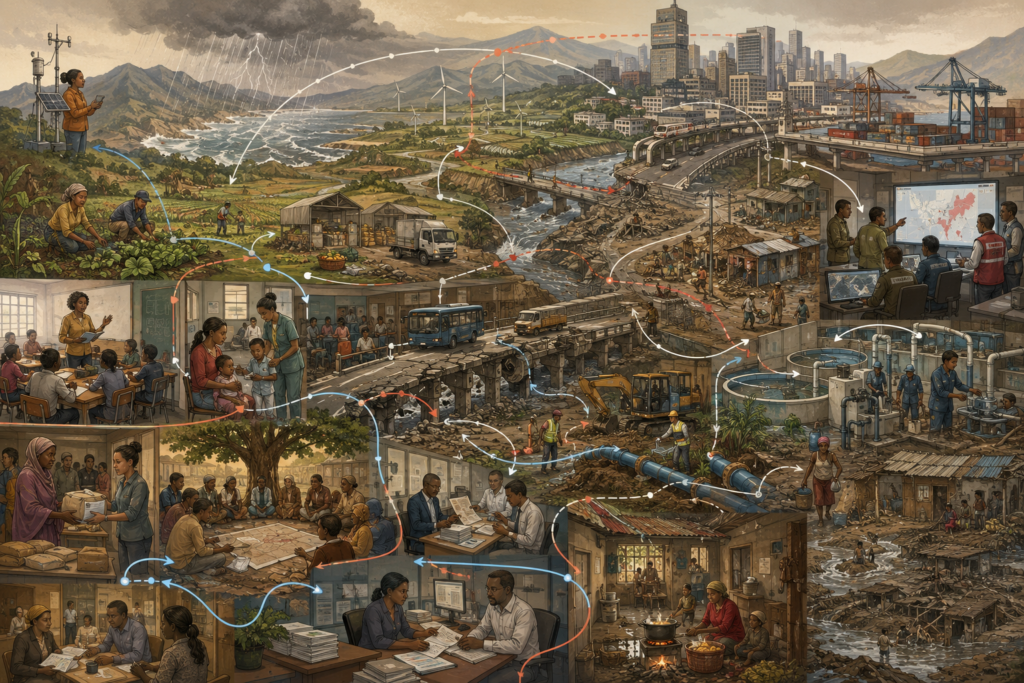
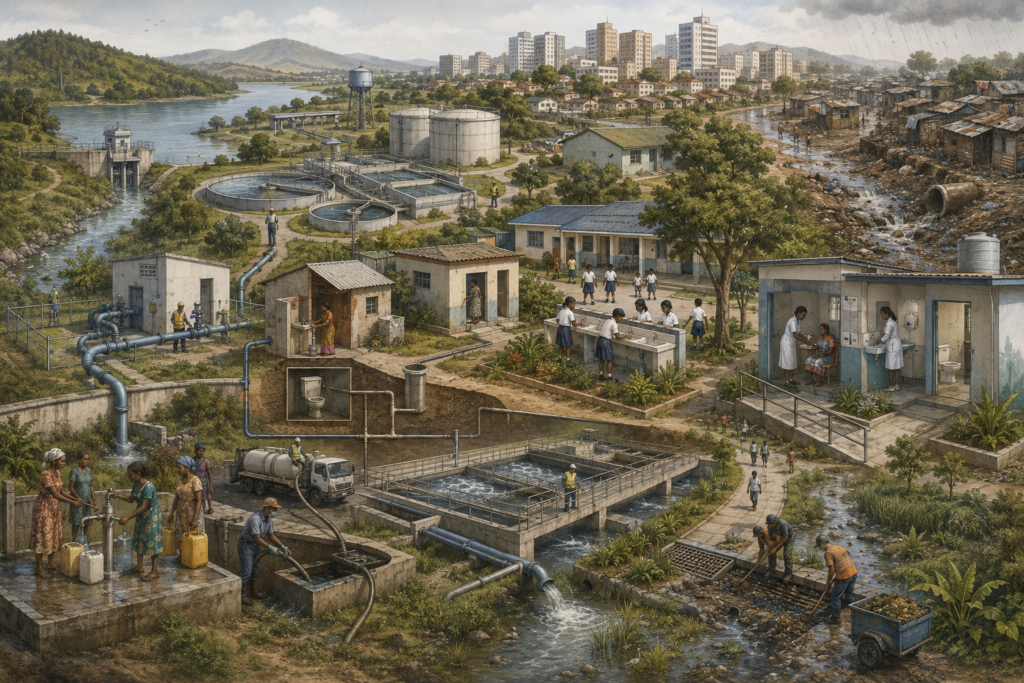
Water, sanitation, and public infrastructure systems are foundational to sustainable development because they determine whether health, dignity, education, care, and public life can function safely and reliably. This article argues that water and sanitation should be understood not as isolated services, but as governable public systems linking treatment, delivery, wastewater, drainage, finance, maintenance, and institutional capacity. It examines the historical evolution of water infrastructure, the shift from access metrics to systems thinking, and the ways inequality, gender, territorial exclusion, and climate stress shape infrastructural outcomes. It also shows why sustainable development depends on more than construction alone: durable progress requires maintenance, resilience, safe end-to-end management, and institutions capable of reconciling rights, affordability, operational realism, and long-horizon stewardship.