Personality Psychology

Personality Psychology examines the psychological traditions through which scholars have sought to understand enduring individuality, characteristic patterns of thought and feeling, and the structures of selfhood that make persons recognizably themselves across time. In the history of psychology, the field has linked trait theory, temperament, psychometrics, development, identity, character, and personality assessment in ways that illuminate how human beings differ, how personality is formed and expressed, and how stable dispositions shape relationships, moral life, health, work, and social behavior.

This category explores the major theories, methods, and debates of personality psychology, including trait structure, temperament, the Five-Factor Model, personality development, measurement and assessment, narrative identity, character, typologies such as MBTI, and the distinction between categorical and dimensional models of individuality. It considers how personality is studied scientifically, how persons change across the lifespan, how enduring traits interact with situations and institutions, and how the field contributes to wider reflection on selfhood, agency, moral evaluation, and the structure of the person.

Personality psychology plays an important role in psychological and interdisciplinary inquiry because it provides one of the most rigorous vocabularies for thinking about individuality as both pattern and personhood. By engaging the field seriously, this category deepens understanding of human difference, character formation, identity, and the enduring question of what gives coherence to a life across time.

Abstract institutional illustration of a human silhouette divided between calm organic landscape forms and darker fractured architectural shapes, representing maladaptive personality as a continuum between normal variation and clinical impairment.

Maladaptive Personality and the Border Between Normal and Clinical Structure

Maladaptive personality sits at one of the most important borders in personality psychology: the point where ordinary individual differences become so rigid, extreme, and impairing that they take on clinical significance. This article examines how current dimensional models reinterpret the relation between normal personality and personality disorder, showing why the border is better understood through severity, self and interpersonal dysfunction, rigidity, and maladaptive trait structure than through older categorical distinctions alone. It explores the DSM-5 Alternative Model for Personality Disorders, ICD-11, trait continua, and the role of personality functioning in defining pathology. The result is a more serious account of maladaptive personality as neither wholly separate from normal variation nor reducible to it, but as a clinically consequential form of personality structure.
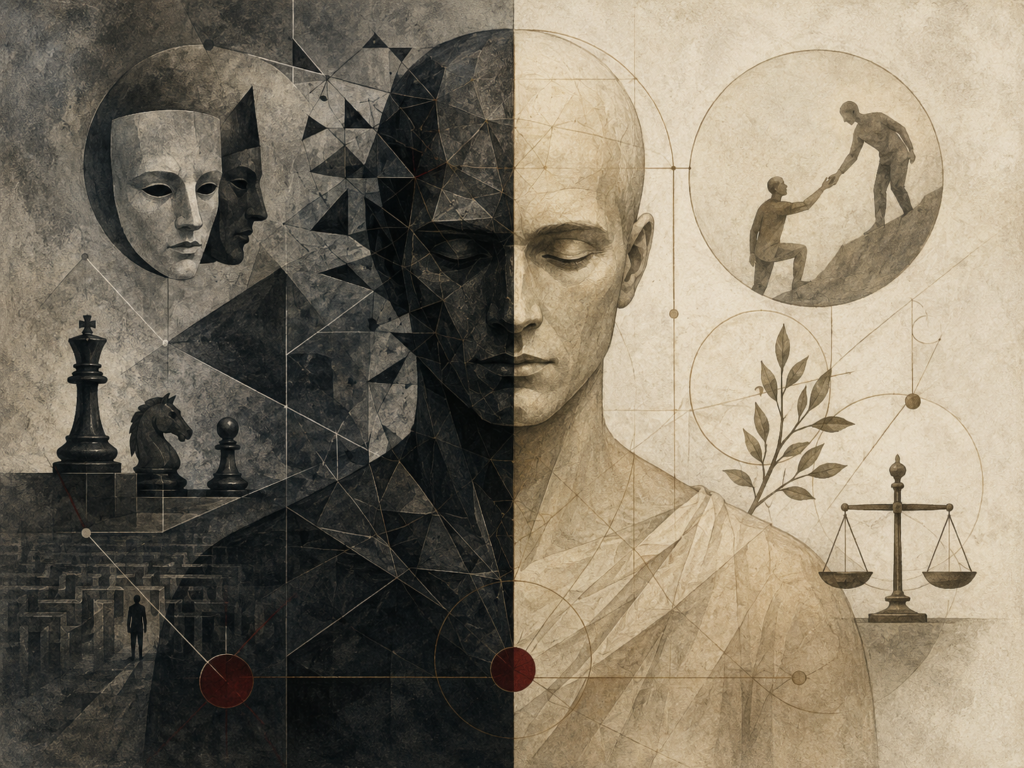
Institutional-style illustration of a central human figure divided between dark fractured geometric forms and lighter balanced symbolic forms, representing the tension between dark personality traits and virtue.

Dark Traits, Virtue, and the Moral Structure of Personality

Dark traits and virtue bring personality psychology to one of its sharpest moral questions: how should stable tendencies toward exploitation, callousness, grandiosity, cruelty, honesty, fairness, and humility be understood within one account of personality? This article examines the Dark Triad and Dark Tetrad alongside virtue research and contemporary work on moral character, arguing that the moral structure of personality cannot be reduced either to vice alone or to the absence of vice. It explores Honesty-Humility, moral evaluation, character strengths, and the social conditions under which dark tendencies are expressed or rewarded. The result is a more serious account of personality as ethically consequential structure—shaped by enduring dispositions, motives, judgment, and the moral worlds in which persons act.

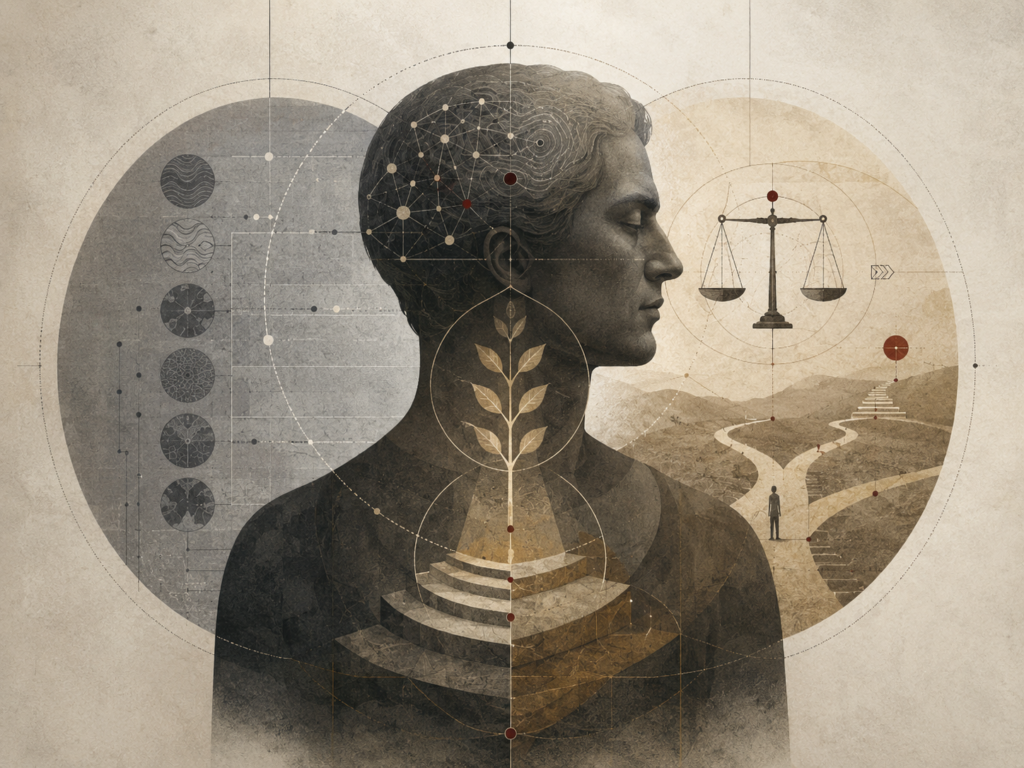
Restrained institutional illustration of a contemplative human profile surrounded by symbolic trait patterns, moral scales, branching paths, and ordered geometric forms representing character and moral evaluation.

Traits, Character, and Moral Evaluation

Traits and character are often treated as if they were the same, but they name different levels of analysis. Traits describe relatively enduring patterns in thought, feeling, and behavior. Character usually adds moral evaluation, asking what those patterns mean in relation to honesty, fairness, courage, integrity, vice, and responsibility. This article examines how descriptive personality science relates to the older normative language of character, showing why the distinction matters for moral psychology, virtue ethics, and contemporary personality research. It argues that personality traits can inform the study of character without exhausting it, because character involves not only stable tendencies but the ethical interpretation of those tendencies under standards of virtue, vice, trustworthiness, and human flourishing.
Image Alt Text: Conceptual editorial illustration representing the relationship between descriptive personality traits, character structure, and moral evaluation

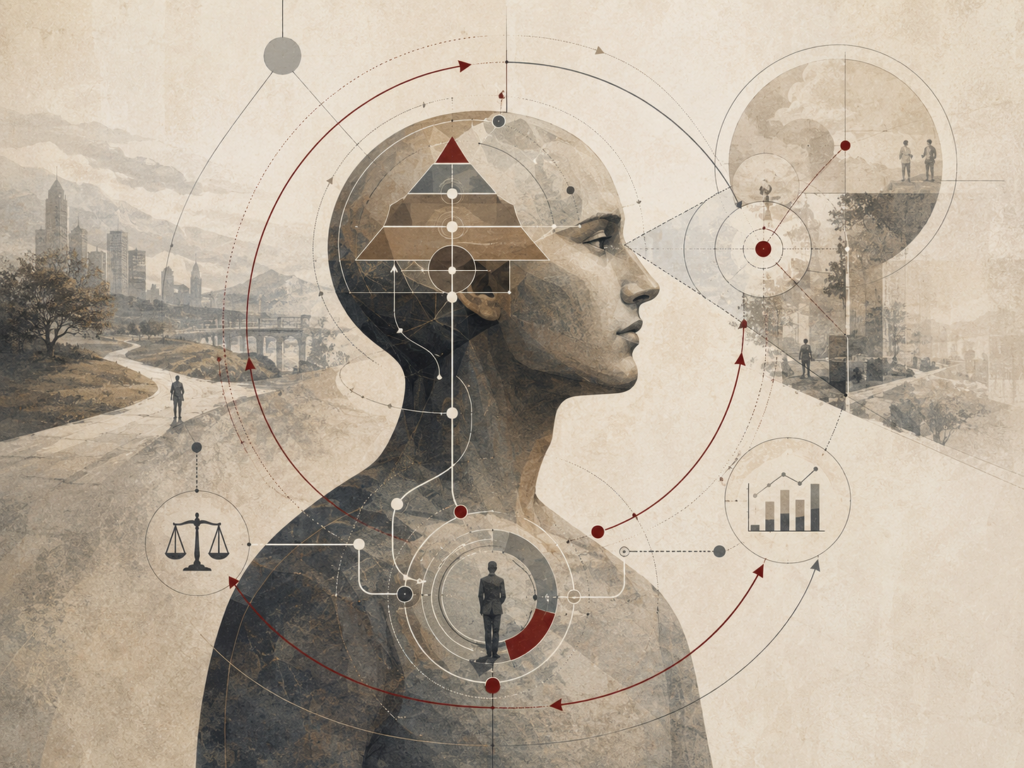
Restrained institutional illustration of a human profile surrounded by abstract feedback loops, goals, pathways, appraisal symbols, and self-regulation diagrams.

Social-Cognitive Approaches to Personality: Goals, Appraisals, and Self-Regulation

Social-cognitive approaches to personality explain individuality not only through broad traits, but through the organized processes that link persons to situations. This article examines how goals, appraisals, expectancies, self-efficacy, and self-regulation shape personality across changing contexts, drawing on Bandura’s social cognitive theory and Mischel and Shoda’s cognitive-affective personality system. It shows how personality can remain stable without requiring identical behavior everywhere, because enduring individuality may lie in characteristic patterns of interpretation and response rather than rigid cross-situational sameness. The result is a more serious account of personality as an agentic, process-based system—organized through meaning, evaluation, and self-guided action rather than reduced to either trait labels or situational pressure alone.

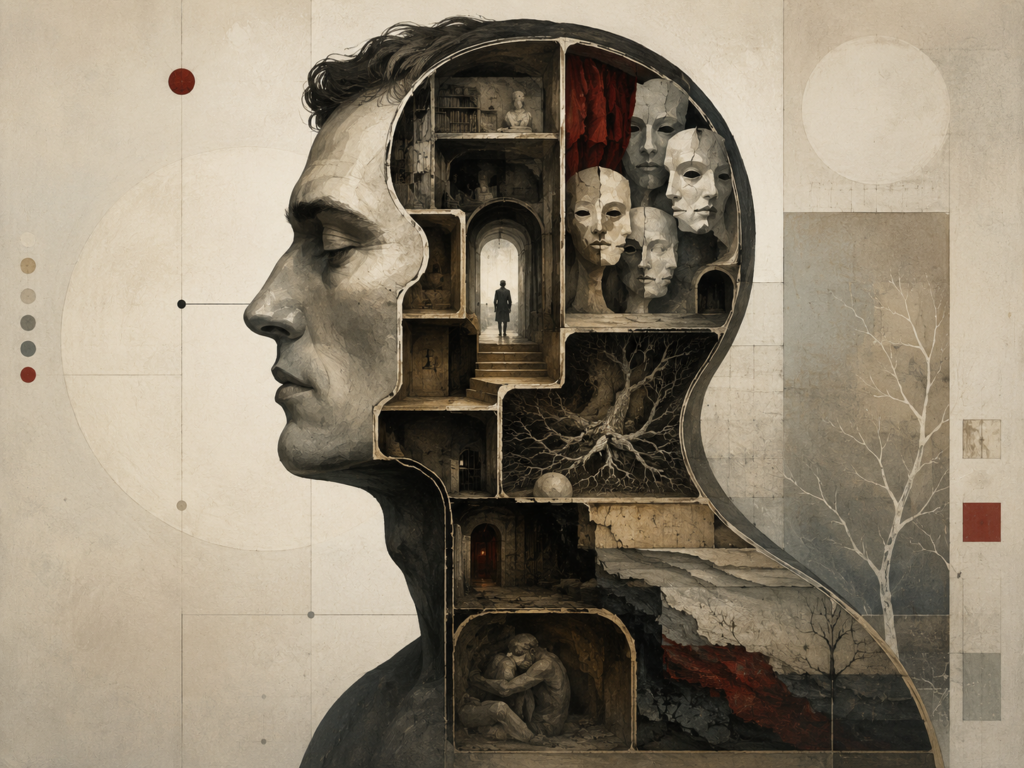
Restrained institutional illustration of a human profile with an exposed inner architecture of rooms, masks, roots, corridors, and shadowed chambers representing psychodynamic personality structure.

Psychodynamic Theories of Personality and the Hidden Structure of Character

Psychodynamic theories of personality begin from the idea that character is not fully visible on the surface of behavior. This article examines the major psychodynamic traditions that treat personality as layered, conflictual, defended, and historically shaped through early relationships and unconscious organization. It explains how Freud’s conflict model, defense mechanisms, object relations, attachment-inflected developments, and self psychology each contribute to a deeper understanding of character formation. It also considers the strengths and limits of psychodynamic theory in relation to modern personality science. The result is a more serious account of personality as something structured not only by traits and motives, but by hidden conflicts, internalized relationships, and the partially unconscious architecture through which a person lives and defends the self.

Restrained institutional illustration of a contemplative human profile surrounded by pathways, steps, branching growth, and measurement diagrams representing personality stability, intervention, and plasticity.

Can Personality Change? Stability, Intervention, and Plasticity

Can personality change is one of the most important questions in personality psychology because it tests whether traits are only durable descriptions or also possible targets of development and intervention. This article examines the strongest contemporary evidence on stability, plasticity, psychotherapy, role transitions, and volitional self-change, showing why the old choice between fixed character and unlimited reinvention no longer holds. It explains how personality can remain stable in relative position while still changing in average level, how repeated states and structured roles may accumulate into broader trait shifts, and why many attempted changes fail despite strong desire. The result is a more serious account of personality as stable enough to matter, yet plastic enough to develop under the right psychological and social conditions.

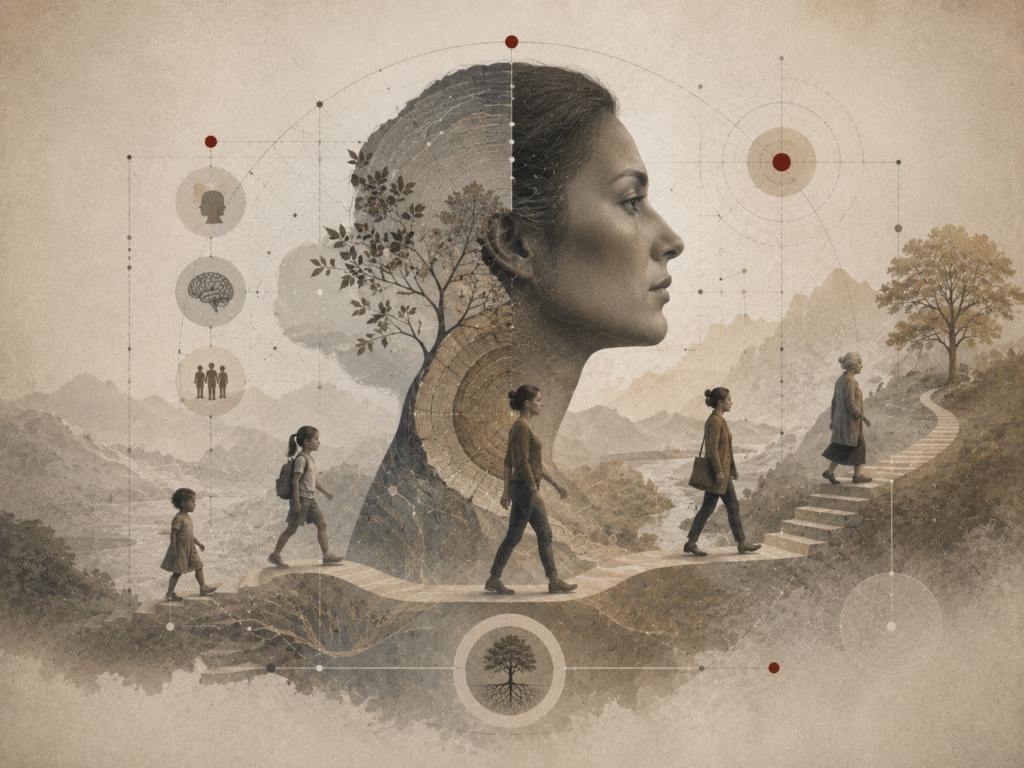
Restrained institutional illustration of a human profile surrounded by life-stage figures, pathways, trees, and developmental diagrams representing personality development across the lifespan.

Personality Development Across the Lifespan

Personality development across the lifespan is one of the central questions of personality psychology because it forces the field to confront two truths at once: people remain recognizably themselves, and people also change. This article examines how continuity and development coexist across childhood, adolescence, adulthood, and later life, distinguishing rank-order stability from mean-level change and showing why both matter. It explores maturation, role investment, identity development, social context, and the mechanisms through which personality evolves over time. The result is a more serious account of lifespan development as neither static character nor unlimited reinvention, but an ongoing pattern of continuity, adaptation, and change shaped by age, roles, institutions, and the unequal worlds through which persons move.

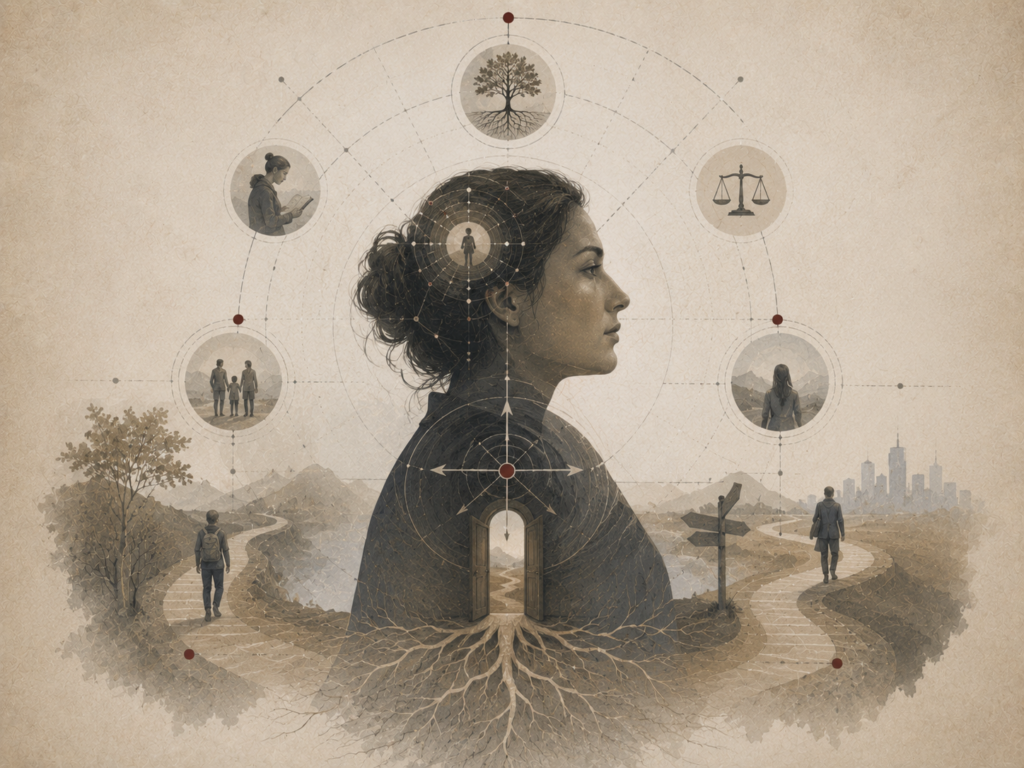
Restrained institutional illustration of a human profile surrounded by symbolic pathways, roots, doors, scales, and life-context diagrams representing selfhood, agency, and personal identity.

Selfhood, Agency, and Personal Identity in Personality Psychology

Selfhood, agency, and personal identity bring personality psychology to one of its deepest questions: what makes a life feel like one person’s life across time, change, conflict, and action? This article examines how personality is shaped not only by traits and motives, but by selfhood as lived ownership, agency as authorship of action, and personal identity as continuity across past, present, and future selves. It explores memory, commitment, identity disturbance, social recognition, and the developmental formation of personal identity while arguing that personality becomes more complete when it is understood as both patterned and owned. The result is a more serious view of the person as a self-organizing agent rather than merely a profile of enduring traits.

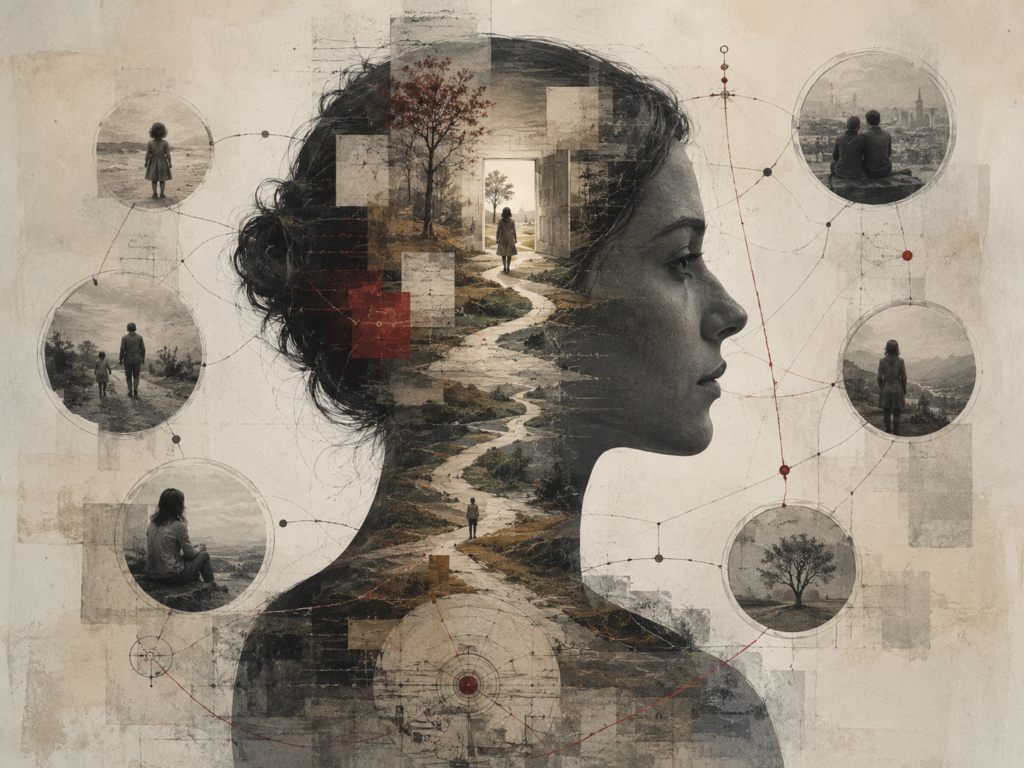
Restrained institutional illustration of a human profile filled with symbolic pathways, memory scenes, circular story fragments, and connected diagrams representing narrative identity and the storied self.

Narrative Identity and the Storied Self

Narrative identity describes the internalized and evolving life story through which a person interprets the past, understands the present, and imagines the future. This article examines narrative identity as a core layer of personality, showing how autobiographical memory, self-continuity, meaning-making, and culturally available story forms shape the storied self. It explains how people organize lives through themes such as redemption, contamination, agency, and coherence, and why life stories matter alongside traits and motives in a full account of personality. The result is a more serious view of selfhood as temporal and interpretive: not only a pattern of dispositions, but an ongoing narrative effort to make a life intelligible, morally meaningful, and continuous across change.

Scroll to Top