Personality Psychology

Personality Psychology examines the psychological traditions through which scholars have sought to understand enduring individuality, characteristic patterns of thought and feeling, and the structures of selfhood that make persons recognizably themselves across time. In the history of psychology, the field has linked trait theory, temperament, psychometrics, development, identity, character, and personality assessment in ways that illuminate how human beings differ, how personality is formed and expressed, and how stable dispositions shape relationships, moral life, health, work, and social behavior.

This category explores the major theories, methods, and debates of personality psychology, including trait structure, temperament, the Five-Factor Model, personality development, measurement and assessment, narrative identity, character, typologies such as MBTI, and the distinction between categorical and dimensional models of individuality. It considers how personality is studied scientifically, how persons change across the lifespan, how enduring traits interact with situations and institutions, and how the field contributes to wider reflection on selfhood, agency, moral evaluation, and the structure of the person.

Personality psychology plays an important role in psychological and interdisciplinary inquiry because it provides one of the most rigorous vocabularies for thinking about individuality as both pattern and personhood. By engaging the field seriously, this category deepens understanding of human difference, character formation, identity, and the enduring question of what gives coherence to a life across time.

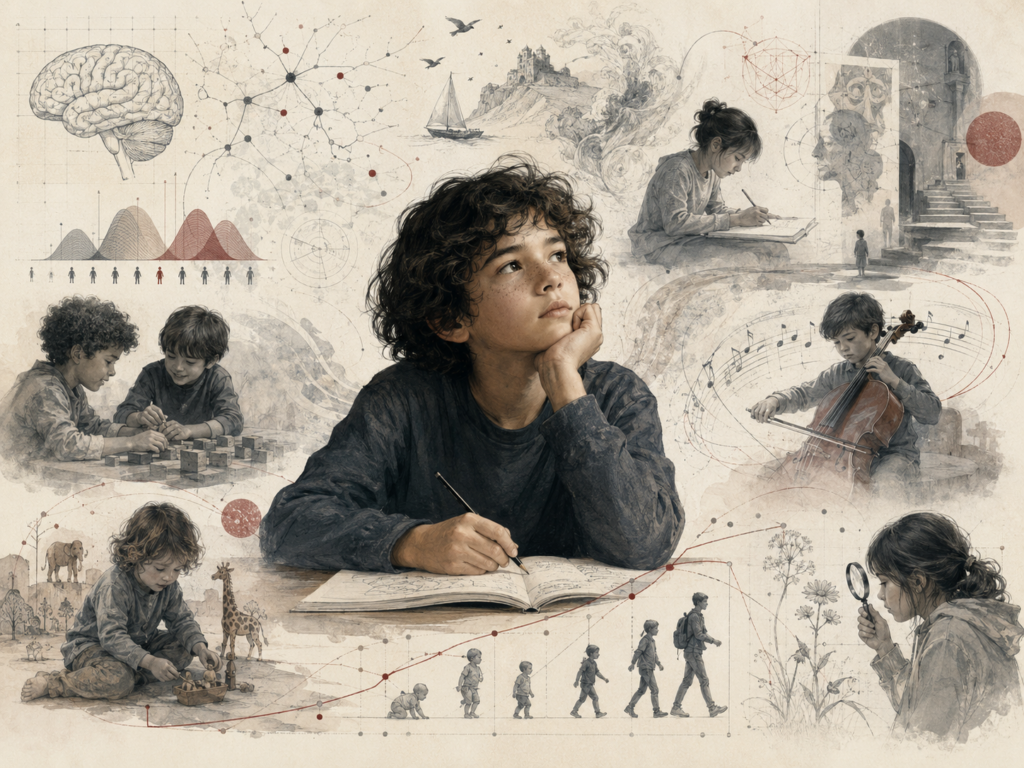
Research-grade illustration of personality, creativity, and imagination in development, showing a child drawing and reflecting amid visual motifs of brain networks, play, music, storytelling, exploration, and individual developmental pathways.

Personality, Creativity, and the Forms of Imagination

Personality, creativity, and the forms of imagination belong together because imagination is never only a cognitive event. It is lived through enduring differences in curiosity, openness, discipline, affective intensity, nonconformity, and the willingness to pursue ideas beyond convention. This article examines the strongest findings in the personality-and-creativity literature, especially the central role of openness to experience, while also showing why no single creative type can explain artistic, scientific, and everyday forms of originality. It distinguishes divergent thinking from creative achievement, explores the complicated role of conscientiousness and persistence, and argues that creativity emerges from different configurations of personality, motive, skill, and environment. The result is a more serious account of imagination as plural in form and structured by personality rather than reducible to one romantic myth.
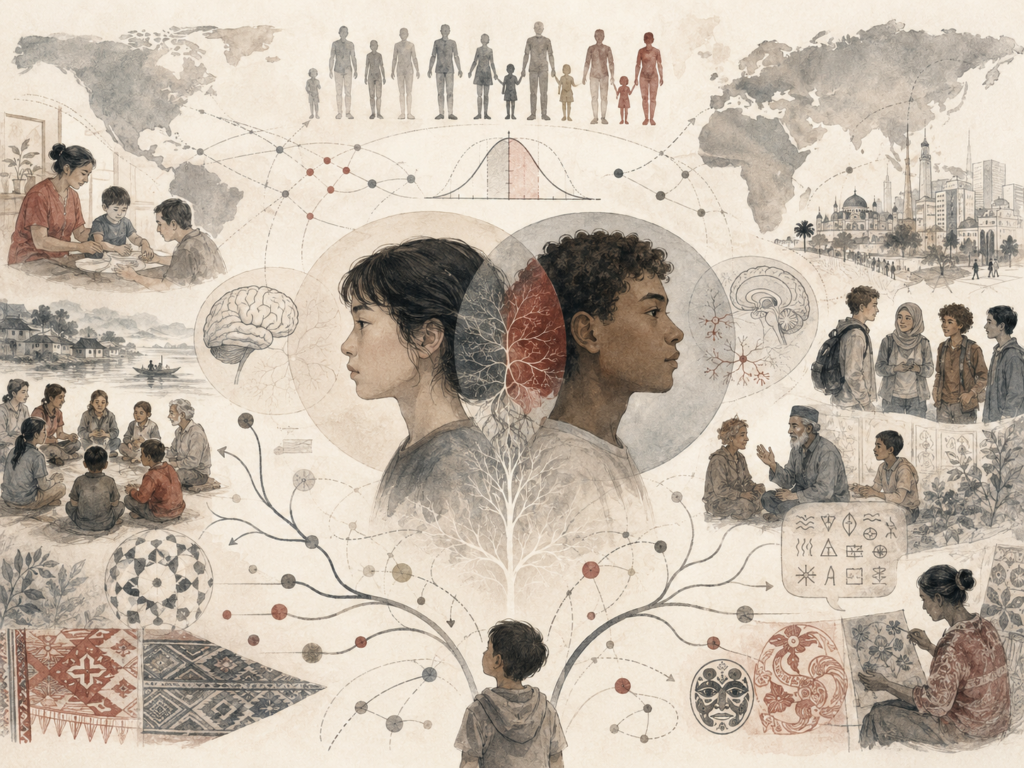

Research-grade illustrative image showing personality and culture through stylized human figures, cross-cultural community scenes, world maps, symbolic motifs, and branching developmental pathways that question universal models of personality.

Personality, Culture, and the Problem of Universality

Personality, culture, and the problem of universality belong together because personality psychology cannot claim to describe human individuality without asking how far its models actually travel across societies, languages, and histories. This article examines the strongest evidence for recurring broad trait structure alongside the major challenges to strong universality claims, including non-WEIRD samples, lexical variation, measurement problems, culture-specific personality concepts, and differences in how traits are behaviorally expressed. It argues that the best current position is neither naïve universalism nor total relativism, but a more careful view in which broad personality dimensions may recur while facets, meanings, and enactments remain culturally variable. The result is a more serious account of universality as a graded and contested claim rather than a settled fact.

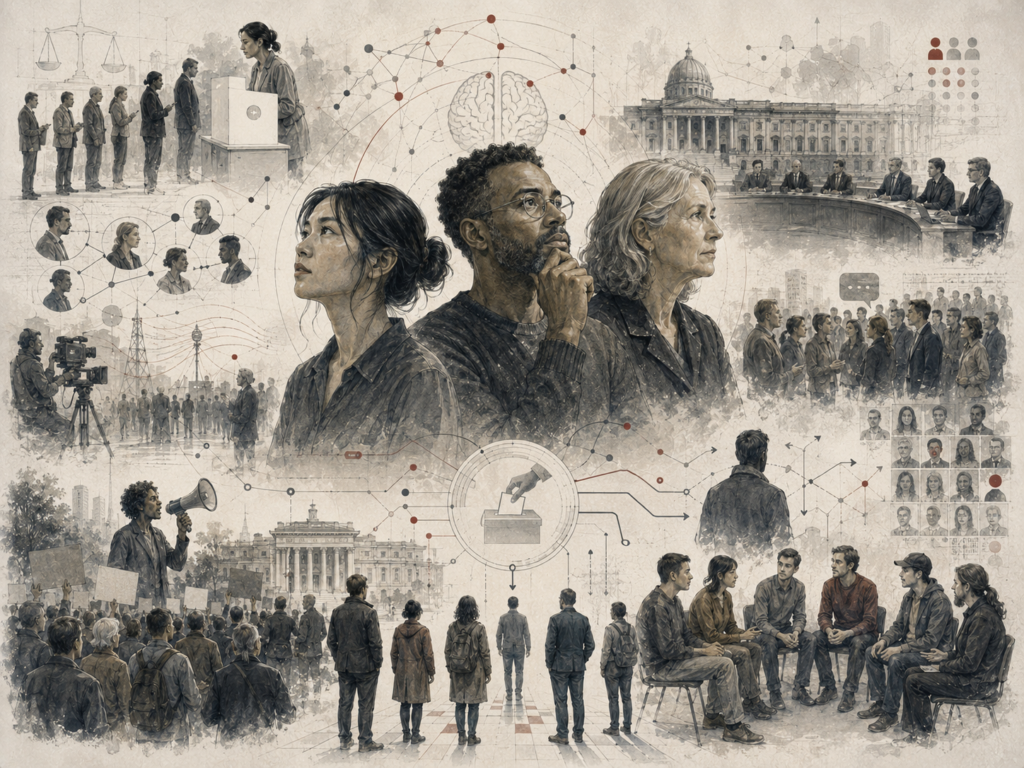
Research-grade illustration of personality and institutions, showing leaders, bureaucratic offices, public buildings, organizational hierarchies, civic crowds, committees, administrative systems, and social order.

Personality and Institutions: Leadership, Bureaucracy, and Social Order

Personality and institutions belong together because leadership, bureaucracy, and social order are never purely structural achievements. This article examines how enduring individual differences interact with roles, rules, authority, and institutional logics to shape leadership, bureaucratic judgment, and the maintenance or corrosion of social order. It explains why institutions do not erase personality but channel and magnify it, why bureaucracy depends on discretion as well as rules, and why leadership must be understood as personality in office rather than charisma alone. The result is a more serious account of institutions as human architectures: sustained not only by formal design, but by the kinds of persons they select, empower, constrain, and morally test.

Research-grade illustration of personality, work, and leadership, showing organizational decision-making, team collaboration, leadership roles, workplace relationships, social networks, institutional structures, and individual differences.

Personality, Work, and Leadership

Personality, work, and leadership belong together because institutions are shaped not only by rules and incentives, but by recurring human styles of effort, judgment, cooperation, conflict, and influence. This article examines how personality affects job performance, teamwork, leadership emergence, leadership effectiveness, and derailment risk, with particular attention to conscientiousness, emotional stability, extraversion, and dark traits in positions of authority. It argues that leadership is not merely a role title but a morally consequential pattern of social influence shaped by both personality and institutional context. The result is a more serious account of work and leadership as major arenas in which personality becomes visible, socially consequential, and ethically tested through performance, power, trust, and the organization of collective life.

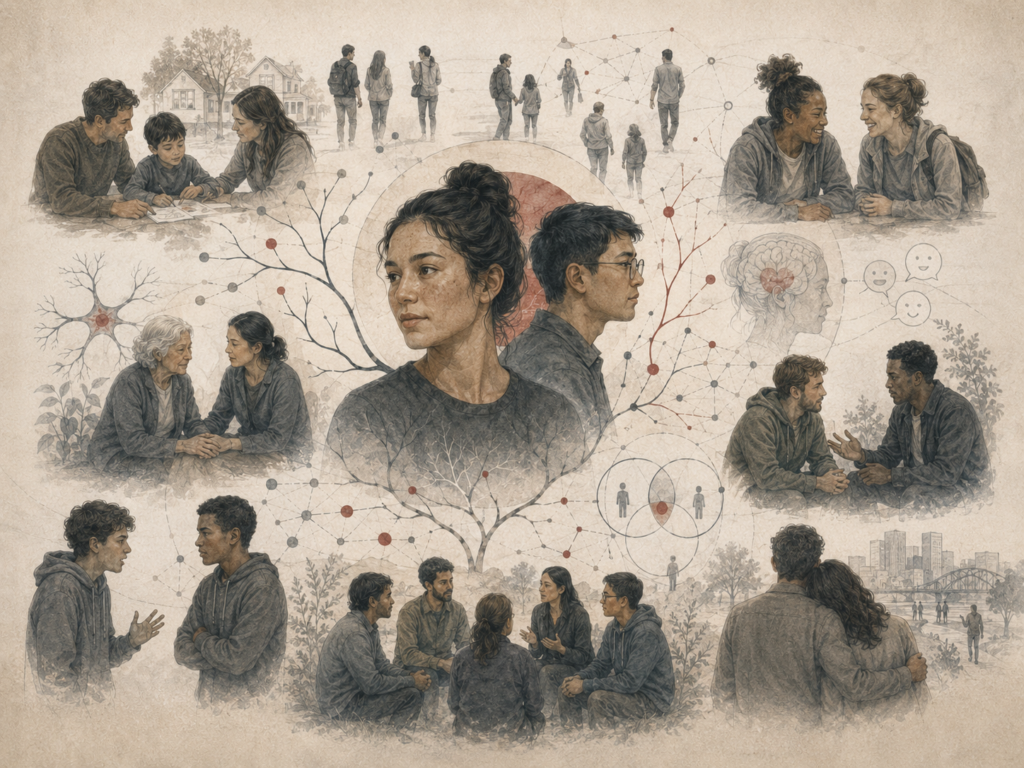
Research-grade illustration of personality and social functioning, showing interpersonal relationships, family interaction, friendship, conflict, support, communication, social networks, and emotional connection.

Personality, Relationships, and Social Functioning

Personality, relationships, and social functioning belong together because enduring individual differences shape not only what people think and feel, but how they love, cooperate, argue, repair, trust, and sustain life with others. This article examines how personality enters romantic relationships, friendship, reputation, reciprocity, and broader social functioning, showing that traits become socially meaningful when they are enacted in real relationships rather than abstractly described. It explores the Big Five, conflict and satisfaction, interpersonal goals, empathy, regulation, and person–environment fit while arguing that social life is one of the main places where personality becomes visible. The result is a more serious account of personality as relational structure—revealed not only in inner pattern, but in the shared worlds people create with and for others.

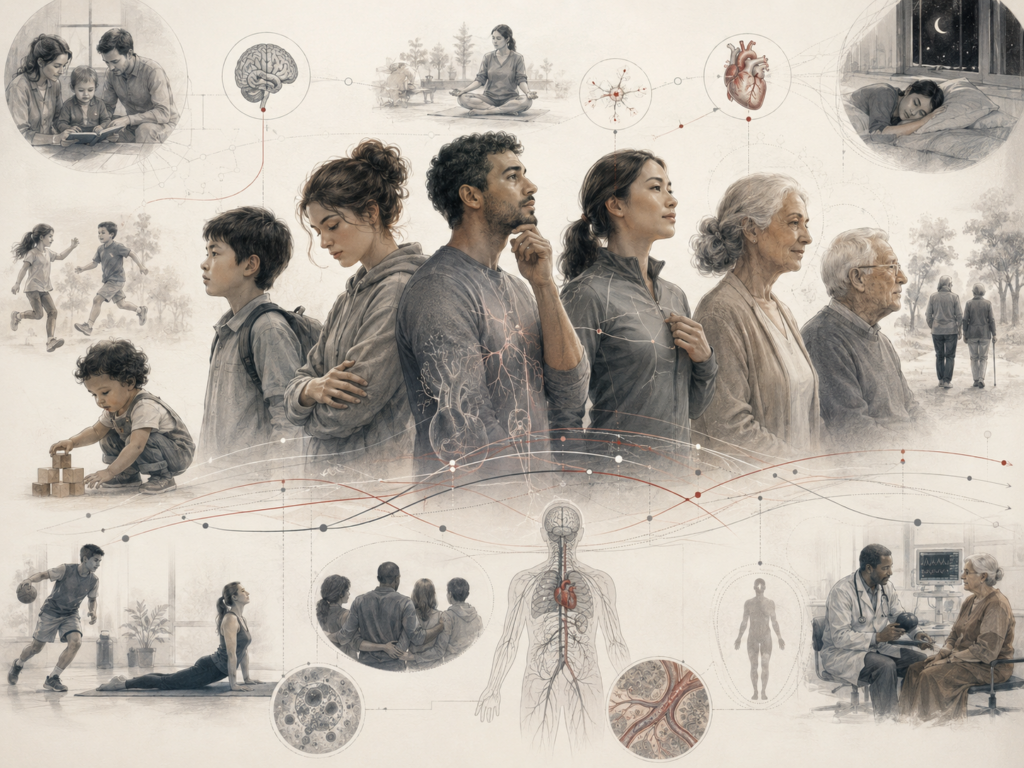
Research-grade illustration of personality and physical health across the lifespan, showing children, adults, and older adults alongside motifs of brain-body connection, cardiovascular health, sleep, movement, stress, care, and social support.

Personality and Physical Health Across the Lifespan

Personality and physical health are linked across the lifespan because enduring traits shape not only how people think and feel, but how they sleep, cope, adhere to treatment, respond to stress, sustain health habits, and age over time. This article examines how personality becomes embodied through behavior, physiology, stress reactivity, and long-term health trajectories, with particular attention to conscientiousness, neuroticism, mortality risk, and healthy ageing. It shows why personality matters for physical health without reducing health to disposition alone, and why the strongest explanations are developmental, behavioral, and contextual rather than simplistic. The result is a more serious account of physical health as something partly patterned by personality, yet always lived within unequal environments, biological constraints, and changing conditions across the life course.

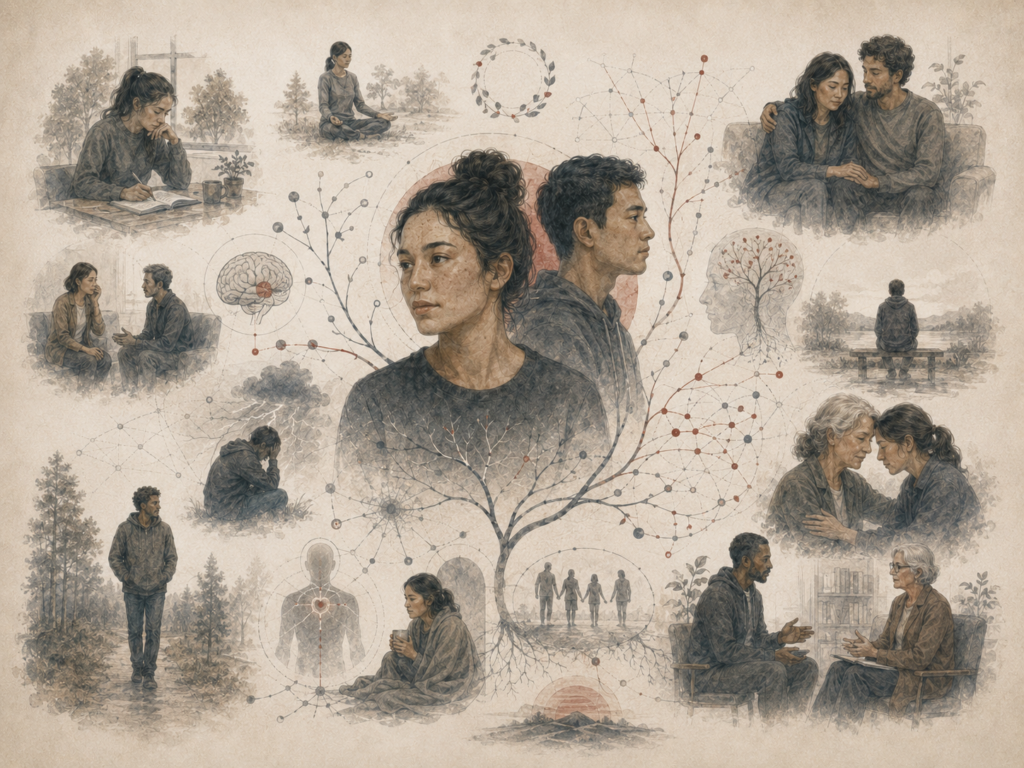
Research-grade illustration of personality, wellbeing, and mental health, showing reflective figures, emotional support, therapy, solitude, stress, resilience, brain-body regulation, and social connection.

Personality, Wellbeing, and Mental Health

Personality, wellbeing, and mental health belong together because enduring individual differences shape not only how people behave, but how they cope, suffer, recover, and flourish. This article examines how personality traits influence distress, self-regulation, relationships, health behavior, and the broader architecture of mental wellbeing. It distinguishes wellbeing from the mere absence of symptoms, and mental health from disorder reduction alone, showing why flourishing, meaning, and functioning must be kept in view alongside anxiety and depression. Drawing on major personality and wellbeing research, it argues that traits such as neuroticism, extraversion, and conscientiousness matter not as destiny but as recurring patterns through which vulnerability and resilience are organized. The result is a more serious account of mental health as lived through personality rather than apart from it.

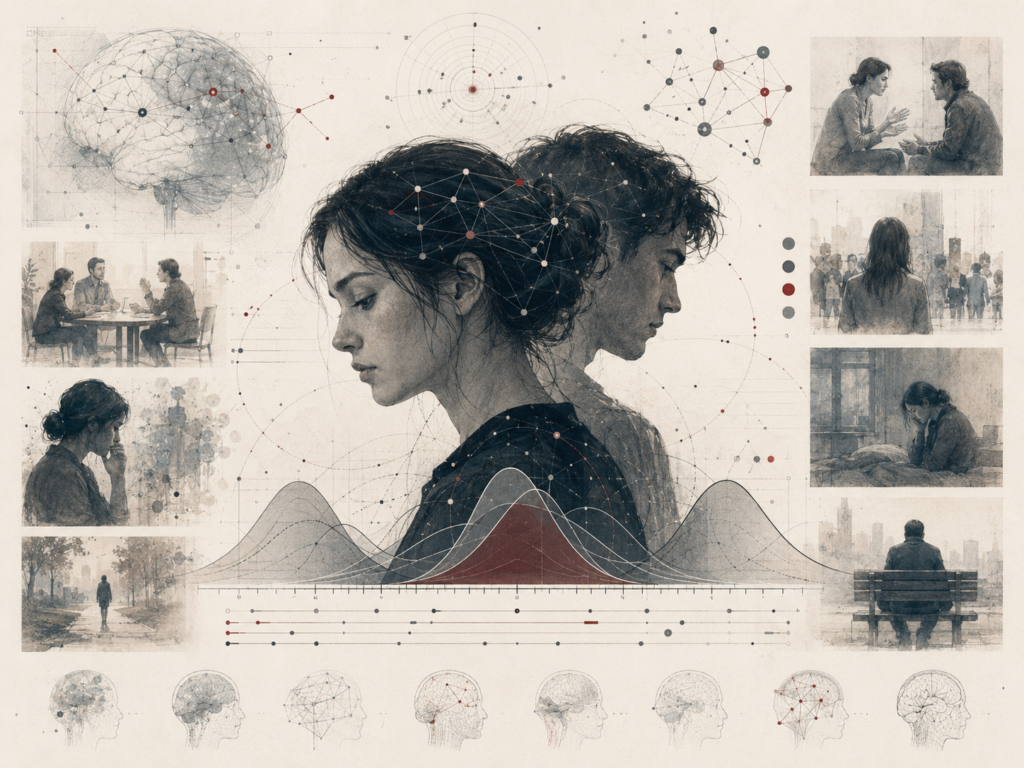
Research-grade illustration of personality disorders and dimensional diagnosis, showing reflective human figures, brain-network diagrams, clinical conversations, emotional distress, social functioning, and dimensional trait distributions.

Personality Disorders and Dimensional Diagnosis

Personality disorders and dimensional diagnosis sit at the center of one of the most important transformations in contemporary personality science. This article examines how personality pathology is increasingly understood not through rigid diagnostic categories alone, but through severity, maladaptive trait structure, and impairments in self and interpersonal functioning. It explains the limitations of older categorical systems, the logic of the DSM-5 Alternative Model for Personality Disorders and ICD-11, and the growing view that pathology is better described as graded and structured rather than boxed into discrete types. The result is a more serious account of personality disorder as disturbed personality organization—continuous with broader personality science, yet clinically distinct where severity, rigidity, and dysfunction converge.

Scroll to Top