Semantic Memory and Knowledge Structures
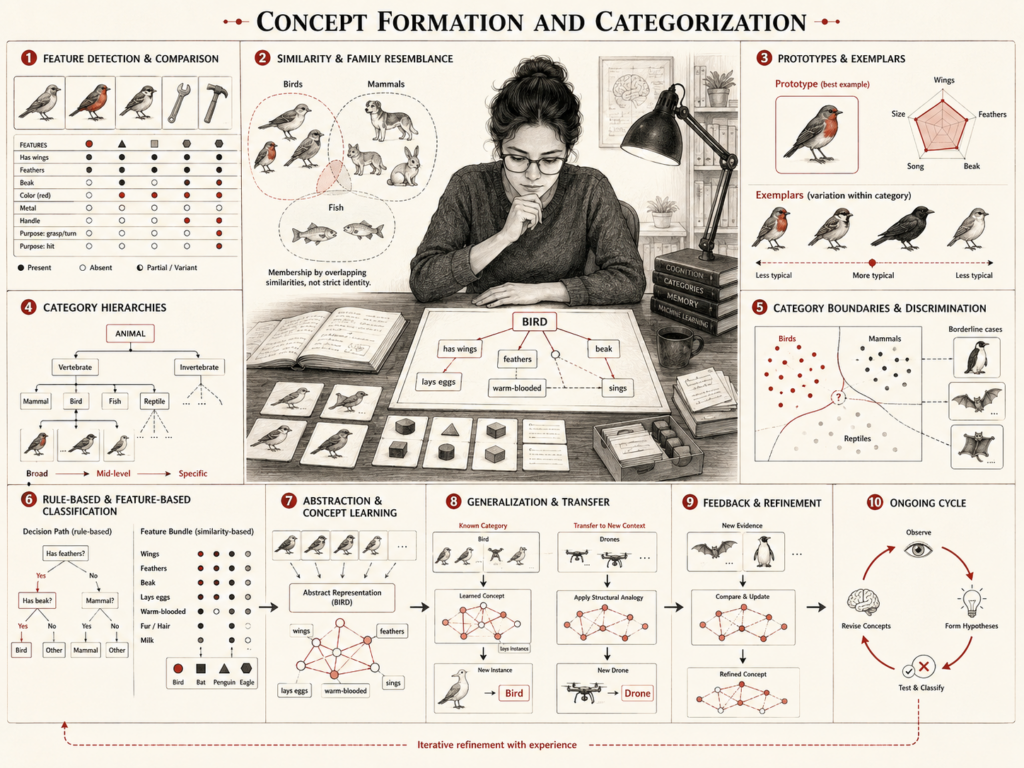
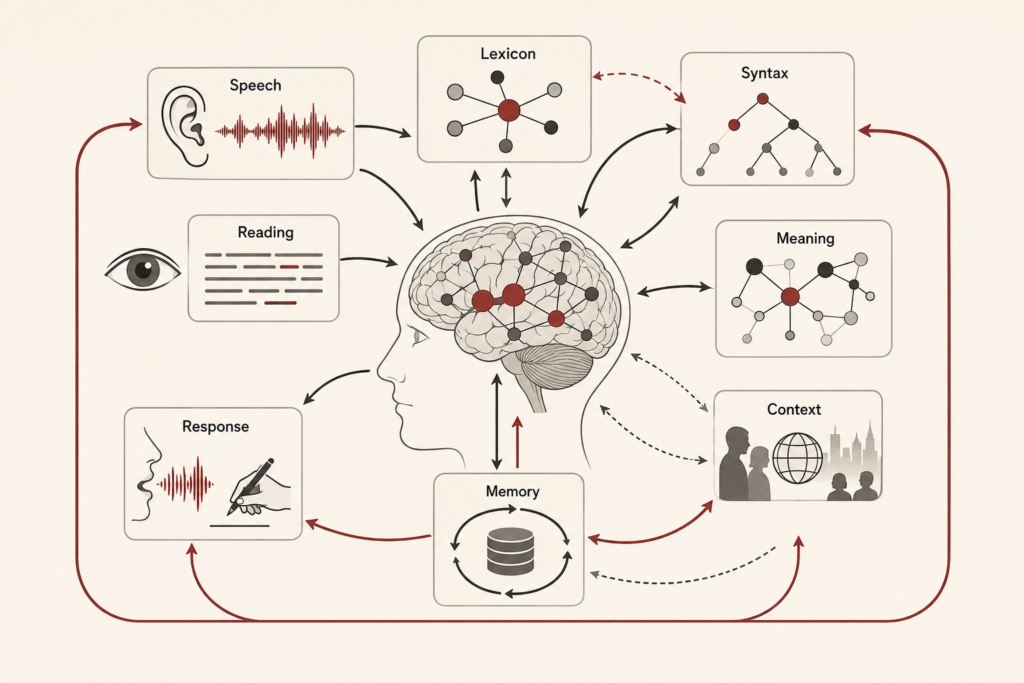
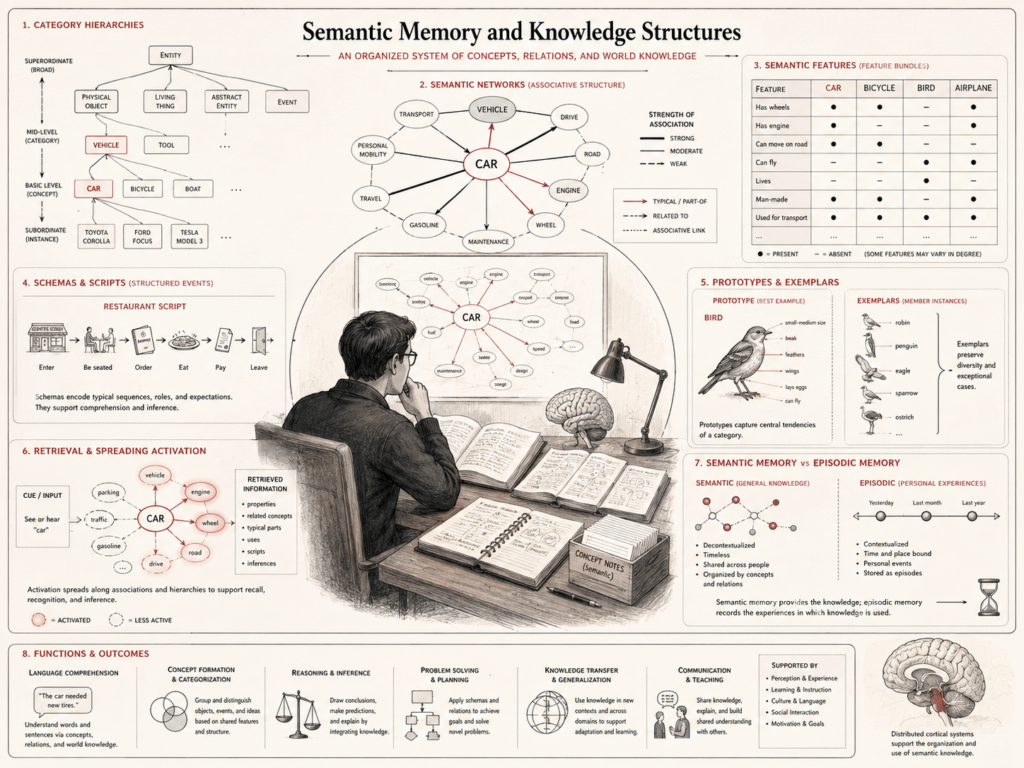
Semantic memory is the long-term memory system through which the mind stores general knowledge about the world, including concepts, facts, meanings, and the relations among ideas. Unlike episodic memory, which is tied to specific personal experiences situated in time and place, semantic memory makes it possible to know things independently of when or where they were learned. It allows individuals to understand that Paris is the capital of France, that a dog is a kind of animal, or that justice, democracy, and gravity refer to larger conceptual structures rather than isolated observations. In cognitive psychology, semantic memory is therefore not treated as a passive storehouse of facts but as an organized and dynamic knowledge system that supports language comprehension, categorization, reasoning, and flexible understanding across contexts. It is one of the major systems through which experience becomes stable knowledge, enabling the mind to retrieve conceptual meaning, recognize relationships among ideas, and reason beyond what is immediately present. For that reason, semantic memory occupies a foundational place within cognition itself, linking language, concept formation, memory, and abstract thought into a broader architecture of meaning.