Analytical Psychology, Symbolism & the Depth Mind

Analytical Psychology, Symbolism & the Depth Mind examines the psychological traditions through which scholars have sought to understand the unconscious, symbolic life, inner conflict, and the deeper structures of selfhood that shape the human person beyond conscious awareness alone. In the history of psychology, the field has linked complexes, dreams, archetypes, typology, persona, shadow, individuation, and symbolic interpretation in ways that illuminate how human beings are formed not only through traits and development, but through image, projection, inward contradiction, and the difficult process of becoming more whole.

This category explores the major theories, concepts, and debates of analytical psychology, including the personal and collective unconscious, archetypes, complexes, dreams, psychological types, individuation, post-Jungian developments, and the relation of depth psychology to myth, religion, literature, and symbolic imagination. It considers how analytical psychology interprets the psyche as a domain of meaning-bearing images and unfinished tensions, how inner life unfolds through symbolic process and transformation, and how the tradition contributes to wider reflection on selfhood, spirituality, narrative, and the depth structure of the mind.

Analytical psychology, symbolism, and the depth mind play an important role in psychological and cultural inquiry because they preserve a serious account of inward life that cannot be reduced to surface behavior, information processing, or explicit belief alone. By engaging this tradition critically and rigorously, this category deepens understanding of the unconscious, symbolic imagination, dreams, projection, inner development, and the enduring problem of how the psyche becomes intelligible to itself.

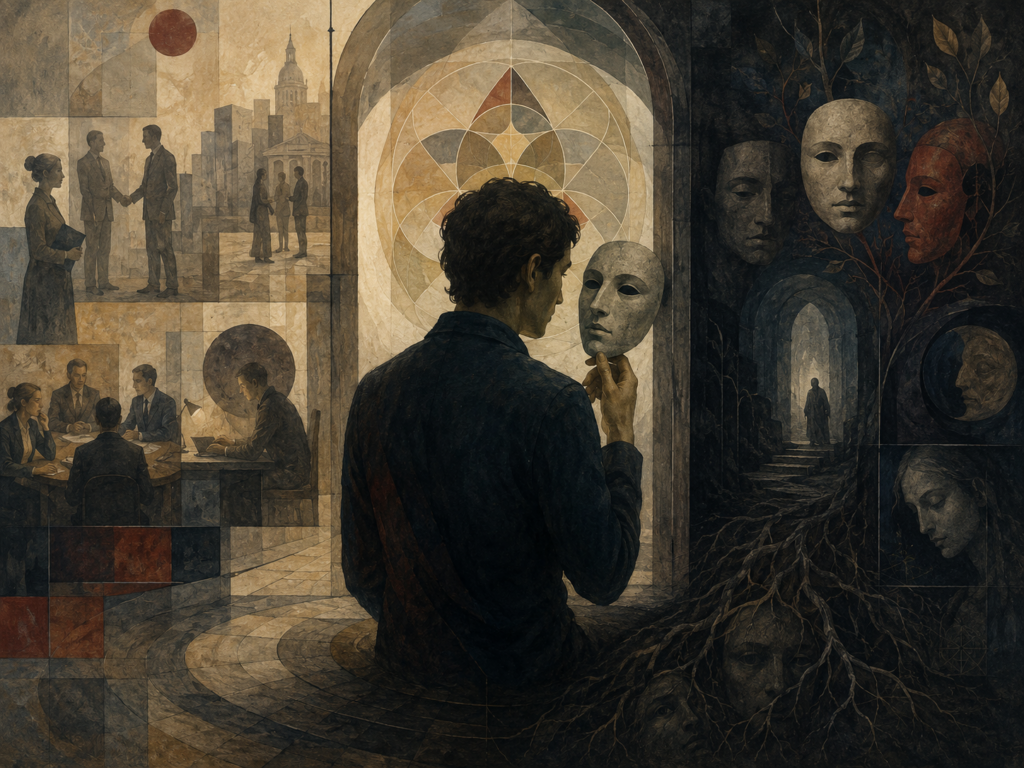
A solitary figure stands between light and shadow, surrounded by mirrors, masks, fractured panels, roots, thresholds, and hidden faces.

Persona and Social Adaptation in Analytical Psychology

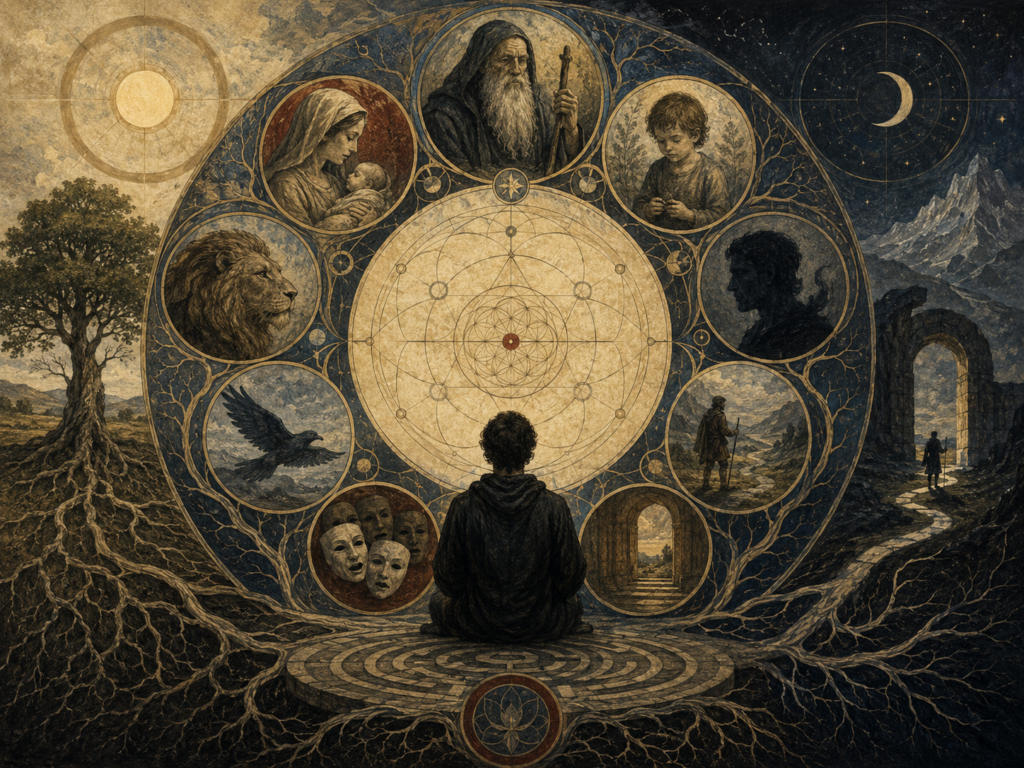
In analytical psychology, the persona is the social face of the psyche: the role-mediated self through which individuals adapt to institutions, relationships, and public life. Far from being mere hypocrisy, persona is a necessary mode of social functioning. Yet Jung warned that problems begin when the social mask hardens into identity and the person becomes overidentified with performance, competence, virtue, or reputation. This article examines persona as a structure of adaptation, recognition, and role formation, while also exploring its dangers: rigidity, alienation, shadow formation, inner emptiness, and moral distortion. It treats persona as one of Jung’s most socially relevant concepts, especially in a world shaped by professional branding, continuous visibility, and digitally intensified self-presentation.

A seated figure faces a circular symbolic structure filled with archetypal images, including a mother, child, wise elder, lion, bird, masks, shadow, thresholds, roots, sun, and moon.

What Is an Archetype? Pattern, Image, and Psychic Structure

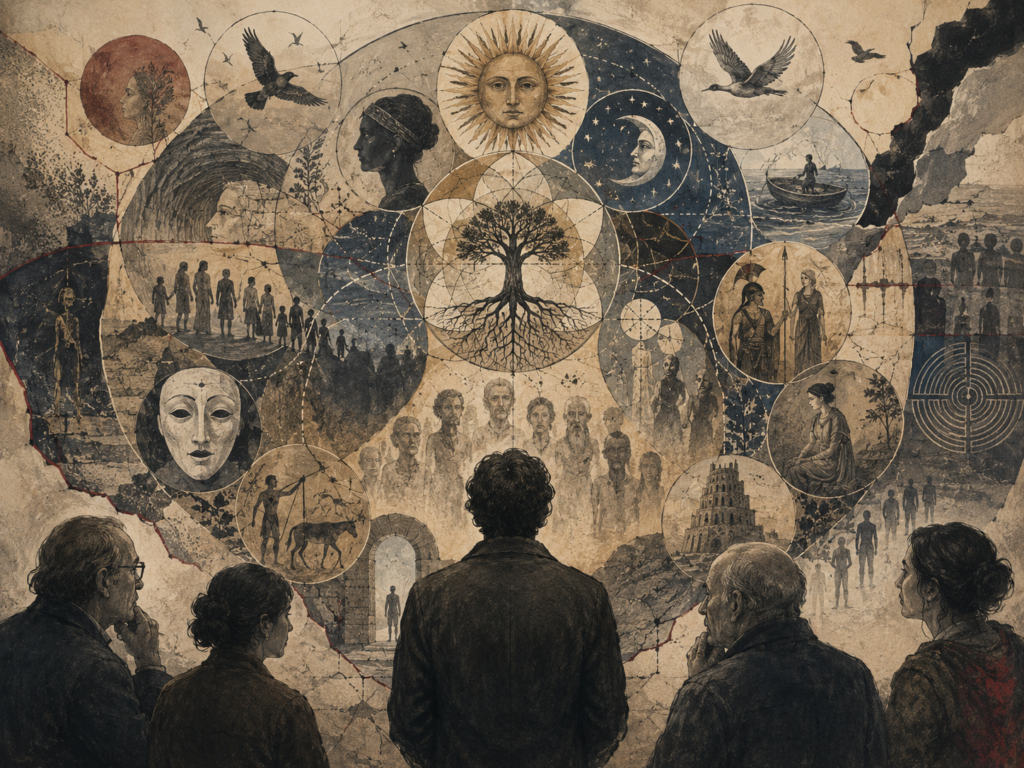
An archetype, in analytical psychology, is not a stock character or a ready-made symbolic label. It is a recurrent structuring pattern of psychic life that becomes visible through images, narratives, dreams, myths, and symbolic forms. This article explains how Jung understood archetypes as latent organizing tendencies rather than fixed inherited pictures, and why the distinction between archetype, symbol, and image matters so much. It also examines the major archetypal patterns, their role in myth and dream life, the interpretive dangers of archetypal inflation, and the continuing controversy around the concept. The result is a more precise account of archetypes as hypotheses about recurring psychic structure rather than vague slogans about universal meaning.

A group of observers studies a vast symbolic wall filled with ancestral figures, masks, birds, sun and moon imagery, roots, cultural motifs, and circular archetypal scenes.

The Collective Unconscious: Meaning, Scope, and Controversy

The collective unconscious is one of Carl Jung’s most ambitious and controversial ideas, proposing that the psyche includes a transpersonal layer deeper than individual memory and private repression. Rather than treating symbolic recurrence in dreams, myth, religion, and imagination as accidental, Jung argued that human beings inherit structural potentials for image, relation, conflict, and narrative form. This article explains what Jung meant by the collective unconscious, how it differs from the personal unconscious, why it became so influential, and why it remains difficult to defend without careful qualification. It treats the concept as a serious psychological hypothesis rather than a mystical slogan, showing both its interpretive power and its major vulnerabilities in relation to evidence, history, culture, and contemporary thought.

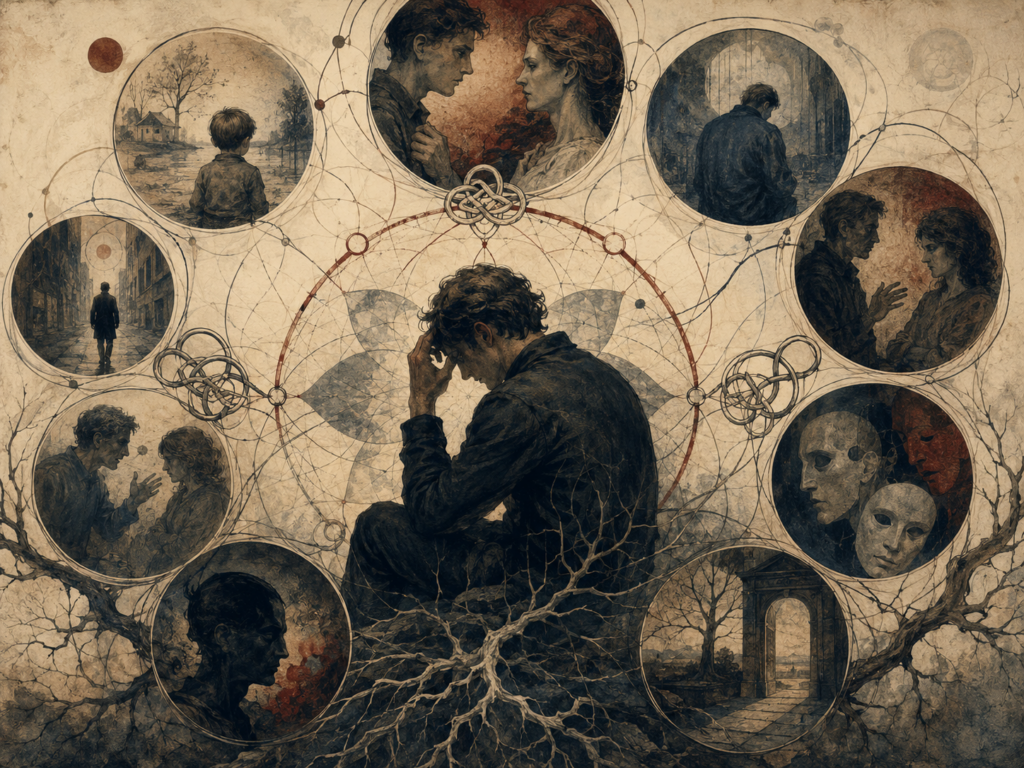
A distressed figure sits at the center of an emotional network, surrounded by repeated relational scenes, childhood memory, masks, tangled knots, roots, and circular patterns.

Complexes, Affect, and Repetition in Analytical Psychology

In analytical psychology, complexes are not inert contents hidden below awareness but affectively charged psychic organizations that recur across time, relationship, and interpretation. Their force becomes visible through repetition: the same humiliation, the same conflict, the same fascination, the same collapse under familiar emotional conditions. This article examines how affect gives complexes their activating power, why repetition is one of their clearest signatures, and how Jungian thought helps explain recurring relational dramas, projections, and self-defeating loops. It also places complex theory in conversation with trauma studies, attachment theory, and contemporary psychology, showing that repetition is not merely failure or habit, but often the return of unresolved emotional structures still active within the personal unconscious.

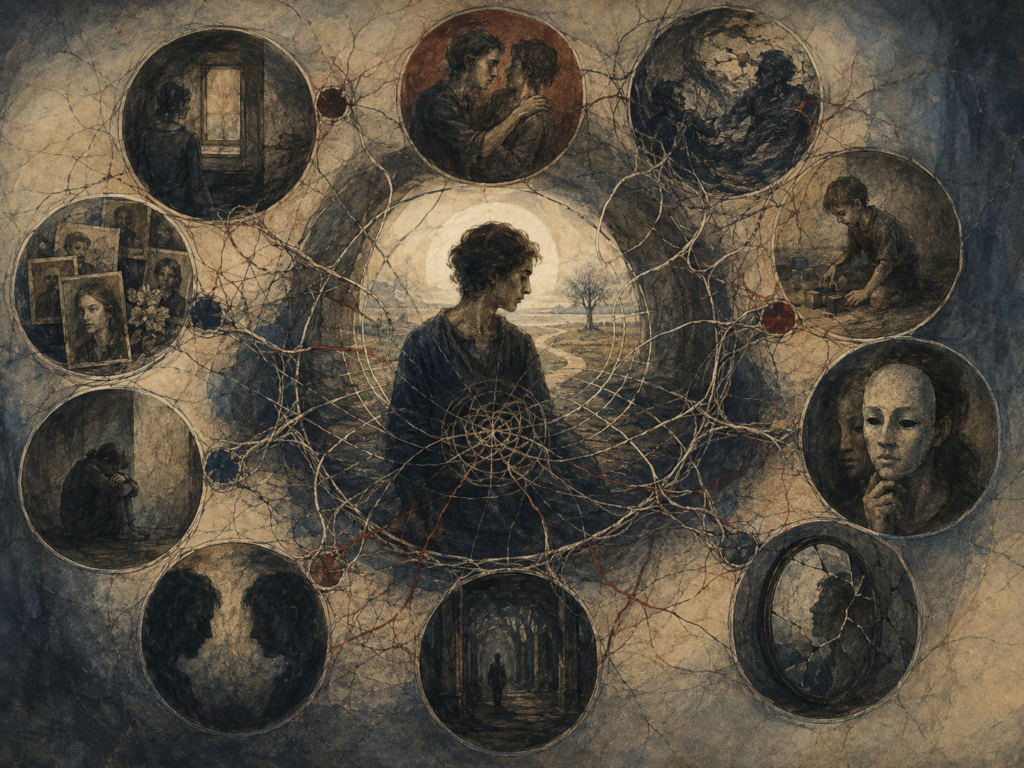
A central figure sits within a web of memory scenes, emotional knots, masks, shadowed figures, childhood images, mirrors, and circular symbolic patterns.

The Personal Unconscious and the Theory of Complexes

The personal unconscious and the theory of complexes belong to the most clinically grounded parts of analytical psychology. In Jung’s account, the psyche is shaped not only by conscious intention, but also by emotionally charged organizations of memory, affect, expectation, and meaning that remain active below the threshold of awareness. These complexes influence perception, reaction, and relationship, often giving present situations the emotional force of older unresolved conflicts. This article explains how Jung developed the concept through early experimental research, how complexes function as semi-autonomous psychic formations, how they relate to projection and distorted perception, and why they remain relevant to contemporary psychology. It presents the personal unconscious not as a mystical realm, but as the unfinished psychological history of the person acting within the present.

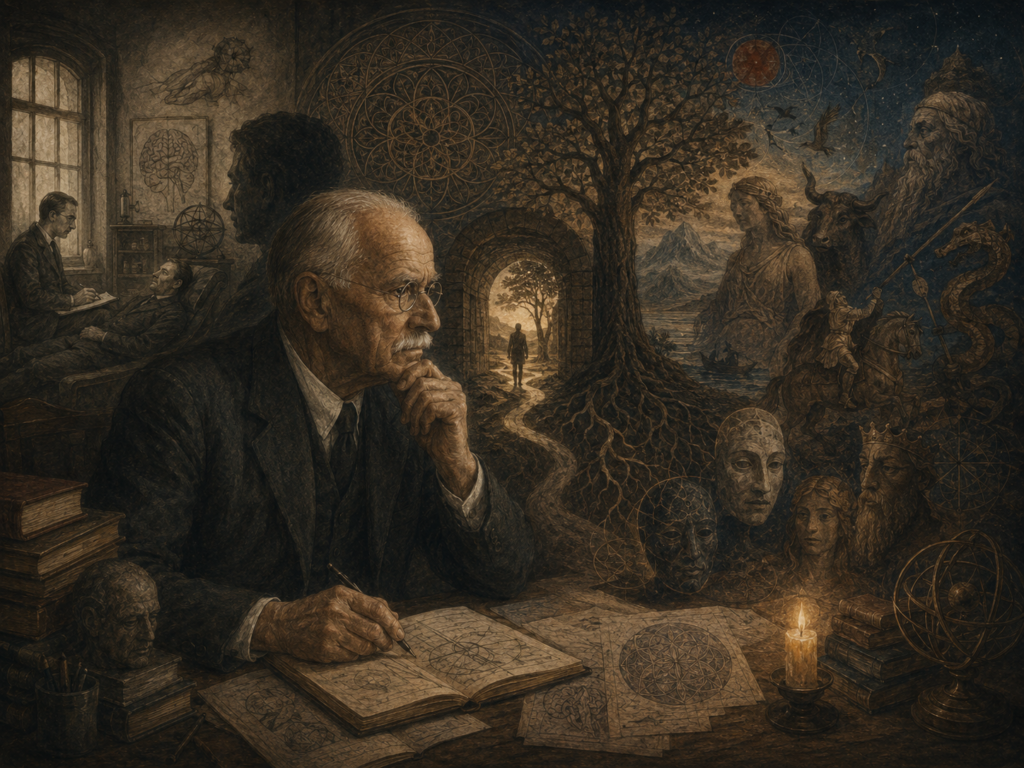
Carl Jung sits at a desk with books, symbolic diagrams, mythic figures, masks, a rooted tree, clinical scenes, and mandala geometry surrounding him.

Carl Jung and the Formation of Analytical Psychology

Carl Jung and the formation of analytical psychology cannot be understood as a simple break from Freud or as the isolated invention of archetypal theory. Jung’s thought emerged through psychiatry, word-association research, dream interpretation, symbolic inquiry, and a sustained effort to explain dimensions of psychic life that exceeded conscious control and reductive theory alike. This article traces the historical and conceptual formation of analytical psychology through Jung’s early clinical work, his collaboration and rupture with Freud, his confrontation with the unconscious, and the gradual emergence of concepts such as complexes, archetypes, the collective unconscious, and individuation. It situates Jung as a major, controversial figure in the intellectual history of mind, symbolism, and the depth interpretation of selfhood.

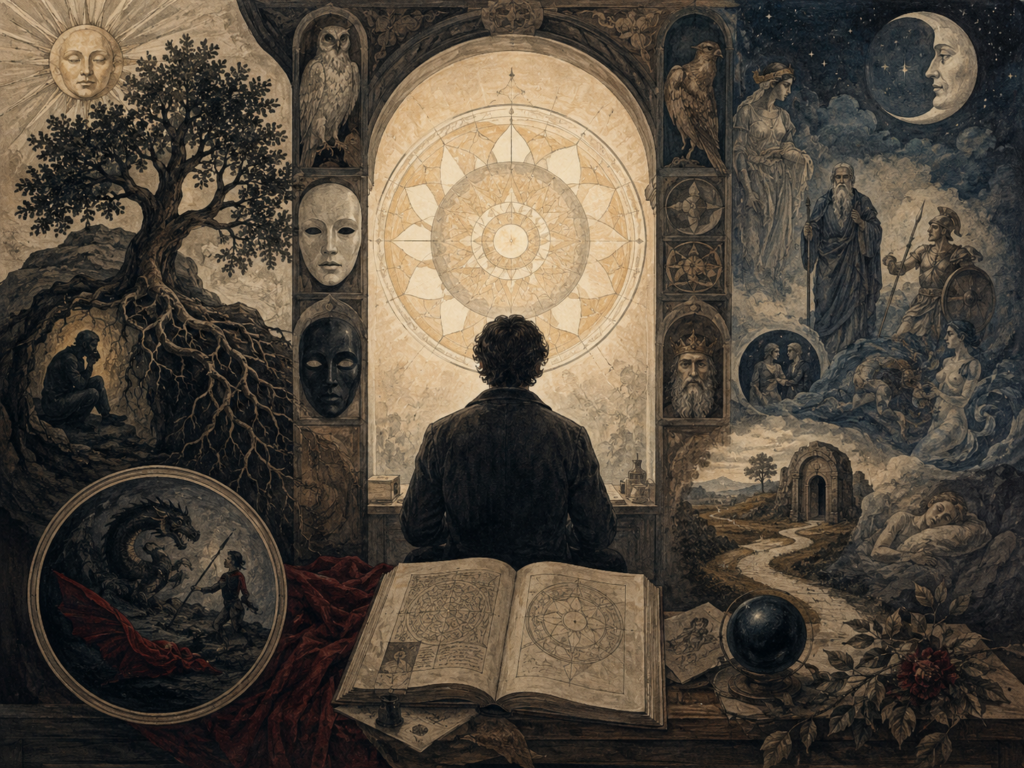
A contemplative figure studies an open symbolic manuscript before a mandala-like center, surrounded by masks, roots, mythic figures, dream imagery, shadow, and archetypal scenes.

What Is Analytical Psychology?

Analytical psychology is the branch of depth psychology associated with C.G. Jung and with the study of symbolism, dreams, myth, psychic conflict, and the development of the self. Rather than treating the mind as identical with conscious thought, it argues that much of psychic life unfolds beyond awareness in the form of complexes, symbolic images, and deeper organizing structures. This article introduces the core architecture of analytical psychology, including the ego, personal unconscious, collective unconscious, archetypes, and individuation, while also addressing the field’s clinical uses, intellectual reach, major criticisms, and continuing relevance. It presents Jungian thought not as pop spirituality or typology culture, but as a serious attempt to understand the hidden structure of mind and the symbolic life of human beings.

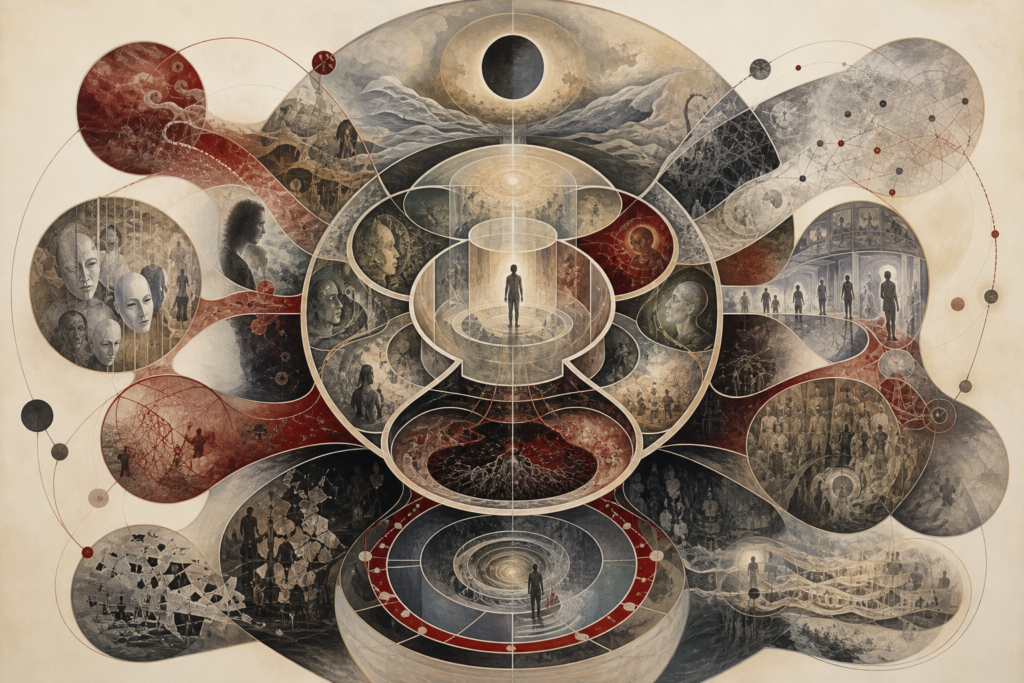
Editorial scientific illustration of analytical psychology as a depth psychology systems architecture, showing psyche, ego, persona, shadow, complexes, dream imagery, archetypal patterns, symbolic transformation, fragmentation, and psychic integration.

Analytical Psychology, Symbolism & the Depth Mind: Archetype, Individuation, and the Inner Life of Meaning

Analytical psychology examines the psyche at the level of symbol, conflict, image, and transformation. This pillar presents the field as a major depth-psychological tradition concerned not only with archetypes and the collective unconscious, but also with complexes, dream life, active imagination, psychic suffering, individuation, symbolic development, and the difficult relation between ego and self. It expands the tradition in a stronger and more publication-ready form by foregrounding analytic practice, post-Jungian differentiation, alchemy, spirituality, epistemology, and non-Western cultural critique. The result is a broader map of analytical psychology as a living, interpretive, and internally contested framework for understanding the symbolic life of the mind.

Scroll to Top