Natural Science

Natural Science examines the physical and living world through the systematic study of matter, energy, life, Earth systems, and the broader universe. It seeks to explain the structures, processes, laws, and transformations that govern the natural order, from the smallest physical interactions to the largest planetary and cosmic systems.

This field brings together disciplines that investigate how nature is organized, how change occurs, and how physical and biological systems develop across time and scale. It includes the study of material composition, chemical transformation, living organisms, planetary processes, celestial phenomena, and the environmental conditions that sustain or constrain life.

Natural Science plays a foundational role in human knowledge because it provides disciplined methods for understanding reality beyond opinion, intuition, or custom. By clarifying how the natural world functions, it shapes scientific reasoning, technological development, environmental awareness, and humanity’s broader understanding of life, matter, and the universe.

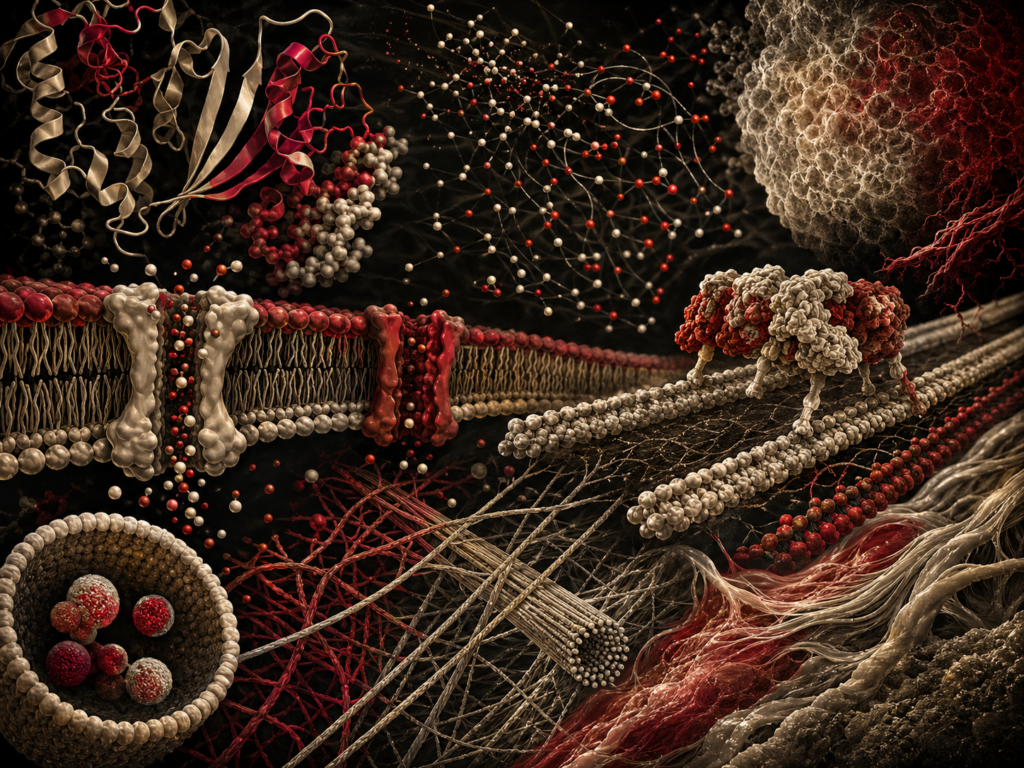
Editorial scientific illustration showing protein-folding structures, lipid membrane layers, ion channels, molecular particles, cytoskeletal fibers, motor-like protein movement, and soft biological material textures.

Biophysics and the Physical Principles of Life

Biophysics studies life through the principles of physics: energy, entropy, force, diffusion, transport, mechanics, electrostatics, molecular structure, information, and nonequilibrium dynamics. This article examines thermal energy, Brownian motion, diffusion, free energy, entropy, molecular forces, protein folding, molecular recognition, binding equilibria, membranes, electrochemical gradients, ion channels, membrane excitability, molecular motors, cytoskeletal mechanics, soft matter, biomechanics, biological fluid flow, biophysical imaging, measurement, systems biophysics, and computational modeling. Selected R and Python workflows model diffusion time scales, Brownian motion, and mean squared displacement, while the linked GitHub repository expands the article with advanced computational scaffolding for reproducible biophysics workflows.
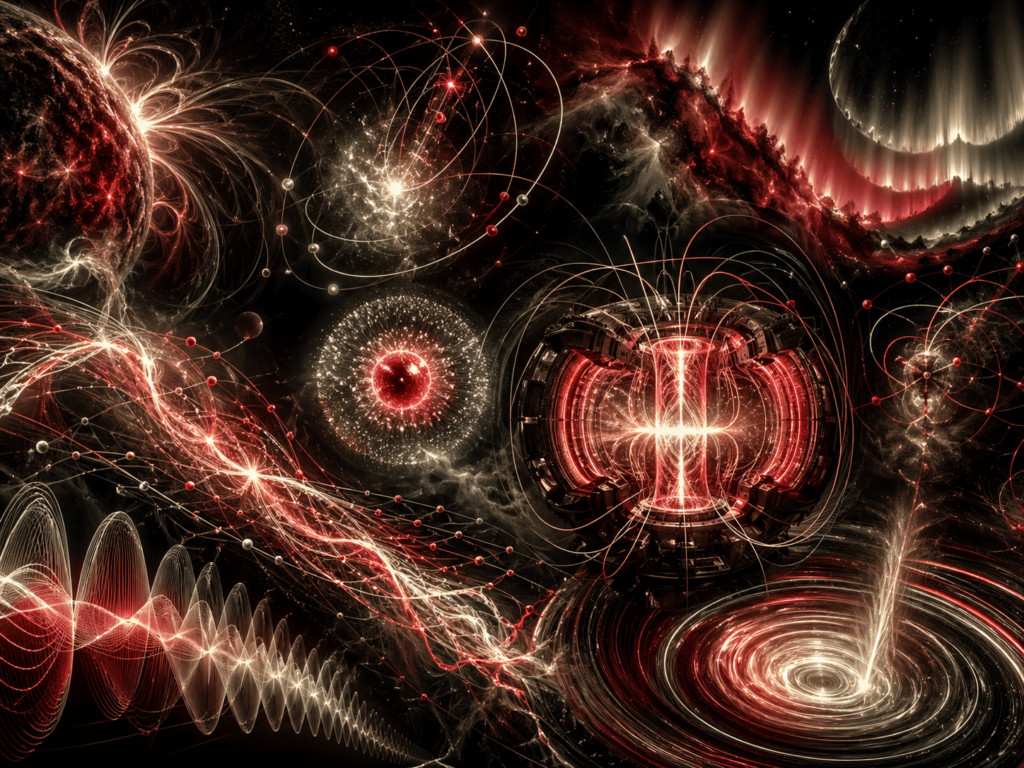
Editorial scientific illustration showing luminous plasma filaments, charged particle trajectories, magnetic field arcs, fusion confinement geometry, wavefronts, aurora-like plasma, and turbulent electromagnetic structures.

Plasma Physics and the Fourth State of Matter

Plasma physics studies ionized matter whose charged particles move collectively under electric and magnetic fields, creating waves, shielding, currents, instabilities, turbulence, confinement behavior, radiation, and nonlinear dynamics that do not appear in ordinary neutral gases. This article examines ionization, quasi-neutrality, Debye shielding, plasma frequency, charged-particle motion, gyrofrequency, gyroradius, drifts, fluid plasma models, kinetic plasma models, magnetohydrodynamics, plasma waves, Alfvén waves, Langmuir waves, instabilities, turbulence, fusion plasmas, magnetic confinement, inertial confinement, space plasmas, astrophysical plasmas, low-temperature plasmas, plasma diagnostics, and computational plasma modeling. Selected R and Python workflows model plasma parameter sensitivity and charged-particle gyration, while the linked GitHub repository expands the article with advanced computational scaffolding for reproducible plasma-physics workflows.

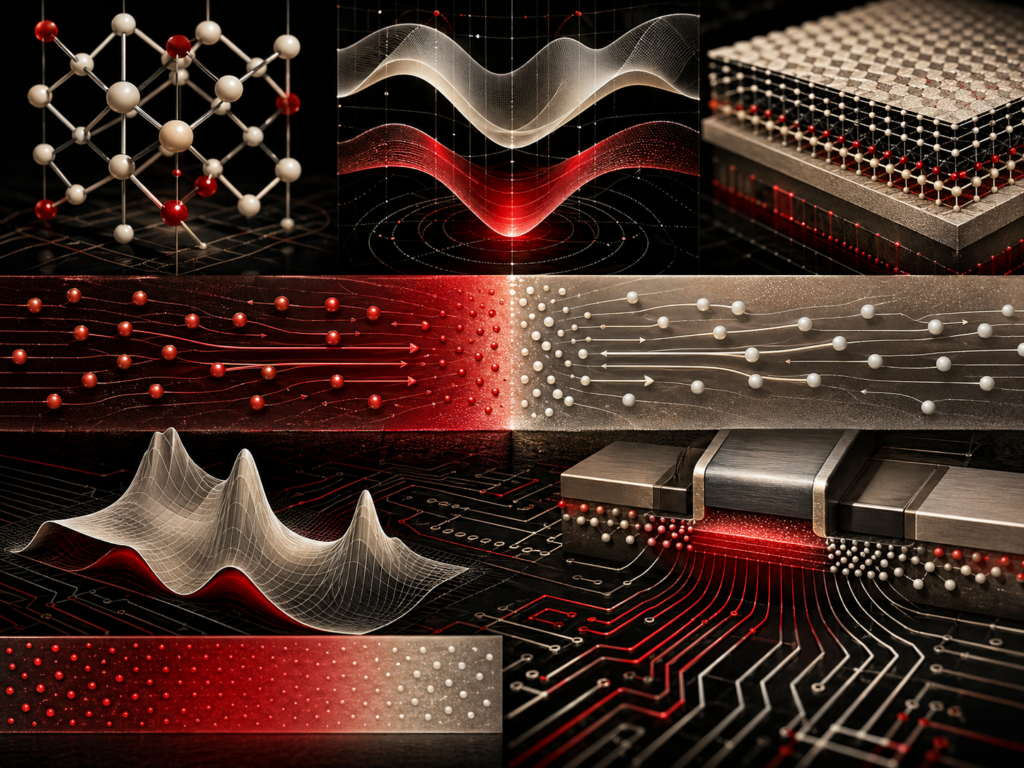
Editorial scientific illustration showing crystal lattice structures, layered semiconductor materials, band-structure energy surfaces, p–n junction regions, carrier flow pathways, transistor gate geometry, doped gradients, and circuit-like traces.

Semiconductor Physics and Electronic Materials

Semiconductor physics and electronic materials explain how quantum band structure, carrier statistics, doping, defects, interfaces, electric fields, and transport processes make modern electronics possible. This article examines crystal lattices, periodic potentials, energy bands, band gaps, effective mass, density of states, Fermi–Dirac statistics, intrinsic and extrinsic semiconductors, doping, carrier concentration, mobility, conductivity, drift, diffusion, recombination, p–n junctions, depletion regions, built-in potential, diode current, metal–semiconductor contacts, MOS capacitors, MOSFET physics, heterostructures, compound semiconductors, wide-bandgap materials, optoelectronic materials, semiconductor metrology, and computational device modeling. Selected R and Python workflows model conductivity sensitivity and diode current–voltage behavior, while the linked GitHub repository expands the article with advanced computational scaffolding for reproducible semiconductor-physics workflows.

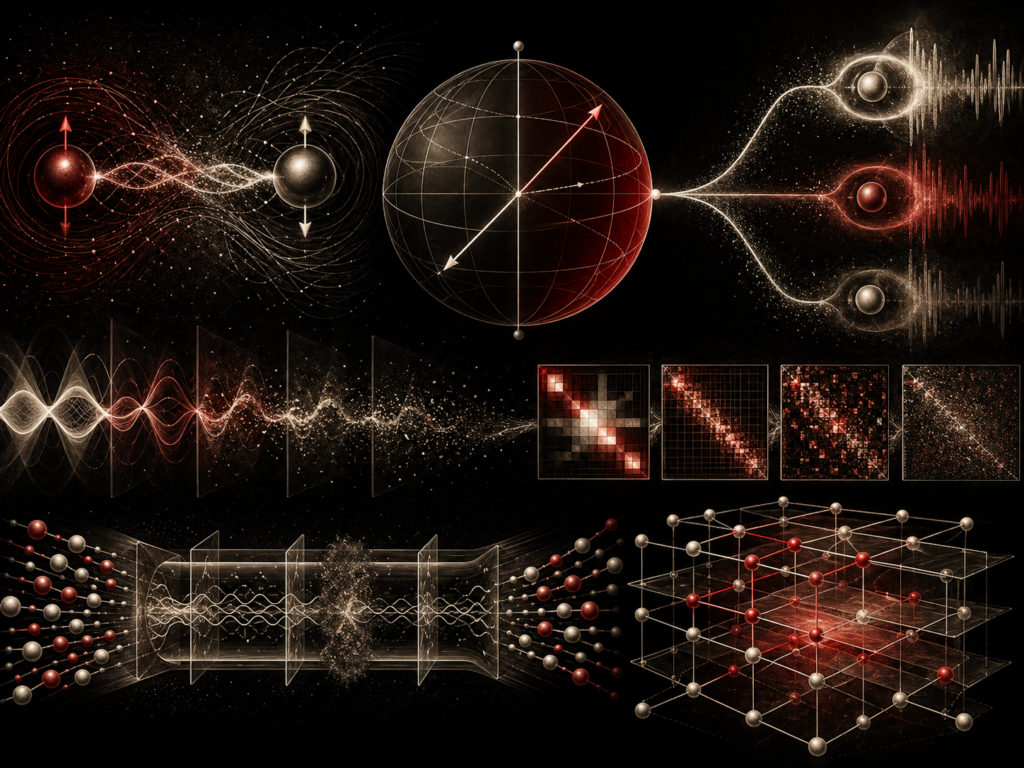
Editorial scientific illustration showing abstract qubits, entangled particles, Bloch-sphere geometry, branching measurement paths, fading coherence waves, matrix-like textures, and lattice structures.

Quantum Information, Decoherence, and Measurement

Quantum information, decoherence, and measurement explain how physical systems can store information in quantum states, how measurement turns amplitudes into outcomes, and how interaction with the environment destroys fragile quantum coherence. This article examines qubits, superposition, Hilbert space, density matrices, pure and mixed states, entanglement, the Born rule, projective measurement, generalized measurement, quantum channels, decoherence, dephasing, relaxation, entropy, no-cloning, teleportation, quantum error correction, fault tolerance, quantum algorithms, quantum communication, and the measurement problem. Selected R and Python workflows model binary entropy, measurement uncertainty, density-matrix dephasing, purity, and von Neumann entropy, while the linked GitHub repository expands the article with advanced computational scaffolding for reproducible quantum-information workflows.

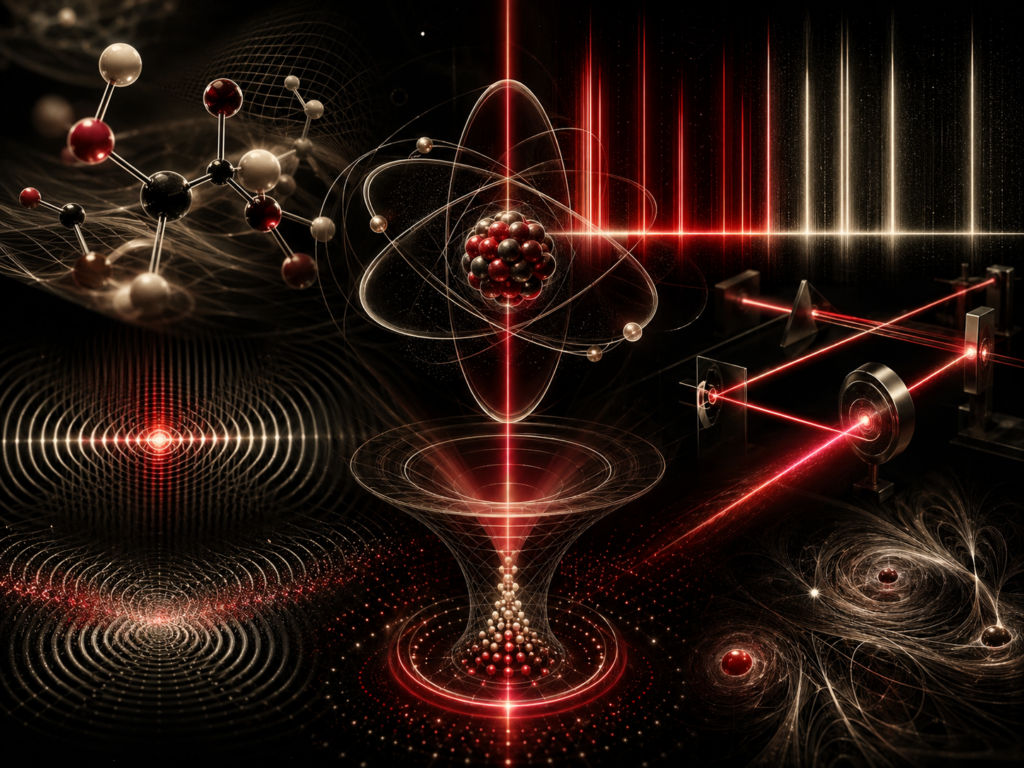
Editorial scientific illustration showing abstract atoms, molecular structures, photon beams, spectral light bands, laser paths, optical interference patterns, and cold-atom trap forms.

Atomic, Molecular, and Optical Physics

Atomic, molecular, and optical physics studies the quantum structure of matter and light: atoms, molecules, photons, spectra, lasers, optical transitions, precision measurement, cold gases, and controlled light–matter interaction. This article examines atomic structure, electronic energy levels, the Schrödinger equation, hydrogen spectra, the Rydberg formula, angular momentum, selection rules, fine and hyperfine structure, Zeeman and Stark effects, molecular rotation and vibration, spectroscopy, spontaneous and stimulated emission, lasers, Rabi oscillations, quantum optics, cold atoms, optical traps, precision clocks, and quantum technologies. Selected R and Python workflows model Boltzmann rotational populations and hydrogen spectral lines, while the linked GitHub repository expands the article with advanced computational scaffolding for reproducible AMO-physics workflows.

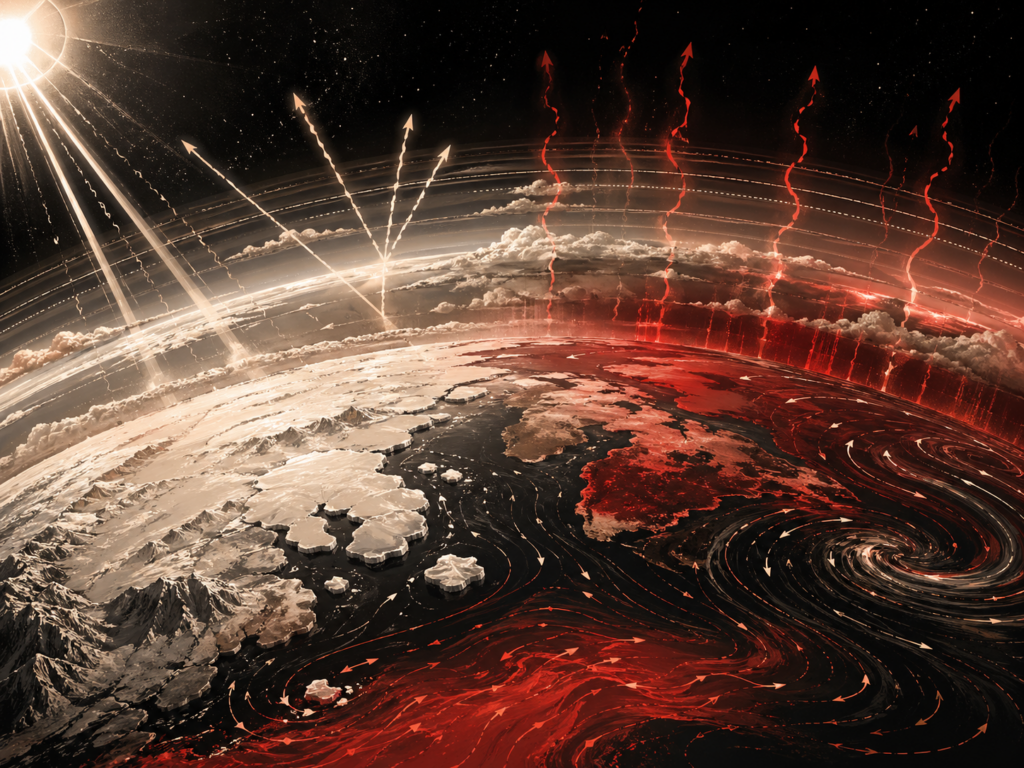
Editorial scientific illustration showing an Earth-like planet with incoming solar radiation, reflected light, outgoing infrared radiation, atmospheric layers, clouds, ocean heat gradients, and ice–albedo contrast.

Climate Physics and Planetary Energy Balance

Climate physics and planetary energy balance explain how radiation, temperature, atmospheric composition, albedo, feedbacks, oceans, ice, clouds, and planetary geometry determine whether a world warms, cools, or remains near equilibrium. This article examines solar radiation, planetary albedo, absorbed shortwave radiation, outgoing longwave radiation, effective emission temperature, the Stefan–Boltzmann law, greenhouse physics, radiative forcing, climate feedbacks, heat capacity, ocean heat uptake, equilibrium climate sensitivity, transient response, orbital forcing, aerosols, clouds, cryosphere feedbacks, planetary habitability, and reduced energy-balance models. Selected R and Python workflows model albedo sensitivity, radiative forcing, and time-dependent climate response, while the linked GitHub repository expands the article with advanced computational scaffolding for reproducible climate-physics workflows.

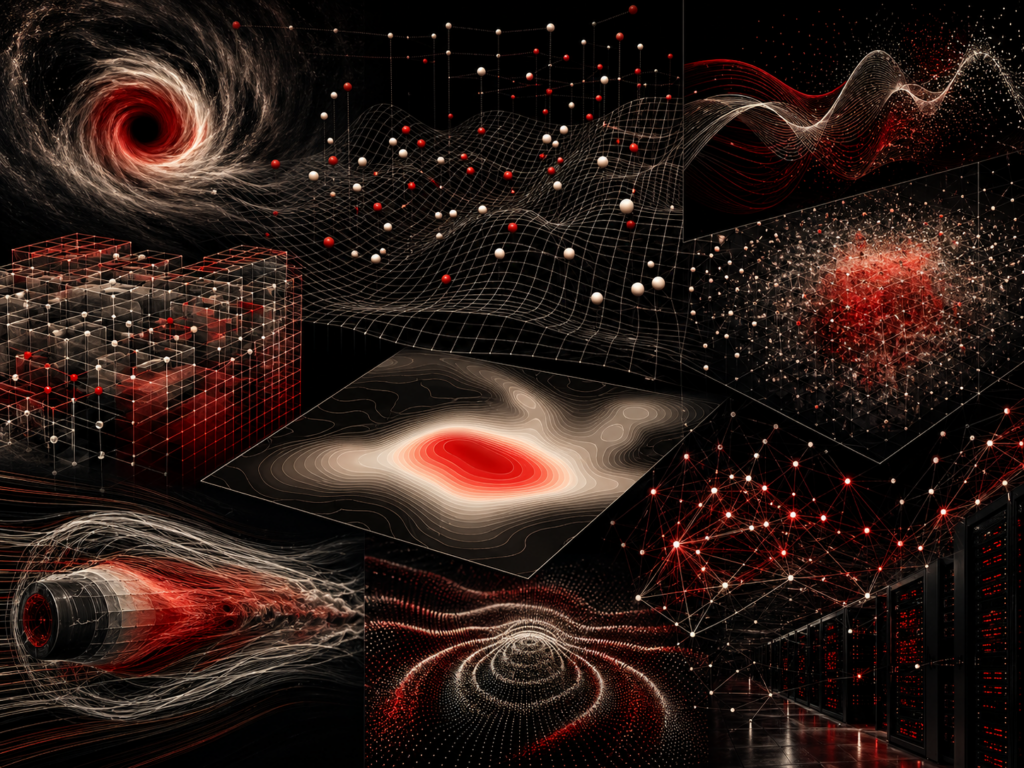
Editorial scientific illustration showing numerical grids, simulation fields, particle trajectories, wave patterns, heat-diffusion contours, Monte Carlo points, and high-performance computing nodes.

Computational Physics and Scientific Simulation

Computational physics and scientific simulation use numerical methods, algorithms, data structures, uncertainty analysis, and reproducible software to study physical systems that cannot be solved by hand alone. This article examines computational modeling, numerical approximation, discretization, floating-point arithmetic, ordinary differential equation solvers, partial differential equation methods, finite difference methods, finite element and finite volume ideas, Monte Carlo simulation, molecular dynamics, particle methods, verification, validation, uncertainty quantification, reproducibility, high-performance computing, visualization, and scientific software practice. Selected R and Python workflows model Monte Carlo uncertainty propagation and finite-difference diffusion, while the linked GitHub repository expands the article with advanced computational scaffolding for reproducible scientific-simulation workflows.

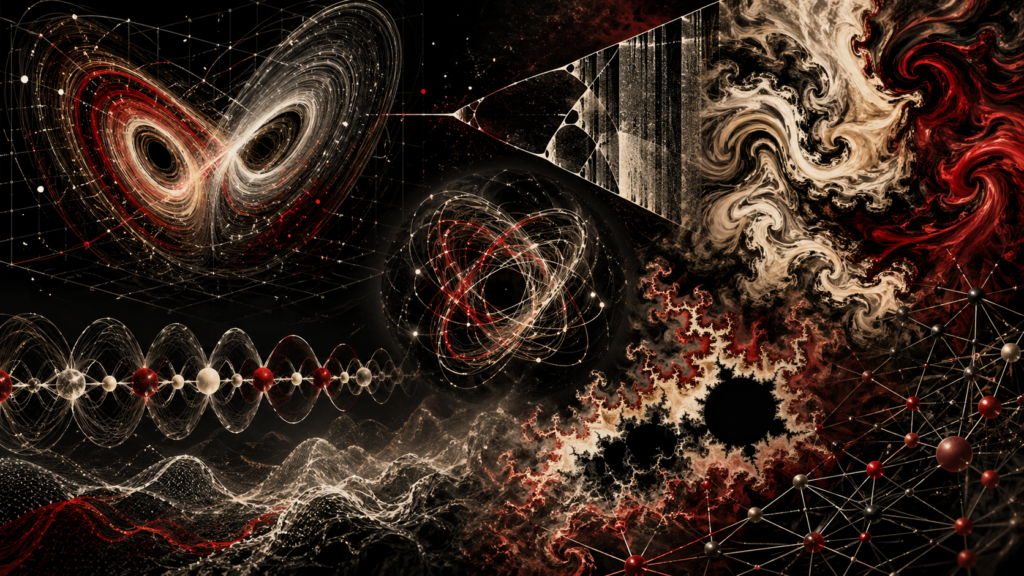
Editorial scientific illustration showing strange attractor loops, bifurcation-like branching, turbulent flow, fractal structures, coupled oscillators, and computational network nodes.

Nonlinear Dynamics, Chaos, and Complex Physical Systems

Nonlinear dynamics, chaos, and complex physical systems explain how deterministic laws can generate feedback, instability, bifurcation, pattern formation, sensitive dependence, and behavior that is difficult to predict even when the governing equations are known. This article examines nonlinear equations, phase space, fixed points, stability, bifurcations, limit cycles, chaos, sensitive dependence, the logistic map, the Lorenz system, strange attractors, Lyapunov exponents, fractals, intermittency, synchronization, pattern formation, turbulence, complex systems, and computational modeling. Selected R and Python workflows model logistic-map bifurcation behavior, Lorenz-system integration, and trajectory separation, while the linked GitHub repository expands the article with advanced computational scaffolding for reproducible nonlinear-dynamics workflows.

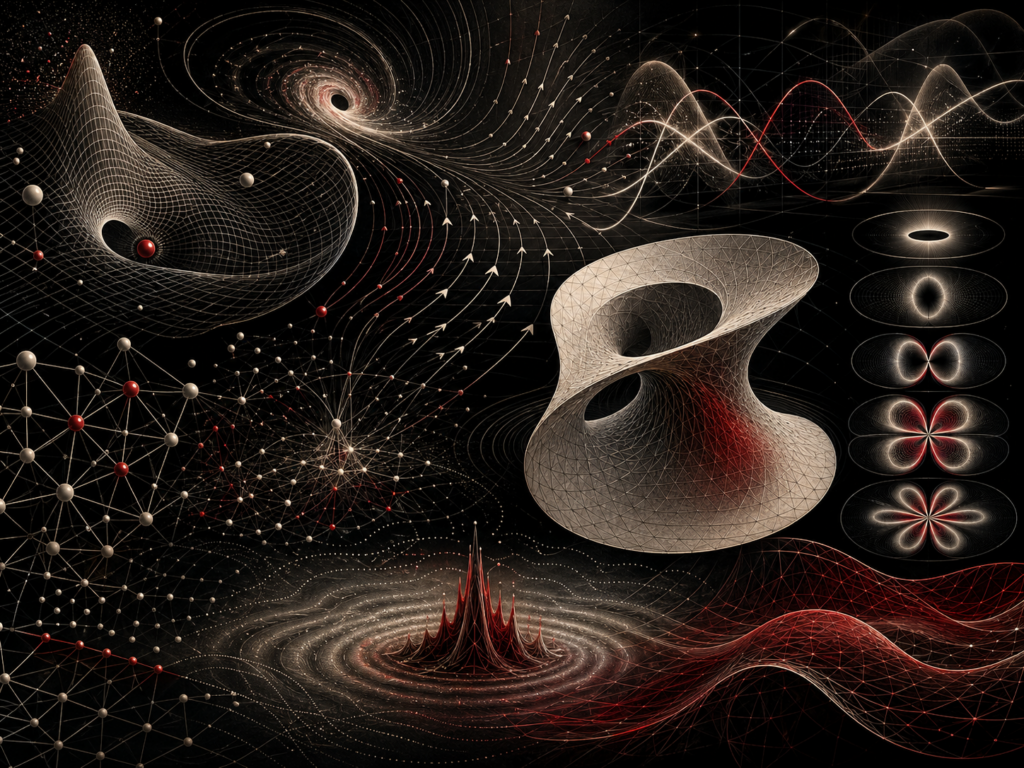
Editorial scientific illustration showing abstract mathematical structures, coordinate grids, vector-field arrows, waveforms, eigenmode patterns, tensor-like surfaces, and computational network forms.

Mathematical Methods in Physics

Mathematical methods in physics provide the language through which physical systems are described, modeled, solved, approximated, simulated, and interpreted. This article examines dimensional analysis, calculus, vector algebra, vector calculus, linear algebra, differential equations, boundary-value problems, Fourier analysis, complex numbers, tensors, probability, statistics, variational methods, numerical methods, computational workflows, and the role of mathematical modeling in physical reasoning. Selected R and Python workflows model uncertainty propagation, ODE integration, eigenvalue analysis, and Fourier spectra, while the linked GitHub repository expands the article with advanced computational scaffolding for reproducible mathematical-physics workflows.

Scroll to Top