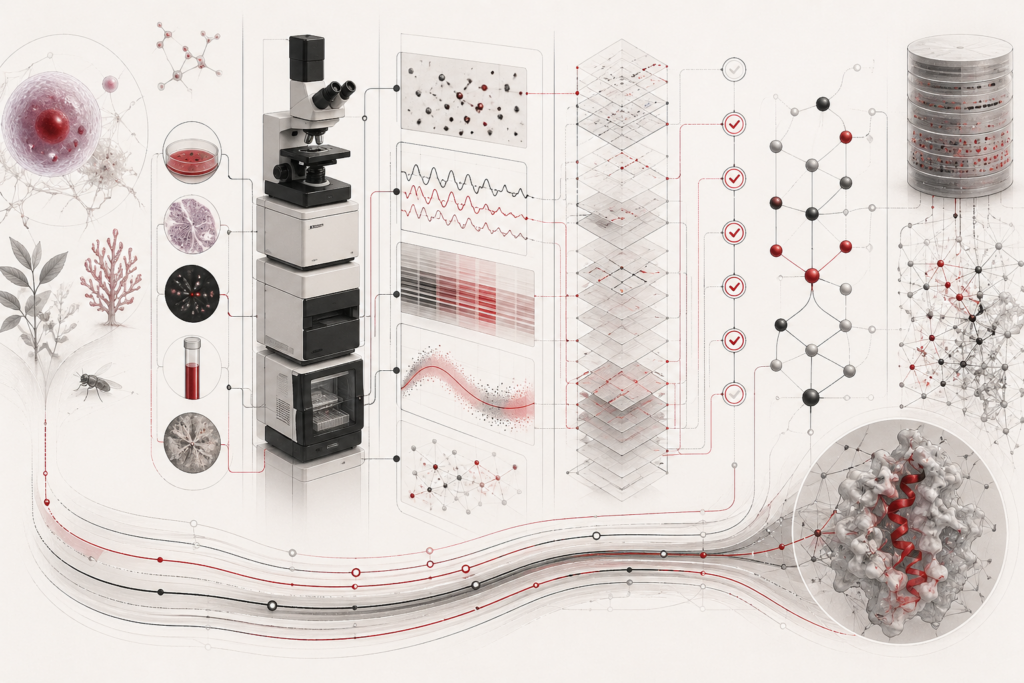
Data, Measurement, and Reproducibility in the Life Sciences
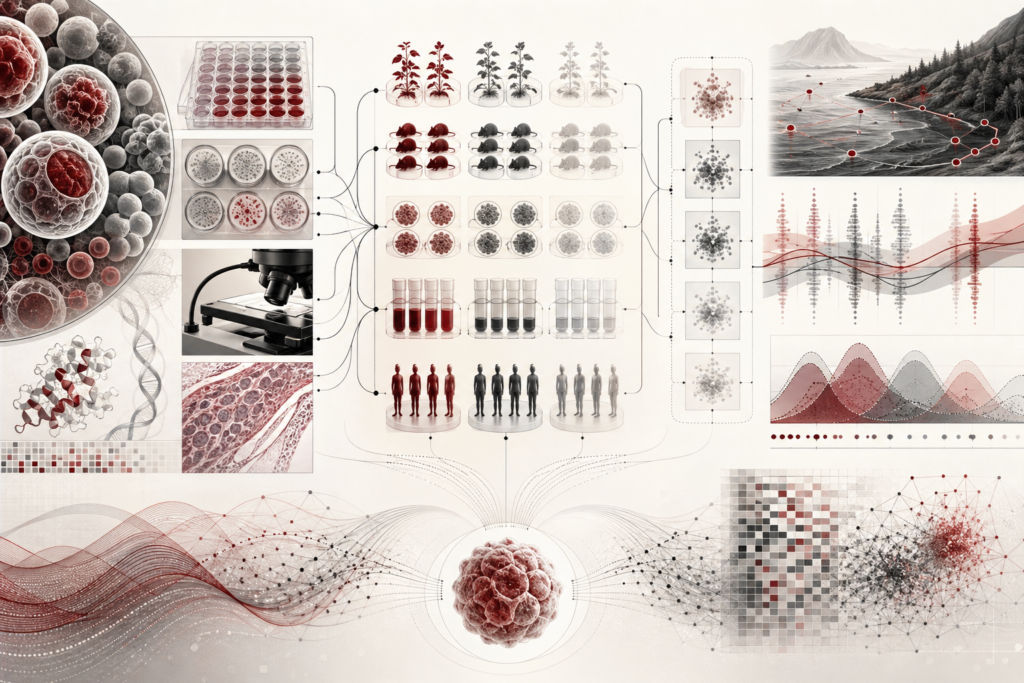
Data, Measurement, and Reproducibility in the Life Sciences examines how biological observations become trustworthy evidence through calibrated measurement, metadata, provenance, quality control, uncertainty analysis, validation, workflow documentation, and responsible data sharing. The article explains why biological data are never simply “raw”: sequencing reads, microscopy images, ecological surveys, biomarkers, sensor traces, and computational outputs are shaped by instruments, protocols, sampling design, processing choices, and assumptions. Written for biologists, ecologists, biomedical researchers, laboratory scientists, computational biologists, engineers, and data scientists, the article connects FAIR data principles, measurement uncertainty, reproducible code, data dictionaries, provenance records, checksum manifests, and transparent computational environments. It shows how rigorous data stewardship makes life-science evidence durable, inspectable, reusable, and scientifically trustworthy.