Graphs, Networks, and Discrete Structure
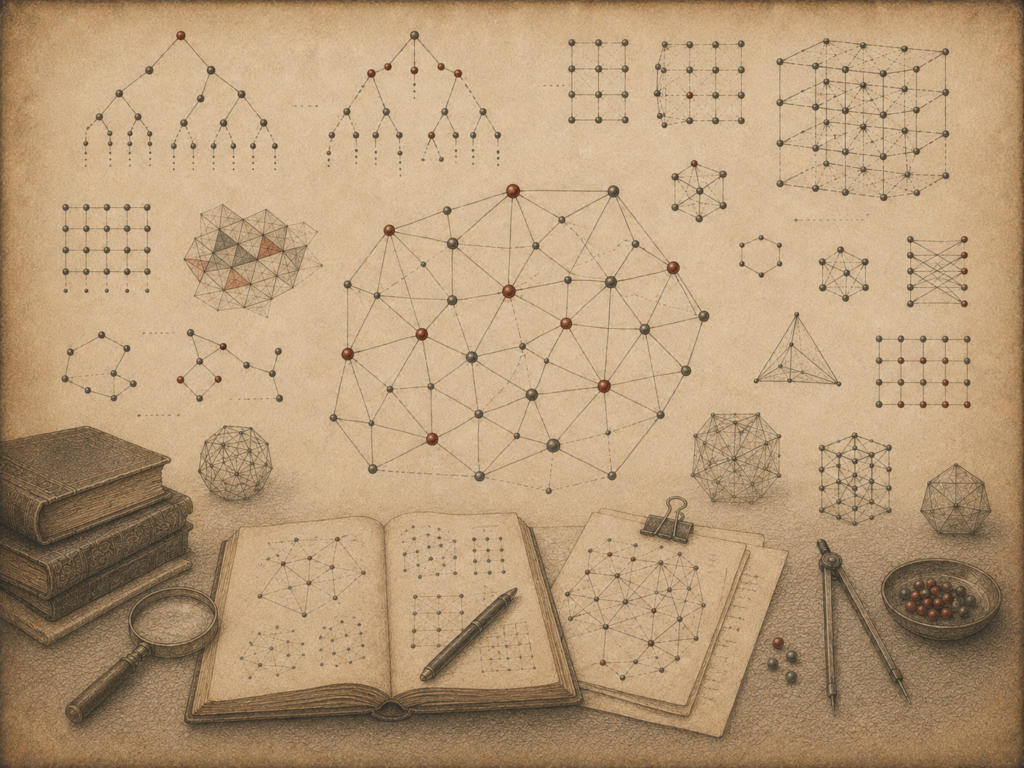
Graphs, Networks, and Discrete Structure examines graph theory as a mathematical language for relationship, connection, path, dependency, flow, hierarchy, clustering, reachability, and network form. The article explains how vertices and edges define discrete structure, then explores adjacency, degree, neighborhoods, paths, cycles, connected components, trees, directed graphs, weighted graphs, bipartite graphs, graph representations, traversal algorithms, shortest paths, centrality, Haskell typed graph models, SQL graph schemas, and responsible network interpretation. It connects graph theory to computer science, data systems, AI, knowledge graphs, infrastructure, citation networks, social systems, biological networks, and institutional analysis. The article emphasizes that networks are interpreted graphs: edge meaning, weight semantics, direction, provenance, missing data, centrality, and visualization choices all shape what can responsibly be inferred. Graph thinking is framed as a disciplined way to understand how local relationships create global structure across technical, scientific, and civic systems.