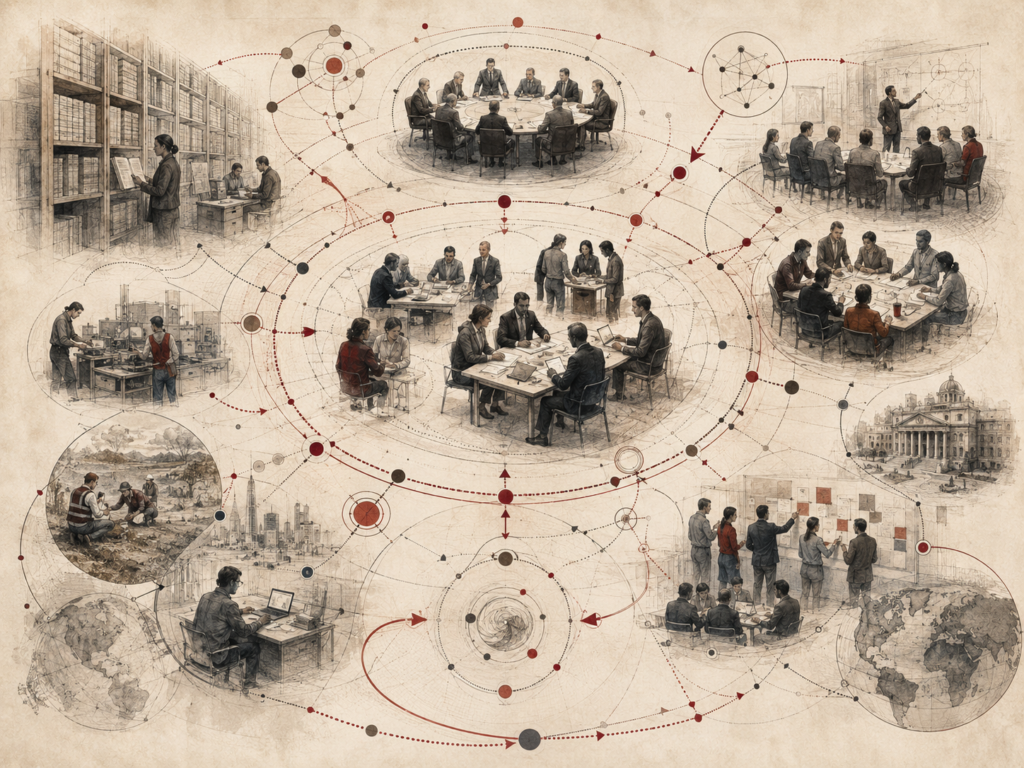
Systems Thinking in Organizations and Learning
Systems Thinking in Organizations and Learning explains how organizations behave as systems of people, routines, incentives, authority, information flows, tools, memory, culture, and feedback. The article shows why repeated problems such as burnout, missed handoffs, failed change initiatives, siloed behavior, defensive routines, weak communication, distorted feedback, and lost institutional memory are rarely caused by individual failure alone. They are often produced by structure. Through examples from public agencies, healthcare, technology organizations, schools, nonprofits, research institutions, corporations, and civic institutions, the article examines organizational learning, mental models, single-loop and double-loop learning, local optimization, feedback distortion, voice, power, and institutional memory. Readers gain a practical method for diagnosing recurring organizational patterns, protecting feedback, preserving knowledge, reducing blame, redesigning routines, aligning incentives, and building organizations capable of learning without relying on burnout, denial, or hidden work.