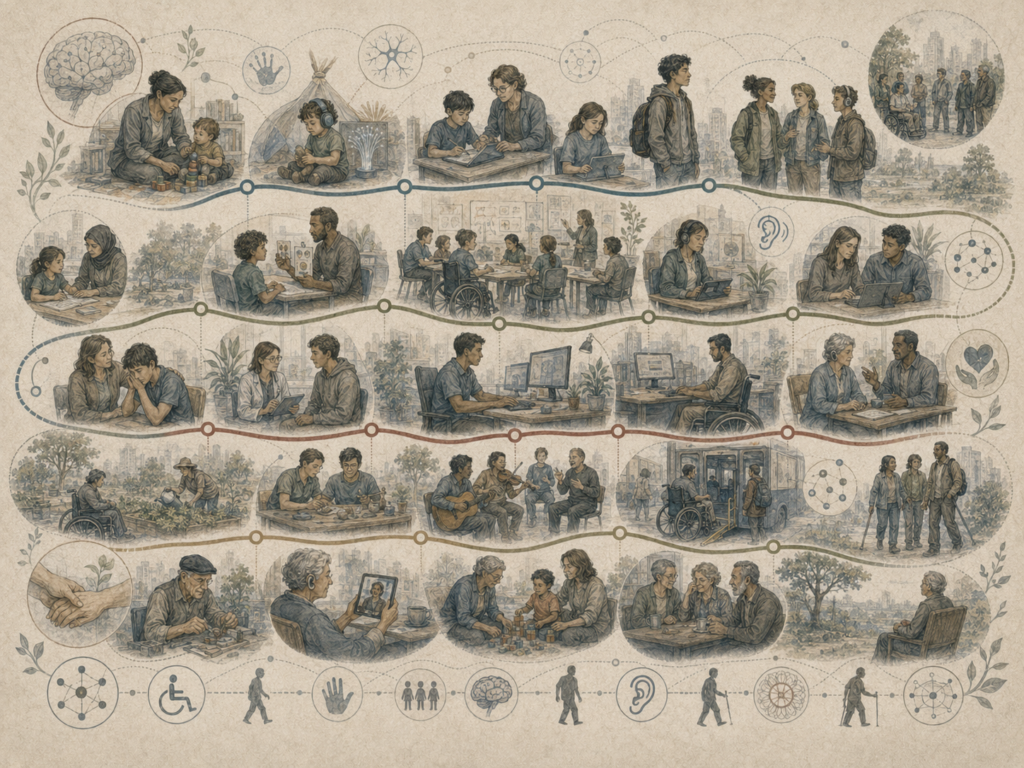
Abstract institutional illustration of disability, neurodivergence, and development across the life course, showing accessible environments, caregiving, education, communication, assistive technology, community participation, and support systems.

Disability, Neurodivergence, and Development

Disability and neurodivergence are not deviations from development in the sense of existing outside it, but part of human development itself, shaping and being shaped by embodiment, cognition, communication, relationship, access, support, stigma, and the unequal social conditions under which growth unfolds. This article examines developmental diversity, context, caregiving, inclusion, sensory and communication difference, identity, and unequal access as parts of one developmental framework. It argues that disability and neurodivergence should be understood not only through impairment or deficit, but through the relational conditions that enable or constrain participation, growth, and dignity over time. In that sense, developmental difference reveals how human development is shaped as much by the world’s response to difference as by difference itself.
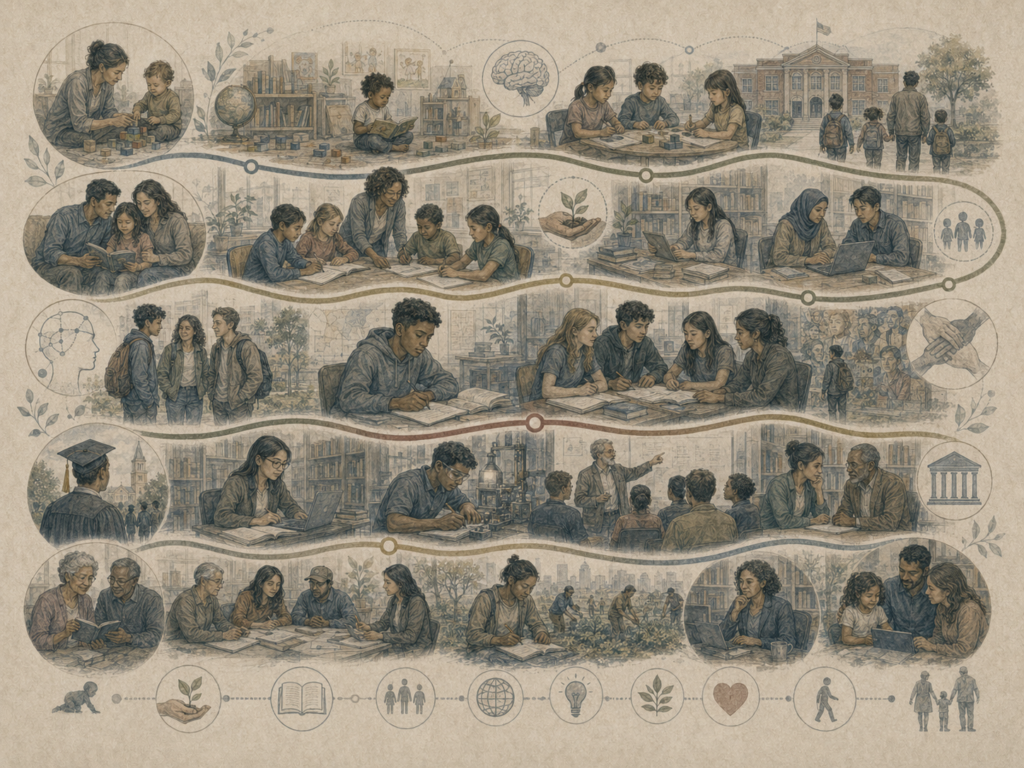
Abstract institutional illustration of education and developmental formation across the life course, showing classrooms, families, libraries, mentors, peer learning, civic institutions, and lifelong learning.

Education, Schooling, and Developmental Formation

Education and schooling are not merely channels for delivering information, but developmental institutions through which children and adolescents learn cognition, self-regulation, belonging, authority, aspiration, social comparison, and the lived meaning of participation in a wider social world. This article examines early learning, school connectedness, teacher relationships, peer life, routines, discipline, school climate, and unequal educational opportunity as parts of one developmental process. It argues that schooling should be understood not only as academic instruction, but as a relational and institutional environment that shapes how development is organized across childhood and adolescence. In that sense, education is not only about what students know, but about what kinds of selves, relations, and futures schools help form.

Illustration of parenting and family systems, showing caregivers, children, intergenerational relationships, family interaction, emotional support, social context, and developmental pathways.

Parenting, Family Systems, and Human Development

Parenting and family systems are not secondary influences on development but among the central relational processes through which human beings learn regulation, attachment, communication, trust, conflict, identity, and the patterned expectations of shared life. This article examines caregiving, attachment, discipline, sibling roles, communication, routines, stress, and inequality as parts of one developmental family system. It argues that children do not simply grow inside families as passive recipients of influence, but develop through recurring relational processes that organize emotion, behavior, and meaning over time. In that sense, parenting and family systems reveal how human development is made through relationship as much as through individual capacity.

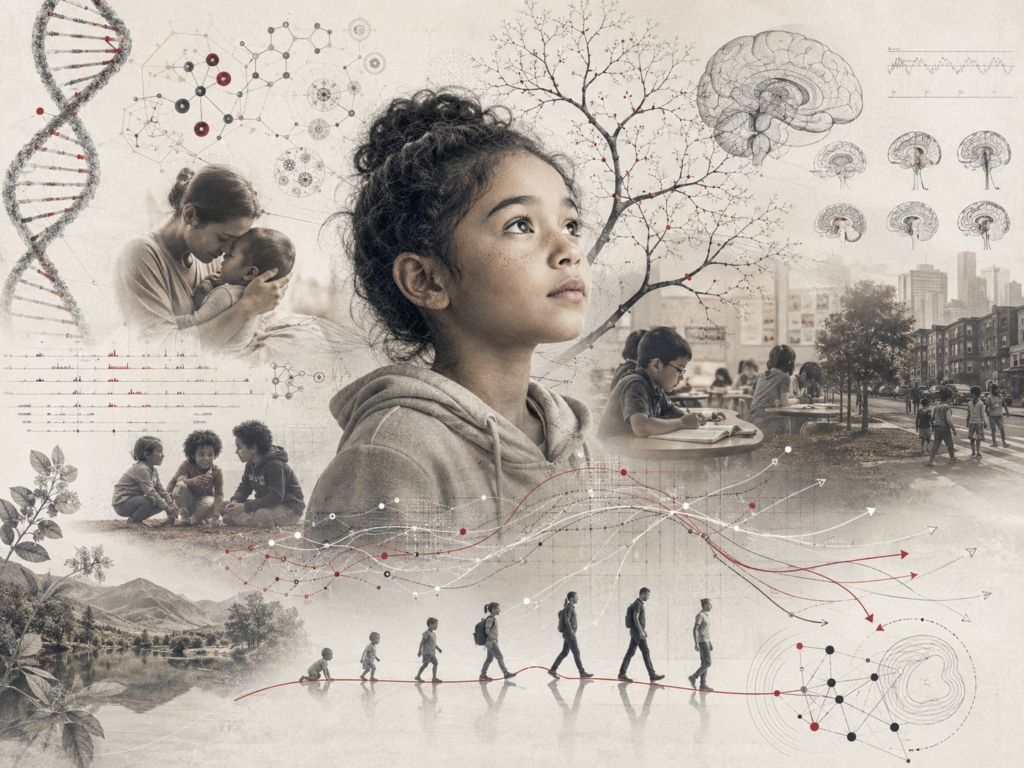
Research-grade illustration of a child surrounded by DNA, brain-development diagrams, caregiving, school, peers, neighborhood, ecology, and branching developmental pathways representing gene–environment interaction and plasticity.

Genes, Environment, and Developmental Plasticity

Genes, environment, and developmental plasticity belong to one developmental system: human growth does not unfold from DNA alone, nor is it imposed from outside by experience alone, but emerges through the ongoing relation between biological potential, lived context, and the capacity of development to change course under differing conditions. This article examines gene–environment interaction, biological embedding, developmental plasticity, sensitive periods, adversity, protection, and unequal developmental opportunity as parts of one developmental framework. It argues that development should be understood neither as genetic destiny nor as simple environmental molding, but as a dynamic process in which biology and experience coact across time. In that sense, developmental plasticity provides one of the strongest ways to understand how human growth remains responsive, conditional, and historically unequal.

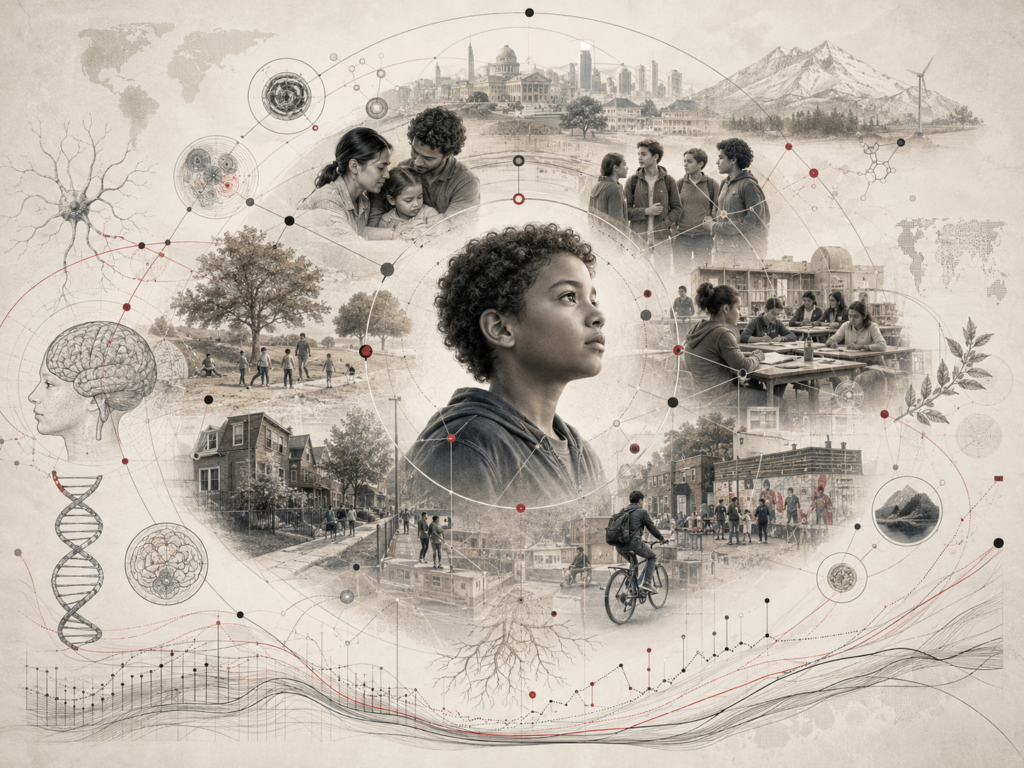
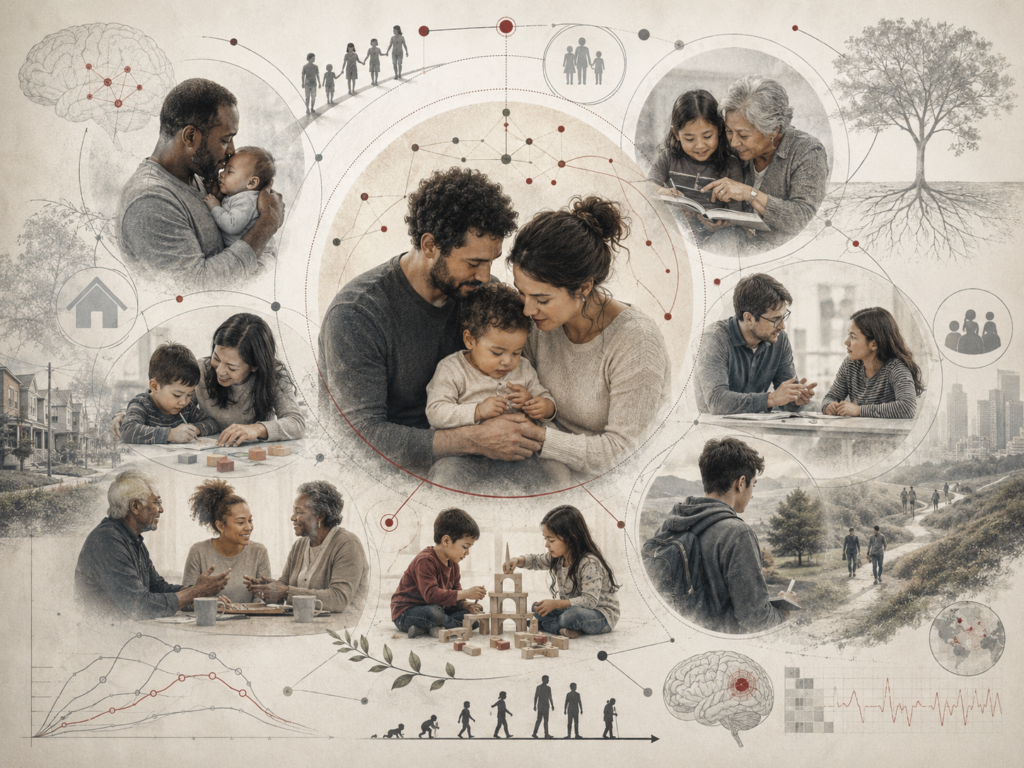
Research-grade illustration of developmental systems theory showing a child embedded within overlapping biological, family, peer, school, neighborhood, cultural, ecological, and institutional systems.

Developmental Systems Theory and the Ecology of Human Growth

Developmental systems theory holds that human growth does not arise from isolated genes, environments, or fixed stages, but from ongoing reciprocal relations among biology, behavior, relationship, culture, institution, and history. This article examines ecology, bioecological thinking, relational developmental systems, embodiment, plasticity, inequality, and person–context reciprocity as core elements of a systems view of development. It argues that human development should not be understood as something unfolding inside the individual alone, but as a dynamic process generated through nested and changing relations across the life course. In that sense, developmental systems theory offers one of the strongest frameworks for understanding the ecology of human growth.

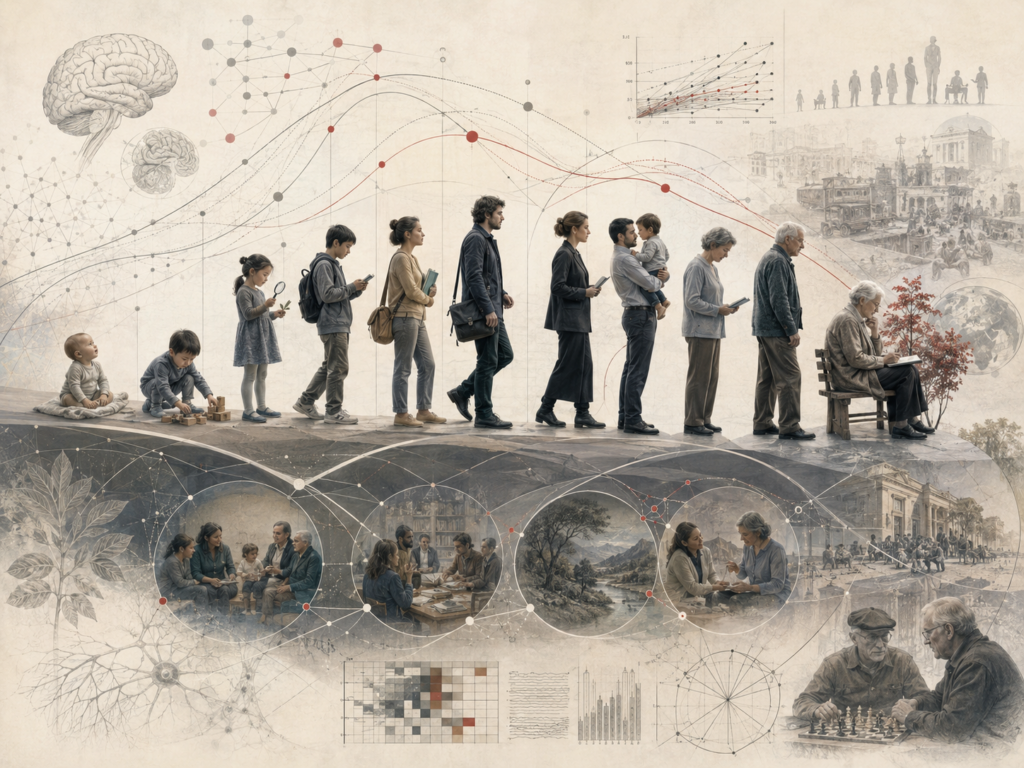
Research-grade illustration of lifespan developmental psychology in the Baltes tradition, showing human development from infancy through old age, with life-course pathways, brain development, social contexts, cultural history, adaptation, and multidirectional change.

Lifespan Developmental Psychology and the Baltes Tradition

Lifespan developmental psychology, in the Baltes tradition, is the claim that development is lifelong, multidimensional, multidirectional, plastic, historically embedded, and always shaped by the interplay of gains and losses across the whole course of life. This article examines lifelong development, multidirectionality, multidimensionality, plasticity, historical context, adaptation, and selective optimization with compensation as core elements of the Baltes framework. It argues that development should not be treated as a child-only process followed by adult stability and later decline, but as a lifelong pattern of change shaped by context, strategy, gain, and loss. In that sense, the Baltes tradition provides one of the most important theoretical foundations for modern lifespan developmental psychology.

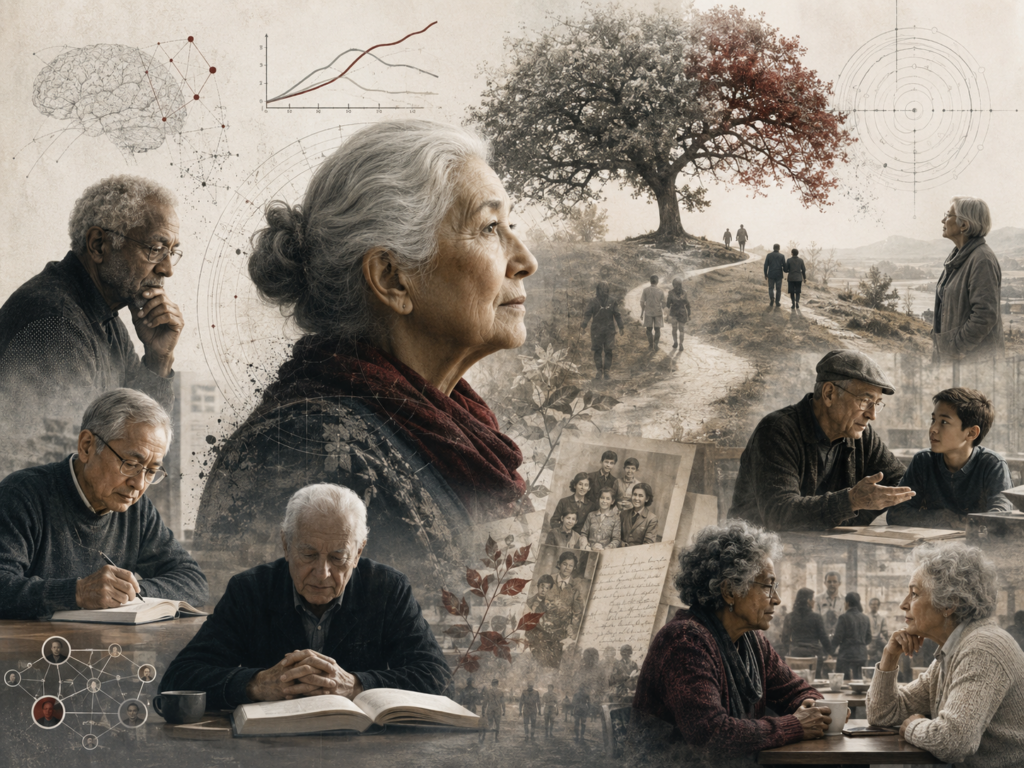
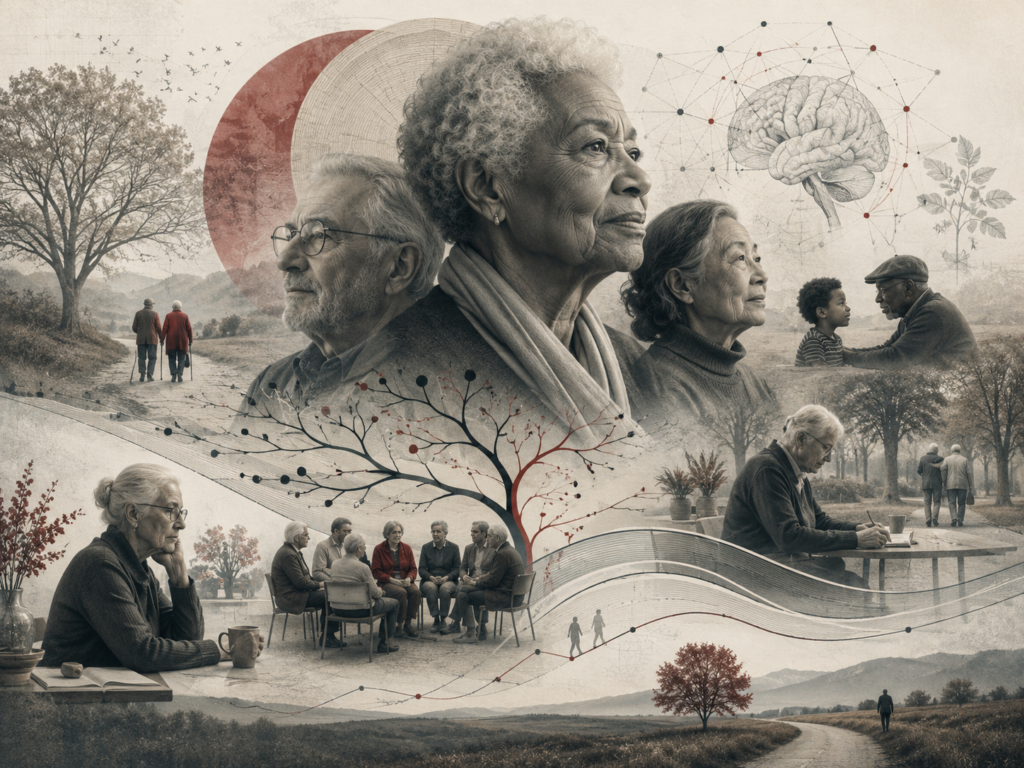
Research-grade illustration of wisdom and meaning in later life, showing older adults in reflection, conversation, writing, memory, intergenerational exchange, social connection, and life review.

Wisdom, Meaning, and Development in Later Life

Wisdom and meaning in later life are not decorative additions to aging but part of the developmental work through which older adults interpret memory, loss, time, relationship, and what a life has meant. This article examines perspective, life review, social connection, health constraint, adaptation, legacy, and mortality awareness as parts of one later-life developmental process. It argues that later life should be understood neither as simple decline nor as automatic wisdom, but as a psychologically serious phase in which understanding, reflection, and meaning must be made under changing conditions of health, support, and time. In that sense, later life reveals how development can continue through interpretation as much as through action.

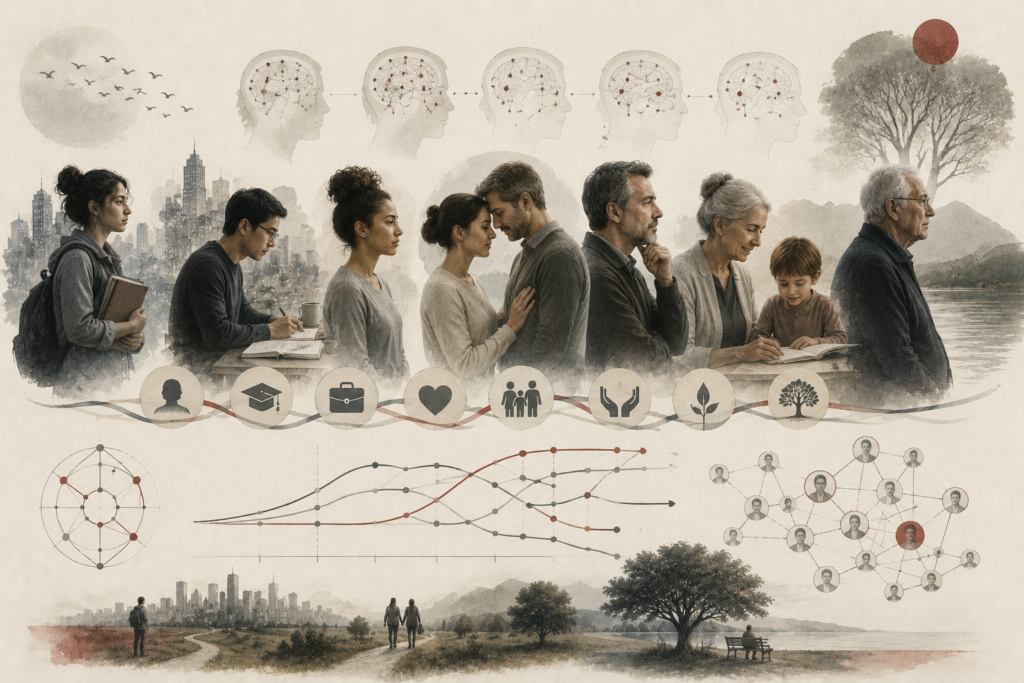
Research-grade illustration of adult development across life stages, showing emerging adulthood, relationships, work, caregiving, midlife reflection, later adulthood, aging, social networks, and changing psychological roles.

Aging, Adaptation, and Development in Later Life

Aging is not the opposite of development but a later-life phase in which human beings continue to adapt under changing conditions of body, time, health, memory, social role, and meaning. This article examines functional ability, cognition, compensation, care, retirement, social connection, mortality awareness, and unequal aging as parts of one developmental process. It argues that later life should be understood neither as simple decline nor as sentimentalized success, but as a psychologically complex phase shaped by support, health, adaptation, and environment. In that sense, aging reveals how development continues through vulnerability, revision, and the changing conditions of embodied life.

Research-grade illustration of adult development across life stages, showing emerging adulthood, relationships, work, caregiving, midlife reflection, later adulthood, aging, social networks, and changing psychological roles.

Adult Development and the Psychology of Life Stages

Adult development is not the end of development but one of its most complex phases: a long psychological process through which human beings revise identity, work, intimacy, responsibility, embodiment, meaning, loss, adaptation, and self-understanding across the life stages of adulthood. This article examines young adulthood, midlife, and later adulthood through intimacy, work, generativity, healthy aging, bodily change, institutional life, and unequal life trajectories. It argues that adulthood is neither a fixed state of maturity nor a simple story of decline, but a continuing developmental process shaped by relationship, health, time, inequality, and the social structures in which a life unfolds. In that sense, adult development reveals how psychological growth continues under the accumulated weight of history, responsibility, and mortality awareness.

Scroll to Top