The Great Acceleration: How Human Activity Reshaped the Earth System
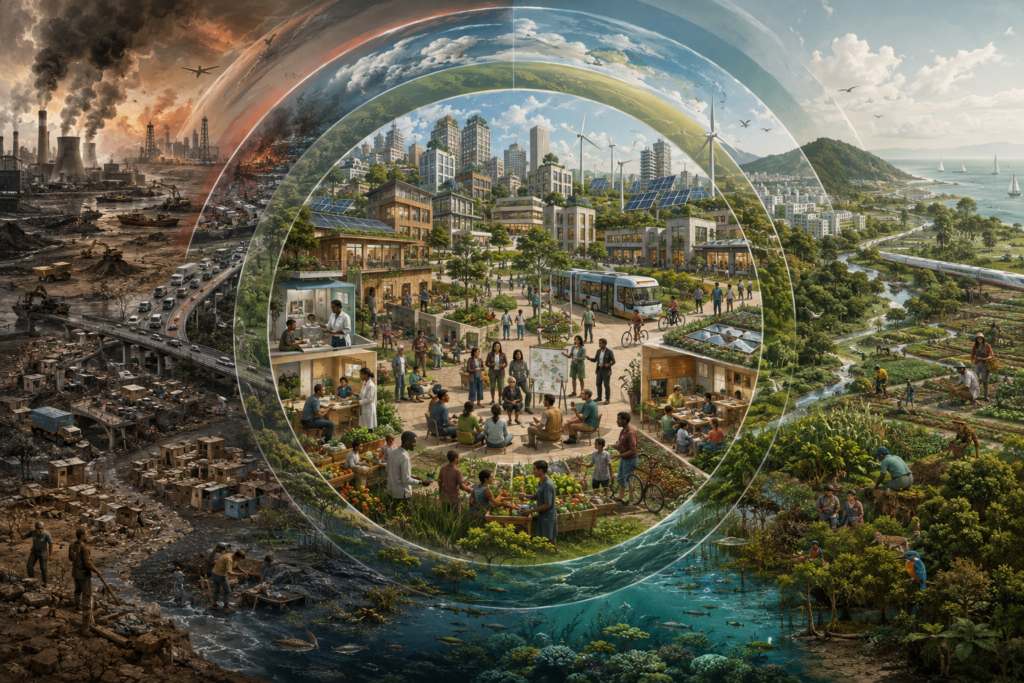
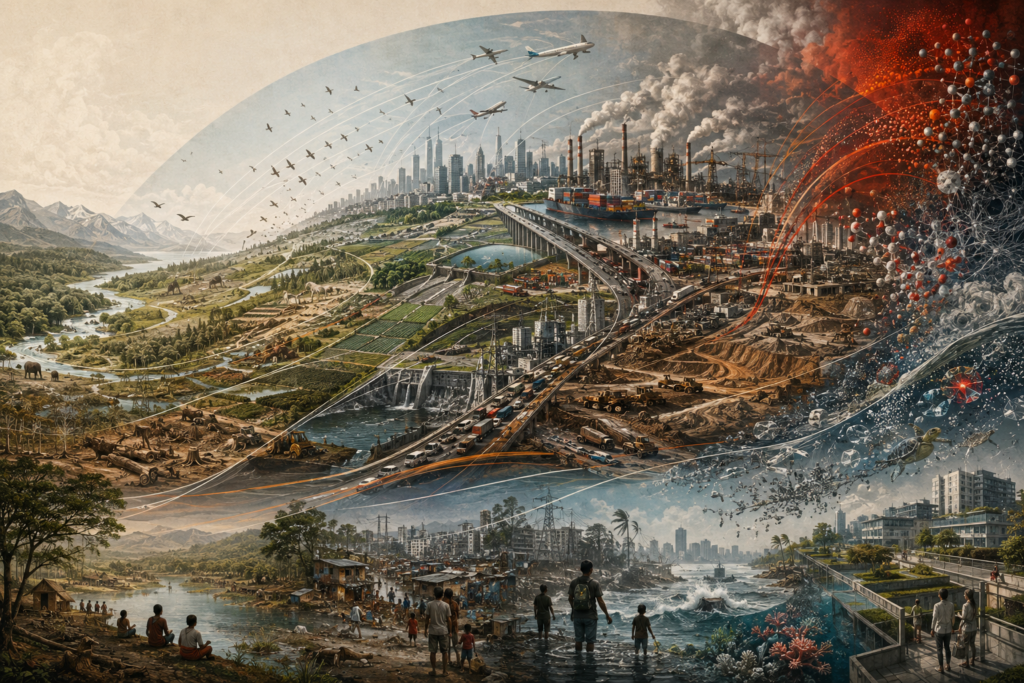
The Great Acceleration: How Human Activity Reshaped the Earth System explains the rapid post-1950 surge in human activity that transformed both society and planetary systems. The article examines how population, economic output, fossil energy use, fertilizer consumption, water use, transport, urbanization, telecommunications, trade, and material extraction expanded alongside rising carbon dioxide, methane, temperature, ocean acidification, nitrogen loading, land conversion, biodiversity loss, and synthetic chemical burdens. It connects the Great Acceleration to Holocene stability, Anthropocene risk, planetary boundaries, industrial metabolism, food systems, urban infrastructure, inequality, lock-in, and governance delay. The article argues that the Great Acceleration is not only a history of growth, but a history of coupled socio-economic and Earth-system change. It also includes mathematical, Python, and R workflows for modeling acceleration, coupling, boundary pressure, governance capacity, justice capacity, and transformation urgency.