Nudge Theory and Behavioral Public Policy
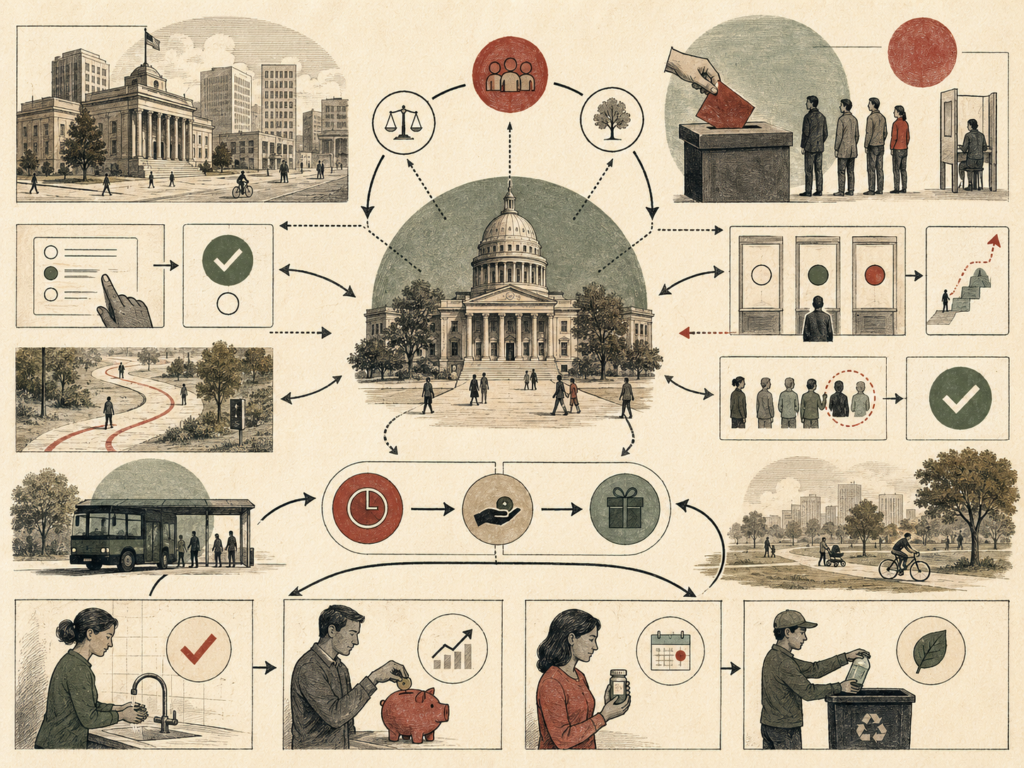
Nudge theory examines how subtle changes in decision environments can influence behavior without removing options or imposing direct mandates. This article places the theory within behavioral economics, showing how defaults, reminders, framing, and social feedback operate through choice architecture under conditions of bounded rationality, limited attention, and inertia. It also explores the difference between nudges, incentives, and regulation; the ethics of libertarian paternalism; public-policy applications; sustainability uses; and the growing relevance of nudges in digital and institutional systems. Substantial R and Python sections model reminder effects, default uptake, social feedback, and welfare across alternative nudge regimes. The broader argument is that nudge theory is best understood as a limited but important tool within behaviorally informed governance.