Geometry and the Visual Mind in Mathematics
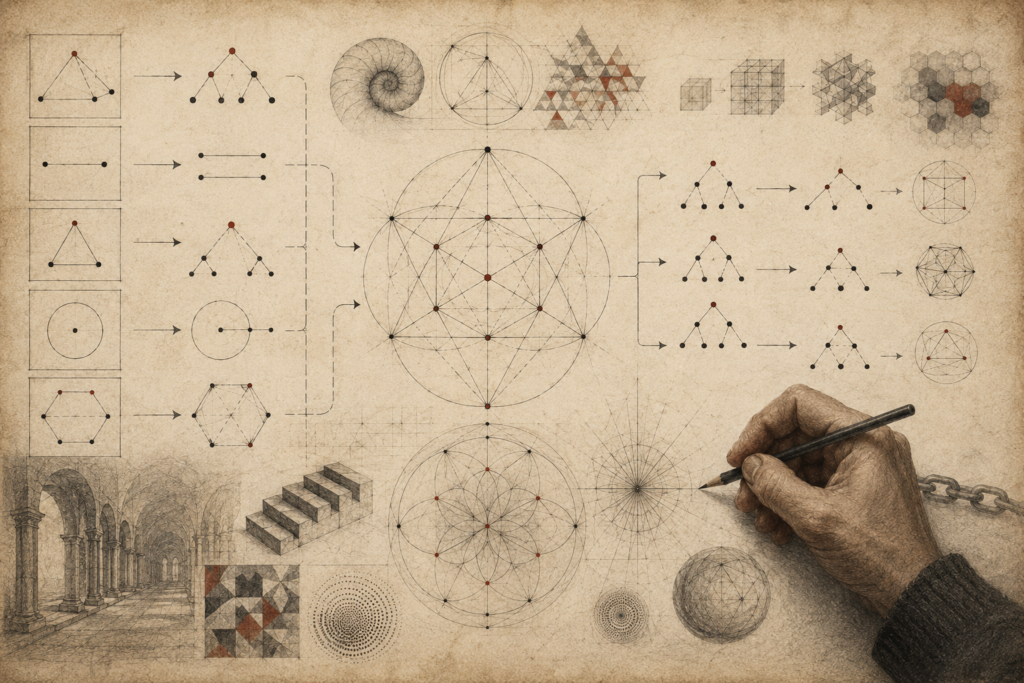
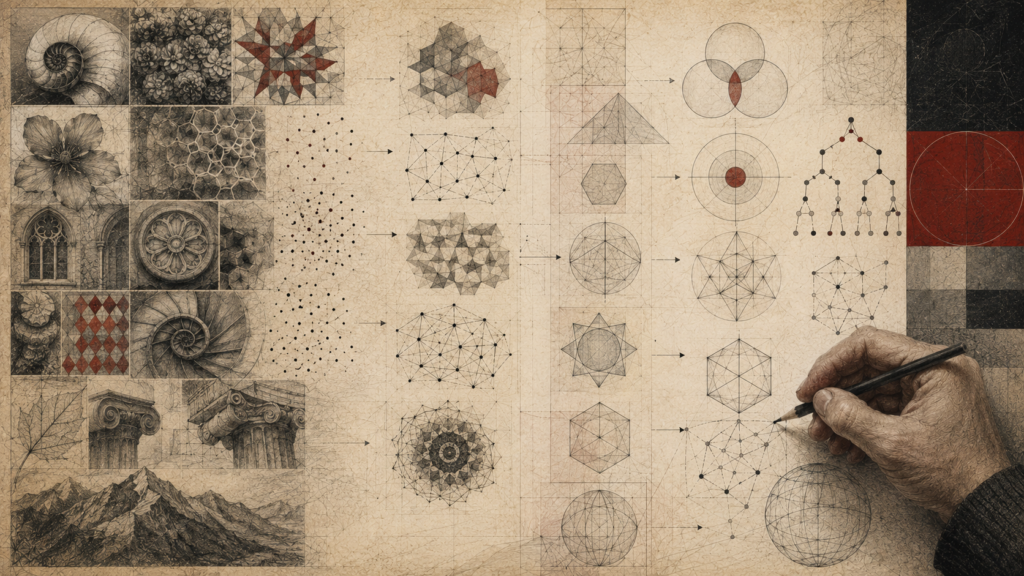
Geometry and the Visual Mind in Mathematics examines how mathematical understanding begins with shape, space, relation, transformation, and visual intuition, then becomes rigorous through definition, proof, and representation. The article explores geometry as a bridge between perception and abstraction, showing how diagrams, figures, spatial reasoning, Euclidean deduction, coordinate systems, symmetry, invariance, topology, and computational geometry help the mind recognize structure. It argues that diagrams are not decorative illustrations but active tools for discovery, explanation, and proof planning, while also emphasizing that visual evidence must be disciplined by logic and verification. By connecting classical geometry to modern visualization, Haskell algebraic data types, computational geometry, AI-generated diagrams, and responsible interpretation, the article frames the visual mind as essential to mathematical learning, modeling, scientific reasoning, and the ethical use of visual representations in technical and public contexts across education, research, and practice.