Knowledge Architecture

Knowledge architecture examines how complex bodies of information are structured, organized, and connected within intellectual systems. In interdisciplinary fields such as sustainability science, governance, economics, and psychology, knowledge rarely exists as isolated insights. Instead, ideas must be arranged within conceptual frameworks that clarify relationships between concepts and enable coherent analysis across multiple domains.

The design of knowledge systems involves the development of taxonomies, conceptual hierarchies, ontologies, and knowledge maps that help organize information into meaningful structures. These architectures make it possible to navigate complex subject areas, integrate research across disciplines, and maintain clarity as knowledge systems expand over time.

Knowledge architecture plays an increasingly important role in digital research platforms, educational systems, and knowledge-driven organizations. By structuring ideas into coherent frameworks, institutions can transform fragmented information into durable intellectual infrastructure capable of supporting research, decision-making, and long-term strategic thinking.

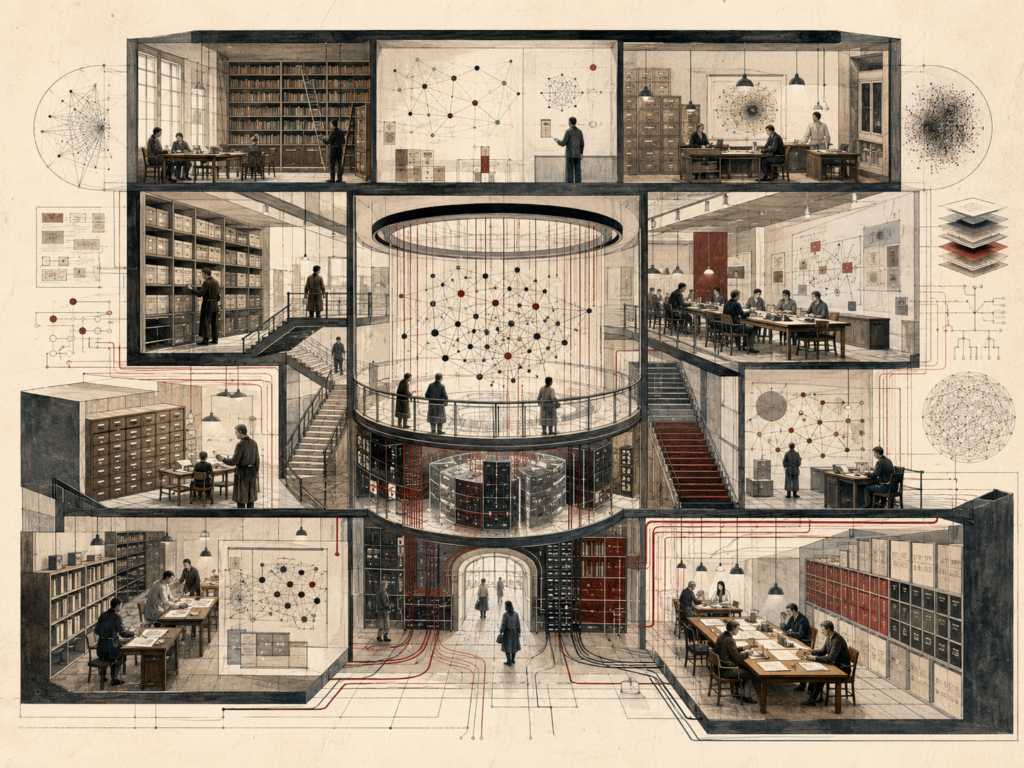
Editorial illustration of a future knowledge platform as a layered civic research institution with archives, libraries, collaboration rooms, semantic diagrams, data repositories, and public knowledge spaces.

Future Knowledge Platforms

Future knowledge platforms will shape how institutions organize evidence, preserve memory, support collaboration, and make complex information usable across disciplines. As research, policy, education, and civic decision-making become more interconnected, knowledge platforms must do more than store documents or display content. They need durable taxonomies, transparent metadata, semantic relationships, version control, governance structures, ethical AI support, and interfaces that help people move from discovery to understanding. This article examines future knowledge platforms as intellectual infrastructure: systems that connect archives, data, publications, models, expert communities, and public-facing interpretation. It emphasizes that scalable knowledge systems should remain accountable, inclusive, and resilient rather than becoming opaque engines of automation or institutional control. The future of knowledge depends not only on better tools, but on better stewardship of meaning, evidence, context, and trust across rapidly changing social, scientific, educational, and technological conditions.

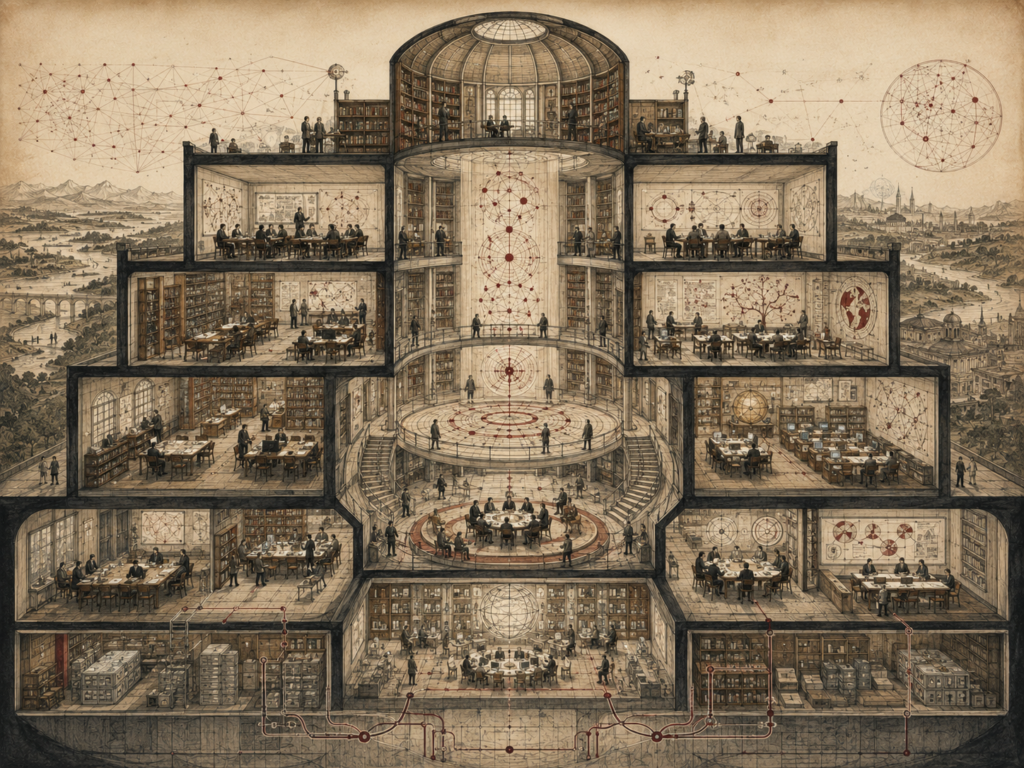
Editorial illustration of a circular scientific knowledge hub with laboratories, archives, research teams, global maps, specimens, semantic networks, and collaborative workspaces.

Knowledge Systems and Scientific Collaboration

Knowledge systems and scientific collaboration are inseparable because modern science depends on shared concepts, instruments, data, methods, metadata, laboratories, repositories, infrastructures, norms, and trust. This article explains why scientific knowledge rarely emerges from isolated insight alone, but through networks of researchers, institutions, disciplines, instruments, field sites, datasets, peer communities, funding structures, standards bodies, journals, repositories, software environments, and governance systems. It examines team science, open science, FAIR data, metadata, provenance, reproducibility, laboratories, instruments, interdisciplinary collaboration, boundary objects, repositories, computational research, scientific communication, peer review, institutional memory, global research equity, AI-assisted scientific collaboration, ethics, and responsible governance. Within knowledge architecture, scientific collaboration becomes durable when evidence, methods, software, people, credit, review, and revision are connected into transparent, reusable, accountable knowledge infrastructure capable of supporting discovery across disciplines, institutions, communities, and generations while preserving rigor, context, and public trust.

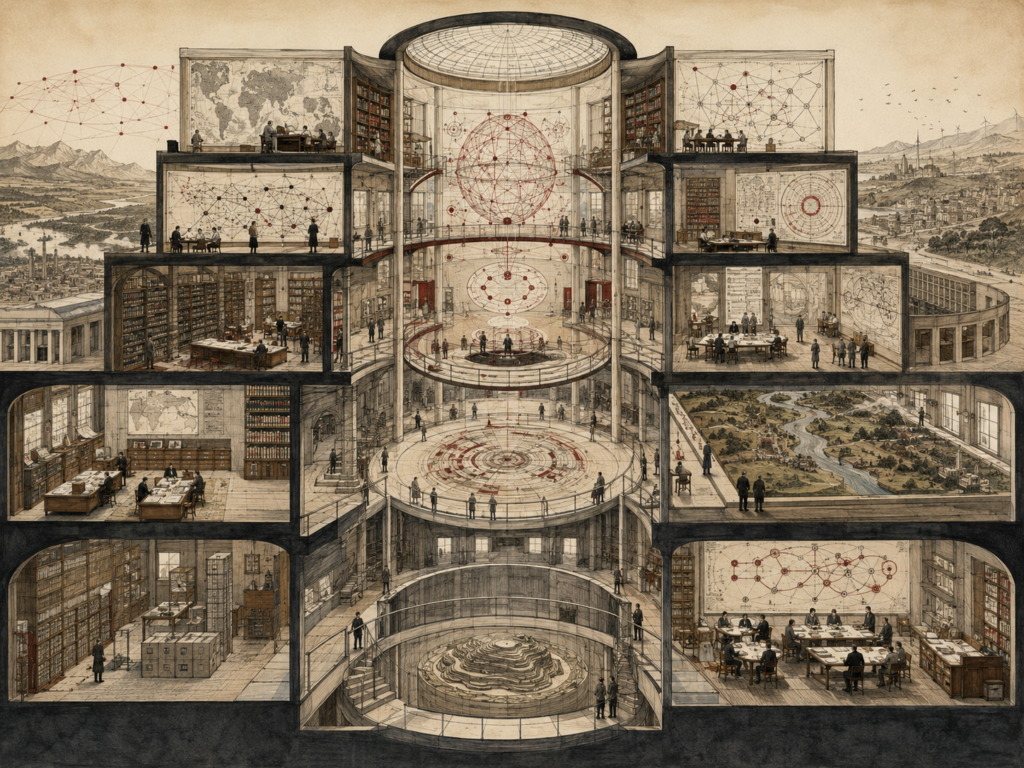
Editorial illustration of a multi-level educational knowledge system with classrooms, libraries, collaborative learning spaces, concept maps, archives, and connected learning pathways.

Designing Knowledge Systems for Education

Designing knowledge systems for education means building structured learning environments that help students, teachers, researchers, institutions, and communities organize knowledge, connect ideas, evaluate evidence, support inquiry, and revise understanding over time. This article explains why education is not only the delivery of content, but the design of conditions under which learners encounter concepts, build mental models, practice skills, receive feedback, transfer knowledge, and participate in shared intellectual life. It examines curriculum architecture, learning pathways, conceptual scaffolding, objectives, competencies, learning outcomes, assessment, feedback, educational metadata, taxonomies, knowledge graphs, repositories, open educational resources, institutional memory, accessibility, equity, inclusive learning design, AI-assisted education, governance, quality, and ethical stewardship. Within knowledge architecture, educational systems turn content into coherent, inclusive, revisable learning infrastructure.

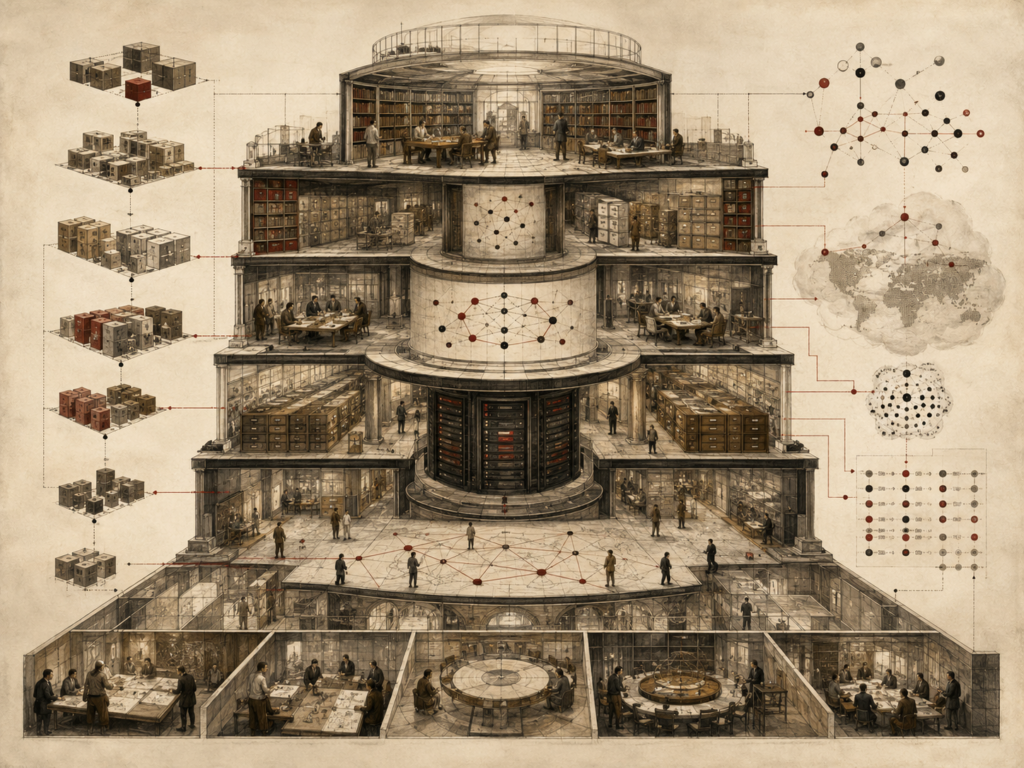
Editorial illustration of a multi-level knowledge institution with systems maps, archives, research rooms, landscape models, network diagrams, and circular analytical pathways.

Knowledge Architecture and Systems Thinking

Knowledge architecture and systems thinking belong together because every serious knowledge system is also a system of relationships, feedback, boundaries, flows, assumptions, delays, and consequences. This article explains why knowledge is not simply a collection of articles, datasets, concepts, files, or categories. It is an organized structure through which people understand how ideas connect, how evidence travels, how decisions are made, how institutions remember, and how complex problems become intelligible enough to act on. It examines boundaries, scales, context, stocks, flows, feedback, delay, mental models, assumptions, framing, knowledge flows, learning loops, emergence, adaptive knowledge, taxonomies, ontologies, systems maps, governance, equity, responsibility, and AI-assisted systems thinking. Within knowledge architecture, systems thinking helps transform fragmented knowledge into adaptive intellectual infrastructure.

Editorial illustration of a layered governance institution with archives, deliberation chambers, policy rooms, civic participants, analytical maps, and knowledge pathways flowing through the building.

Knowledge Architecture in Governance Systems

Knowledge architecture in governance systems is the design of intellectual structures that help institutions gather evidence, define authority, organize rules, preserve accountability, support public reasoning, and learn from decisions over time. This article explains why governance is not only the exercise of power, but also the organization of knowledge: what institutions know, how they know it, who can challenge it, which records are preserved, which evidence is trusted, and which communities are heard. It examines governance as a knowledge system, authority, rules, institutional memory, evidence, policy, public reasoning, participation, transparency, accountability, metadata, taxonomies, governance knowledge graphs, risk, resilience, equity, power, contestable knowledge, audits, AI-assisted governance, and institutional learning. Within knowledge architecture, governance systems become more traceable, accountable, adaptive, publicly reviewable, and open to correction.

Editorial illustration of a multi-level institutional knowledge system with archives, maps, analytical rooms, deliberation chambers, and decision pathways converging around civic decision-making.

Knowledge Systems and Decision-Making

Knowledge systems and decision-making are inseparable because every serious decision depends on how knowledge is gathered, structured, interpreted, weighted, contested, and revised. This article explains why decisions do not emerge from information alone. They depend on categories, evidence standards, institutional routines, models, values, incentives, uncertainty, authority, and human judgment. It examines decision contexts, evidence flows, bounded rationality, cognitive limits, institutional settings, uncertainty, risk, trade-offs, decision models, feedback, learning, institutional memory, equity, power, accountability, metadata, taxonomies, decision knowledge graphs, and AI-assisted decision support. Within knowledge architecture, decision-making shows why data, evidence, options, criteria, assumptions, outcomes, and feedback must be structured together. The article frames knowledge systems as decision infrastructure for making judgment more informed, traceable, contestable, adaptive, equitable, and accountable.

Editorial illustration of a transparent multi-level research environment with conceptual networks, system maps, ecological spaces, analytical rooms, and layered model structures.

Conceptual Modeling in Complex Systems

Conceptual modeling in complex systems is the practice of building structured representations that help researchers understand how interacting parts produce patterns, feedback, emergence, adaptation, resilience, collapse, and transformation. This article explains why conceptual models are more than diagrams: they are disciplined representations of how systems are believed to work. It examines system boundaries, units of analysis, components, relationships, feedback loops, emergence, nonlinearity, thresholds, stock-flow models, agent-based models, network models, assumptions, evidence, model purpose, computational simulation, uncertainty, scenarios, equity, governance, and AI-assisted modeling. Within knowledge architecture, conceptual models make complex systems inspectable, revisable, and accountable. They help translate complexity into structures that can be discussed, tested, simulated, governed, and connected to evidence without pretending that the model fully captures the system itself.

Scroll to Top