Intelligent Infrastructure Systems

Intelligent infrastructure systems examine how technological, physical, and informational systems interact to support modern society. Energy grids, transportation networks, water systems, communications infrastructure, and urban systems provide the foundational structures that enable economic activity, public services, and everyday life.

These systems increasingly combine physical infrastructure with sensor networks, data platforms, artificial intelligence, and distributed computing. This integration enables real-time monitoring, predictive maintenance, adaptive resource management, and stronger resilience. Because infrastructure systems are deeply interconnected, studying them requires a systems perspective that connects engineering, data science, governance, economics, and sustainability.

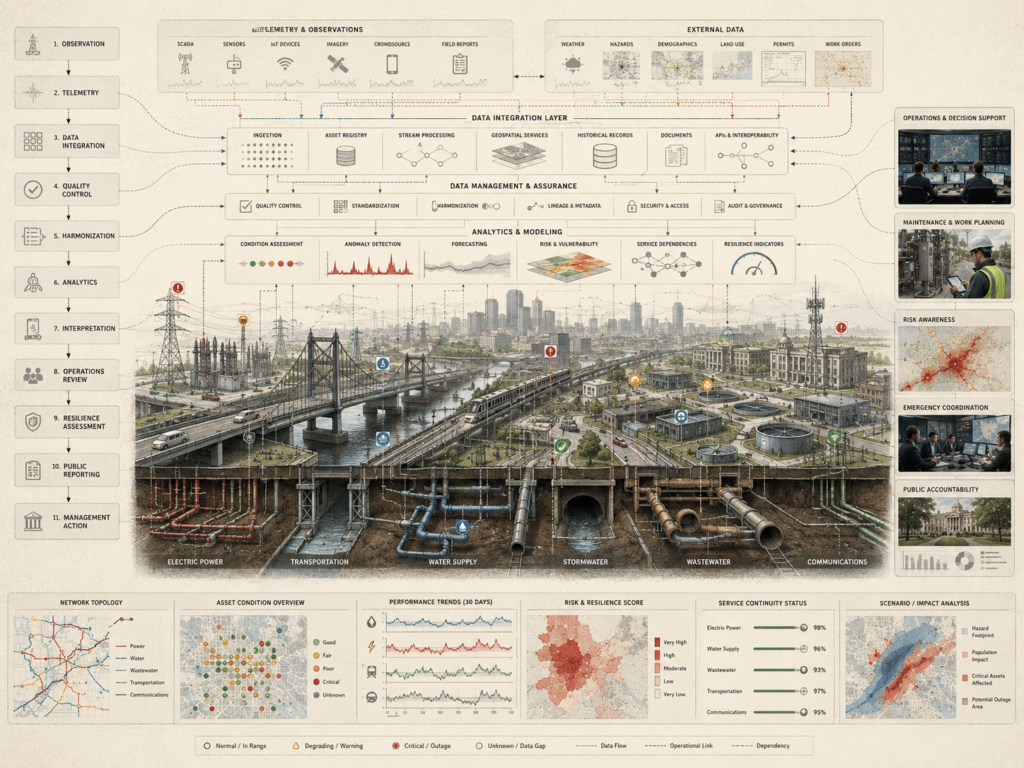
Restrained infrastructure data platform diagram showing telemetry, asset registries, geospatial services, analytics, risk maps, service continuity, operations centers, and public accountability pathways.

Infrastructure Data Platforms and Analytics: Integration, Visibility and Resilience

Infrastructure data platforms turn fragmented operational records into shared visibility for resilience and accountable decision-making. Telemetry, SCADA signals, IoT sensors, imagery, field reports, asset registries, geospatial layers, weather data, hazard maps, permits, work orders, and historical records become useful when they are integrated through common standards, metadata, quality controls, lineage, access management, and audit trails. This article examines how infrastructure analytics support condition assessment, anomaly detection, forecasting, risk analysis, service-dependency mapping, maintenance planning, emergency coordination, and service-continuity review. Strong platforms do more than store data; they help institutions understand system performance, prioritize action, detect emerging risks, and communicate public value. By linking integration, visibility, resilience indicators, and public accountability, infrastructure data platforms strengthen decisions across power, transportation, water, stormwater, wastewater, and communications systems.
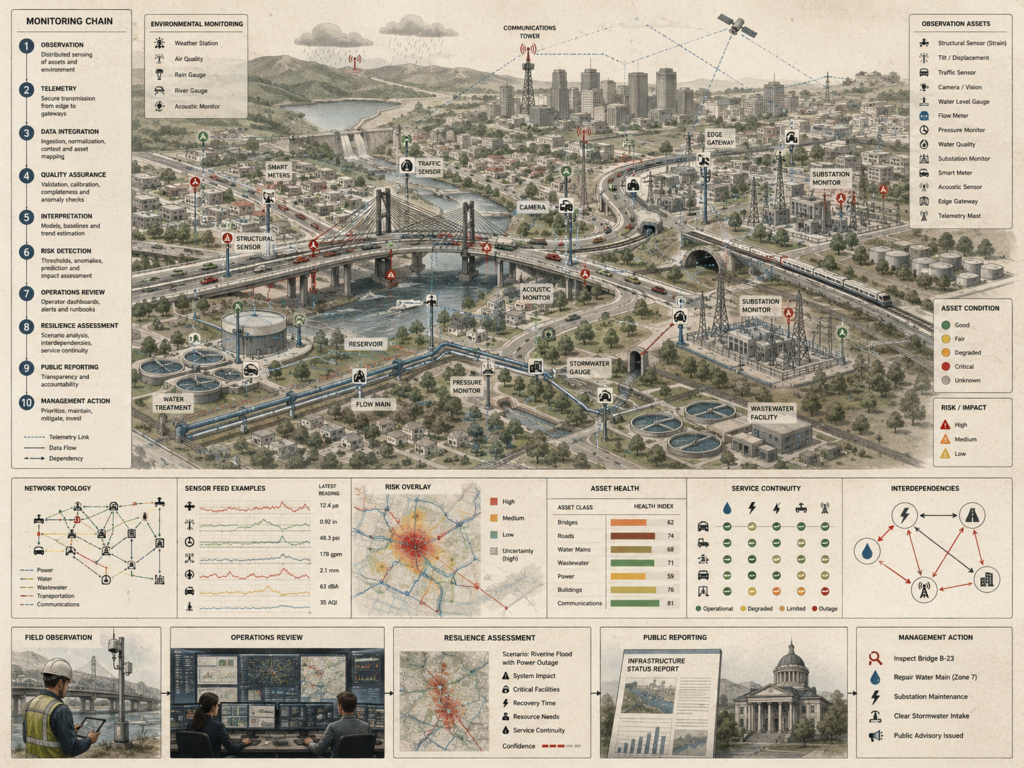
Restrained infrastructure monitoring diagram showing urban sensors, telemetry links, asset condition, risk overlays, service continuity, operations review, public reporting, and resilience assessment.

Infrastructure Monitoring and Sensor Integration: Observability and Resilience

Infrastructure monitoring and sensor integration make public systems observable, measurable, and more resilient. Structural sensors, traffic monitors, water-level gauges, flow meters, pressure sensors, water-quality probes, smart meters, substation monitors, acoustic sensors, cameras, weather stations, edge gateways, and telemetry networks help reveal how bridges, roads, rail, tunnels, reservoirs, water systems, wastewater facilities, power infrastructure, stormwater assets, and public buildings are performing. This article examines how integrated sensing supports data quality, asset condition assessment, risk detection, service-continuity review, operations coordination, public reporting, and management action. Monitoring is valuable only when observation leads to interpretation, accountability, and timely response. By linking sensor networks, infrastructure analytics, resilience assessment, and institutional decision-making, integrated monitoring helps protect essential services and strengthen long-term public infrastructure stewardship.

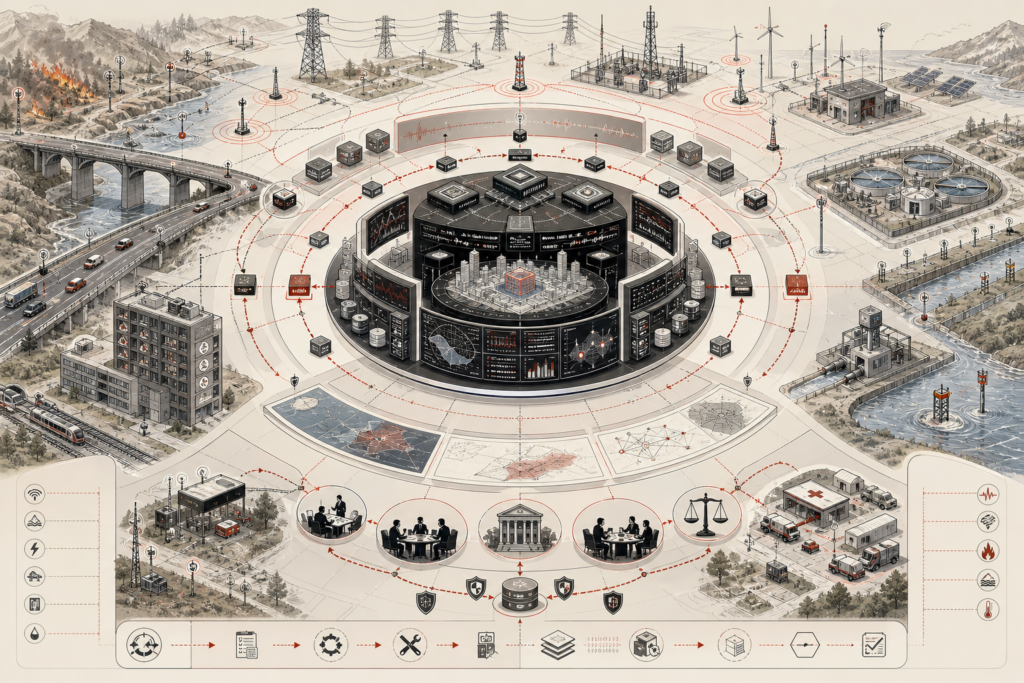
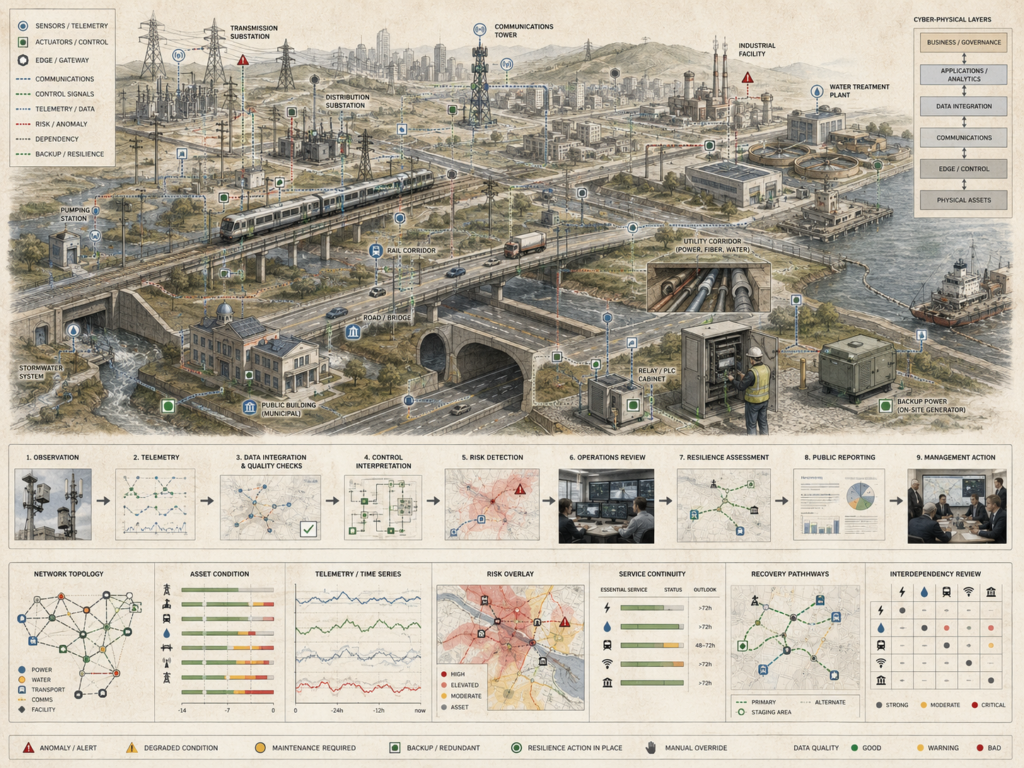
Restrained cyber-physical infrastructure diagram showing power, water, transportation, communications, sensors, control systems, telemetry, risk overlays, service continuity, and recovery pathways.

Cyber-Physical Infrastructure Systems: Control, Risk and Resilience

Cyber-physical infrastructure systems connect physical assets, digital sensing, control signals, and operational decisions across essential public systems. Power substations, water treatment plants, pumping stations, stormwater networks, rail corridors, roads, bridges, communications towers, industrial facilities, utility corridors, public buildings, field devices, actuators, edge gateways, and operations centers increasingly function as interconnected control environments. This article examines how cyber-physical infrastructure depends on reliable telemetry, data quality, control interpretation, anomaly detection, service-continuity review, recovery pathways, interdependency analysis, and resilience assessment. The challenge is not connectivity alone; it is ensuring that connected systems remain safe, accountable, and recoverable under stress. By linking control, risk detection, operations review, and public reporting, cyber-physical infrastructure supports continuity, resilience, and responsible stewardship of essential services.

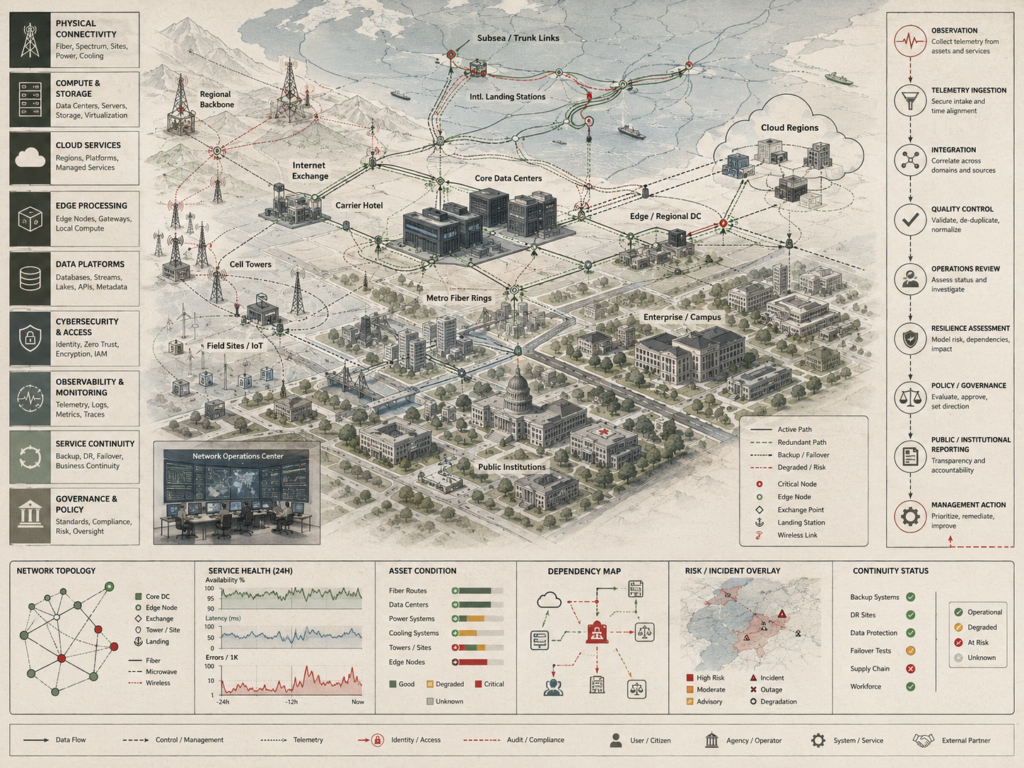
Restrained digital infrastructure systems diagram showing fiber networks, data centers, cloud regions, edge nodes, wireless towers, telemetry, cybersecurity, service continuity, and governance pathways.

Digital Infrastructure Systems: Networks, Cloud, Data and Governance

Digital infrastructure systems connect networks, cloud platforms, data systems, and governance into the operating layer of modern institutions and public services. Fiber routes, subsea links, internet exchanges, data centers, cloud regions, edge nodes, wireless towers, IoT systems, and enterprise campuses increasingly support essential communication, computation, storage, security, and coordination. This article examines how digital infrastructure depends on observability, cybersecurity, access control, metadata, dependency mapping, service-health monitoring, continuity planning, resilience assessment, and accountable governance. Its value is not connectivity alone; it is the ability to keep services reliable, secure, interoperable, recoverable, and publicly accountable. By linking networks, cloud, data, and institutional oversight, digital infrastructure systems become foundations for resilience, data stewardship, public trust, and responsible digital transformation.

Editorial scientific illustration showing AI as a governed media-system architecture with synthetic media pathways, provenance chains, verification gates, recommender flows, disinformation-risk signals, correction loops, public trust, and accountability structures.

Intelligent Infrastructure Systems: How Digital Technologies Transform Physical Infrastructure

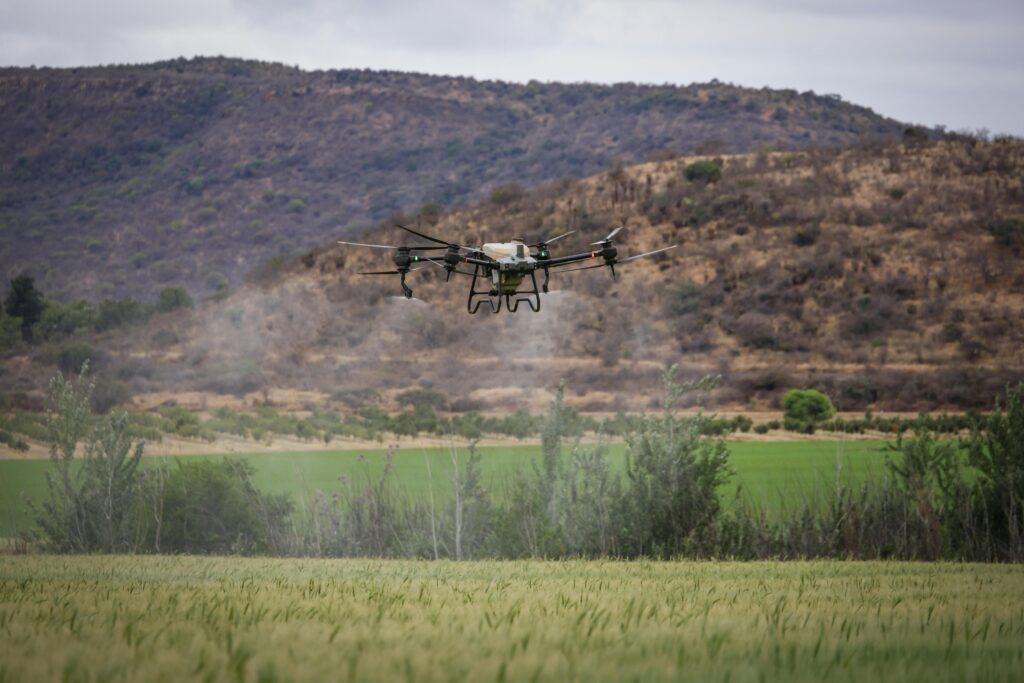
Intelligent infrastructure systems integrate sensing, embedded computing, edge intelligence, communication networks, data platforms, analytics, automated control, and governance into essential physical systems. This pillar explores how roads, grids, water networks, buildings, emergency systems, environmental assets, and public services become dynamically monitored cyber-physical infrastructure. It emphasizes LPWAN, LoRaWAN, MQTT, OPC UA, Embedded C, TinyML, PYNQ, HDL, SQL, Python, R, geospatial analytics, digital twins, disaster relief, remote monitoring, predictive maintenance, and infrastructure observability. By connecting field devices, telemetry, edge processing, data governance, resilience modeling, and institutional decision support, the series frames intelligent infrastructure as a public-interest system for improving reliability, adaptation, emergency response, lifecycle stewardship, and accountable infrastructure governance.

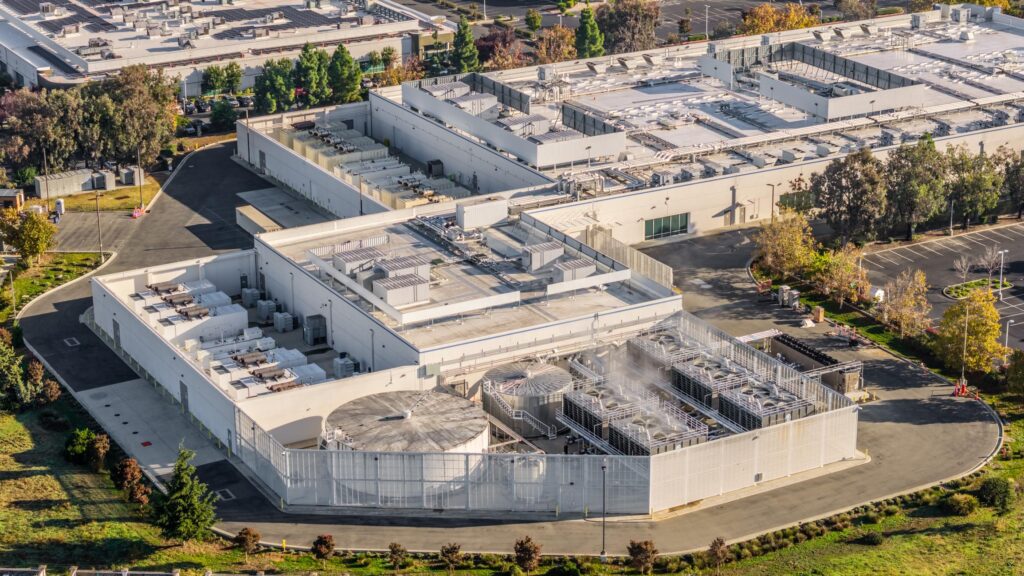
Environmental cost of data centers powering artificial intelligence infrastructure

Environmental Cost of Data Centers: Energy, Water, and AI Infrastructure

Data centers make the cloud physically visible: servers, cooling systems, electrical substations, backup power, water systems, land, buildings, and global supply chains. As artificial intelligence and cloud computing expand, these facilities are becoming major infrastructure systems with significant environmental costs. This article examines data centers through the lens of energy demand, water consumption, cooling design, grid expansion, AI compute growth, hardware supply chains, and public accountability. It argues that digital infrastructure cannot be evaluated only by speed, scale, or efficiency metrics. Its sustainability depends on where power comes from, how water is used, how cooling systems are designed, how hardware is produced and retired, and whether communities can understand and govern the impacts of the infrastructure behind the cloud.

Scroll to Top