Positive Psychology
Positive psychology studies the conditions that allow individuals and communities to flourish. Rather than focusing primarily on psychological disorders or dysfunction, the field investigates the strengths, motivations, and environmental factors that contribute to well-being, resilience, and meaningful life outcomes.
Research in positive psychology examines topics such as life satisfaction, intrinsic motivation, psychological resilience, character strengths, gratitude, purpose, and social connection. Scholars in the field explore how these factors influence mental health, personal development, and long-term human flourishing.
Positive psychology integrates insights from cognitive psychology, behavioral science, neuroscience, and philosophy. Its findings inform areas such as education, leadership development, organizational culture, and public policy. Programs that incorporate positive psychology principles often aim to enhance well-being, build resilience, and strengthen supportive social environments.
In recent years, positive psychology has also intersected with sustainability research, emphasizing the role of well-being, social trust, and community cohesion in building resilient societies capable of navigating economic, environmental, and technological change.
Positive psychology emerged as an important correction to psychology’s long emphasis on pathology, but its rise has also generated serious criticism. This article examines the major critiques of positive psychology, including concerns about individualism, structural inequality, measurement, commercialization, and cultural bias. It argues that these critiques are not merely oppositional; they have helped clarify what a more mature science of flourishing must look like. By bringing institutions, inequality, culture, and public use into the discussion, the article reframes critique as part of the field’s development rather than a rejection of it. The result is a more serious understanding of flourishing as a psychological, social, institutional, and cultural question.
Positive psychology and sustainability converge around a shared question: what conditions allow individuals and societies to flourish over time? This article reframes that relationship by showing that flourishing is not simply a private psychological state, but a systems-level outcome shaped by institutions, public health, education, community trust, and ecological stability. It explores why sustainability needs a theory of well-being, how the SDGs and WHO already embed well-being in global policy, and why resilience, meaning, and adaptive capacity matter under conditions of climate strain and institutional stress. The result is a more serious understanding of flourishing as a durable relationship among persons, communities, and the social and ecological systems that sustain life.
One of the most important debates in well-being research concerns whether living well is best understood as happiness or as flourishing. This article examines the distinction between hedonic well-being, centered on life satisfaction and emotional experience, and eudaimonic well-being, centered on meaning, virtue, growth, and psychological functioning. Drawing on philosophy, modern psychology, and current well-being science, it shows why both traditions remain essential to understanding human flourishing. It also explores how the debate shapes measurement, public policy, and sustainability, arguing that a mature science of well-being must remain attentive both to how life feels from within and to the deeper developmental quality of the life being lived.
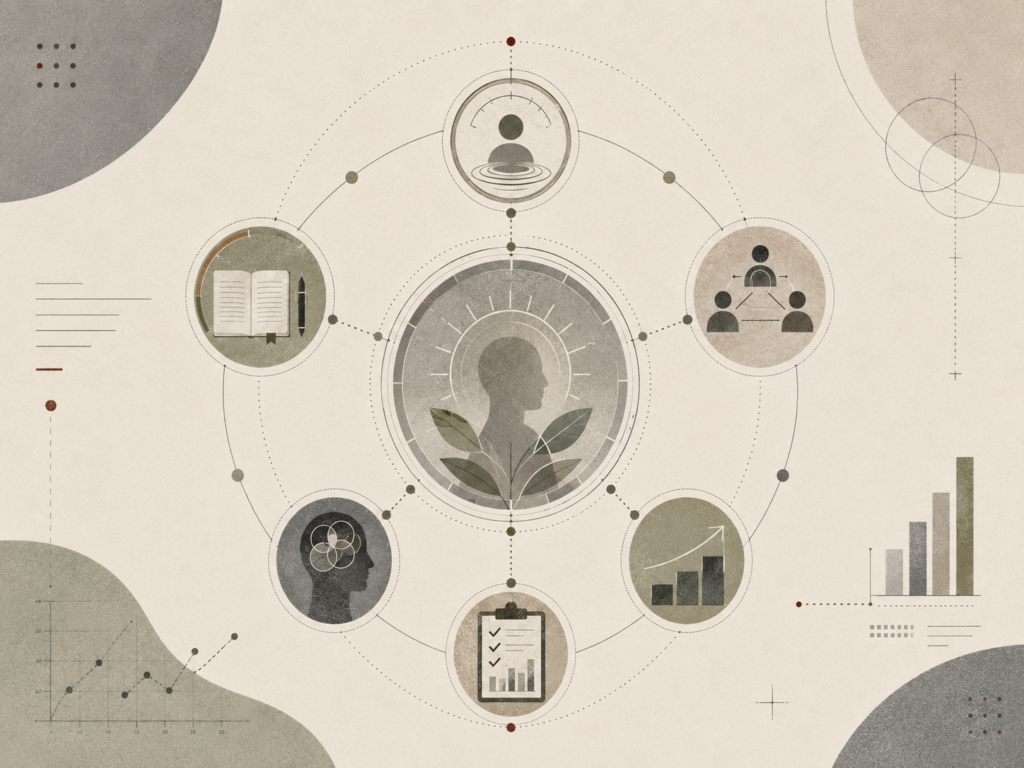
The scientific study of flourishing depends on a difficult methodological question: how can well-being be measured without reducing it to a single oversimplified variable? This article traces how positive psychology moved beyond the measurement of pathology to develop instruments for life satisfaction, psychological functioning, meaning, relationships, and accomplishment. It examines the major traditions of flourishing measurement, including subjective well-being, eudaimonic well-being, and the PERMA framework, while also addressing the methodological challenges of self-report, cultural variation, and complex causality. The result is a stronger understanding of well-being science as a multidisciplinary effort to transform flourishing from a philosophical ideal into a measurable, empirical, and policy-relevant domain.
Positive education integrates academic learning with the science of well-being, arguing that schools should cultivate not only intellectual achievement but also resilience, belonging, purpose, and psychological development. This article examines the origins of positive education, the influence of PERMA and resilience-based interventions, the evidence for school-based well-being programs, and the policy questions raised by the global turn toward learner well-being. It also addresses the field’s critiques, including structural limits, cultural adaptation, and the risk of reducing institutional problems to individual skills. The result is a stronger account of positive education as a serious effort to rethink what schools are for and how they support flourishing over time.
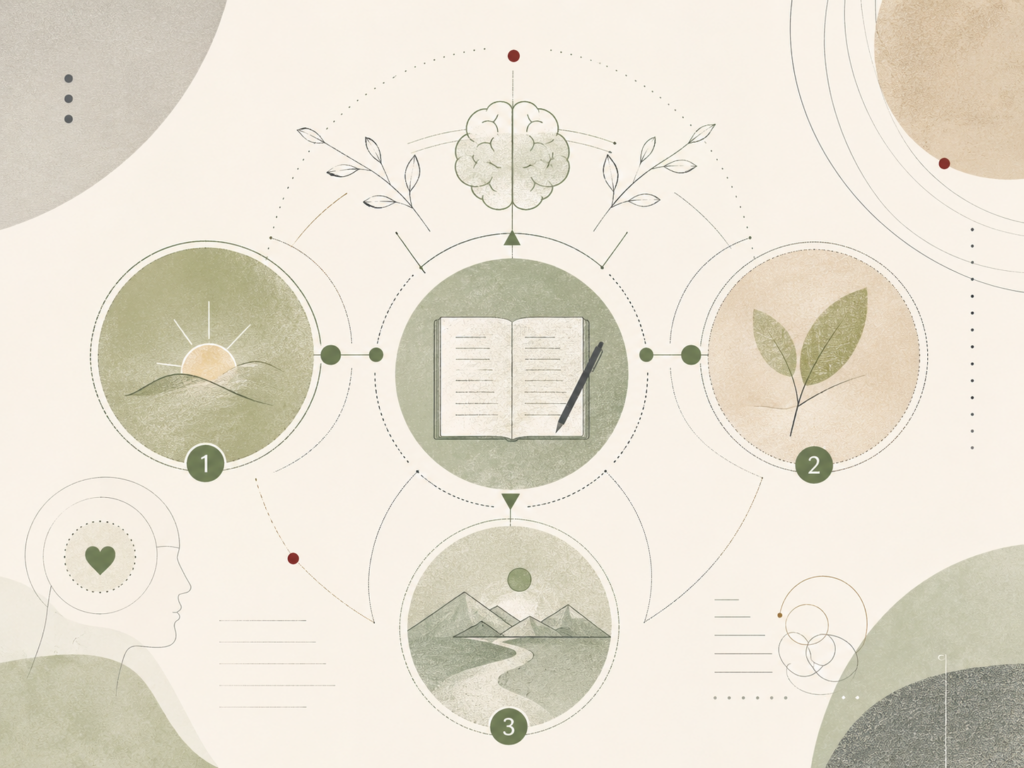
The Three Good Things exercise is one of the best-known interventions in positive psychology because it shows how a small reflective practice can measurably influence well-being. This article examines the origins of the exercise, how it works, why it may be effective, and what the intervention literature suggests about its benefits and limits. It situates Three Good Things within broader research on gratitude, attentional retraining, cognitive framing, and emotional memory, while also noting that the practice is modest in scope and not a substitute for structural change or clinical care. The result is a more serious understanding of the exercise as an evidence-informed practice of appreciative awareness.
Positive psychology interventions are structured, evidence-informed practices designed to cultivate well-being through gratitude, strengths use, hope, meaning, and supportive social connection. This article examines the origins of PPIs, the major intervention families that define the field, the evidence supporting their use, and the mechanisms through which they may work. It also addresses their limitations, including modest effect sizes, contextual dependence, and the risk of overselling individual practices while neglecting structural conditions. The result is a more serious account of PPIs as practical tools that can support flourishing when used with realism, fit, and conceptual discipline.
Gratitude is one of the most important strengths in positive psychology because it links well-being to attention, interpretation, and relationship rather than to pleasure alone. This article examines how gratitude became a central topic in flourishing research, why it matters psychologically and socially, and what current intervention and neuroscience work suggests about its effects. It also explores gratitude’s role in resilience, social bonding, and appreciative awareness, while addressing the concept’s ethical and methodological limits. The result is a more serious understanding of gratitude as a relational and interpretive capacity that can deepen well-being when used with realism rather than sentimentality.
Broaden-and-Build Theory is one of the central frameworks in positive psychology because it explains why positive emotions matter for more than momentary pleasure. This article examines Barbara Fredrickson’s argument that positive emotions broaden attention, cognition, and behavioral possibility, and that repeated experiences of joy, interest, gratitude, love, and related states can help build durable psychological, social, intellectual, and physical resources over time. It also explores the undoing effect, resilience, and everyday examples of broadening and building, while addressing the theory’s methodological and contextual limits. The result is a stronger account of positive emotion as a developmental force within human flourishing.