Can Well-Being Be Sustainable?
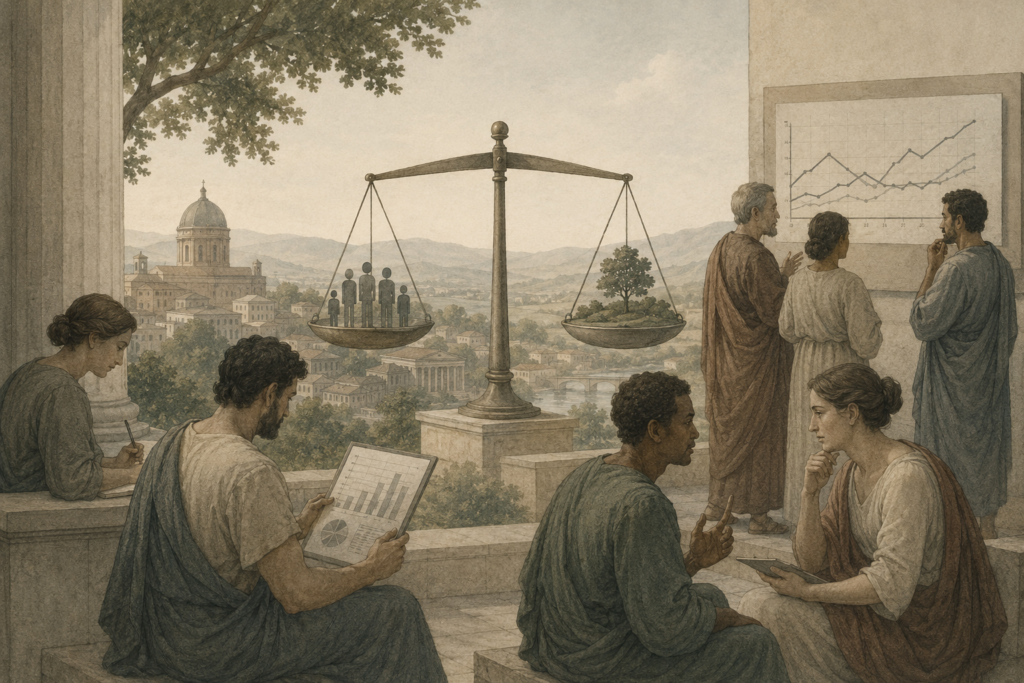
Sustainable well-being asks whether human flourishing can endure without undermining the ecological, social, and institutional systems on which it depends. This article reframes well-being as a long-horizon systems problem rather than a short-term measure of satisfaction alone. It explores the ecological limits of prosperity, the critique of growth in ecological economics, the institutional foundations of durable flourishing, and the psychological capacities needed for resilient adaptation under conditions of uncertainty. It also introduces formal models and code-based analytical approaches for researchers studying the interaction of well-being, inequality, ecological integrity, and governance. The result is a more serious account of flourishing: one that includes quality of life, but also its durability across generations.