Positive Psychology
Positive psychology studies the conditions that allow individuals and communities to flourish. Rather than focusing primarily on psychological disorders or dysfunction, the field investigates the strengths, motivations, and environmental factors that contribute to well-being, resilience, and meaningful life outcomes.
Research in positive psychology examines topics such as life satisfaction, intrinsic motivation, psychological resilience, character strengths, gratitude, purpose, and social connection. Scholars in the field explore how these factors influence mental health, personal development, and long-term human flourishing.
Positive psychology integrates insights from cognitive psychology, behavioral science, neuroscience, and philosophy. Its findings inform areas such as education, leadership development, organizational culture, and public policy. Programs that incorporate positive psychology principles often aim to enhance well-being, build resilience, and strengthen supportive social environments.
In recent years, positive psychology has also intersected with sustainability research, emphasizing the role of well-being, social trust, and community cohesion in building resilient societies capable of navigating economic, environmental, and technological change.
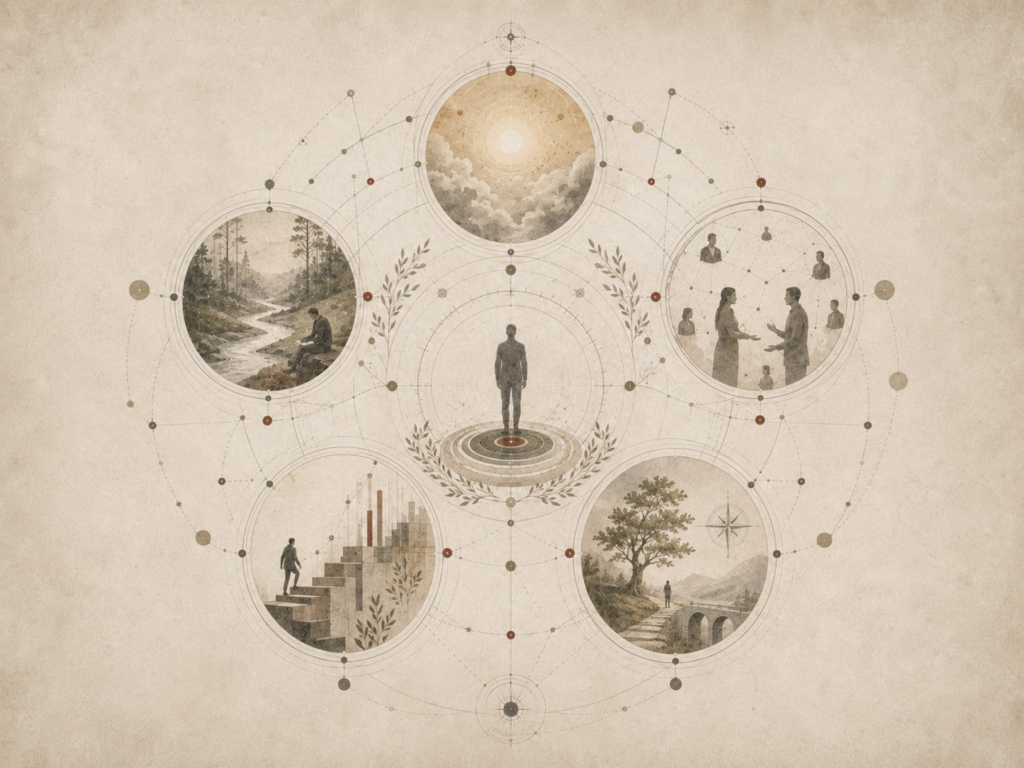
The PERMA model of well-being is one of the central frameworks in positive psychology because it reconceives flourishing as a multidimensional structure rather than a single emotional state. This article examines Martin Seligman’s five-part model of positive emotion, engagement, relationships, meaning, and accomplishment, while also exploring its measurement, institutional applications, and relationship to subjective well-being and eudaimonic traditions. It adds a related articles section linking PERMA to flourishing measurement, meaning, flow, self-determination, education, public health, sustainability, and the future of well-being science. The result is a stronger account of PERMA as a serious framework for understanding how flourishing is built across personal, social, and institutional life.