Language Processing in Cognitive Psychology
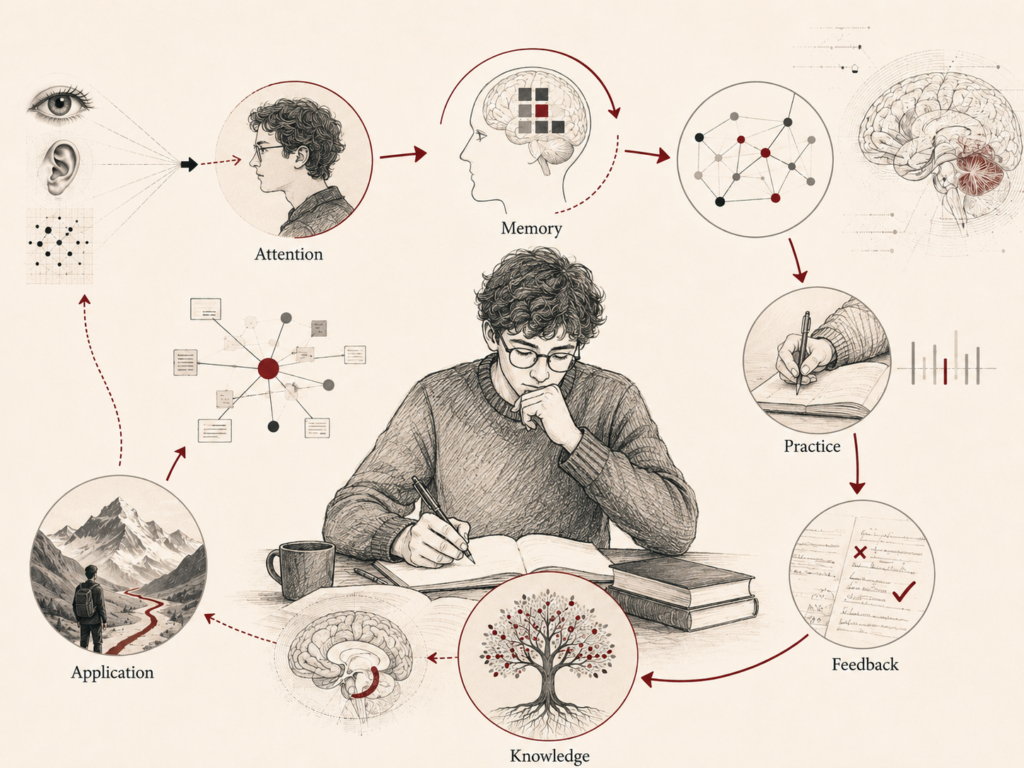
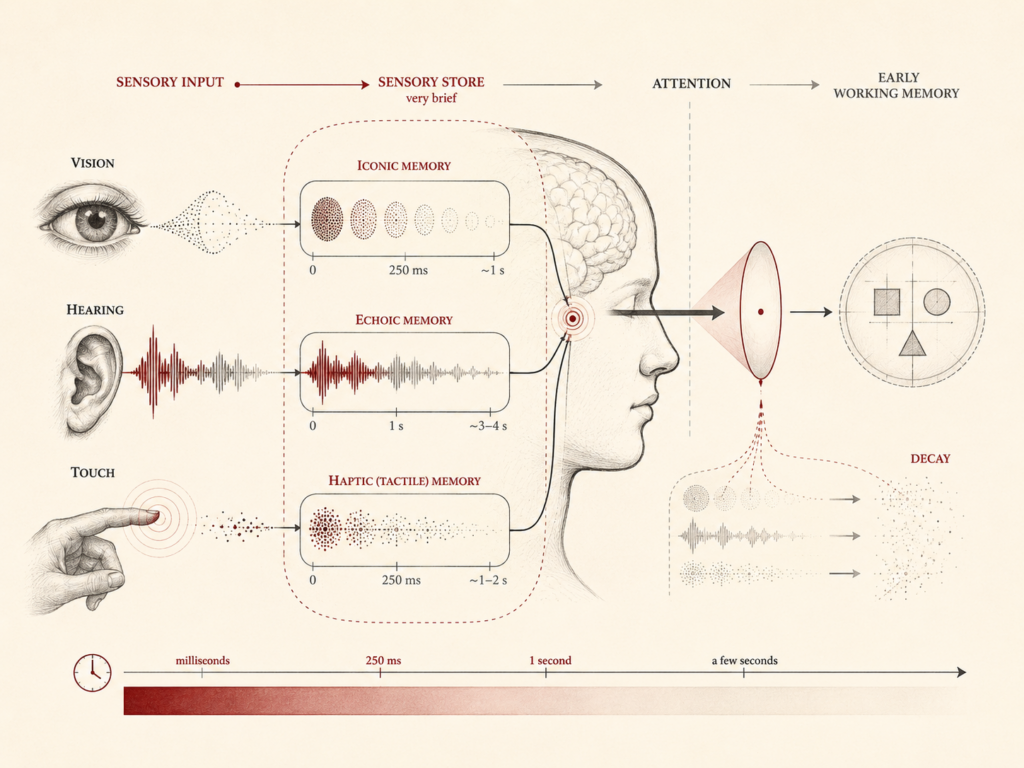
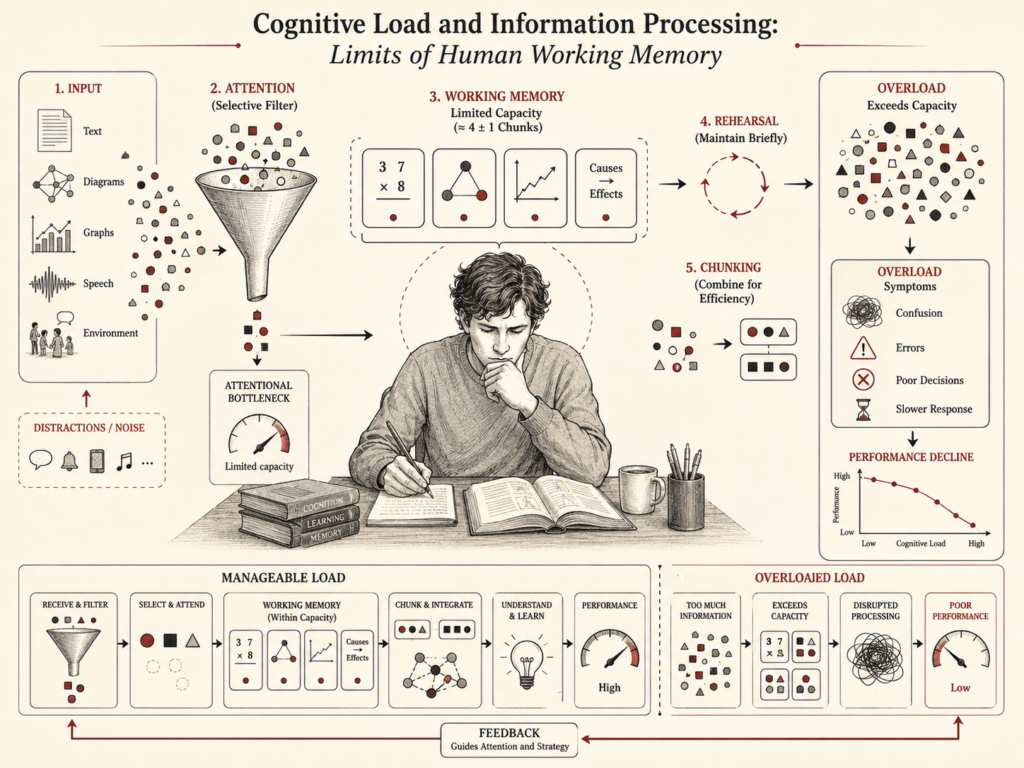
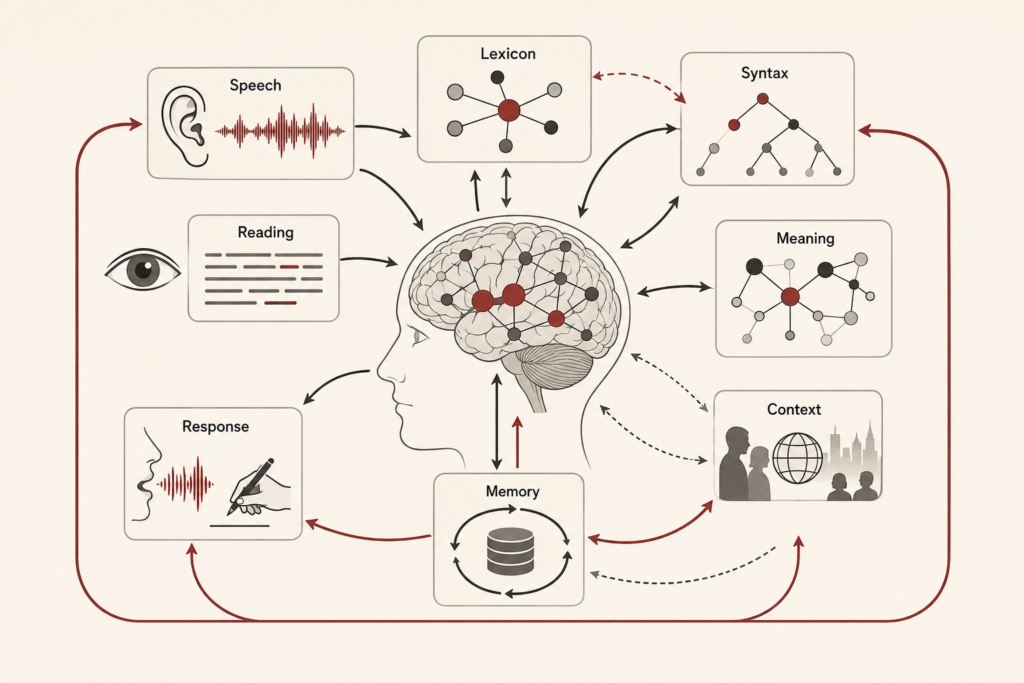
Language processing refers to the set of mental operations through which sounds, symbols, and written forms are transformed into structured meaning and coherent expression. In cognitive psychology, language is not treated merely as a tool for communication, but as one of the central systems through which the mind organizes knowledge, constructs meaning, and coordinates social and intellectual life. These processes draw together multiple cognitive systems at once: perception makes linguistic input available, attention selects relevant signals, memory provides vocabulary and world knowledge, and working memory supports the temporary maintenance of structure as sentences are interpreted or produced. Language processing is therefore both rapid and deeply layered, involving phonological, lexical, syntactic, semantic, and pragmatic operations that interact continuously rather than unfolding as isolated steps. It is also one of the clearest ways to see cognition in motion, because language links internal representation to public communication, allowing thought to be expressed, shared, revised, and socially transmitted. For that reason, the study of language processing offers insight not only into comprehension and production, but into the broader architecture of human cognition itself.