Inequality Aversion in Economic Decision-Making
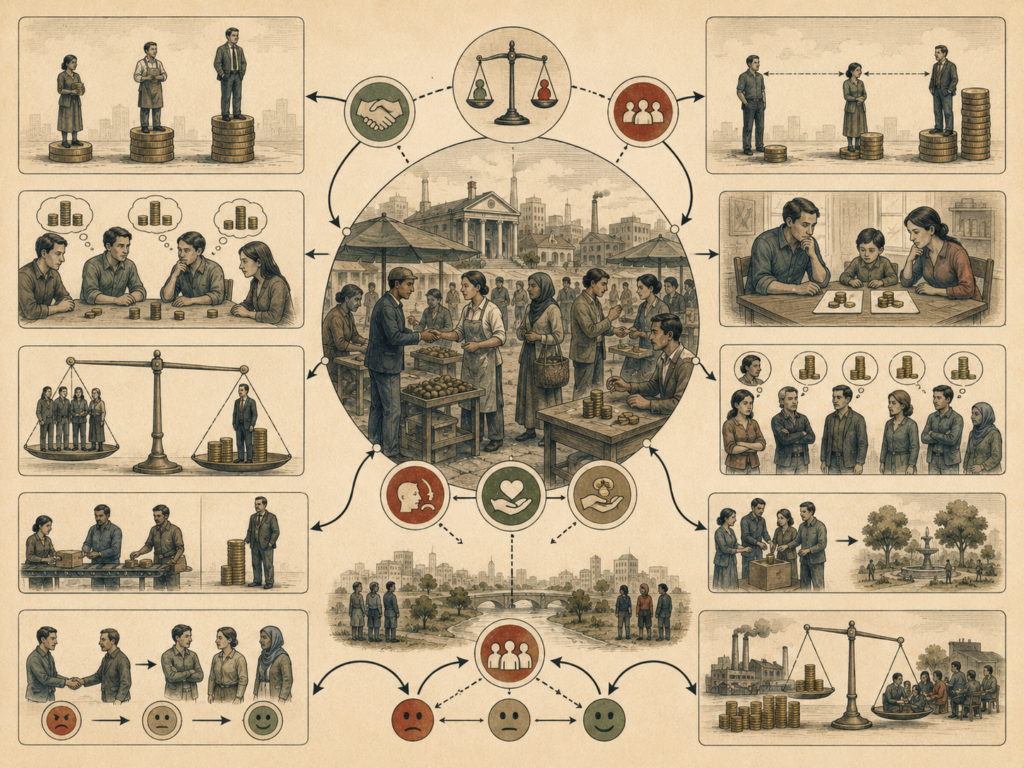
Inequality aversion examines how distributive fairness enters economic decision-making by shaping how people evaluate outcomes relative to others rather than solely through their own material payoff. This article explores the concept of advantageous and disadvantageous inequality aversion, the Fehr-Schmidt and Bolton-Ockenfels models, experimental evidence from bargaining and allocation games, labor-market and policy implications, and the relation between distributive justice and institutional legitimacy. It also includes substantial R and Python sections with fully commented code for simulating bargaining, redistribution, and distributional welfare under heterogeneous social preferences. The broader argument is that inequality aversion is a central part of economic behavior, not a peripheral moral exception to otherwise self-interested choice.