Strategic Ideation

Strategic ideation focuses on the structured generation of ideas, conceptual frameworks, and narratives that guide long-term strategy. Unlike informal brainstorming, strategic ideation involves disciplined methods for exploring complex problems, reframing assumptions, and developing innovative approaches to emerging challenges.

Strategic ideation is widely used in fields such as innovation management, content strategy, design research, and organizational development. Techniques often include concept mapping, scenario exploration, narrative framing, and interdisciplinary synthesis.

The goal of strategic ideation is not simply to produce more ideas, but to generate ideas that clarify problems, reveal hidden opportunities, and inform strategic decision-making. Effective ideation requires both creative thinking and analytical rigor.

In knowledge-intensive fields, strategic ideation also supports the development of intellectual architectures—frameworks that organize complex information into coherent systems of thought. These frameworks enable organizations and research communities to identify emerging trends, develop strategic insights, and communicate ideas that shape future innovation.

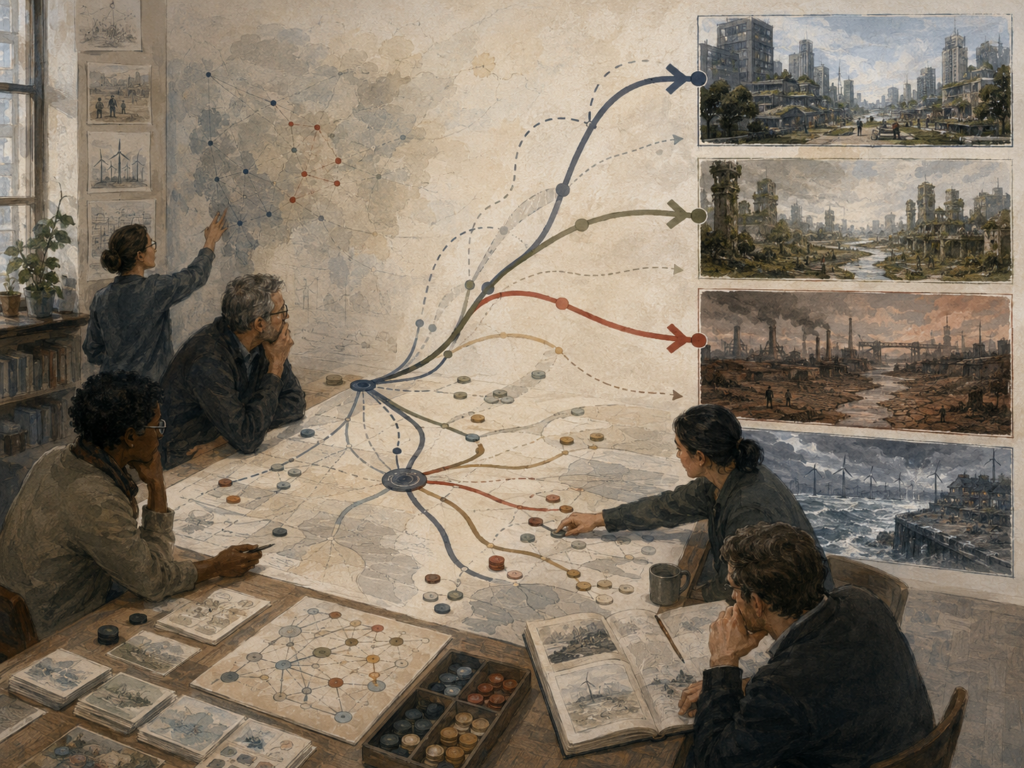
Researchers study branching future pathways, scenario maps, uncertainty markers, and visual panels showing different possible outcomes.

Scenario Planning and Futures Thinking: How to Build Strategy for Uncertain Futures

Scenario Planning and Futures Thinking examines how organizations prepare for uncertainty by exploring multiple plausible futures rather than relying on a single predicted outcome. The article argues that in complex systems, where nonlinear change, feedback effects, and structural uncertainty make forecasting brittle, scenario methods provide a more realistic strategic discipline by helping decision-makers test assumptions, surface risks, and design strategies that remain viable across different conditions. It develops this through the limits of prediction, the structure of scenarios, long-term futures thinking, ideation, stress testing, uncertainty as a strategic resource, systems integration, organizational capability, and the limits of scenario work itself. The article emphasizes that scenarios do not eliminate uncertainty or forecast the one true future; they make organizations more prepared, more reflective, and less dependent on fragile assumptions about what comes next.
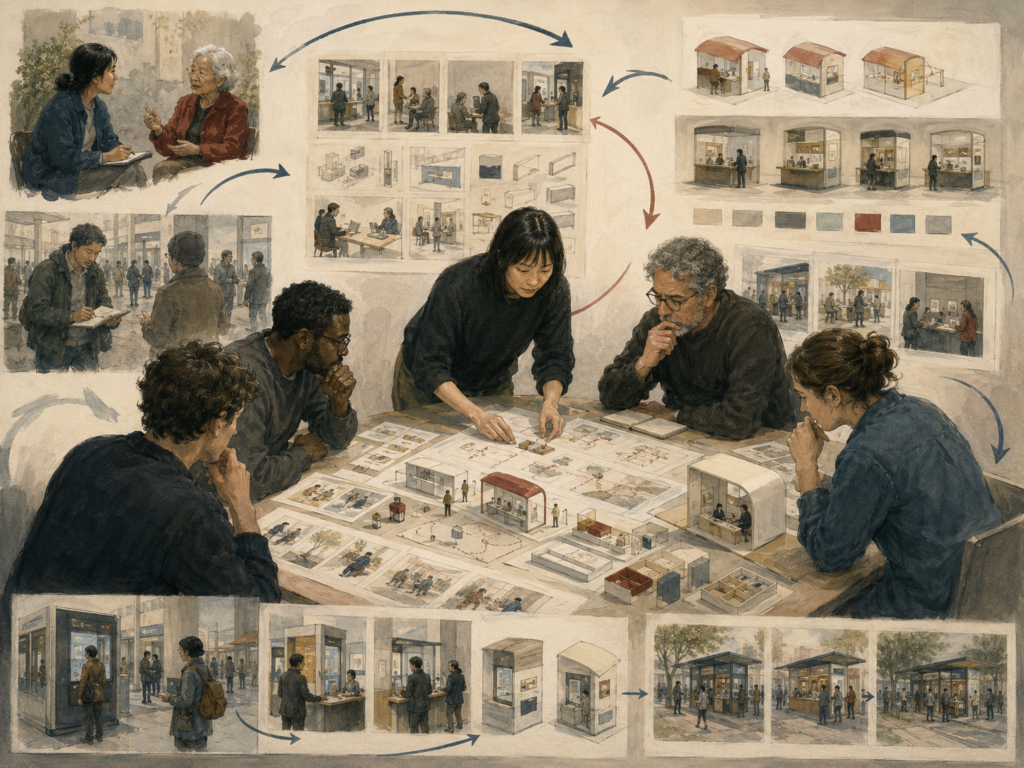
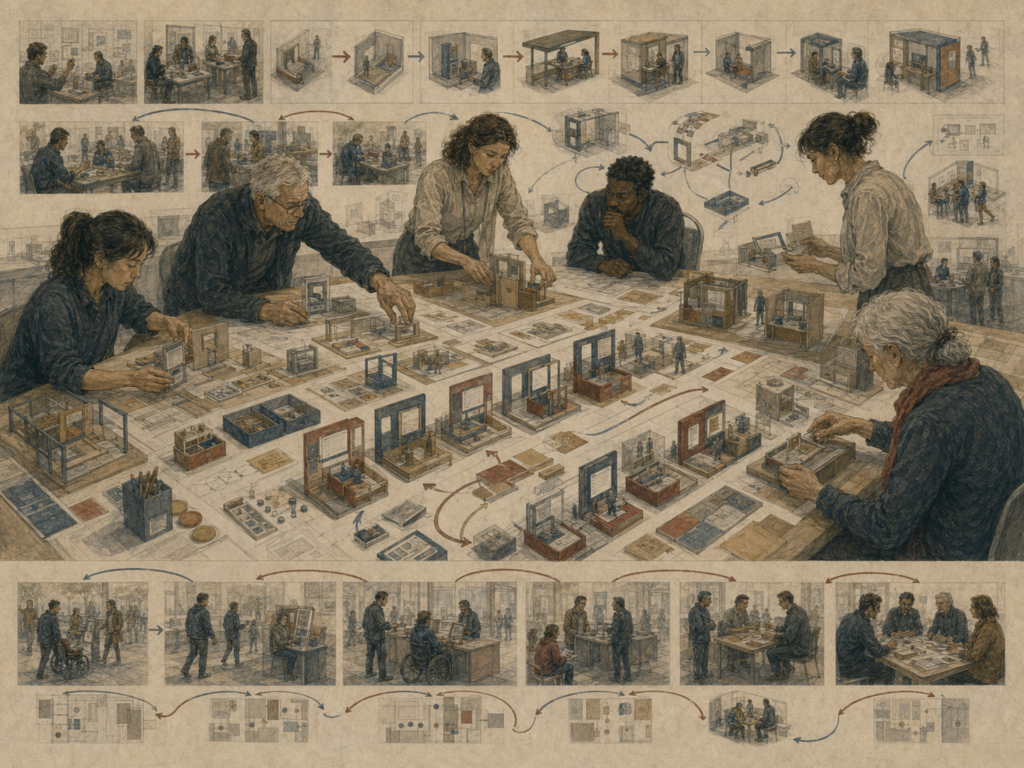
Designers and researchers review user feedback, prototype variations, service scenes, and iterative improvement pathways around a collaborative design table.

Feedback Loops in Design Thinking: Turning User Feedback Into Better Strategy

Feedback Loops in Design Thinking examines how design becomes adaptive when information from use, testing, and system performance is continuously fed back into future decisions. The article argues that feedback loops transform design from a linear sequence into a recursive learning system, where signals are generated, interpreted, and translated into adjustment across prototypes, services, and strategies. It develops this through the structure of feedback loops, the difference between reinforcing and balancing loops, prototyping, user insight, temporal dynamics, systems thinking, organizational learning, practical limitations, and ethical concerns around feedback and data. The article emphasizes that the purpose of feedback is not merely to collect more information, but to create an ongoing conversation between design intent and real-world response so that ideas can evolve under changing conditions rather than remain static.

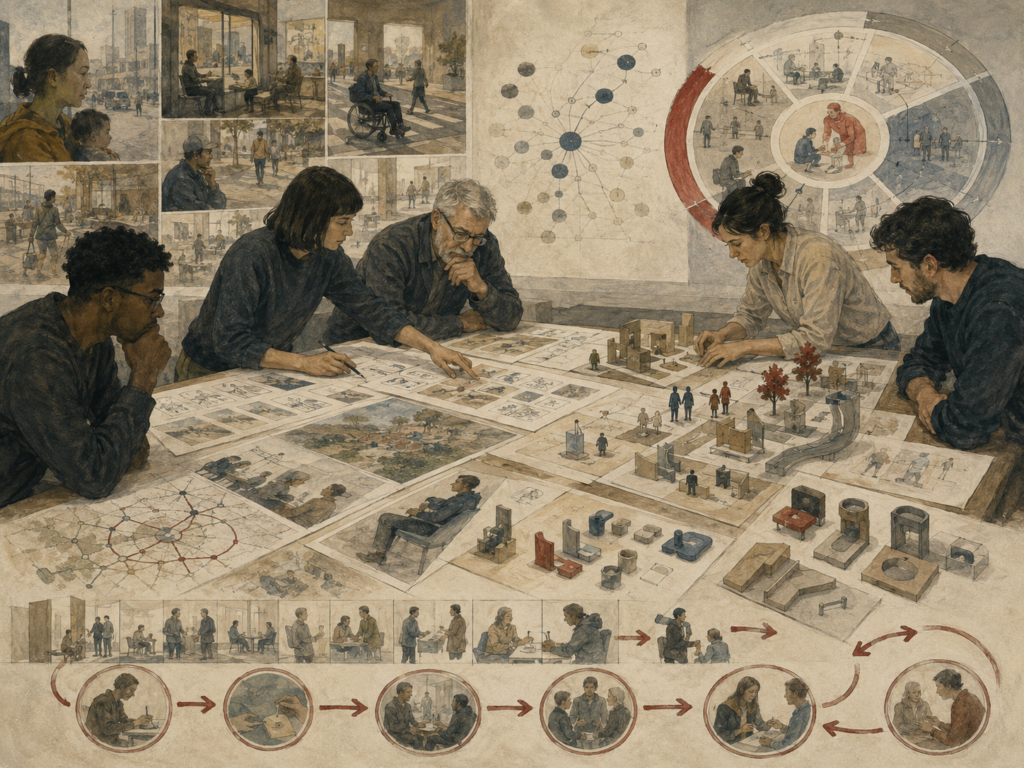
Designers and researchers arrange small prototype models, experience mockups, test sequences, and feedback loops on a large collaborative worktable.

Prototyping and Rapid Experimentation: Turning Strategic Ideas Into Evidence

Prototyping and Rapid Experimentation examines how organizations convert strategy from a fixed planning exercise into a learning system built around hypotheses, tests, and iterative refinement. The article argues that prototypes are not merely unfinished versions of final solutions, but structured instruments for inquiry that make abstract ideas visible, discussable, and testable under real or simulated conditions. It develops this through the role of prototypes, experimentation as evidence-based inquiry, iteration, speed and cost as strategic variables, assumption testing, user interaction, broader applications beyond products, and the organizational culture required to support experimentation. The article emphasizes that the value of rapid experimentation lies not in moving fast for its own sake, but in increasing the rate of meaningful learning while lowering the cost of being wrong.

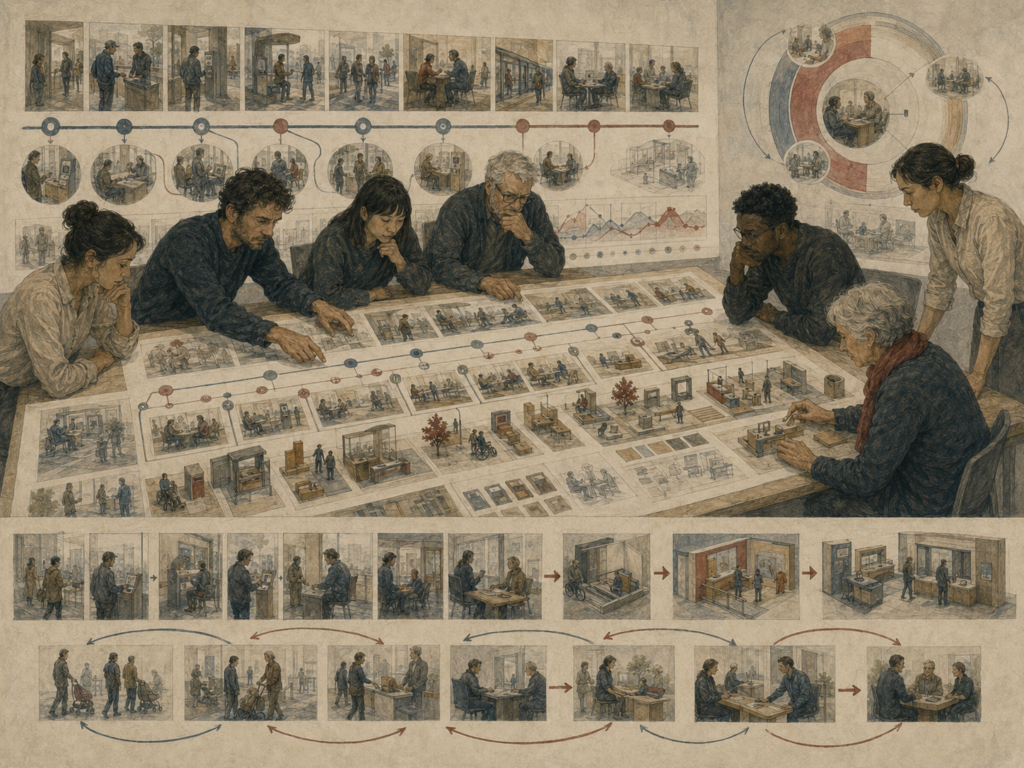
Designers and researchers study user journey scenes, experience sequences, touchpoints, prototype environments, and feedback loops on a large planning table.

Journey Mapping and Experience Design

Journey Mapping and Experience Design examines how people actually move through systems over time, across touchpoints, transitions, decisions, and moments of friction, rather than how those systems appear in process diagrams or institutional workflows. The article argues that strategic performance must be understood experientially as well as operationally, because users encounter systems as lived journeys that are often fragmented, emotional, and cumulative in their effects. It develops this through journey structure, accumulated friction, experience design as intervention, problem reframing, multi-channel continuity, stakeholder complexity, behavioral decision pathways, iterative measurement, and ethical accessibility concerns. The article emphasizes that better strategy emerges when organizations stop designing only for internal logic and begin designing for the actual sequences through which systems are navigated, interpreted, and judged in practice.

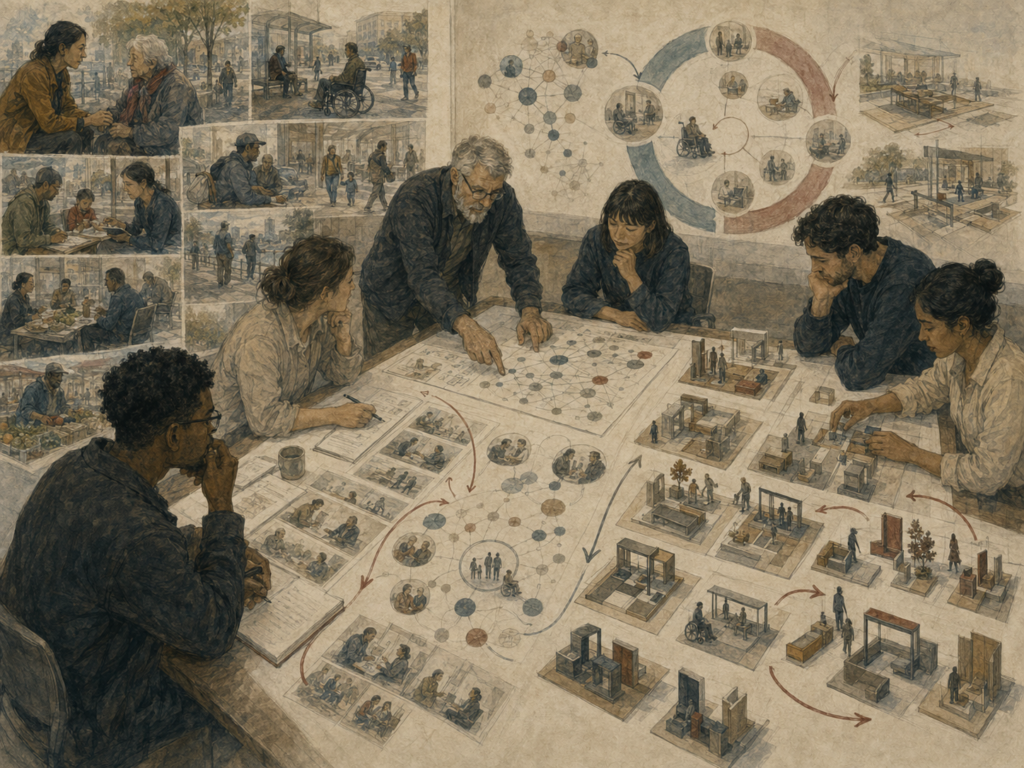
Designers and researchers study user scenes, stakeholder maps, observation sketches, accessibility needs, prototype models, and feedback pathways on a large planning table.

Empathy and User-Centered Ideation: How Lived Experience Improves Strategy

Empathy and User-Centered Ideation examines how stronger ideas emerge when strategy begins from lived experience rather than from institutional projection or internal convenience. The article argues that empathy is not a soft add-on to innovation but a disciplined method of inquiry that helps organizations understand how systems are actually interpreted, navigated, and endured by the people affected by them. It develops this through empathy as evidence-based inquiry, the problem of projection, observation, journey mapping, unmet need, multi-stakeholder experience, behavioral interpretation, reframing, organizational capability, and the ethical link between experience, burden, and legitimacy. The article emphasizes that user-centered ideation improves strategic quality not by asking people to design the solution directly, but by grounding ideation in a more truthful understanding of friction, need, and context before solutions are imagined.

Designers and researchers study user scenes, concept sketches, prototype models, pathway sequences, and feedback loops on a large planning table.

Design Thinking Foundations: Human-Centered Strategy Under Uncertainty

Design Thinking Foundations examines design thinking as a disciplined mode of inquiry for strategic environments where problems are ambiguous, stakeholder needs are contested, and conventional planning breaks down. The article argues that design thinking is not merely a workshop technique or creativity ritual, but a human-centered, iterative framework for working under uncertainty through empathy, reframing, ideation, prototyping, and testing. It develops this through its intellectual foundations in Simon, wicked-problem theory, and design methodology; its core principles of human-centeredness, divergence and convergence, experimentation, and iterative learning; and its organizational value as both a method and an institutional capability. The article emphasizes that design thinking matters strategically because it helps institutions generate better solutions by first producing better questions, more accurate framings, and more adaptive learning loops.

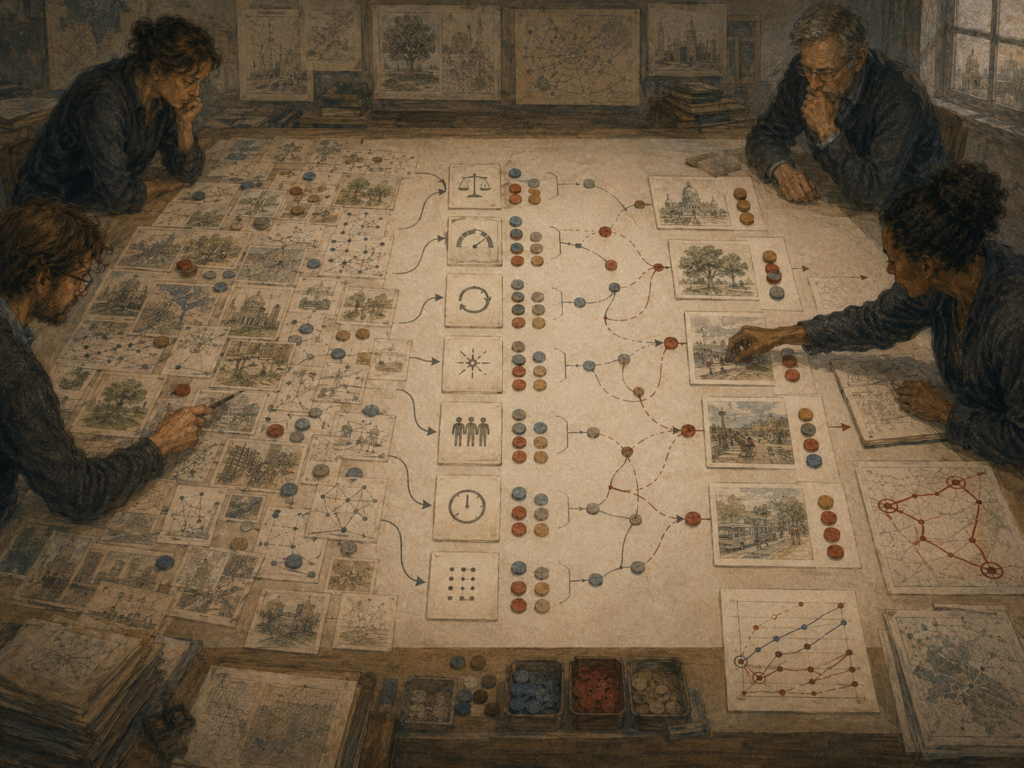
Strategists use visual filters, tokens, decision paths, idea cards, and practical shortcuts to narrow many possible ideas into clearer strategic options.

Heuristics in Strategic Ideation: Mental Shortcuts in Innovation and Strategy

Heuristics in Strategic Ideation examines how cognitive shortcuts shape the generation of ideas under conditions of uncertainty, bounded rationality, and institutional constraint. The article argues that heuristics are not merely flaws or post hoc biases in strategic judgment, but part of the hidden architecture through which the idea space itself is constructed. It develops this through bounded rationality, constrained search, core heuristics such as availability, representativeness, anchoring, recognition, satisficing, and affect, as well as the tension between speed and depth, expertise and rigidity, institutional path dependence, and the challenge of governing shortcut reasoning in complex systems. The article emphasizes that stronger ideation does not come from eliminating heuristics, which is impossible, but from making them visible, varying them deliberately, and preventing any single shortcut from silently narrowing strategic imagination too early.

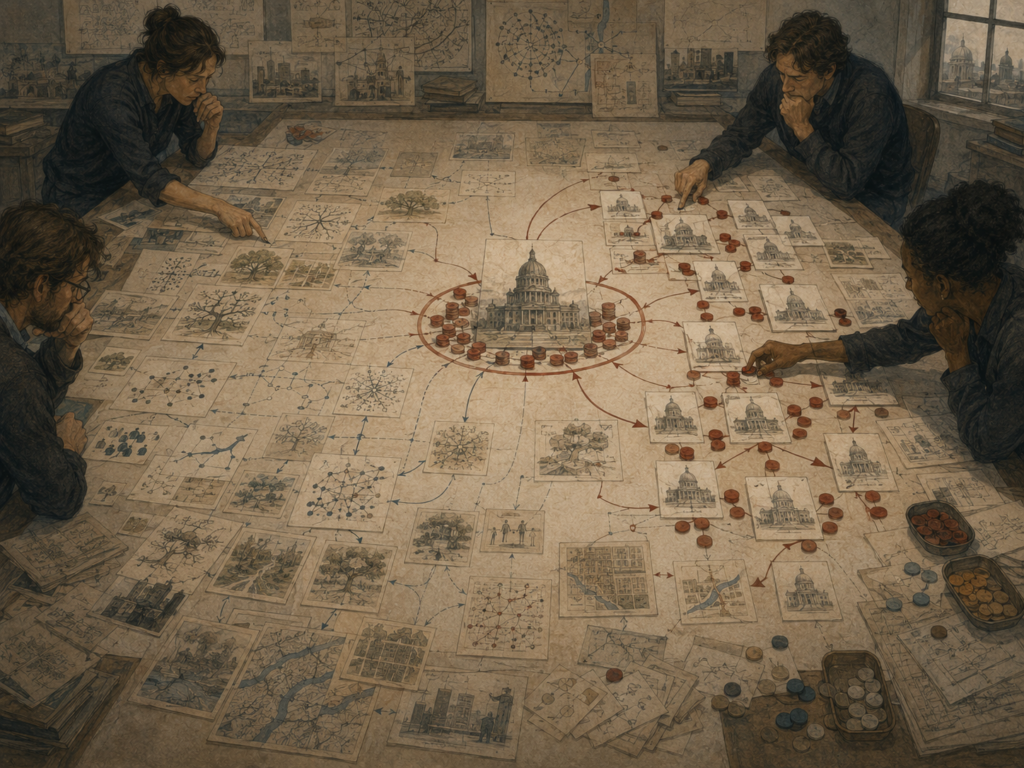
Strategists study a planning table where one dominant idea receives repeated attention while alternative concepts, evidence, and pathways remain underexplored.

Cognitive Bias in Idea Generation: How Bias Shapes Strategic Thinking

Cognitive Bias in Idea Generation examines how the production of strategic ideas is shaped in advance by attention, memory, framing, emotional comfort, and social dynamics rather than emerging from a neutral field of creativity. The article argues that bias matters upstream, before formal evaluation begins, because it influences which possibilities become thinkable, which analogies are retrieved, and which directions are prematurely excluded from search. It develops this through the cognitive architecture of ideation, core biases such as availability, anchoring, confirmation, functional fixedness, framing, and conformity, as well as the adaptive role of bias under bounded rationality, the narrowing of search, institutional path dependence, pseudo-innovation, and mitigation through better ideation design. The article emphasizes that stronger strategy depends not on eliminating bias entirely, which is impossible, but on making bias visible early enough to widen the possibility space before judgment begins.

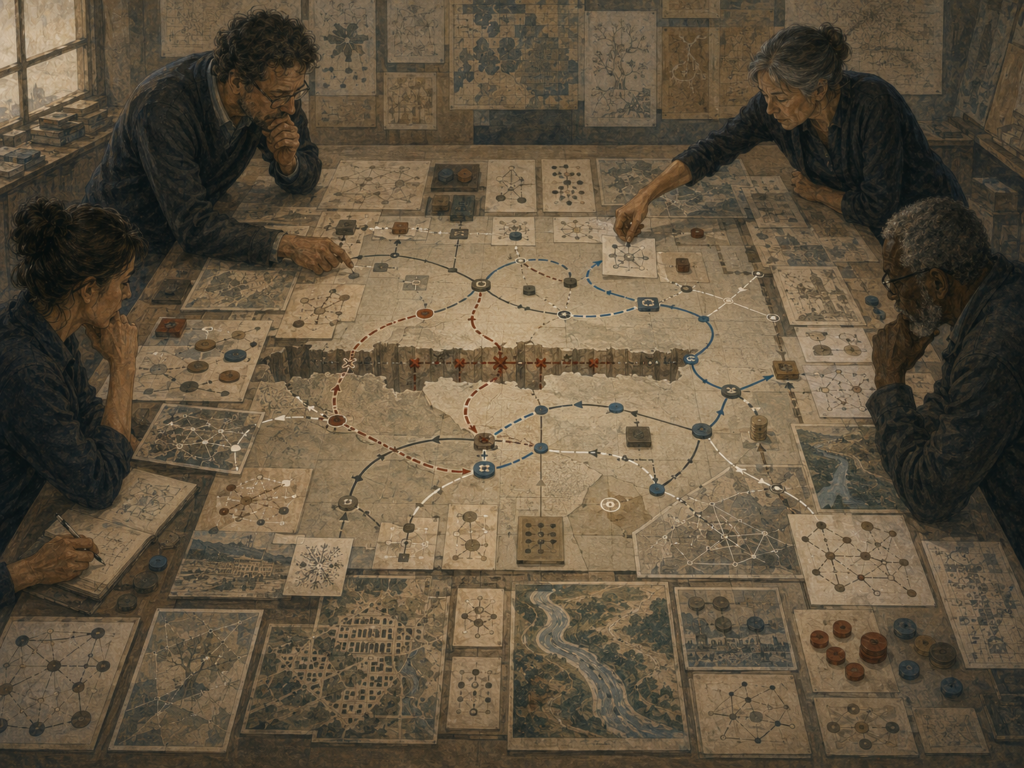
Strategists study maps, unconventional pathways, network diagrams, and planning materials on a large table, showing lateral thinking as indirect strategic problem solving.

Lateral Thinking in Strategy: How Reframing Creates Better Ideas

Lateral Thinking in Strategy examines how organizations escape inherited patterns of reasoning by using indirect, non-linear, and frame-disrupting methods to generate new strategic possibilities. The article argues that lateral thinking is not simply a creativity technique for producing more ideas, but a deeper intervention into the structure of thought itself, one that alters the conditions under which problems are represented and solutions become imaginable. It develops this through the limits of linear reasoning, the search-space logic of lateral thinking, core techniques such as provocation, random entry, reversal, and challenge, as well as the role of constraints, the relationship between novelty and convergence, organizational conditions, and the importance of integrating lateral moves with systems understanding. The article emphasizes that lateral thinking matters strategically because many institutions do not fail for lack of analysis, but because their analysis remains trapped inside frames that should have been disrupted much earlier.

Scroll to Top