Scenario Modeling and Simulation: Exploring Alternative System Futures
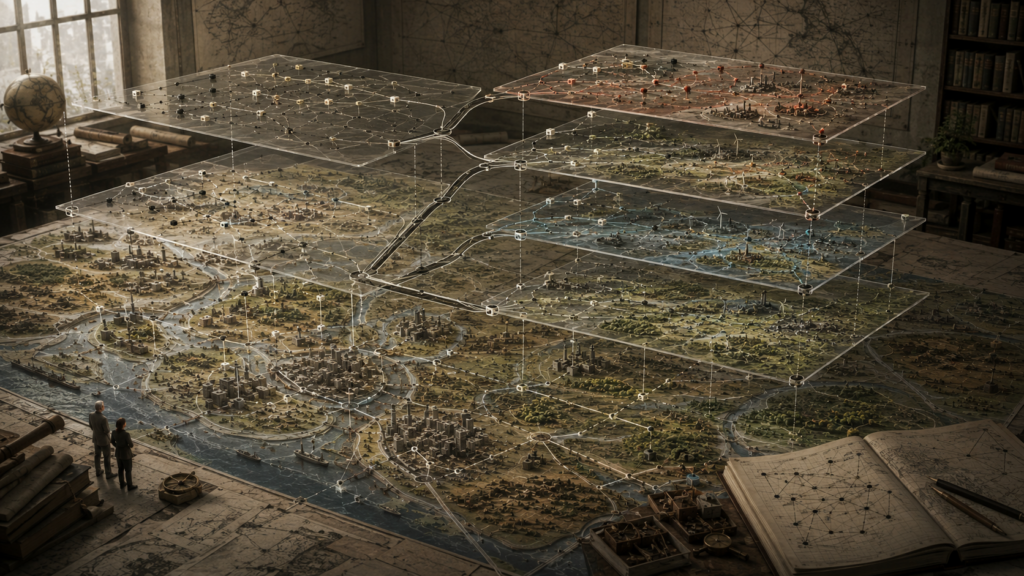
Scenario modeling and simulation is a methodological approach used to explore how complex systems may evolve under different assumptions about future conditions, policies, behaviors, and external shocks. Rather than attempting to predict a single outcome, it examines multiple plausible futures by varying key parameters, structural conditions, and interventions within a formal model. This article explains how scenario modeling shifts analysis from deterministic forecasting to structured exploration, outlines major scenario types such as baseline, policy, stress, exploratory, normative, and wild-card scenarios, and shows how simulation functions as a computational laboratory for comparing alternative system trajectories. It also emphasizes that scenario results are not predictions but disciplined comparisons shaped by model structure and assumptions. In systems modeling, scenario analysis matters because it helps identify vulnerabilities, thresholds, and robust strategies under uncertainty while supporting more responsible long-term reasoning about complex futures.