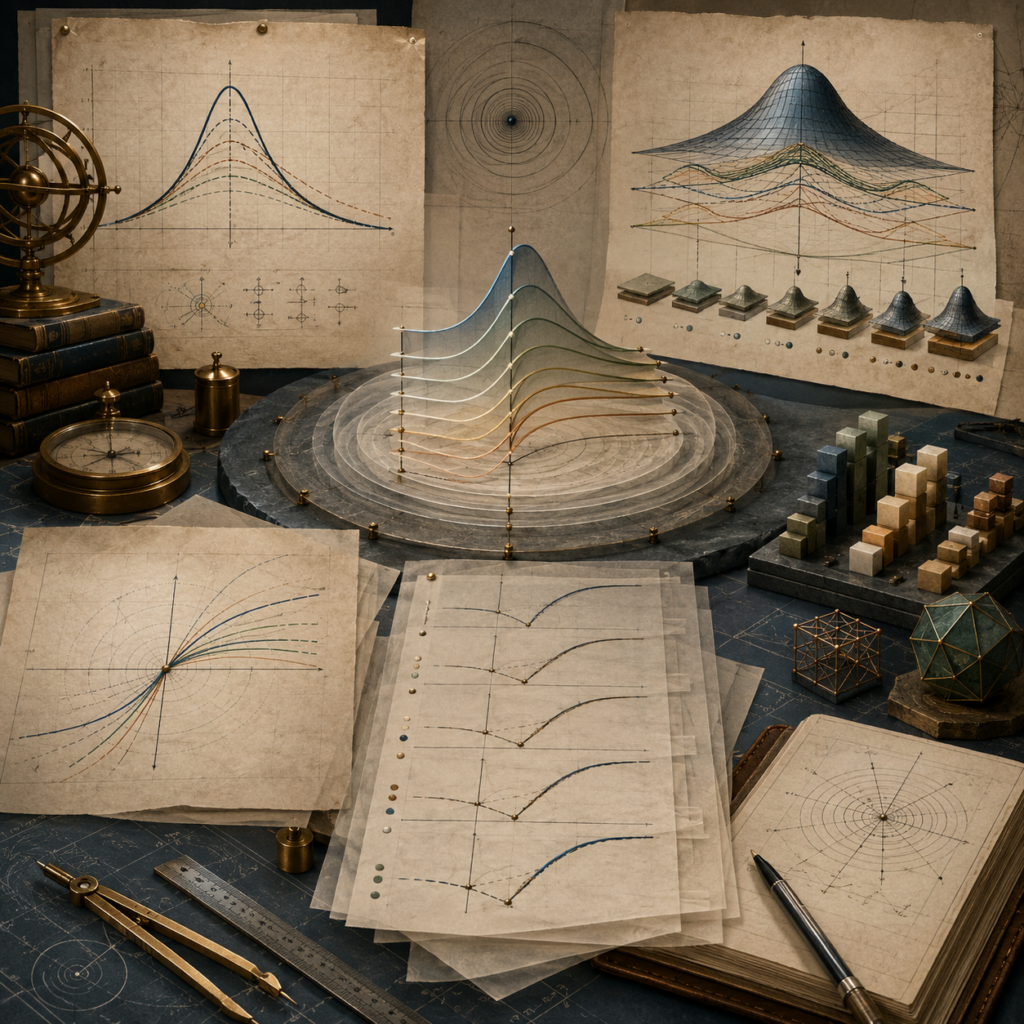
Functions of Several Variables: Multivariable Calculus for Systems Modeling
Functions of several variables extend calculus from single-input change to interacting systems, where outcomes depend on multiple conditions at once. This article explains how multivariable functions, input spaces, domains, ranges, surfaces, level curves, feasible regions, constraints, interaction terms, local neighborhoods, and reference states shape systems modeling. It shows why a model output should not be interpreted only as a formula, but as a structured claim about which inputs matter, how they combine, where they are meaningful, and which combinations are physically or operationally feasible. In modeling workflows, functions of several variables support surface diagnostics, contour analysis, parameter grids, interaction review, and local validity checks. The article emphasizes that multivariable representation requires clear variable definitions, units, bounds, constraints, and validity regions before outputs support responsible interpretation across complex systems, especially when input combinations interact or exceed the model’s feasible domain.