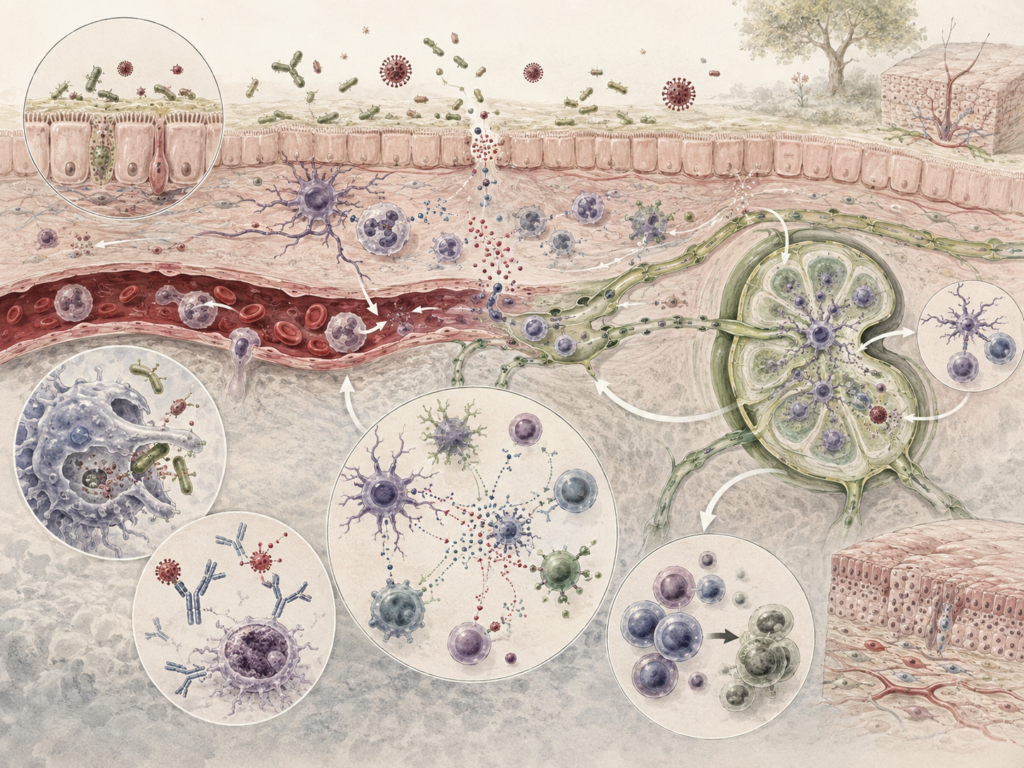
Immunology and Biological Defense
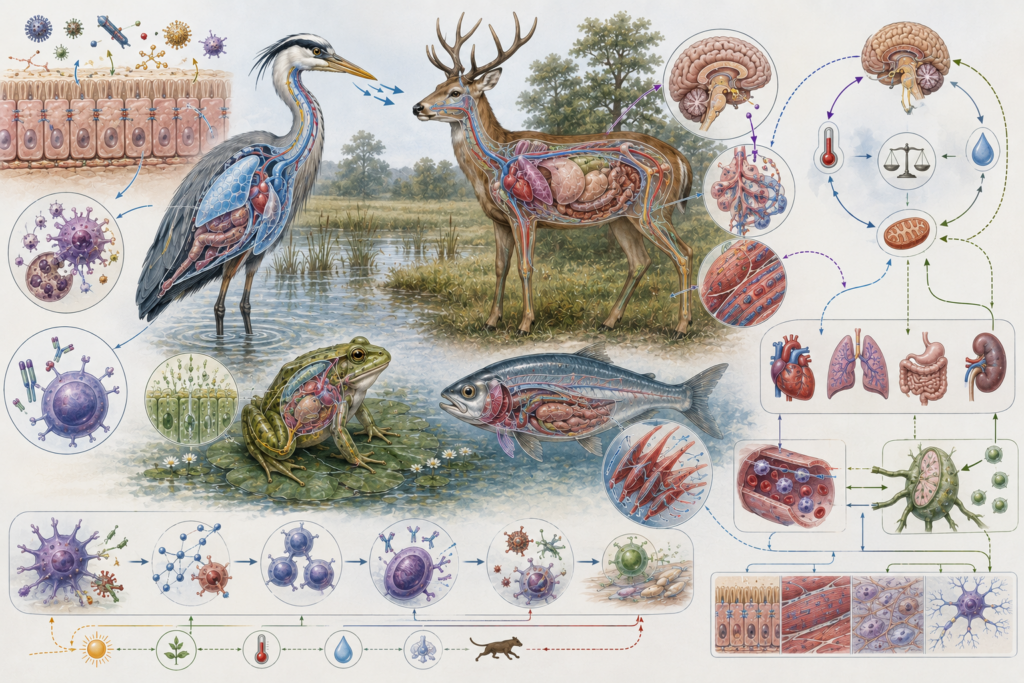
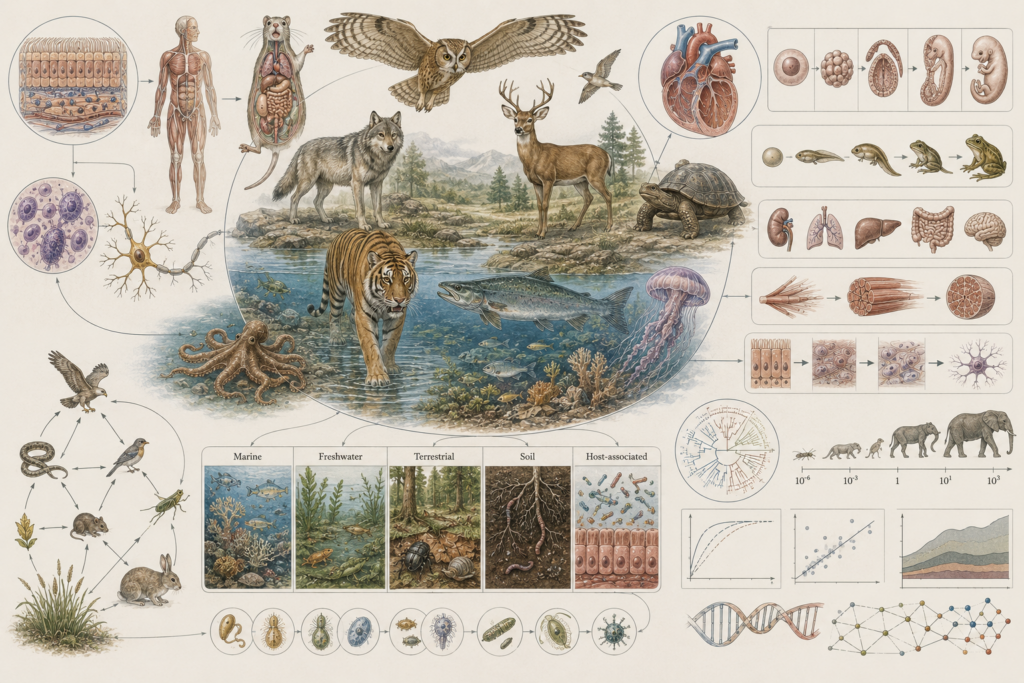
Immunology and biological defense examine how living systems detect danger, distinguish self from non-self or altered self, coordinate protective responses against infection and damage, and regulate the fine balance between defense, tolerance, inflammation, and injury. Immunology is central to biology because life persists not only through metabolism, development, and regulation, but also through the capacity to resist invasion, contain damage, remember prior exposure, and preserve internal integrity under continual microbial and environmental challenge. This article explores immunology through the lenses of innate defense, adaptive immunity, inflammation, immune memory, host-pathogen interaction, tolerance, immune dysregulation, and ecological context, while also situating biological defense within wider systems of physiology, microbiology, animal biology, plant biology, disease ecology, evolution, and sustainability-oriented science. It further extends the topic into quantitative and computational biology through feedback models, and population dynamics.