Abstract institutional illustration of the Three Good Things exercise, showing a journaling notebook connected to three reflective well-being symbols.

The Three Good Things Exercise: A Simple Positive Psychology Practice for Well-Being

The Three Good Things exercise is one of the best-known interventions in positive psychology because it shows how a small reflective practice can measurably influence well-being. This article examines the origins of the exercise, how it works, why it may be effective, and what the intervention literature suggests about its benefits and limits. It situates Three Good Things within broader research on gratitude, attentional retraining, cognitive framing, and emotional memory, while also noting that the practice is modest in scope and not a substitute for structural change or clinical care. The result is a more serious understanding of the exercise as an evidence-informed practice of appreciative awareness.
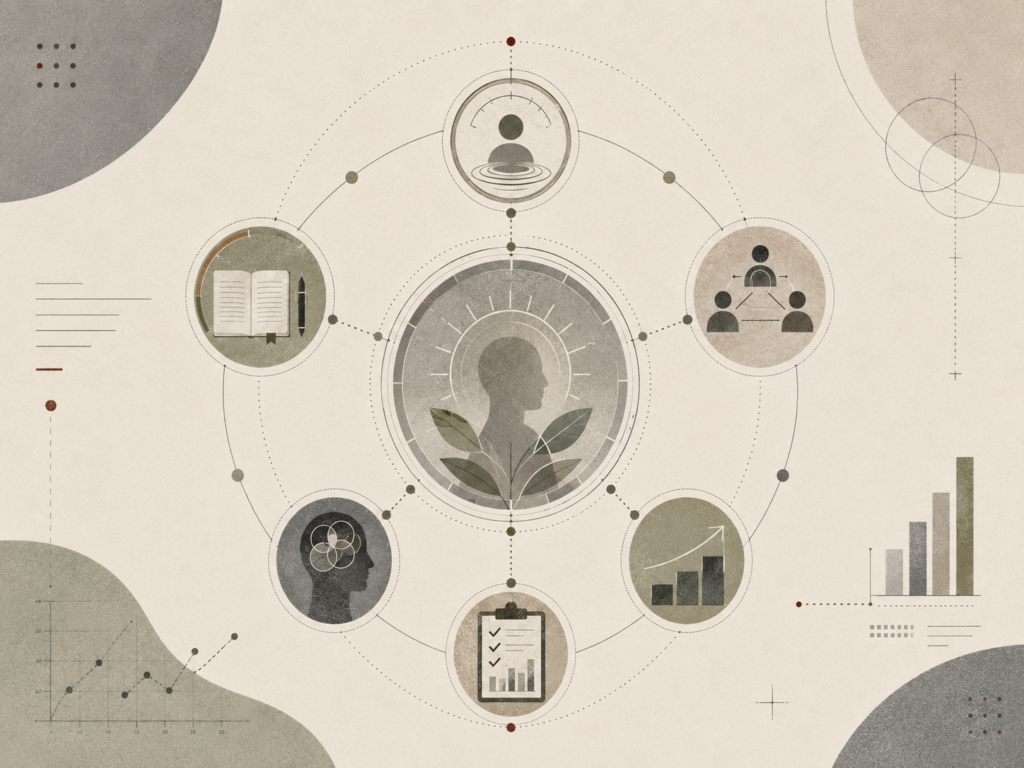

Abstract scholarly systems diagram of positive psychology interventions, showing evidence-based practices, measurement, reflection, social connection, and well-being outcomes.

Positive Psychology Interventions: Evidence-Based Practices for Well-Being

Positive psychology interventions are structured, evidence-informed practices designed to cultivate well-being through gratitude, strengths use, hope, meaning, and supportive social connection. This article examines the origins of PPIs, the major intervention families that define the field, the evidence supporting their use, and the mechanisms through which they may work. It also addresses their limitations, including modest effect sizes, contextual dependence, and the risk of overselling individual practices while neglecting structural conditions. The result is a more serious account of PPIs as practical tools that can support flourishing when used with realism, fit, and conceptual discipline.

Restrained academic illustration of layered research cards, wellbeing diagrams, botanical forms, and social connection markers representing gratitude as a psychological construct.

Gratitude and Wellbeing in Positive Psychology

Gratitude is one of the most important strengths in positive psychology because it links well-being to attention, interpretation, and relationship rather than to pleasure alone. This article examines how gratitude became a central topic in flourishing research, why it matters psychologically and socially, and what current intervention and neuroscience work suggests about its effects. It also explores gratitude’s role in resilience, social bonding, and appreciative awareness, while addressing the concept’s ethical and methodological limits. The result is a more serious understanding of gratitude as a relational and interpretive capacity that can deepen well-being when used with realism rather than sentimentality.

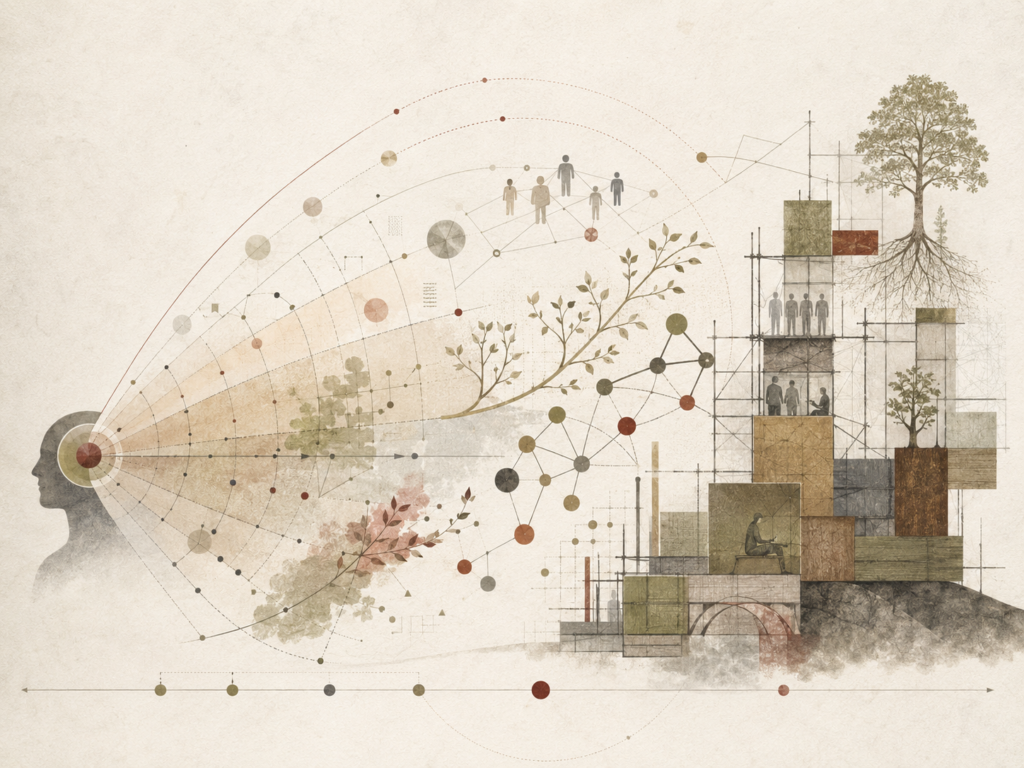
Restrained academic illustration of a human profile, expanding attention arcs, social network pathways, branching growth forms, and scaffolded resource structures representing broaden-and-build theory.

Broaden-and-Build Theory in Positive Psychology

Broaden-and-Build Theory is one of the central frameworks in positive psychology because it explains why positive emotions matter for more than momentary pleasure. This article examines Barbara Fredrickson’s argument that positive emotions broaden attention, cognition, and behavioral possibility, and that repeated experiences of joy, interest, gratitude, love, and related states can help build durable psychological, social, intellectual, and physical resources over time. It also explores the undoing effect, resilience, and everyday examples of broadening and building, while addressing the theory’s methodological and contextual limits. The result is a stronger account of positive emotion as a developmental force within human flourishing.

Restrained academic illustration showing three connected pathways for autonomy, competence, and relatedness converging into structures of growth, motivation, and wellbeing.

Self-Determination Theory in Positive Psychology

Self-Determination Theory is one of the most important frameworks in positive psychology because it explains flourishing through the quality of motivation rather than through reward alone. This article examines the origins of SDT, its organismic view of human development, the distinction between intrinsic and extrinsic motivation, and the central role of autonomy, competence, and relatedness as basic psychological needs. It also explores internalization, need-supportive environments, and applications across education, work, and health. The result is a stronger account of SDT as a theory not only of motivation, but of the social and institutional conditions under which human beings are most likely to act with volition, mastery, and connection.

Restrained academic illustration of a central figure facing branching pathways, goal markers, obstacles, scaffolding, and growth forms representing hope theory.

Hope Theory in Positive Psychology

Hope Theory is one of the most important motivational frameworks in positive psychology because it explains hope as a structured form of goal-directed thinking rather than as passive optimism. This article examines C. R. Snyder’s model of hope through its two core components, agency and pathways, and shows how the theory helps explain persistence, strategic flexibility, resilience, and the pursuit of meaningful goals. It also explores the measurement of hope, its distinction from optimism, and its applications across education, health, and counseling. The result is a stronger account of hope as a practical psychological resource that helps individuals continue moving toward valued futures under conditions of uncertainty and difficulty.

Restrained academic illustration of a solitary figure standing on fractured ground, with repaired pathways, scaffolding, rooted trees, and social connection markers representing post-traumatic growth.

Post-Traumatic Growth in Positive Psychology

Post-traumatic growth examines the possibility that profound adversity can sometimes lead to lasting psychological transformation rather than mere recovery. This article explores how trauma can disrupt core assumptions about the world, why meaning-making becomes central after crisis, and how growth may appear in domains such as life appreciation, relationships, personal strength, new possibilities, and existential depth. It also distinguishes post-traumatic growth from resilience, addresses the measurement debates surrounding perceived versus corroborated change, and emphasizes that growth is a possibility rather than a moral requirement. The result is a more serious account of post-traumatic growth as a theory of transformation through struggle, not a romanticization of trauma.

Restrained academic illustration of a solitary figure facing branching paths, a compass diagram, rooted trees, bridges, social networks, and civic structures representing meaning and purpose.

Meaning and Purpose in Positive Psychology

Meaning and purpose are central to flourishing because they connect well-being to direction, value, responsibility, and contribution rather than to pleasure alone. This article examines why meaning matters within positive psychology, how it relates to eudaimonic well-being and the PERMA model, and why thinkers such as Viktor Frankl remain important to its modern study. It also explores how meaning is measured scientifically, how purpose supports identity and persistence, and why meaning becomes especially important in the context of adversity, leadership, work, and education. The result is a stronger account of meaning as one of the deepest psychological and existential foundations of human flourishing.

Editorial scientific illustration of positive psychology as a flourishing systems architecture, showing well-being, resilience, meaning, hope, relationships, public health, education, work, institutions, social trust, recovery, and sustainable development.

Positive Psychology: The Science of Human Flourishing

Positive psychology is the scientific study of the conditions under which individuals, relationships, institutions, and communities are able to flourish. Properly understood, it is not a shallow discourse of happiness, but a serious interdisciplinary field concerned with resilience, meaning, strengths, motivation, health, prosociality, and long-term human development. This pillar article situates positive psychology within its philosophical roots, modern empirical foundations, and wider institutional significance. It also examines measurement, formal modeling, intervention design, and the structural conditions that shape well-being across schools, workplaces, public health systems, and sustainable societies. The result is a broader account of flourishing as a developmental, relational, and system-level problem rather than a matter of mood alone.

Scroll to Top