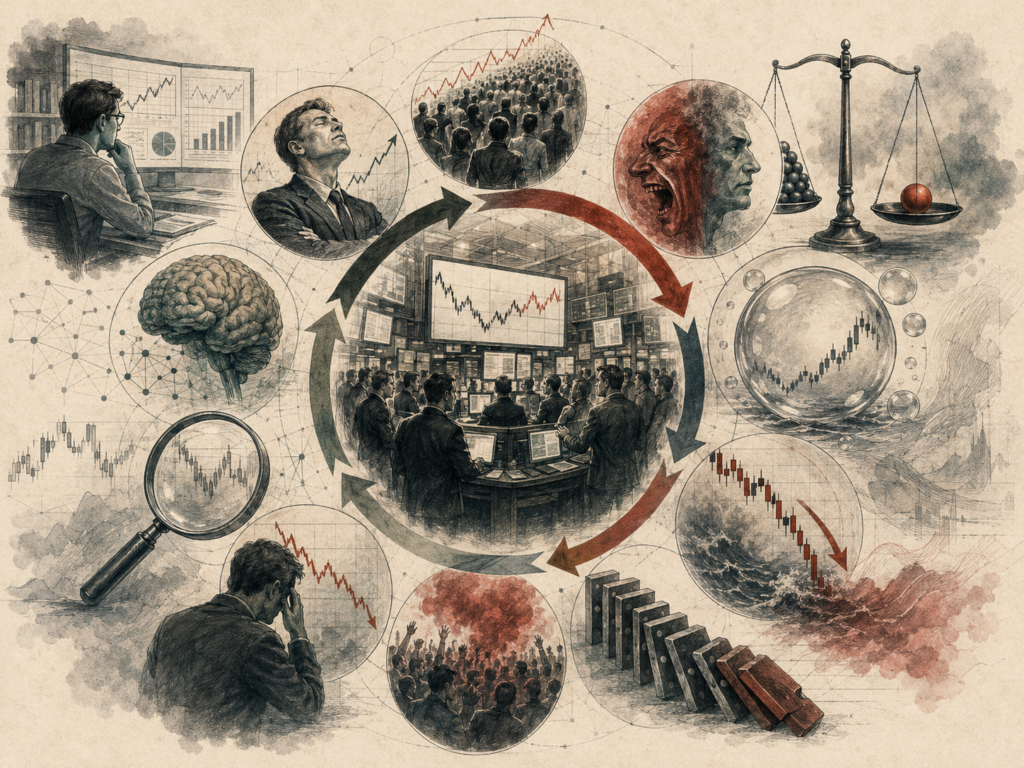
Behavioral Finance: Why Investors Deviate from Rational Models
Behavioral finance examines how psychological biases, cognitive limitations, and emotional responses shape investor behavior and financial market outcomes. Rather than assuming that markets are driven entirely by rational information processing, the field explains how real investors rely on heuristics, react asymmetrically to gains and losses, imitate one another, and bring overconfidence, anchoring, and sentiment into financial decisions. This article explores the limits of rational market models, the major biases that influence investing, the institutional and technological conditions that amplify or constrain those biases, and the implications of behavioral finance for economic governance. It also develops a formal analytical framework and includes substantial R and Python sections showing how investor psychology can scale into mispricing, volatility, and broader market instability.