Prosocial Behavior in Social Psychology: Cooperation, Empathy, and Altruism
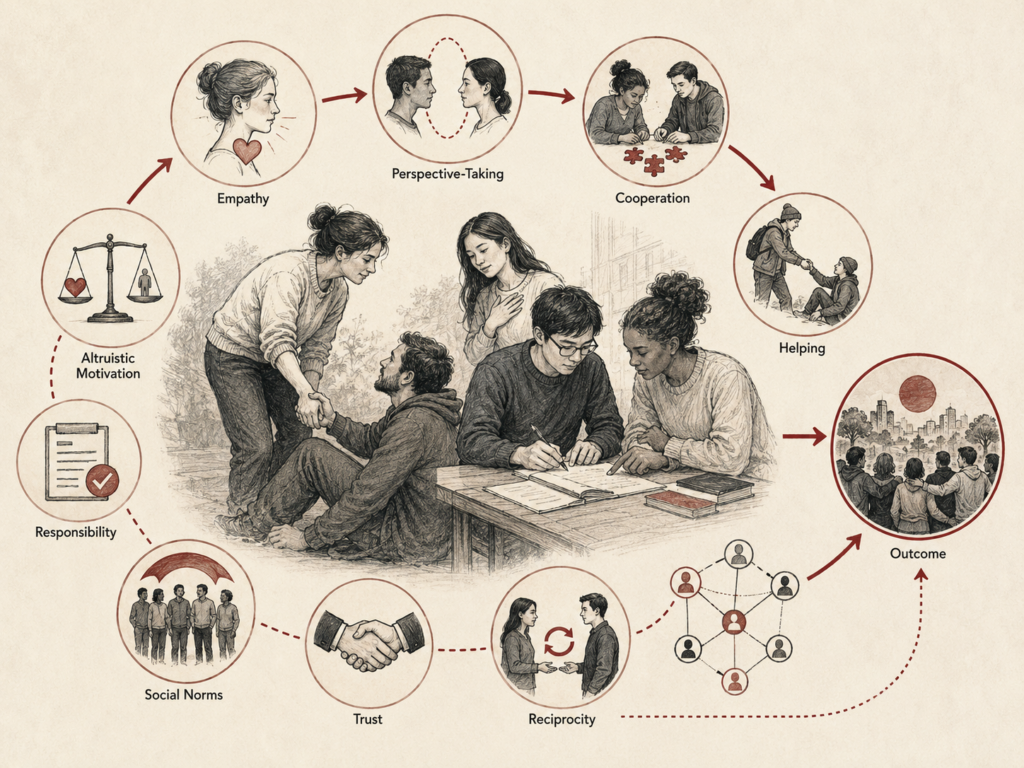
Prosocial behavior refers to actions intended to benefit others, including helping, cooperation, sharing, and altruism. In social psychology, it provides one of the central frameworks for understanding why individuals assist others, contribute to collective welfare, and sustain cooperative social systems. Its importance lies in the fact that it asks a different question from much of the rest of social psychology: not why people divide, withdraw, or harm, but under what conditions they choose to help rather than ignore, cooperate rather than defect, and contribute rather than withhold. Prosocial behavior ranges from small everyday acts, such as offering assistance to a stranger or comforting someone in distress, to large-scale collective efforts such as volunteering, mutual aid, disaster response, and humanitarian relief. This makes the concept essential for explaining how communities respond to crisis, how institutions function beyond formal rules, and how societies maintain cooperation. At the same time, the concept is analytically valuable because it does not reduce helping to pure selflessness. People often act prosocially for overlapping moral, emotional, relational, reputational, and identity-based reasons, which is precisely why prosocial behavior is so central to understanding how cooperation becomes socially organized and institutionally durable.