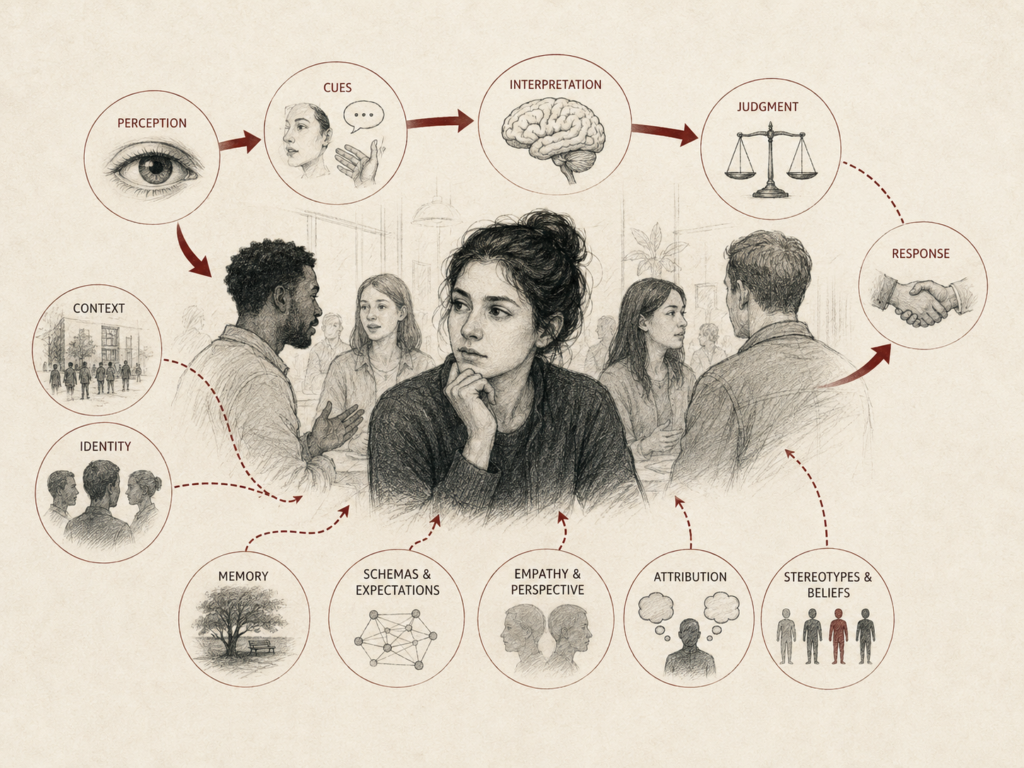
Attribution Theory: How Humans Explain Behavior
Attribution theory explains how individuals interpret the causes of behavior. Within social psychology, it examines how people infer whether actions arise from internal characteristics such as personality, intention, and ability, or from external situational forces such as context, constraint, and social pressure. These attribution processes are central to social judgment because they shape how observers assign responsibility, evaluate character, interpret success and failure, and make sense of conflict. Human beings rarely have direct access to the true causes of behavior, so they rely on inference, prior expectations, contextual cues, and socially learned frameworks to construct causal explanations. For that reason, attribution theory occupies a foundational place within social cognition. It helps explain how judgments about fairness, blame, competence, legitimacy, and moral responsibility emerge, while also showing why those judgments are often vulnerable to systematic bias.