AI for Scientific Discovery and Computational Research
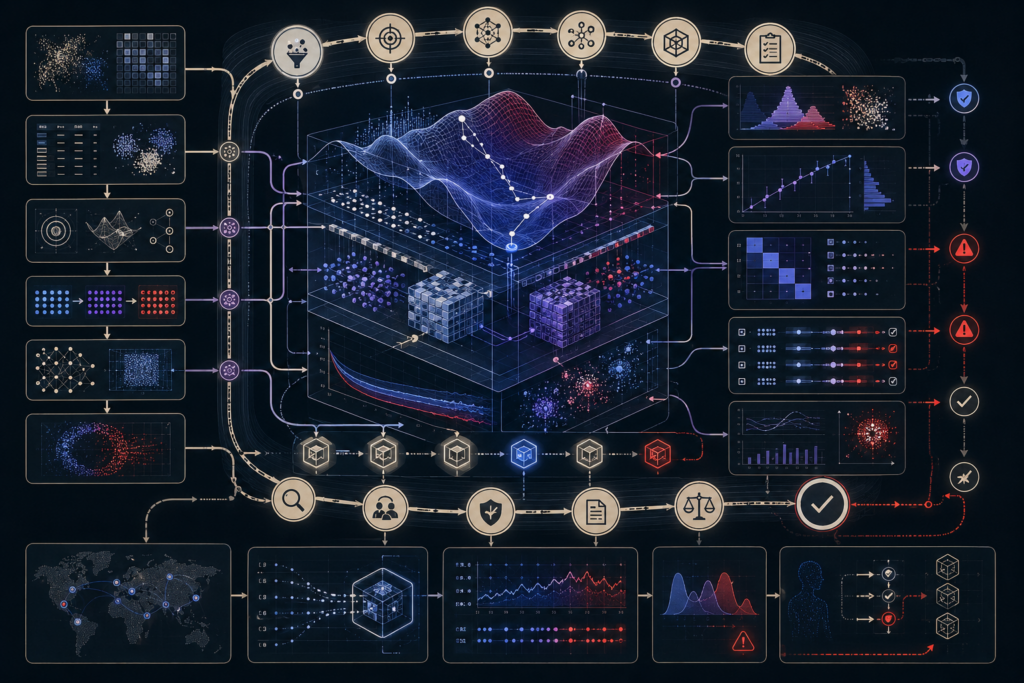
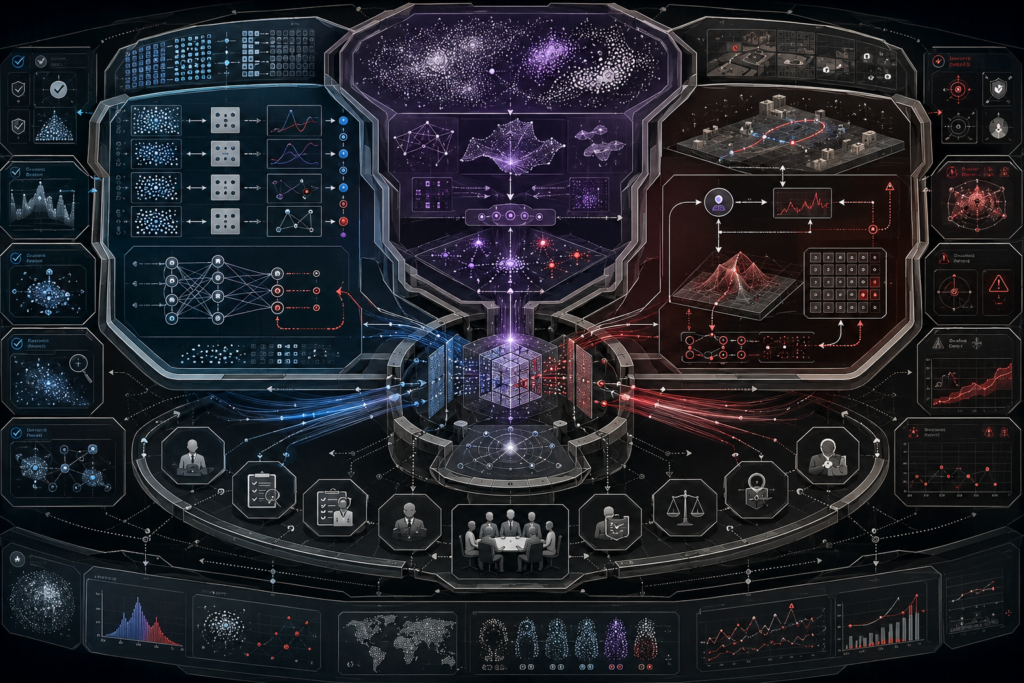
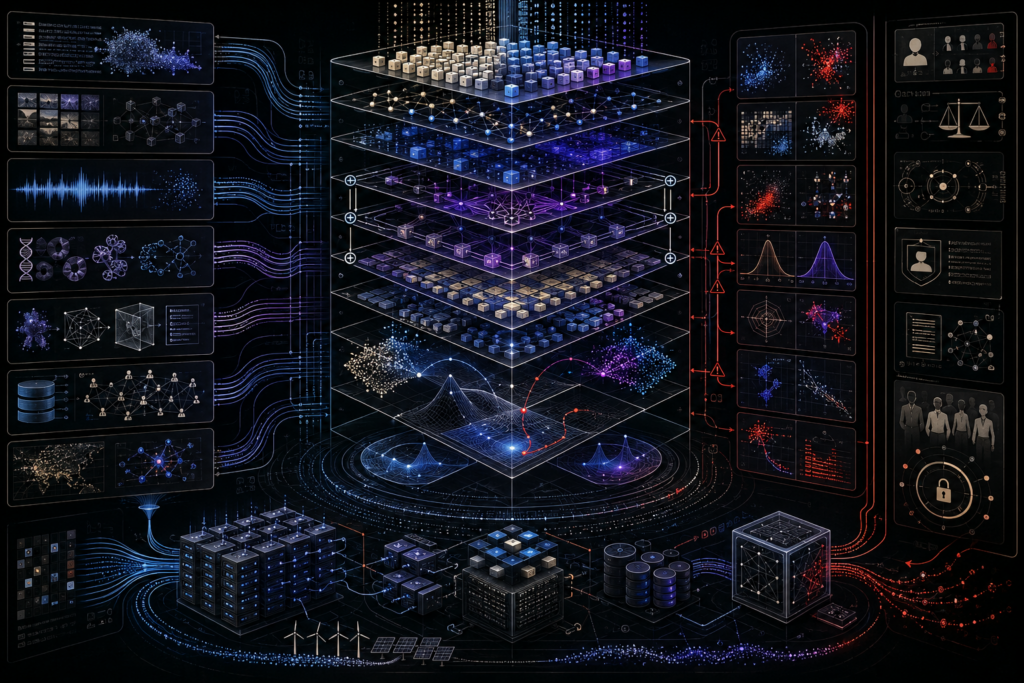
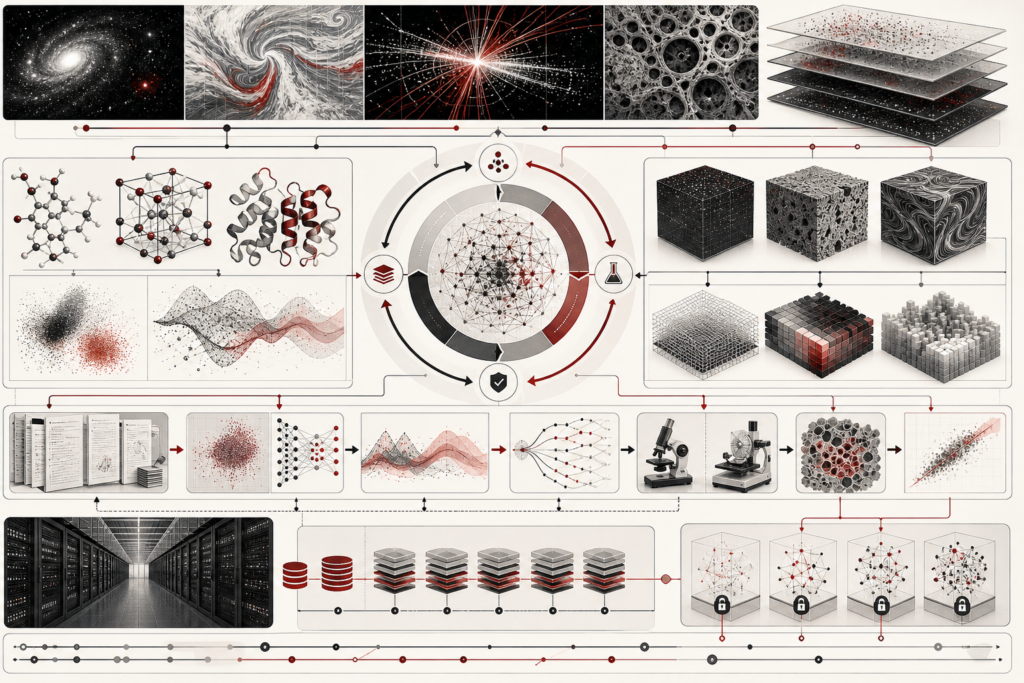
AI for scientific discovery and computational research examines how artificial intelligence can extend the scientific workflow across data analysis, simulation, hypothesis generation, experimental design, and reproducible validation. Rather than replacing theory, observation, or experiment, AI acts as a scientific amplifier: it helps researchers search vast candidate spaces, learn representations from high-dimensional data, approximate expensive simulations, identify patterns, and prioritize what to test next. This article explains the fourth paradigm of data-intensive science, representation learning, surrogate modeling, active learning, Bayesian optimization, causal inference, symbolic discovery, and reproducibility governance. It also emphasizes the limits of AI-driven research, including prediction without explanation, correlation without causality, benchmark overfitting, opaque automation, and uneven access to scientific infrastructure. The central argument is that AI becomes scientifically valuable only when embedded in workflows that preserve evidence, uncertainty, validation, reproducibility, and human judgment.