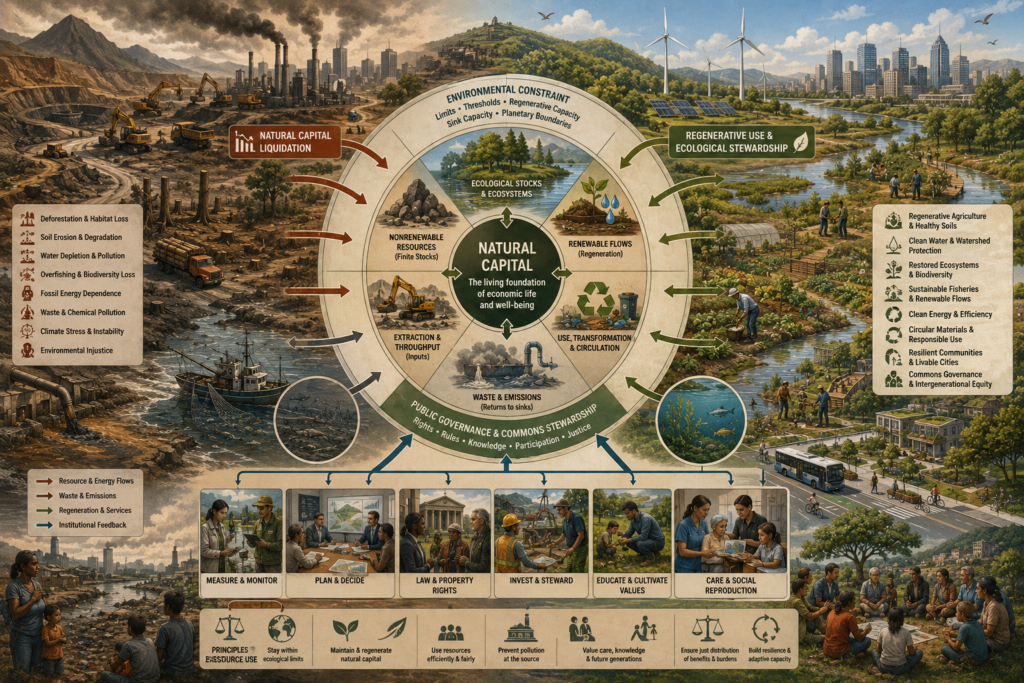
Natural Capital, Resource Use, and Environmental Constraint
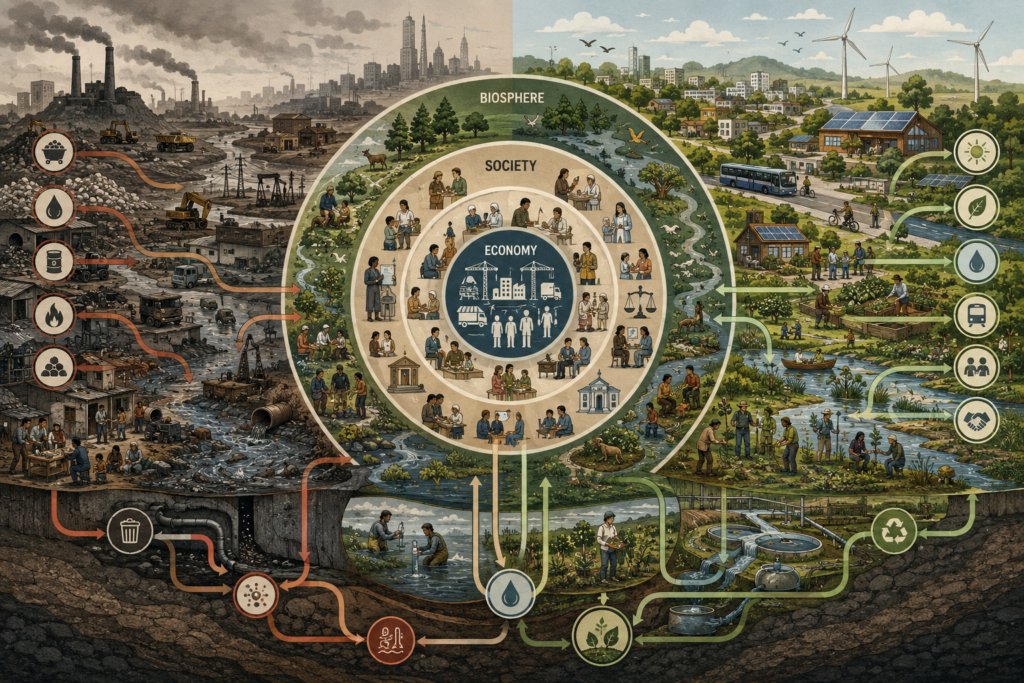
Natural capital, resource use, and environmental constraint are central to sustainable economic thought because economies depend on land, water, forests, minerals, biodiversity, fertile soils, stable climate systems, and the ecological processes that support production and life across time. This article examines natural capital as the stock of natural assets that generate goods, ecological functions, and life-supporting services; resource use as the extraction, transformation, circulation, and consumption of matter and energy within economic systems; and environmental constraint as the limits, thresholds, regenerative rates, and absorptive capacities that shape what ecological systems can sustain without degradation or breakdown. It explores stocks and flows, renewable and nonrenewable resources, extraction, ecosystem functions, soil, water, forests, minerals, pollution, substitution, accounting, commons governance, ecological justice, and resilience under conditions of environmental stress.