Problem Solving

Problem solving refers to the cognitive and strategic processes used to identify challenges, analyze underlying causes, and develop effective solutions. In complex environments, problem solving requires more than analytical reasoning; it involves integrating creative thinking, structured analysis, and systems-level understanding.

Traditional models of problem solving emphasized linear processes such as defining the problem, generating alternatives, and selecting optimal solutions. Contemporary research recognizes that many real-world problems are complex, dynamic, and interconnected, requiring iterative approaches that incorporate experimentation, feedback, and adaptive learning.

Modern problem-solving frameworks often draw from multiple disciplines, including cognitive psychology, systems thinking, design research, and decision science. These approaches help individuals and organizations understand how problems emerge within broader systems and how interventions may produce both intended and unintended consequences.

Effective problem solving is central to innovation, policy development, and strategic planning. In rapidly changing environments, organizations increasingly rely on interdisciplinary problem-solving methods that combine analytical rigor with creative exploration.

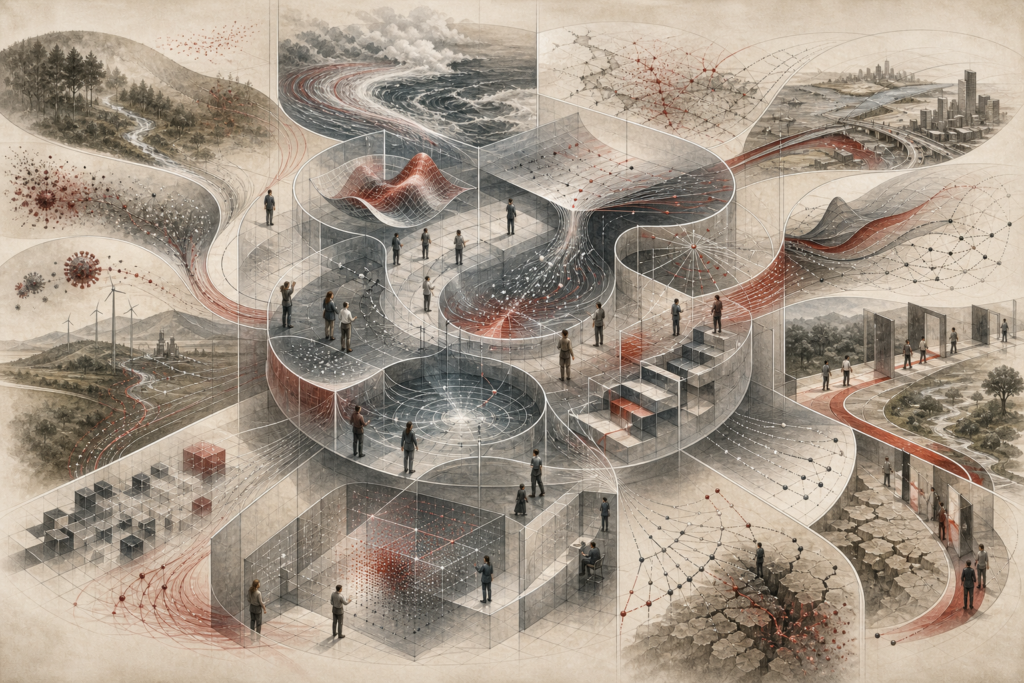
Researchers study a large planning table divided into exploratory ideas, strategic pathways, and tactical implementation steps, showing the relationship between ideation, strategy, and tactics.

Strategy vs Tactics vs Ideation

Strategy vs Tactics vs Ideation distinguishes three interdependent layers of decision-making that are often blurred together in practice. The article argues that ideation generates the conceptual architecture of possibility, strategy narrows that possibility into coherent direction through tradeoffs and choice, and tactics translate that direction into real-world action that also produces feedback. It develops this through a layered model of reasoning, the role of ideation in shaping the possibility space, strategy as commitment under constraint, tactics as execution and learning, recursive feedback across layers, organizational breakdowns such as tactical overload or strategic ambiguity, and the importance of locating failure in the correct layer. The article emphasizes that stronger execution depends not only on better tactics, but on preserving the distinctions and feedback links that allow ideas to become strategy, strategy to become action, and action to become learning.

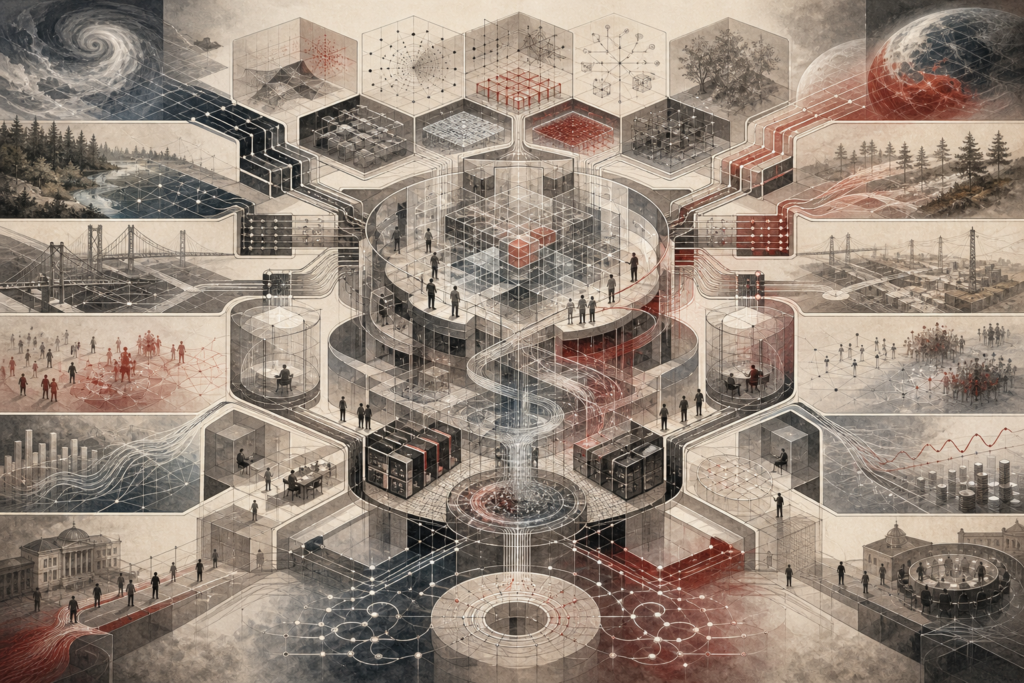
Researchers study maps, diagrams, decision cards, notebooks, and branching pathways on a large planning table, representing strategic ideation as structured creative reasoning.

What Is Strategic Ideation?

What Is Strategic Ideation? defines strategic ideation as the disciplined process through which ideas are generated, structured, evaluated, and refined so they can guide judgment and action in complex systems. The article argues that it is not equivalent to casual creativity or brainstorming, because its purpose is not merely to produce options but to build the conceptual architecture through which problems, possibilities, tradeoffs, and interventions become intelligible. It develops this through a systems-process model of framing, cognition, idea generation, conceptual structuring, evaluation, and iteration; an interdisciplinary foundation spanning bounded rationality, behavioral judgment, reflective practice, design thinking, systems theory, and foresight; the role of ideation in complex environments; and the tensions between creativity and discipline, exploration and exploitation, simplicity and fidelity, and vision and implementation. The article emphasizes that strategic ideation matters because strong strategy depends upstream on strong idea architecture: the capacity to turn uncertainty into structured understanding that can survive translation into action.

Editorial scientific illustration of scientific computing for systems modeling as a computational architecture, showing data-flow pathways, numerical grids, algorithmic chambers, simulation loops, parameter sweeps, uncertainty envelopes, calibration bridges, validation checkpoints, structured output vaults, climate simulation fields, ecological monitoring, infrastructure networks, epidemiological pathways, governance systems, and responsible computational interpretation.

Scientific Computing with Python for Systems Modeling

Scientific Computing for Systems Modeling examines how computational methods make it possible to implement, simulate, analyze, and evaluate complex systems across economics, infrastructure, ecology, climate, engineering, epidemiology, governance, and public policy. Moving from numerical methods and data structures to simulation, optimization, performance, calibration, and reproducible workflows, this pillar treats scientific computing as both a practical computational discipline and a core modeling framework. It also connects scientific computing to implementation in R and Python, showing how mathematical models can be approximated, visualized, stress-tested, and explored in applied settings.

Editorial scientific illustration of probability for systems modeling as an uncertainty-and-risk architecture, showing probability fields, distribution-like structures, stochastic pathways, transition states, Monte Carlo simulation streams, rare-event zones, tail-risk shadows, reliability networks, climate uncertainty, epidemiological pathways, infrastructure risk, ecological disturbance, public-policy systems, and responsible uncertainty interpretation.

Probability for Systems Modeling: Uncertainty, Risk, Stochastic Processes, R, and Python

Probability for Systems Modeling examines how uncertainty, randomness, risk, and variation can be formally represented in the analysis of complex systems across economics, infrastructure, ecology, climate, epidemiology, engineering, finance, and public policy. Moving from random variables and probability distributions to conditional probability, stochastic processes, Bayesian reasoning, reliability, and Monte Carlo simulation, this pillar treats probability as both a formal mathematical language and a practical modeling framework. It also connects probability to computational implementation in R and Python, showing how uncertain systems can be simulated, estimated, visualized, and interpreted in applied settings.

Editorial scientific illustration of linear algebra for systems modeling as a structural-systems architecture, showing vector pathways, matrix grids, coordinate spaces, transformation surfaces, eigenstructure axes, network adjacency structures, graph flows, decomposition layers, dimensionality-reduction funnels, infrastructure networks, ecological systems, economic input-output structures, machine-learning representation spaces, governance systems, and responsible structural interpretation.

Linear Algebra for Systems Modeling: Matrices, Networks, Dynamics, and Structural Reasoning

Linear Algebra for Systems Modeling introduces matrices, vectors, transformations, networks, and eigensystems as tools for understanding structure in complex systems. The map connects foundational ideas—linear equations, matrix operations, rank, span, bases, projections, determinants, eigenvalues, singular value decomposition, and least-squares reasoning—to applied questions in engineering, data analysis, infrastructure, control, optimization, and scientific modeling. Rather than treating linear algebra as isolated computation, it presents the subject as a language for describing flows, constraints, dependence, stability, approximation, feedback, and system behavior. Readers move from basic matrix representation to network models, dynamical systems, dimensional reduction, numerical reliability, and interpretive judgment. The series emphasizes both mathematical clarity and practical modeling discipline: how linear structures reveal hidden relationships, where linear assumptions fail, and how computational methods translate abstract algebra into usable insight.

Editorial scientific illustration of calculus for systems modeling as a continuous-change architecture, showing dynamic pathways, accumulation basins, derivative-like curves, feedback loops, gradient fields, spatial flows, simulation tracks, sensitivity branches, ecological systems, climate feedback, infrastructure networks, epidemiological spread, sustainability transitions, and responsible model interpretation.

Calculus for Systems Modeling: Change, Accumulation, and Dynamics

Calculus for Systems Modeling examines how mathematical representations of continuous change make it possible to analyze dynamic systems across ecology, economics, infrastructure, climate, engineering, public policy, and sustainability. Moving from limits and derivatives to integration, multivariable analysis, vector calculus, differential equations, and numerical methods, this pillar treats calculus as both a formal mathematical language and a practical modeling framework. It also connects calculus to computational implementation in R and Python, showing how continuous models can be simulated, visualized, approximated, and interpreted in applied settings.

Institutional systems modeling lab with researchers, regional models, transparent simulation structures, analog instruments, sample trays, maps, and large windows overlooking a coastal city.

Future Directions in Systems Modeling: From Simulation to Intelligent System Governance

Systems modeling is entering a new phase shaped by the convergence of simulation, real-time data, artificial intelligence, digital twins, and interoperable computational infrastructure. Where earlier models were often built as bounded analytical exercises, future modeling systems are increasingly adaptive, continuously updated, and more closely connected to the real systems they represent. This article explores that transition from static models to dynamic decision-support environments, examining the growing role of live data integration, hybrid AI-model architectures, digital twins, multi-model ecosystems, and reproducible modeling practice. It argues that the future of systems modeling will depend not only on technical power but also on transparency, trust, security, and governance. Across sustainability science, infrastructure, public policy, and complex socio-technical systems, the next generation of models will be defined by their ability to learn, update, compare alternatives, and support responsible action under uncertainty.

Research studio with paired physical and transparent simulation models of the same regional system, showing cities, waterways, infrastructure, energy networks, sensors, cables, and analog computing equipment.

Digital Twins and Simulation Platforms: Real-Time Modeling of Complex Systems

Digital twins are dynamic computational models that remain connected to the evolving systems they represent through ongoing data integration, simulation, and analytical updating. Unlike static models built mainly for scenario analysis or theoretical study, digital twins support continuous monitoring, anomaly detection, forecasting, intervention testing, and operational decision support under changing conditions. This article explains how digital twins combine physical systems, sensor networks, computational models, and analytics platforms into feedback-rich modeling environments that synchronize model state with real-world behavior. It also shows how digital twins differ from traditional simulation, where they are being applied across infrastructure, manufacturing, urban systems, and environmental monitoring, and why they are increasingly linked to AI, hybrid modeling, security, and governance. In systems modeling, digital twins represent a major shift toward adaptive, data-rich, and operationally embedded analytical platforms.

Cabinet of analytical models showing a watershed, city district, transport network, energy grid, hospital network, supply chain, and ecological habitat, connected by threads, tokens, overlays, and research tools.

AI and Machine Learning in Systems Modeling: Data-Driven Approaches to Complex Systems

Artificial intelligence and machine learning are becoming increasingly important in systems modeling because they allow analysts to work with large, noisy, and high-dimensional datasets while extending the reach of traditional simulation-based approaches. Rather than replacing structural models, the strongest use of AI in this context is hybrid: machine learning can detect patterns, estimate uncertain parameters, emulate expensive simulations, and improve predictive performance, while theory-driven models preserve causal structure, domain logic, and scenario reasoning. This article explains how AI is being integrated into environmental systems, infrastructure, economic modeling, and policy analysis, and why this integration raises important questions about interpretability, data quality, causality, transparency, and governance. In systems modeling, the central challenge is not simply whether machine learning can predict well, but how it can be combined with structural reasoning in ways that remain scientifically meaningful and institutionally responsible.

Scroll to Top