Decision Science

Decision science examines how individuals, organizations, and institutions make choices under conditions of uncertainty, complexity, and limited information. Drawing from economics, psychology, statistics, and operations research, it studies how decisions are structured, evaluated, and improved through both analytical methods and behavioral insight.

This field explores how people weigh alternatives, interpret risk, and act when outcomes cannot be known with certainty. It pays particular attention to probabilistic reasoning, expected value, behavioral bias, and multi-criteria evaluation, while helping decision-makers design more transparent, consistent, and effective processes in areas such as public policy, climate risk, healthcare, finance, and strategic planning.

Painterly editorial illustration of a thoughtful figure facing branching paths, fog, storm clouds, risk markers, weighted choices, feedback loops, and scattered evidence under uncertain conditions.

Why Uncertainty Changes Decision-Making

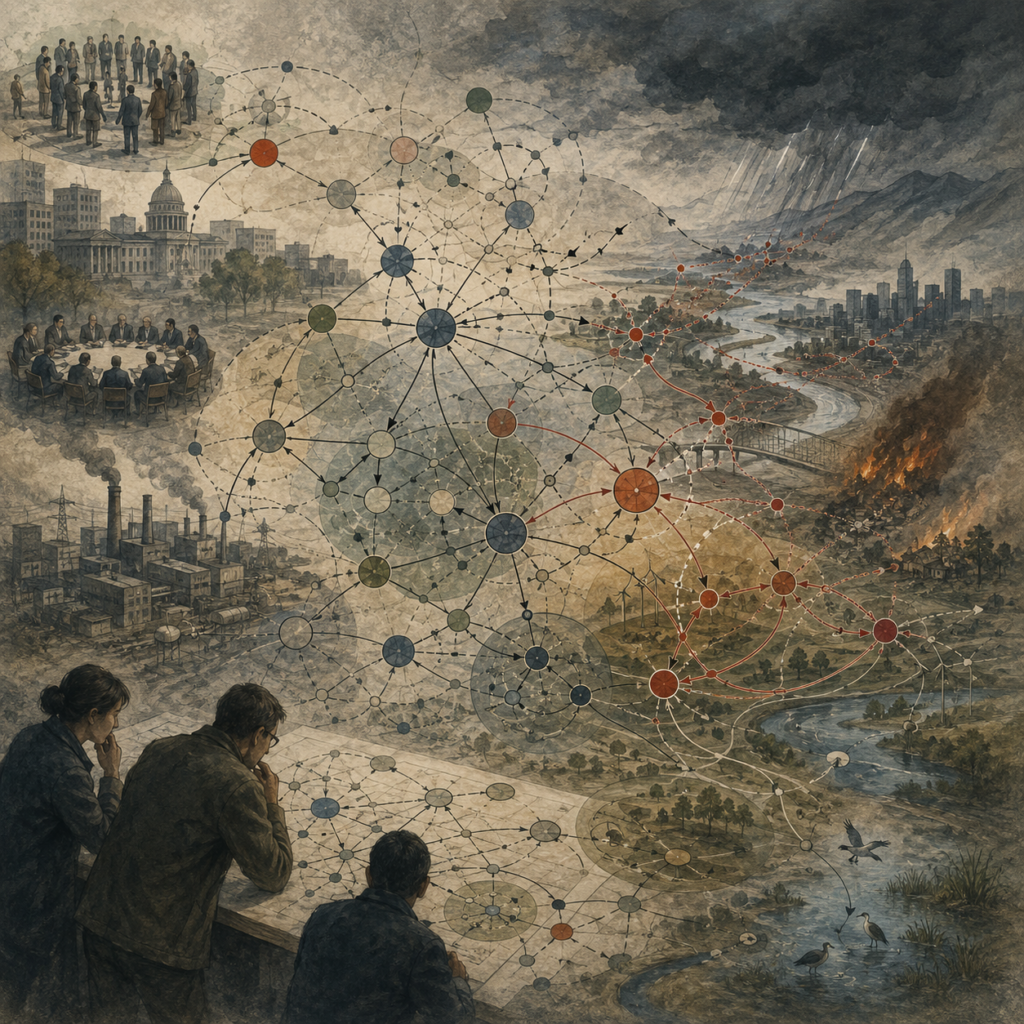
Uncertainty changes decision-making by undermining the assumptions of predictability, stable probabilities, and fully specified outcomes that support classical optimization. Rather than simply making choices harder, uncertainty changes the structure of the problem itself. Decision-makers must often act without knowing whether the relevant variables, probabilities, or models are fully reliable, especially in complex systems shaped by feedback, delay, and interdependence. This shifts attention from narrow optimization toward robustness, adaptability, and structured judgment under incomplete knowledge. The article explains the distinction between risk and uncertainty, examines ambiguity and cognitive bias, and shows why bounded rationality, scenario thinking, and robust decision-making become essential when the future cannot be known with confidence. Under such conditions, good decisions are less about perfect prediction than about resilience, transparency, and defensible action across plausible futures.

Painterly editorial illustration contrasting applied decision science with formal decision theory through human judgment, messy systems, abstract geometries, networks, tradeoffs, and symbolic uncertainty.

Decision Science vs. Decision Theory

Decision theory and decision science are closely related but serve different purposes in the study of choice under uncertainty. Decision theory provides the formal, mathematical foundations of rational choice, using concepts such as expected utility, Bayesian updating, and probabilistic consistency to define how decisions should be made under ideal conditions. Decision science builds on those foundations but extends them into real-world settings, where information is incomplete, uncertainty is often deep, preferences may conflict, and decision-makers face cognitive and institutional constraints. The article argues that decision science does not replace decision theory but broadens it by integrating behavioral research, organizational context, systems thinking, and practical decision methods. Together, the two fields form a more complete framework for understanding and improving judgment in complex environments where formal optimization alone is rarely sufficient.

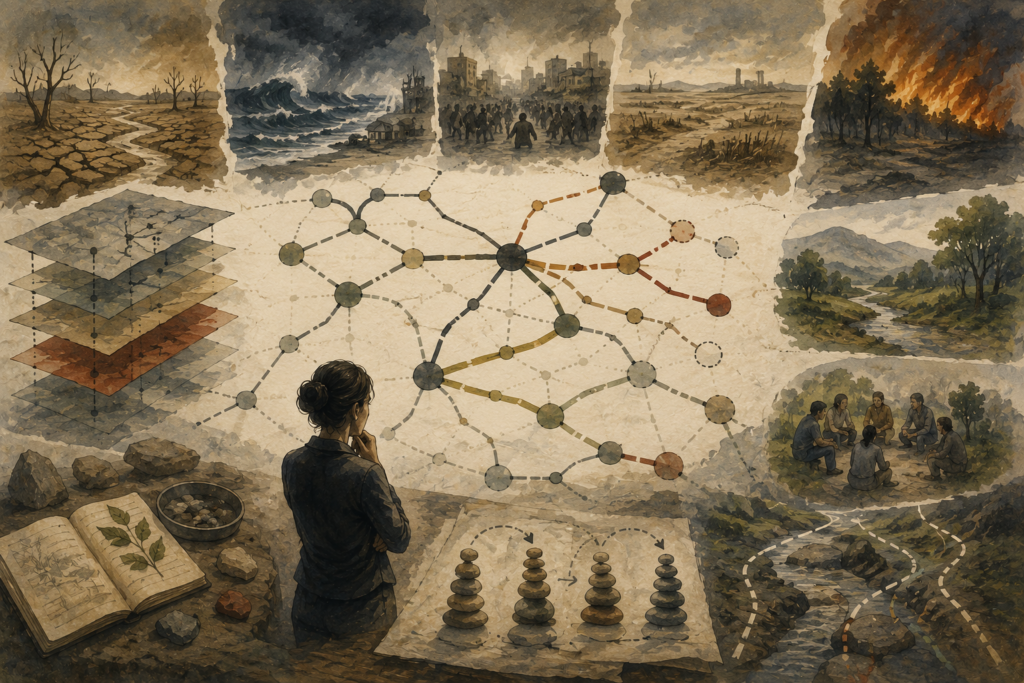
Painterly editorial illustration of decision science with branching pathways, weighted nodes, uncertainty symbols, evidence fragments, and a contemplative figure studying choices under uncertainty.

What Is Decision Science?

Decision science is the interdisciplinary study of how choices are structured, evaluated, and improved under uncertainty, complexity, and competing objectives. Drawing on economics, statistics, operations research, psychology, and organizational research, it combines formal analytical methods with empirical insight into how real people and institutions actually make decisions. Rather than assuming ideal conditions of complete information and perfect rationality, decision science focuses on how judgment can be made more transparent, systematic, and defensible when knowledge is incomplete and trade-offs are unavoidable. The field links normative models of rational choice with descriptive research on cognitive bias, bounded rationality, and institutional constraint. It also emphasizes scenario analysis, sensitivity analysis, and robust decision-making in complex systems. In practice, decision science helps decision-makers reason more clearly when certainty is impossible and consequences are significant.

Editorial scientific illustration of decision science as an architecture-of-judgment systems framework, showing uncertainty, probability, risk, decision pathways, evidence layers, scenario comparison, trade-offs, cognitive bias, systems modeling, public policy, sustainability, healthcare, finance, organizational strategy, governance, accountability, and learning.

Decision Science: How Decisions Are Made Under Uncertainty

Decision science is the interdisciplinary study of how choices are structured, evaluated, and improved under uncertainty, complexity, and competing objectives. Drawing on economics, statistics, operations research, psychology, and organizational research, it provides a framework for making judgment more explicit, transparent, and defensible when knowledge is incomplete and trade-offs are unavoidable. The field connects normative models of rational choice with descriptive research on how people and institutions actually decide under limits of time, information, and cognitive capacity. It also emphasizes uncertainty, system dynamics, and the need for robust reasoning in environments where prediction is fragile and consequences may unfold over time. As a knowledge series, this pillar introduces the core foundations, methods, and applications of decision science, while linking to related work on risk, Bayesian reasoning, heuristics, trade-offs, complex systems, and long-horizon strategic decision-making.

Scroll to Top