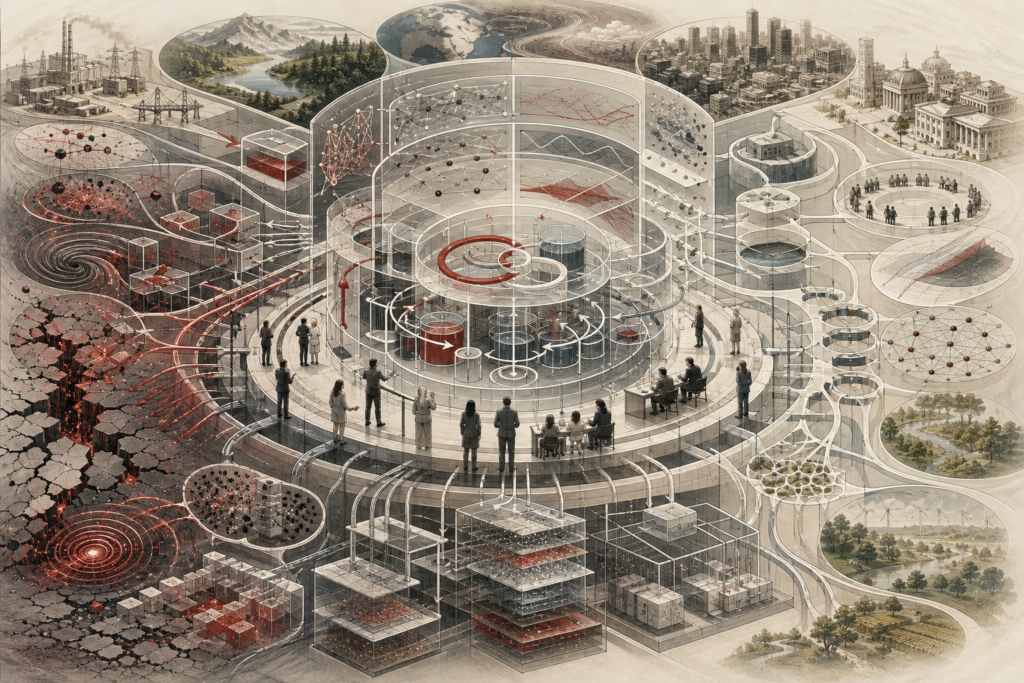
Systems Modeling: Formal Methods for Understanding Complex Systems
Systems modeling examines how formal models are used to understand, simulate, and analyze complex systems composed of interacting components. Rather than focusing on isolated variables, it studies how feedback loops, nonlinear relationships, time delays, and structural dependencies generate behavior across time. This pillar introduces the field as a whole, explaining why systems modeling matters, what major methods it includes, and how it supports analysis in sustainability, governance, infrastructure, economics, and technology. It emphasizes that models do not eliminate uncertainty, but help make it more explicit, structured, and usable for decision-making. By clarifying how system structure produces outcomes, systems modeling allows researchers and policymakers to compare interventions, explore plausible futures, identify leverage points, and reason more carefully about long-term change in dynamic, interconnected worlds.