Feature Engineering and Data Representation: Encoding, Embeddings, and Learnable Signal
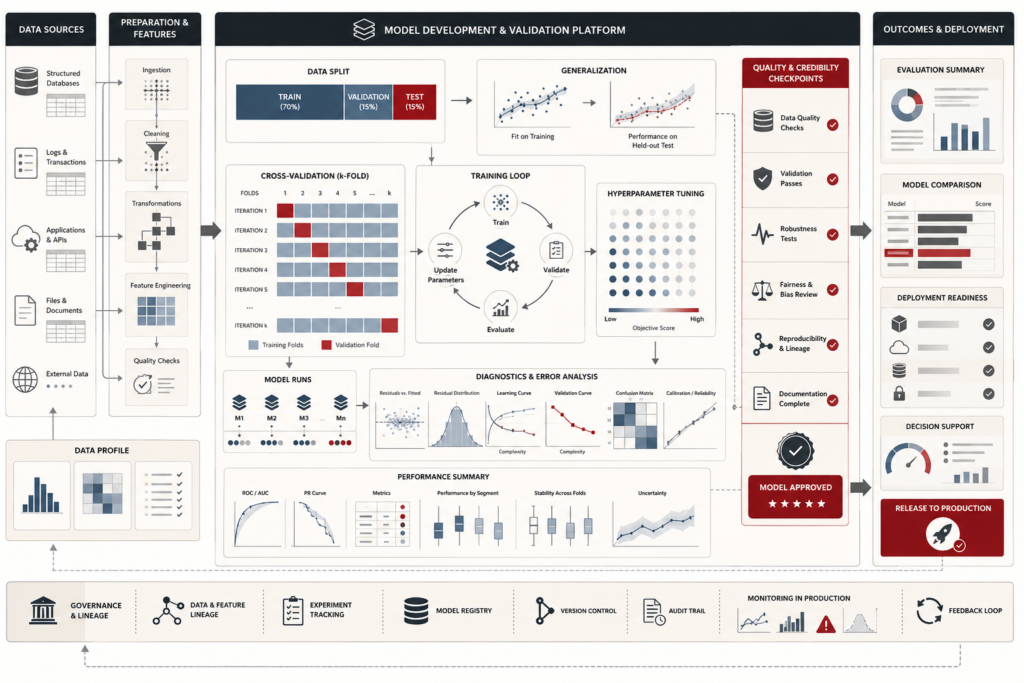
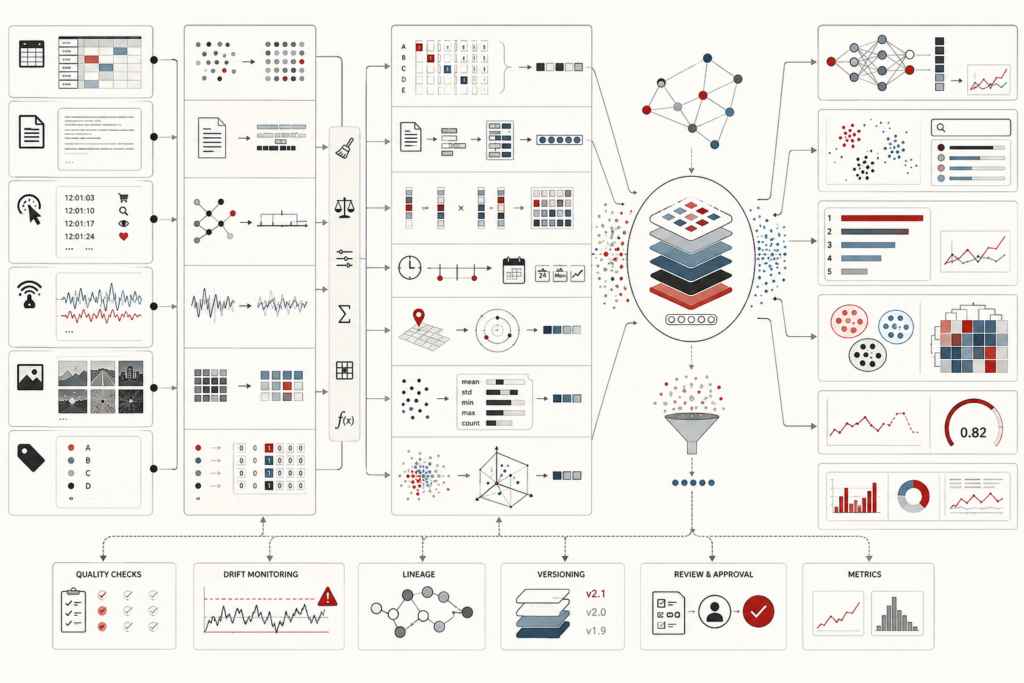
Feature engineering and data representation determine what a model can actually learn from raw data. This article frames representation not as preprocessing trivia, but as model design before the model: the disciplined construction of numerical transformations, categorical encodings, feature crosses, temporal features, embeddings, derived variables, feature-selection workflows, and leakage controls. It explains why representation shapes inductive bias, learnable signal, sparsity, dimensionality, interpretability, prediction-time validity, and downstream model behavior. The article also examines numerical scaling, one-hot encoding, high-cardinality categories, cyclical time, learned embeddings, domain-derived variables, feature stores, lineage, governance, and operational representation. A mathematical lens and Python/R workflows show how teams can evaluate feature integrity, transformation validity, leakage risk, sparsity, selection status, representation readiness, and governance review.