Author name: Tariq Ahmad

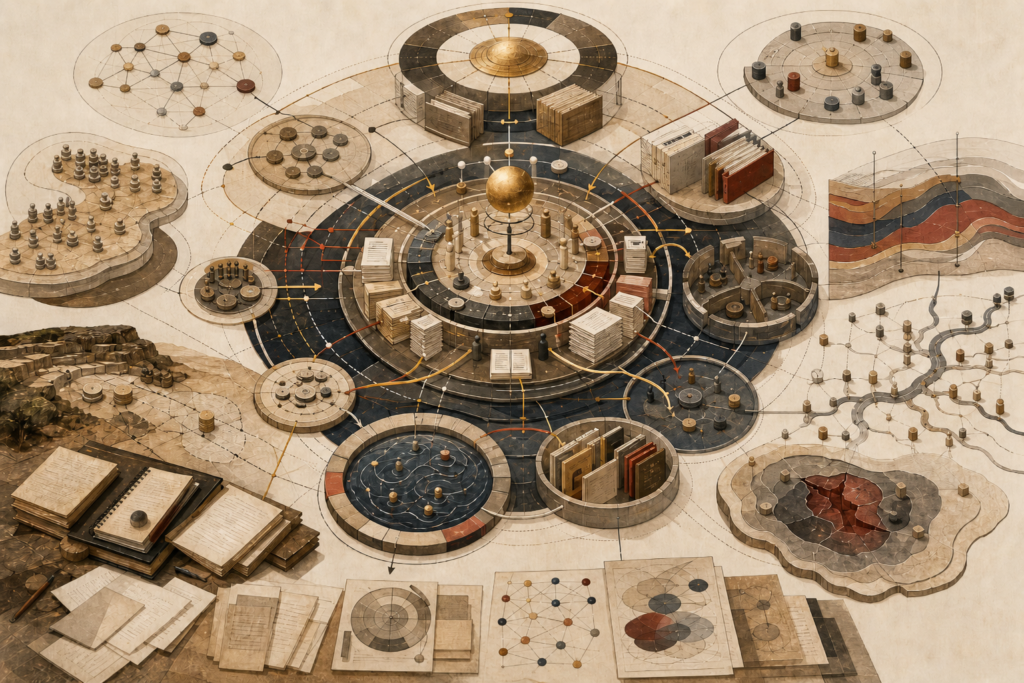
Editorial anthropological illustration showing an abstract human-environment systems map with landscapes, watersheds, forests, settlements, seasonal-calendar rings, ecological-knowledge records, field notebooks, botanical cards, urban blocks, extraction zones, and connected place-based knowledge networks.

Environment, Place, and Ecological Knowledge

Environment, place, and ecological knowledge examine how human communities understand, inhabit, interpret, adapt to, and struggle over the natural worlds around them. In cultural anthropology, environments are not treated only as physical settings, resource bases, ecological constraints, or technical management problems. They are also lived landscapes shaped by memory, livelihood, risk, symbolism, mobility, territorial belonging, local knowledge, environmental change, and systems of stewardship. This pillar explores how communities classify plants, animals, water, weather, soils, and territory; how place becomes embedded in identity, social memory, and obligation; how ecological knowledge is transmitted through practice; and how environmental conflict, conservation, extraction, climate adaptation, and environmental justice reveal the unequal power relations that shape human-environment life.
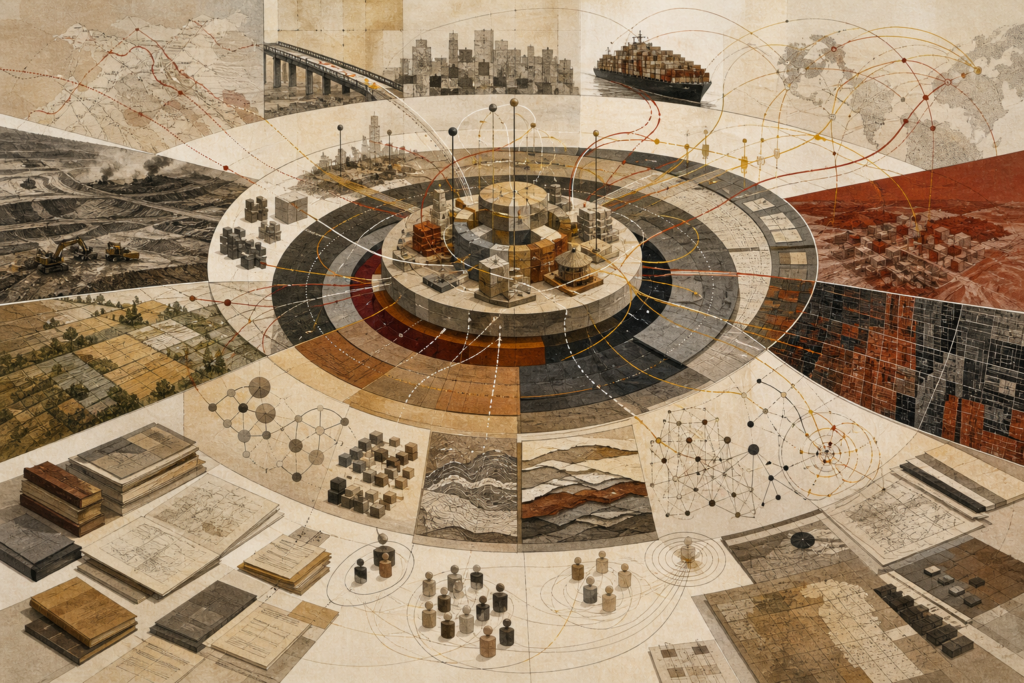
Editorial anthropological illustration showing abstract development systems with infrastructure corridors, migration flows, commodity pathways, urban expansion, extraction landscapes, research documents, and interconnected global transformation networks.

Development, Modernity, and Global Change

Development, modernity, and global change examine how communities experience economic transformation, modernization, globalization, infrastructure, migration, state power, market expansion, expert knowledge, and social upheaval within changing historical conditions. In cultural anthropology, development is not understood only through aggregate growth, institutional reform, technical assistance, or economic indicators. It is also understood through lived experiences of displacement, aspiration, inequality, cultural change, ecological disruption, institutional intervention, and shifting relations of power across local and transnational worlds. This pillar explores how development projects reorganize everyday life, how modernity alters social expectations, how global integration generates mobility and disruption, and how communities reinterpret, resist, inhabit, and transform large-scale change through memory, obligation, local knowledge, survival, and contested futures.

Editorial anthropological illustration showing abstract institutional systems, authority pathways, legitimacy rings, norm grids, archival records, organizational structures, rule-practice layers, and interconnected flows of governance and social order.

Power, Norms, and Institutions

Power, norms, and institutions examine how authority, legitimacy, custom, informal expectation, hierarchy, discipline, and social recognition shape social order within human communities. In cultural anthropology, institutions are not limited to formal organizations, legal systems, or bureaucratic structures. They are also embedded in norms, roles, rituals, sanctions, status systems, moral expectations, and everyday practices that define what is proper, possible, binding, deviant, honorable, or forbidden. This pillar explores how power becomes ordinary, how norms regulate behavior, how legitimacy sustains authority, how informal institutions shape formal rules, and how systems of status, trust, symbolic authority, and institutional memory reproduce social order. It also examines institutional change, contestation, inequality, governance, and the ethical challenges of studying power in lived settings.

Editorial anthropological illustration showing abstract household clusters, kinship networks, exchange pathways, migration flows, care systems, fieldwork materials, and interconnected relational structures.

Kinship, Reciprocity, and Social Organization

Kinship, reciprocity, and social organization examine how human communities organize belonging, obligation, exchange, care, inheritance, alliance, and continuity across generations. In cultural anthropology, kinship is not limited to biological or legal family structures. It includes the culturally specific ways societies create relatedness through descent, marriage, households, feeding, co-residence, ritual ties, adoption, labor, memory, migration, and care. This pillar explores how kinship systems define persons and roles, how reciprocity sustains trust and obligation, how households distribute labor and resources, and how exchange creates durable social ties. It also examines the power and inequality embedded in relational life, including gendered labor, inheritance, dependency, migration, remittances, social support, and the ethical challenges of studying sensitive relational data.

Editorial anthropological illustration showing an abstract symbolic-worldmaking system with ritual circles, narrative pathways, archive layers, material objects, classification grids, institutional forms, and interconnected networks of meaning.

Culture, Ritual, and Symbolism

Culture, meaning, and symbolism examine how human beings construct shared worlds through language, myth, ritual, narrative, classification, material practice, and public symbols. In cultural anthropology, culture is not treated as decoration, lifestyle, or inherited custom alone, but as a symbolic system through which communities perceive reality, define belonging, organize memory, regulate moral life, and make social order intelligible. This pillar explores how symbols acquire authority, how rituals make values visible, how stories preserve collective memory, how classifications create boundaries, and how symbolic systems can both legitimize power and support resistance. It also introduces research workflows for organizing sources, fieldnotes, interpretive codebooks, qualitative coding, and symbolic analysis while preserving context, ethics, reflexivity, and the central anthropological responsibility of interpretation.

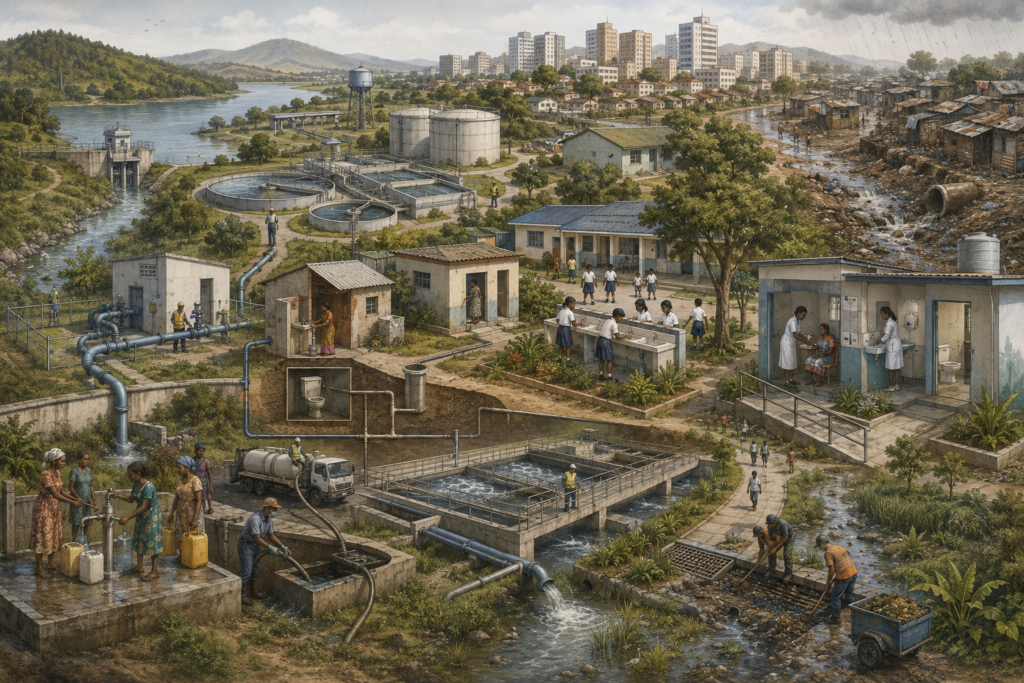
Editorial sustainability illustration showing water treatment, sanitation, hygiene facilities, drainage, wastewater systems, and unequal service conditions across neighborhoods, schools, clinics, and public spaces.

Water, Sanitation, and Public Infrastructure Systems

Water, sanitation, and public infrastructure systems are foundational to sustainable development because they determine whether health, dignity, education, care, and public life can function safely and reliably. This article argues that water and sanitation should be understood not as isolated services, but as governable public systems linking treatment, delivery, wastewater, drainage, finance, maintenance, and institutional capacity. It examines the historical evolution of water infrastructure, the shift from access metrics to systems thinking, and the ways inequality, gender, territorial exclusion, and climate stress shape infrastructural outcomes. It also shows why sustainable development depends on more than construction alone: durable progress requires maintenance, resilience, safe end-to-end management, and institutions capable of reconciling rights, affordability, operational realism, and long-horizon stewardship.

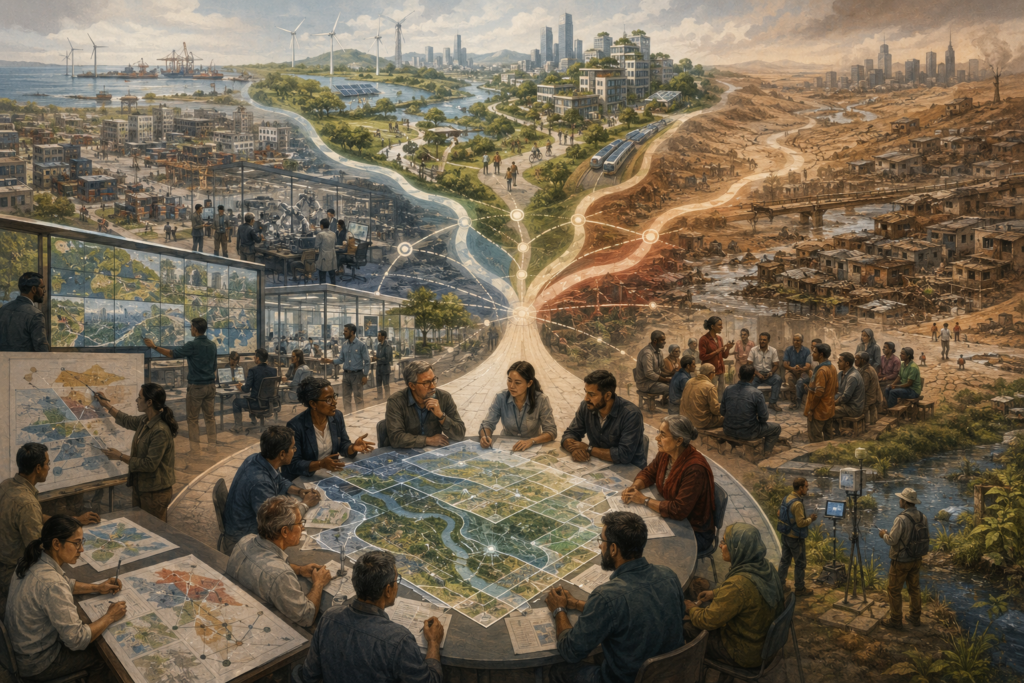
Editorial sustainability illustration showing a globe, ecological restoration, renewable energy, inclusive communities, public transit, agriculture, and a pathway toward a more resilient sustainable future.

Future Directions in Sustainable Development Thought

Future directions in sustainable development thought are being shaped by a deeper redefinition of development itself. This article argues that the field is moving beyond growth-centered frameworks toward a more demanding conception of viability: one that integrates planetary boundaries, resilience, governance capacity, technological power, justice, and long-horizon uncertainty. It examines the biophysical turn in development theory, the rise of fragility and systems thinking, the growing importance of anticipatory governance, and the digital recasting of development through AI and data systems. It also explores how future development thought is becoming more political in its treatment of inequality, more plural in its treatment of knowledge, and more ambitious in its effort to measure flourishing beyond output alone. The result is a field increasingly organized around the problem of sustaining just and governable futures under conditions of systemic stress.

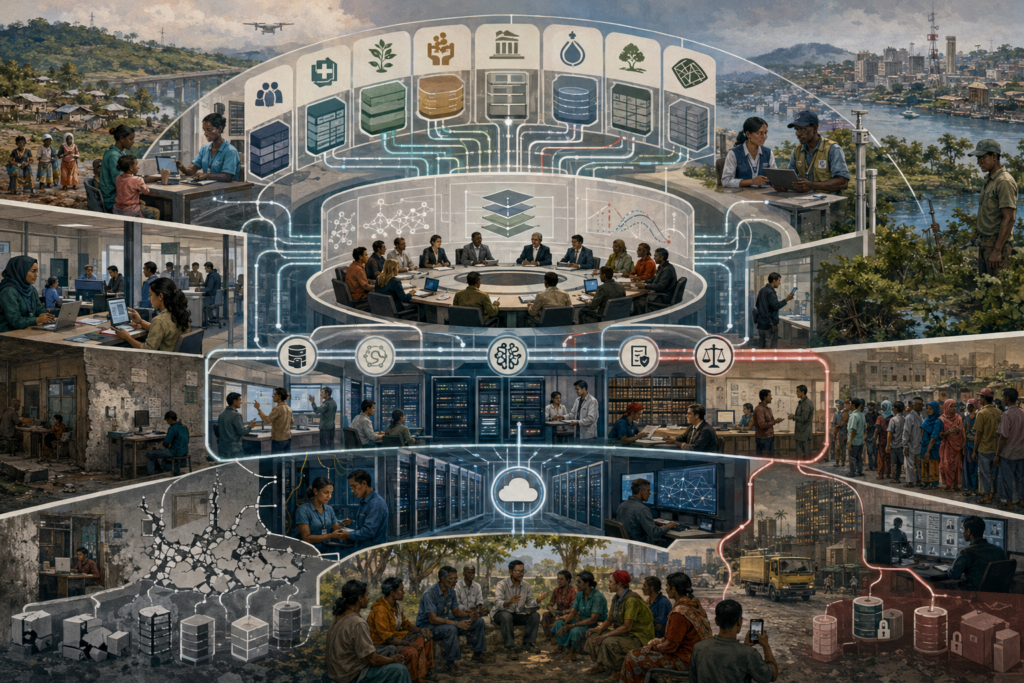
Editorial sustainability and governance illustration showing AI, public data systems, digital infrastructure, institutional oversight, community participation, and unequal access to accountable digital governance.

AI, Data Systems, and the Future of Development Governance

AI, data systems, and development governance increasingly belong to the same analytical frame because public authority is becoming more data-mediated, more automated, and more dependent on digital infrastructure. This article argues that AI is not developmentally meaningful in isolation. Its value depends on data quality, interoperability, compute access, institutional capacity, legal safeguards, and public trust. It examines how AI is reshaping administrative power, service delivery, state legibility, and governance infrastructure, while also intensifying questions of inequality, surveillance, platform dependence, and algorithmic lock-in. The core claim is that sustainable development now depends not only on technical adoption, but on whether societies can build trustworthy data systems and publicly governable AI arrangements. What matters most is not AI sophistication alone, but whether digital governance remains accountable, inclusive, contestable, and institutionally durable.

Planetary boundaries define the Earth-system conditions within which sustainable development remains habitable, just, resilient, and durable over time.

Development Under Deep Uncertainty

Development under deep uncertainty examines how sustainable development decisions should be made when futures are multiple, probabilities are disputed, and system behavior cannot be confidently forecast in advance. This article argues that long-horizon development planning cannot rely on prediction-centered methods alone. It must instead use strategies built around robustness, adaptability, institutional learning, and pathway flexibility. The piece distinguishes deep uncertainty from ordinary risk, explains why forecast-based planning often becomes brittle under changing conditions, and shows how scenario analysis, adaptive pathways, and Decision-Making Under Deep Uncertainty provide a more durable framework for planning. It also foregrounds the justice dimension of uncertainty, emphasizing that the burdens of error, delay, and adjustment are distributed unequally. The result is a more realistic account of how development remains strategic when certainty is no longer available.

Scroll to Top