Food System Fragility and Resilience
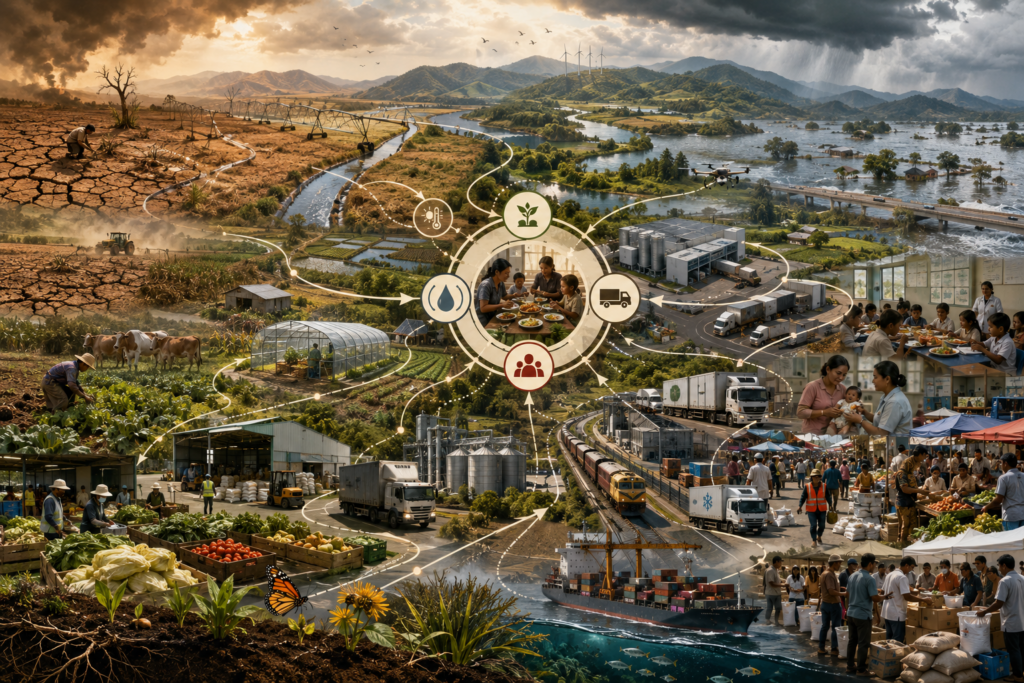
Food system fragility and resilience must be understood across the full chain from ecological foundations to household access. Food systems are not only agricultural systems; they are interconnected ecological, logistical, economic, labor, infrastructural, institutional, and social systems whose stability depends on production, storage, transport, affordability, nutrition, public protection, and governance. This article explains how climate pressure, water stress, ecological degradation, input dependency, logistics disruption, price volatility, inequality, household vulnerability, and weak institutions can turn localized strain into wider food insecurity. It also shows why resilience requires more than higher yields: resilient food systems need diversity, ecological buffers, storage, market access, social protection, nutritional safeguards, fair labor, adaptive governance, and enough redundancy to prevent stress from becoming hunger, malnutrition, and systemic instability.