Public Health Systems and Social Resilience
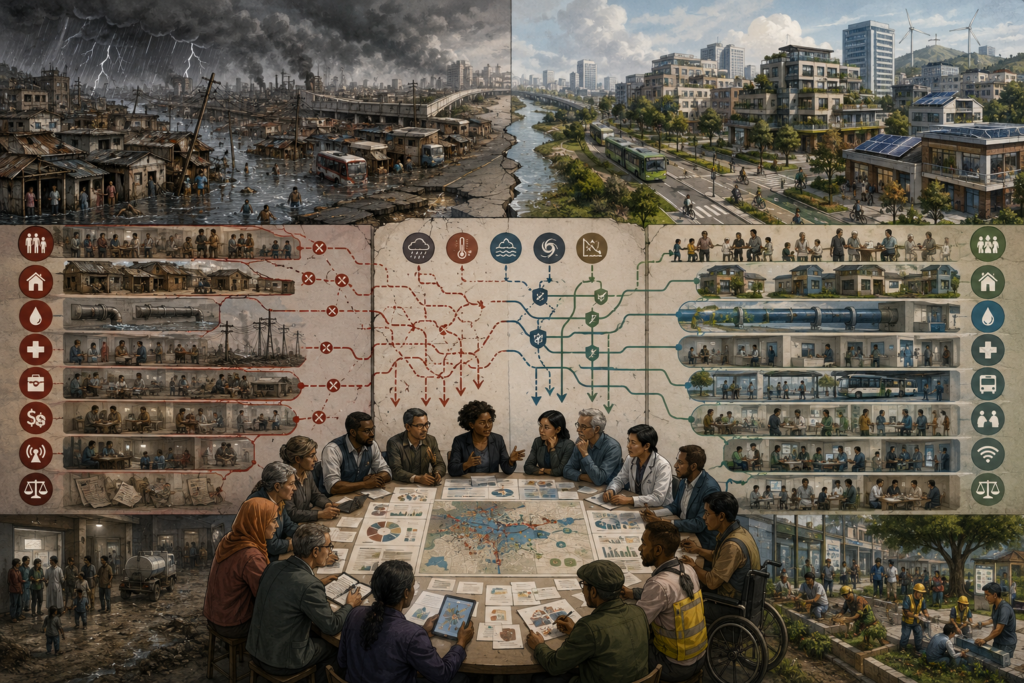
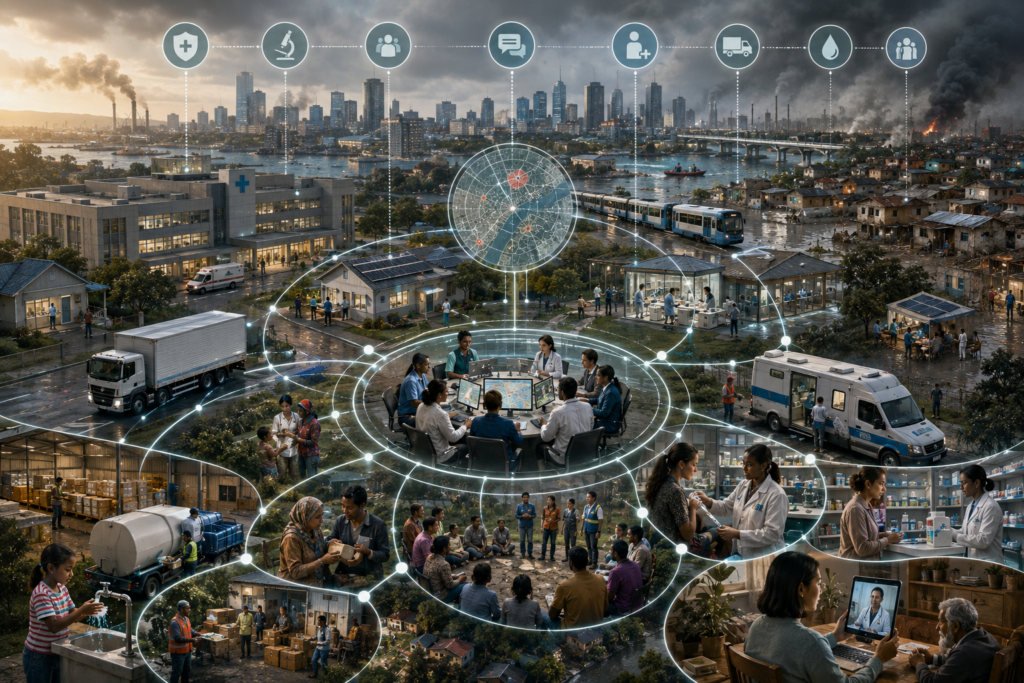
Public health resilience and systemic risk belong together because public health systems are not only clinical systems. They are social, institutional, informational, logistical, preventive, and trust-based systems that help societies detect danger, preserve essential services, protect vulnerable populations, and prevent health shocks from cascading into wider social disruption. This article explains how surveillance, laboratories, vaccination, prevention, environmental health, communication, workforce readiness, supply chains, continuity of care, primary care, mental health, public trust, and equity determine whether infectious disease, heat, smoke, contaminated water, food insecurity, conflict, displacement, infrastructure failure, or chronic disease burdens become manageable disruptions or systemic crises. Durable public health resilience requires prevention, preparedness, trusted institutions, accessible care, health justice, and the protection of essential services under stress.