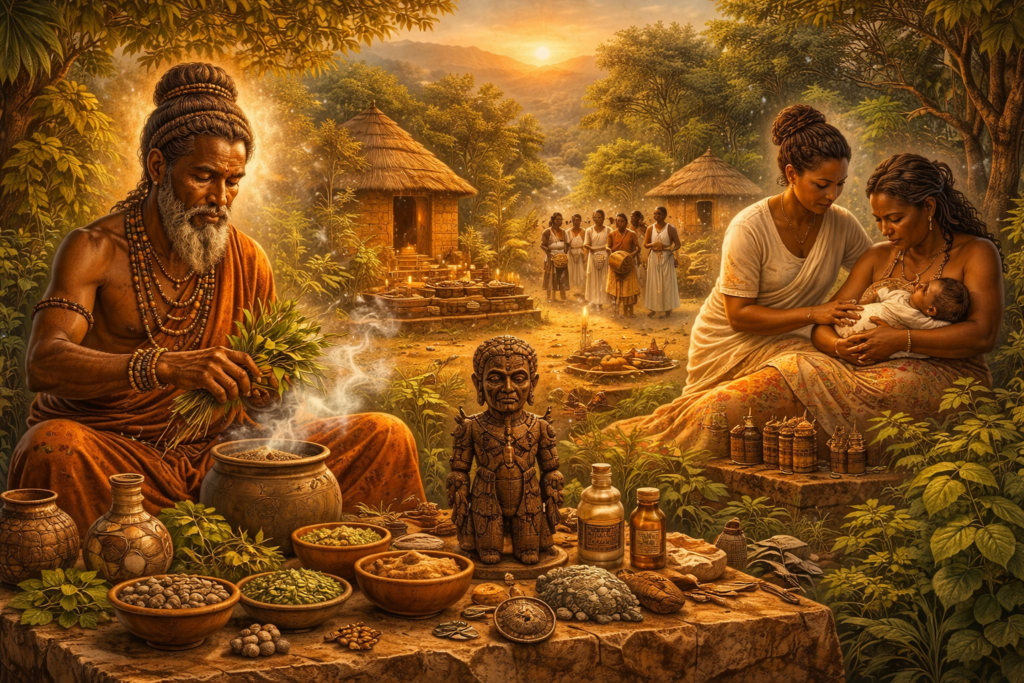
African Healing Traditions: Body, Spirit, Community, and the Work of Restoration
African healing traditions examine the diverse systems of care through which African societies have understood illness, vitality, danger, protection, and restoration across bodily, spiritual, communal, ecological, and moral dimensions of life. This category explores herbal medicine, divination, ancestral mediation, ritual healing, women’s and household care, material forms of protection, social diagnosis, regional healing worlds, colonial suppression, public-health integration, and diaspora afterlives, revealing African healing traditions as major civilizational systems of practical care, ritual knowledge, and relational restoration.