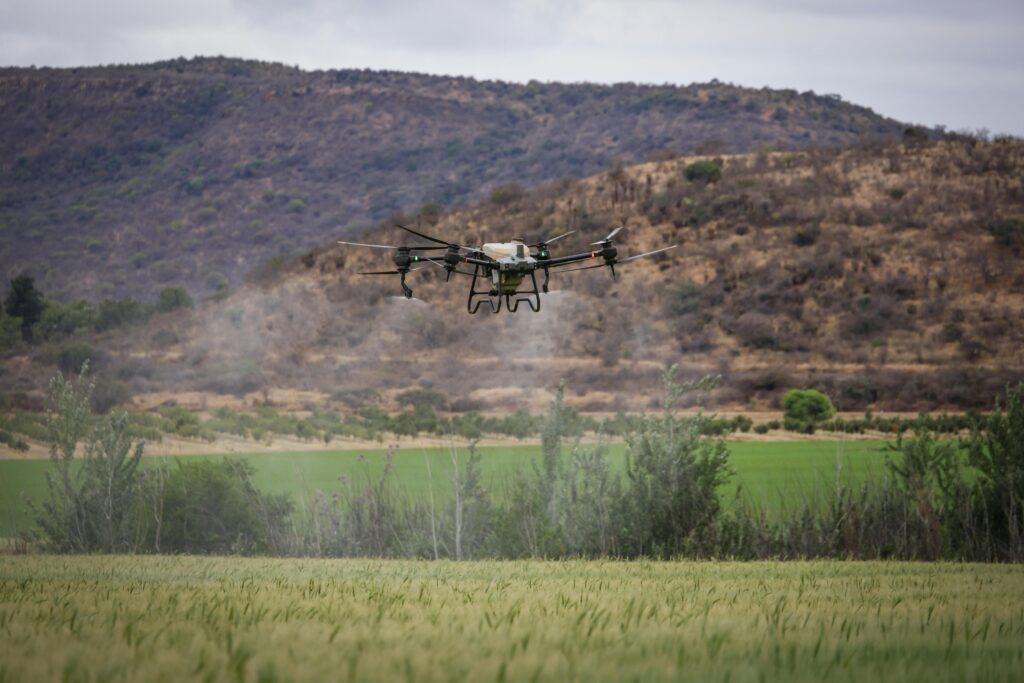
Agricultural drone flying over a crop field as part of a precision farming system

Precision Farming: IoT Sensors, Agricultural Drones, and Data-Driven Agriculture

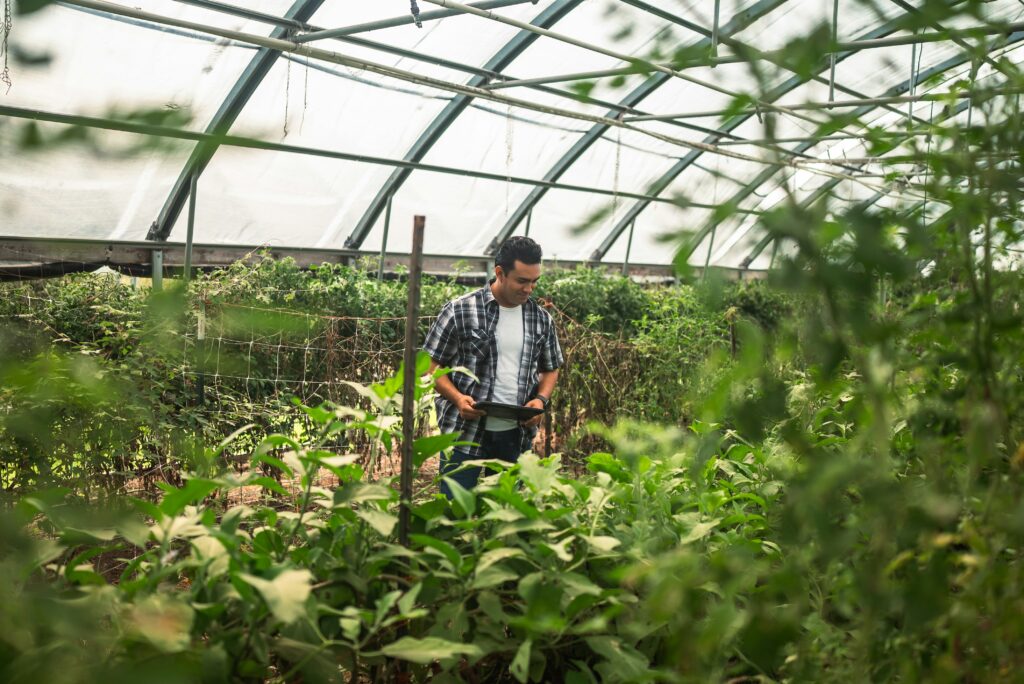
Precision farming transforms agriculture into an environmental monitoring system. By combining IoT sensors, drones, remote sensing, geospatial analytics, and decision-support tools, farmers can observe soil moisture, crop stress, nutrient variability, irrigation needs, and field conditions with far greater precision than fixed schedules or broad averages allow. This article examines precision farming as more than a farm-technology upgrade: it is a new data infrastructure for food systems, water stewardship, soil health, and climate adaptation. It argues that sensors and drones are most valuable when they strengthen farmer judgment, reduce waste, improve input efficiency, and support sustainable decision-making. But precision agriculture also raises questions of data ownership, platform dependency, equity, interoperability, and governance. Its future depends on whether digital agriculture is designed for resilience, transparency, and ecological responsibility.

Vintage car driving past Che Guevara mural in Havana Cuba illustrating the long-term impact of economic sanctions on Cuban society and infrastructure

Why Economic Sanctions Are Bad Policy

Economic sanctions are often framed as a civilized alternative to war, but their real-world effects are far more complex. This article examines sanctions as instruments of economic statecraft that can punish aggression, corruption, human-rights violations, and breaches of international law while also weakening institutions, harming civilians, disrupting development, and destabilizing critical infrastructure. It explores the institutional impact of sanctions, the ethical problem of collective punishment, their long-term consequences for sustainable development, and their uneven record of policy effectiveness. Through a systems lens, mathematical framing, and Python and R modeling snippets, the article shows how sanctions reshape financial networks, public services, trade systems, humanitarian access, and political incentives. Rather than treating sanctions as clean or bloodless tools, it argues for more precise, accountable, humane, and evidence-based forms of economic statecraft.

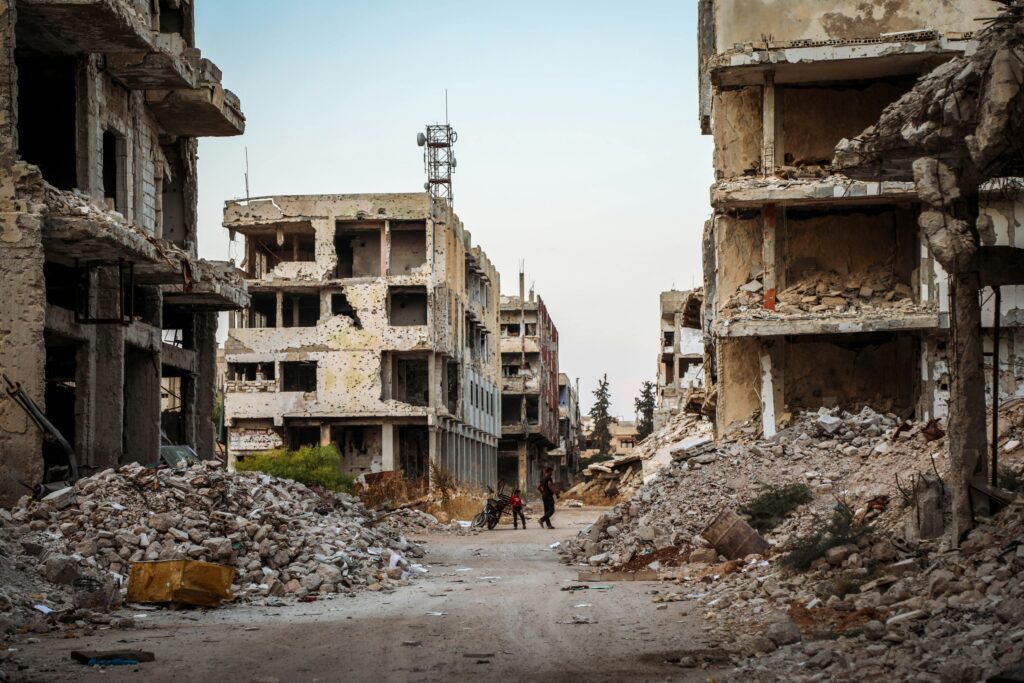
War-damaged buildings in Syria showing destroyed civilian infrastructure during armed conflict.

Does International Law Still Matter? The Erosion of Global Legal Norms

International law remains one of the central legal frameworks for limiting force, protecting civilians, and holding power accountable in global politics. Emerging from the devastation of world war, decolonization, genocide, and mass displacement, the modern international legal system is built around the UN Charter, Geneva Conventions, International Court of Justice, International Criminal Court, human-rights law, humanitarian law, and customary legal norms. This article examines whether international law still meaningfully constrains state behavior in an era of armed conflict, selective enforcement, sovereignty disputes, civilian harm, geopolitical rivalry, and institutional distrust. It explores the foundations of international law, the protection of civilians, international criminal accountability, enforcement gaps, legitimacy, marginalized peoples, and the tension between law and power. Rather than treating international law as either powerless or perfect, it frames it as a fragile but necessary guardrail against impunity.

Finnish public school campus surrounded by trees illustrating the Finland education system and its learning environment

The Institutional Logic of the Finland Education System

The institutional logic of the Finland education system reveals how public education can function as a deeply designed institution rather than a competitive sorting mechanism. This article examines Finland’s schools through the lens of Institutions & Governance, focusing on public funding, comprehensive schooling, equity, teacher professionalism, assessment restraint, student well-being, local autonomy, and public trust. It argues that Finland’s visible education practices rest on deeper institutional foundations: strong teacher preparation, national purpose, municipal implementation, welfare-state support, and a commitment to reducing disparities between schools and communities. Rather than treating Finland as a simple model to copy, the article explores what other systems can learn from its governance architecture: education works best when society treats learning as a public good, teachers as trusted professionals, and equity as a design obligation.

China green energy transition illustrated by large-scale solar and wind power infrastructure

China Green Energy Transition: Industrial Policy, Infrastructure, and Global Climate Leadership

China’s green energy transition is not only an energy story, but an institutional story about state capacity, industrial policy, infrastructure planning, regulatory coordination, and long-term climate governance. As the world’s largest energy consumer and greenhouse gas emitter, China occupies a decisive position in global decarbonization. This article examines how China has expanded solar, wind, storage, electric vehicles, transmission infrastructure, and clean-technology manufacturing through coordinated public investment and national planning. It argues that decarbonization requires more than cleaner technology; it requires institutions capable of financing infrastructure, integrating renewable power, managing coal dependence, coordinating regional development, and shaping global supply chains. China’s transition remains incomplete and contested, but it demonstrates how climate leadership increasingly depends on industrial capacity, infrastructure governance, and the ability to align national development with planetary responsibility.

Urban farming infrastructure including rooftop gardens and distributed city food production

Urban Farming Infrastructure: Distributed Food Systems and Urban Resilience

Urban farming infrastructure reframes local food production as a question of resilience, not lifestyle. Community gardens, rooftop greenhouses, hydroponic systems, vacant-lot farms, and peri-urban production cannot replace industrial agriculture or global trade, but they can add distributed capacity to fragile food systems. In an era of climate volatility, supply-chain disruption, food-price instability, and unequal food access, cities need more than efficient long-distance logistics; they need redundancy, proximity, visibility, and neighborhood-level adaptive capacity. This article examines urban farming as civic infrastructure: a measurable layer of food-system resilience connected to land use, water, energy, waste cycling, public health, equity, and governance. It argues that local production is most valuable when designed honestly—not as romantic self-sufficiency, but as practical distributed infrastructure that helps cities absorb shocks.

American classroom illustrating structural challenges in the American education system

The Structural Failures of the American Education System

The structural failures of the American education system are not mainly failures of teachers, students, families, or individual schools. They are failures of institutional design: how public education is funded, governed, measured, staffed, segregated, disciplined, professionalized, and connected to housing, public finance, higher education, debt, and social inequality. This article examines American education as an Institutions & Governance problem, showing how local property-tax dependence, district boundaries, residential segregation, unequal facilities, teacher workforce pressure, test-driven accountability, curriculum stratification, civil-rights disparities, and debt-financed higher education distribute opportunity unevenly. It argues that educational inequality is not accidental or marginal, but built into the public architecture of the system. A more democratic education system would require equitable finance, professional trust, strong facilities, broad curriculum access, civil-rights enforcement, affordable higher education, and public accountability for the conditions of learning.

Rising sea levels increasing coastal flood risk and threatening low-elevation coastal infrastructure

Measuring the Ocean: Why Coastal Flood Risk May Be Higher Than We Think

Coastal flood risk is often framed as a future consequence of sea-level rise, but present-day exposure may already be underestimated when baseline sea-level assumptions are inaccurate. Flood models depend on the relationship between water levels, land elevation, tides, storm surge, vertical datums, infrastructure protection, and local subsidence. When those baselines are wrong, the map of risk changes. This article examines how small measurement errors can produce large differences in flood exposure, especially in low-elevation coastal zones, deltas, ports, island communities, and infrastructure corridors. It connects sea-level measurement to risk governance, environmental monitoring, infrastructure resilience, and planetary-boundaries thinking. The central argument is that coastal adaptation depends not only on projecting future sea-level rise, but on accurately measuring present risk before planning systems, insurance models, and infrastructure investments lock in avoidable vulnerability.

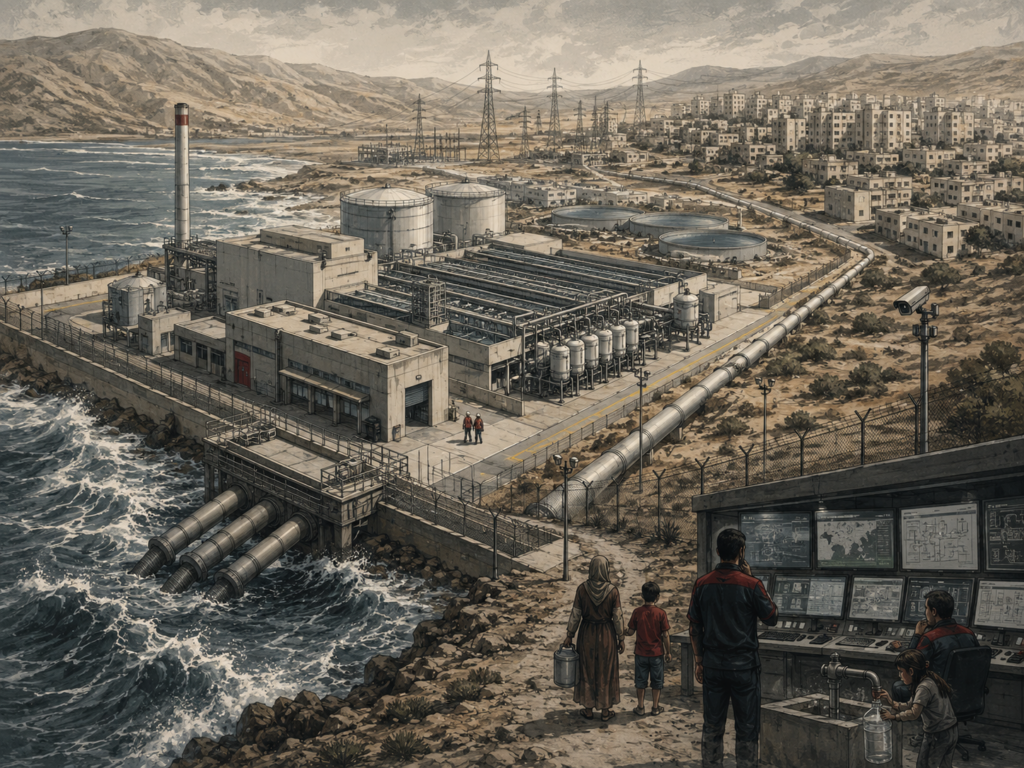
Editorial illustration of a coastal desalination plant with seawater intakes, pipelines, treatment tanks, power lines, security fencing, monitoring systems, nearby communities, and workers overseeing critical water infrastructure.

Water Infrastructure at Risk: The Security Challenge of Desalination Plants

Desalination plant security is becoming a central question for water security, urban resilience, and sustainable development. In arid coastal regions, desalination facilities are no longer secondary infrastructure; they are strategic lifelines that convert seawater into drinking water for millions of people. Yet these systems also concentrate risk. Large plants depend on coastal siting, energy supply, specialized membranes, pumps, digital controls, chemical inputs, skilled operators, and global supply chains. Disruption can cascade through public health, sanitation, hospitals, food systems, and urban stability. This article examines desalination as critical infrastructure, connecting water scarcity, climate stress, energy dependency, cyber and physical security, environmental monitoring, and resilience planning. It argues that desalination can strengthen water security only when cities design for redundancy, storage, accountability, and continuity under disruption.

Scroll to Top