
Last Updated May 9, 2026
International law emerged from the wreckage of empire, world war, genocide, mass displacement, colonial domination, and the repeated failure of power politics to protect human beings from organized violence. After the Second World War, governments attempted to build a legal order capable of limiting the use of force, protecting civilians, regulating armed conflict, supporting self-determination, and creating institutions through which disputes could be addressed by law rather than by conquest alone.
The modern international legal system is built around several overlapping frameworks: the United Nations Charter, the Geneva Conventions, customary international law, international human rights law, refugee law, international criminal law, the International Criminal Court, the International Court of Justice, regional human-rights systems, treaty bodies, and domestic courts applying international norms. Together, these institutions reflect a central post-1945 aspiration: global politics should not be governed solely by force.
Yet the authority of international law has always been contested. The system promises sovereign equality, but power remains unequal. It prohibits aggression, yet wars continue. It protects civilians, yet hospitals, schools, journalists, humanitarian workers, refugee camps, water systems, food systems, and residential neighborhoods are repeatedly harmed. It condemns genocide, crimes against humanity, war crimes, apartheid, torture, forced displacement, and unlawful occupation, yet accountability is often slow, selective, or blocked by geopolitical interests.
The central question, therefore, is not whether international law is perfect. It has never been perfect. The deeper question is whether international law still meaningfully constrains state behavior, shapes legitimacy, protects vulnerable populations, and provides a language through which weaker states, occupied peoples, stateless communities, victims, civil-society groups, and marginalized populations can contest domination.
For Institutions & Governance, the erosion of global legal norms is not only a legal crisis. It is a governance crisis. It asks whether institutions can restrain power, whether rules can survive selective enforcement, whether civilians remain legally visible during war, whether powerful states can be judged by the standards they invoke against others, and whether the international system can preserve enough legitimacy to prevent a return to naked force as the primary organizing principle of global order.
Main Library
Publications
Article Map
Institutions & Governance
Related Topic
International Law
Related Topic
Global Governance
Related Topic
Geopolitics & Global Order
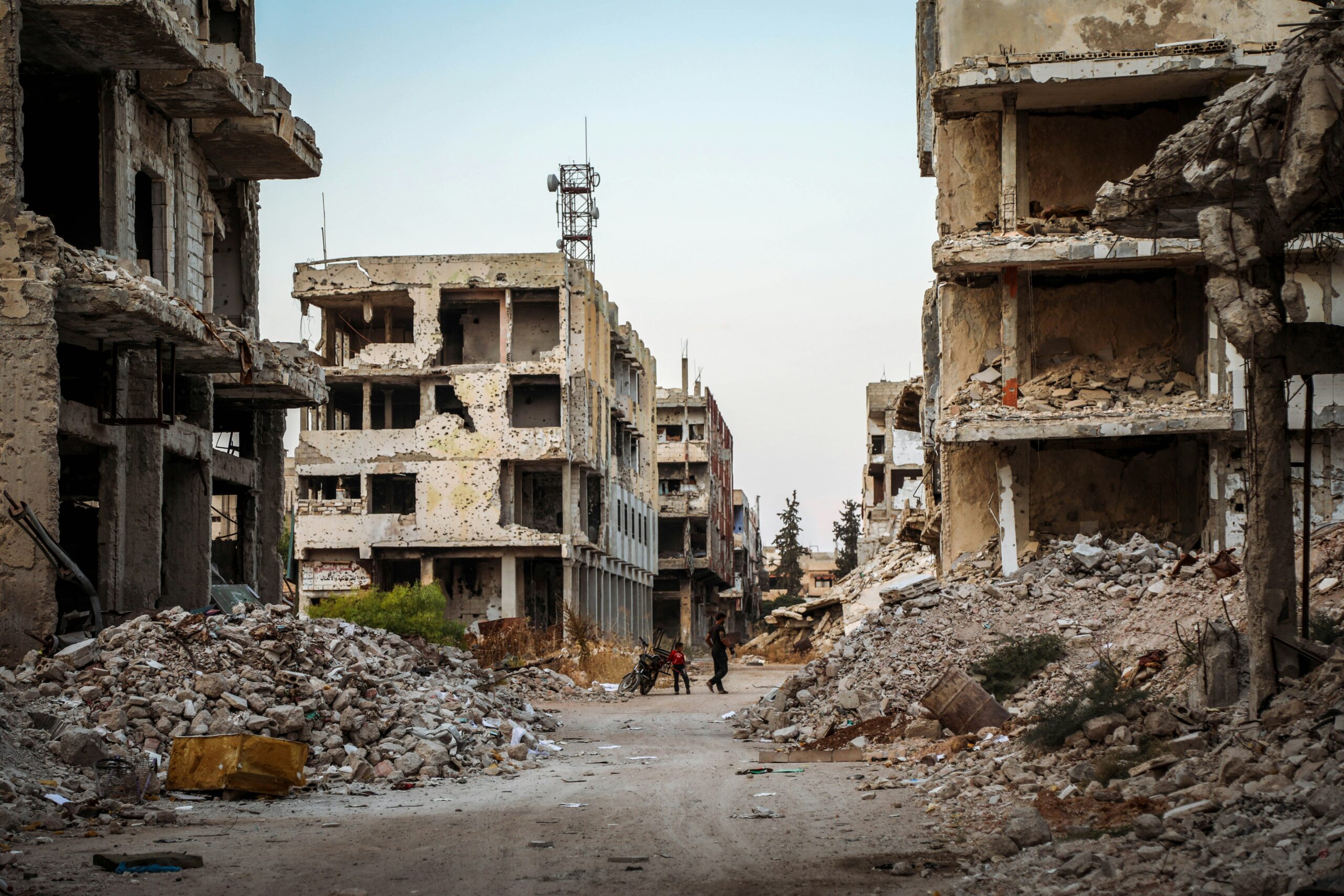
This article examines international law as both a legal system and a fragile institutional order. It explores the foundations of modern international law, the UN Charter, civilian protection, international humanitarian law, human rights, criminal accountability, enforcement gaps, sovereignty, selectivity, marginalized peoples, institutional legitimacy, and the continuing struggle to preserve legal constraint in a world still structured by unequal power.
The Foundations of Modern International Law
The modern framework of international law developed from multiple historical sources: treaty law, customary law, diplomacy, maritime practice, the law of neutrality, humanitarian traditions, anti-slavery struggles, decolonization movements, human-rights advocacy, and postwar institution-building. Although international law did not begin in 1945, the post-Second World War order gave it a new institutional architecture.
The devastation of global war convinced many governments that international stability required stronger legal rules limiting aggression and protecting civilian populations. The result was a layered legal order built around several foundational commitments:
- the prohibition of aggressive war;
- the sovereign equality of states;
- the peaceful settlement of disputes;
- the protection of civilians and persons hors de combat;
- the recognition of human rights;
- the criminal responsibility of individuals for grave international crimes;
- the principle that even state power must be subject to legal constraint.
Several legal instruments define this order. The United Nations Charter restricts the threat or use of force and establishes the Security Council’s responsibility for international peace and security. The Geneva Conventions codify humanitarian protections for wounded soldiers, prisoners of war, civilians, medical personnel, and other protected persons. The Rome Statute of the International Criminal Court establishes jurisdiction over genocide, crimes against humanity, war crimes, and the crime of aggression. The International Court of Justice provides a forum for resolving legal disputes between states and issuing advisory opinions requested by authorized UN organs and specialized agencies.
These frameworks did not abolish power politics. They attempted to discipline it. International law does not erase national interest, military force, economic coercion, or geopolitical rivalry. Instead, it provides standards by which conduct can be judged, claims can be contested, violations can be documented, and legitimacy can be evaluated.
This is why international law matters even when enforcement is incomplete. A rule that is violated is not necessarily irrelevant. Domestic law is also violated, yet its violation does not prove that law has no force. The question is whether law shapes expectations, creates accountability, organizes resistance, constrains behavior, and provides institutional pathways for judgment. International law does all of these unevenly, but not insignificantly.
The institutional lesson is that law functions partly through enforcement, but also through language, legitimacy, documentation, expectation, and memory. Even when power blocks immediate accountability, legal classification can preserve truth against denial and keep open the possibility of future judgment.
The UN Charter and the Legal Constraint on Force
The United Nations Charter is the constitutional center of the modern international order. Its most important legal innovation is the restriction on the unilateral use of force. Article 2(4) requires states to refrain from the threat or use of force against the territorial integrity or political independence of any state. The Charter recognizes limited exceptions, most notably self-defense under Article 51 and collective enforcement action authorized by the Security Council.
This structure reflects a decisive postwar shift. Before the twentieth century, war was often treated as an accepted instrument of state policy. The Charter system attempted to delegitimize aggressive war and replace conquest with collective security. Its purpose was not merely diplomatic convenience. It was a response to catastrophic historical experience: world war, occupation, genocide, mass bombing, forced displacement, and imperial domination.
In practice, however, the Charter system faces persistent challenges:
- self-defense claims can be stretched or contested;
- Security Council action can be blocked by veto politics;
- interventions may be justified through disputed humanitarian, counterterrorism, or security arguments;
- proxy conflicts blur the line between internal and internationalized armed conflict;
- occupation, annexation, and territorial disputes test the credibility of legal prohibitions.
The Charter’s legal significance therefore depends on more than text. It depends on interpretation, institutional practice, political will, state consent, regional pressure, domestic courts, civil society, media scrutiny, and the willingness of states to treat violations as legal problems rather than merely strategic facts.
Even when the system fails to prevent war, the Charter still structures legal argument. States rarely admit that they are violating the prohibition on force. Instead, they try to justify their actions through self-defense, invitation, Security Council authorization, humanitarian necessity, counterterrorism, or disputed territorial claims. This pattern reveals something important: international law retains legitimacy even when actors attempt to manipulate it. Powerful states may evade the law, but they often still feel compelled to speak in its language.
The erosion of the Charter system therefore does not occur only when force is used. It occurs when legal exceptions are stretched beyond recognition, when selective enforcement becomes normal, when Security Council paralysis makes accountability impossible, and when the prohibition on aggression becomes easier to invoke against adversaries than allies.
For Institutions & Governance, the central problem is institutional credibility. If the global legal order cannot reliably distinguish lawful defense from unlawful aggression, or cannot respond consistently when the distinction is breached, the system’s authority weakens.
Civilian Protection and the Laws of War
One of the most important objectives of international humanitarian law is the protection of civilians during armed conflict. The laws of war do not make war humane. Rather, they seek to limit the worst effects of armed violence by imposing legal obligations on parties to conflict.
Three principles are especially central:
- Distinction: parties must distinguish between civilians and combatants, and between civilian objects and military objectives.
- Proportionality: attacks expected to cause incidental civilian harm that would be excessive in relation to the concrete and direct military advantage anticipated are prohibited.
- Precaution: parties must take feasible precautions to avoid or minimize civilian harm.
Protected civilian objects and persons include, among others:
- hospitals and medical facilities;
- schools and universities;
- residential areas;
- water, sanitation, energy, and food systems when civilian survival depends on them;
- journalists, humanitarian workers, medical personnel, and civilians not directly participating in hostilities;
- cultural property and religious sites, subject to specific legal frameworks and circumstances.
Contemporary warfare complicates the application of these rules. Urban conflict places military operations near civilian populations. Non-state armed groups may operate within populated areas. Advanced weapons can be precise, but precision does not automatically make an attack lawful. Cyber operations can disrupt civilian infrastructure without visible physical violence. Siege warfare, blockades, starvation tactics, forced displacement, and attacks on dual-use infrastructure raise difficult questions about military necessity and civilian survival.
Transparent investigation is essential. When civilians are harmed, legal assessment cannot depend only on the attacking party’s internal claims. Credible review requires evidence preservation, independent monitoring, witness protection, forensic documentation, satellite imagery, weapons analysis, chain-of-command inquiry, and public reporting wherever possible.
The legitimacy of international humanitarian law depends not only on whether rules exist, but on whether civilian life is treated as legally meaningful. If civilian harm is repeatedly dismissed as collateral, accidental, unavoidable, or unverifiable without serious investigation, the protective purpose of the law is weakened.
This is where legal norms become institutional practice. A military manual may cite distinction and proportionality, but those principles matter only if commanders are trained, targeting decisions are reviewed, civilian harm is tracked, violations are investigated, and victims have some pathway to recognition or remedy.
Human Rights, Humanitarian Law, and Armed Conflict
International humanitarian law and international human rights law are distinct but complementary. International humanitarian law applies during armed conflict and regulates the conduct of hostilities, protection of persons, occupation, detention, and means and methods of warfare. International human rights law applies at all times, though some rights may be subject to lawful derogation during public emergencies. Certain protections, such as the prohibition of torture, remain non-derogable.
The interaction between these bodies of law matters because armed conflict does not suspend human dignity. Civilians do not lose human rights because war exists. Detained persons do not lose protection because they are held in a security context. Occupied populations do not lose legal status because the occupying power asserts military necessity.
Important areas of overlap include:
- the right to life and rules on lethal force;
- prohibitions on torture and cruel, inhuman, or degrading treatment;
- fair-trial rights and detention safeguards;
- protection against enforced disappearance;
- freedom from discrimination;
- rights to food, water, health, housing, and education during crisis conditions;
- protection of children, displaced persons, refugees, and stateless people.
This legal overlap is especially important in conflicts involving occupation, counterterrorism, emergency rule, internal repression, displacement, siege conditions, and humanitarian access. A narrow focus on battlefield rules can miss structural harms inflicted through detention systems, movement restrictions, deprivation, discriminatory law, settlement practices, resource control, or administrative coercion.
International law therefore protects not only against unlawful killing, but against systems of domination that deny people the legal conditions of life, movement, recognition, and security.
This is especially important for communities that experience violence not only as isolated incidents, but as a prolonged condition: occupation, blockade, apartheid, forced displacement, statelessness, refugee encampment, surveillance, discriminatory citizenship, or denial of return. Legal analysis must be capable of seeing both the event and the system.
International Criminal Accountability
International criminal law developed from the recognition that some crimes are so grave that they concern the international community as a whole. The postwar tribunals at Nuremberg and Tokyo helped establish the principle that individuals, including state officials and military leaders, can be held criminally responsible under international law. Later tribunals for the former Yugoslavia, Rwanda, Sierra Leone, Cambodia, and other contexts expanded the practice of international and hybrid criminal justice.
The International Criminal Court, created by the Rome Statute, has jurisdiction over four core crimes:
- genocide;
- crimes against humanity;
- war crimes;
- the crime of aggression.
The ICC was not designed to replace national courts. It operates on the principle of complementarity, meaning that it acts when national systems are unwilling or unable genuinely to investigate and prosecute. This principle reflects a balance between sovereignty and accountability: states retain the primary duty to prosecute serious crimes, but international jurisdiction exists when domestic systems fail.
International criminal accountability serves several purposes:
- recognizing victims and documenting harm;
- deterring future violations, at least in some contexts;
- challenging impunity for commanders and political leaders;
- establishing public records of atrocities;
- supporting transitional justice and post-conflict reconstruction;
- signaling that certain conduct is not merely politically controversial but criminal.
Yet international criminal justice faces serious limitations. Arrests depend on state cooperation. Powerful states may reject jurisdiction. Evidence collection can be dangerous. Trials may take years. Selectivity can undermine legitimacy. Victims may experience proceedings as distant, slow, or disconnected from material repair.
Despite these limits, international criminal law remains one of the few mechanisms through which victims of atrocity can assert that their suffering is not simply a tragic byproduct of power, but a legal wrong demanding judgment.
The institutional question is whether international criminal accountability can become more consistent, more victim-centered, more independent, and less vulnerable to geopolitical selectivity. If accountability appears to reach only the weak, the defeated, or the diplomatically isolated, the moral authority of international criminal justice is weakened.
The Challenge of Enforcement
The central weakness of international law is not the absence of rules. It is the difficulty of enforcement. Unlike domestic legal systems, international law lacks a centralized global police force, a universal executive authority, and automatic jurisdiction over all actors. Its enforcement depends on treaties, state consent, domestic implementation, Security Council action, international courts, diplomatic pressure, sanctions, reputation, civil society documentation, and political mobilization.
This creates several structural limitations:
- states may refuse to recognize the jurisdiction of international courts;
- powerful states may shield themselves or allies from scrutiny;
- Security Council vetoes may block collective enforcement;
- arrest warrants may remain unenforced if states do not cooperate;
- investigations may be delayed by lack of access, insecurity, or political obstruction;
- domestic courts may lack independence or capacity;
- international institutions may lack resources relative to the scale of violations.
Enforcement also depends on political context. A legal judgment may be binding, but implementation may require diplomacy, economic pressure, domestic political change, or long-term institutional support. In some cases, international law works slowly: through documentation, legal memory, reputational pressure, universal jurisdiction, civil litigation, sanctions, arms-transfer restrictions, or future prosecutions when political conditions shift.
This slow temporality can frustrate victims. Law that arrives years later cannot restore the dead or undo displacement. Yet delayed accountability is not meaningless. Historical records matter. Judicial findings matter. Arrest warrants matter. Legal classifications matter. They can shape diplomacy, restrict travel, delegitimize perpetrators, support reparations claims, and preserve truth against denial.
The enforcement problem therefore requires a realistic but not cynical view. International law is weaker than domestic law in coercive capacity, but stronger than pure morality in institutional form. Its authority lies between power and principle, and that is precisely why legitimacy is so important.
The erosion of global legal norms often begins when enforcement gaps become normalized. If legal findings are ignored, if vetoes repeatedly block action, if arrest warrants become symbolic only, or if powerful actors exempt themselves from scrutiny, the distance between law and reality becomes politically corrosive.
Sovereignty, Power, and Global Governance
International law operates within a deep tension between sovereignty and accountability. The modern international system is organized around states. States possess territorial authority, legal personality, diplomatic equality, and the right to political independence. At the same time, international law increasingly recognizes that sovereignty cannot be a shield for aggression, genocide, crimes against humanity, apartheid, torture, slavery, forced disappearance, or systematic persecution.
This tension is not a flaw at the margins of the system; it is one of the system’s organizing contradictions. International law depends on states to create, interpret, and enforce legal rules. But it must also constrain states when they violate fundamental norms.
Sovereignty has multiple meanings:
- territorial sovereignty: authority over a defined territory;
- political independence: freedom from external domination;
- legal equality: formal equality of states under international law;
- popular sovereignty: the right of peoples to political self-determination;
- responsible sovereignty: the idea that state authority carries obligations toward populations and the international community.
These meanings can conflict. A state may invoke territorial sovereignty to resist external accountability. A people may invoke self-determination against colonial rule, occupation, annexation, racial domination, or foreign control. International institutions may invoke human rights or humanitarian law to scrutinize state conduct. Powerful states may invoke sovereignty for themselves while violating it elsewhere.
The legal challenge is to preserve the stabilizing function of sovereignty without allowing sovereignty to become impunity. International law cannot survive if sovereignty means only power protected from judgment. It also cannot survive if accountability is applied selectively by powerful actors against weaker ones. The credibility of the system depends on consistency, restraint, and equal legal seriousness.
For Institutions & Governance, sovereignty is not only a legal doctrine. It is an institutional design problem. The international system must preserve political independence while preventing state authority from becoming a license for domination, conquest, or atrocity.
Selectivity, Double Standards, and Unequal Power
One of the most serious threats to international law is the perception that it is applied selectively. When weaker states, defeated leaders, or politically isolated actors face legal scrutiny while powerful states and their allies avoid accountability, the system’s legitimacy erodes.
Selectivity can appear in several forms:
- jurisdictional selectivity: some actors fall within court jurisdiction while others remain outside it;
- enforcement selectivity: arrest warrants or judgments are enforced against some suspects but ignored for others;
- diplomatic selectivity: violations by allies are described as complex security issues, while violations by rivals are treated as clear legal breaches;
- media selectivity: some victims receive global attention while others are marginalized;
- institutional selectivity: Security Council politics can determine which crises receive action and which are blocked.
These double standards are not only moral problems. They are structural problems. Law depends on legitimacy. If international law is widely perceived as an instrument of the powerful, its ability to constrain future conduct weakens. States and armed actors may treat legal claims as political weapons rather than binding standards.
At the same time, the existence of selectivity does not mean international law should be abandoned. It means international law must be defended against capture. The answer to unequal enforcement is not less law, but more consistent law: broader jurisdiction, stronger domestic implementation, better support for independent courts, protection for investigators, attention to victims across regions, and willingness to scrutinize allies as well as adversaries.
This is especially important for the Global South and formerly colonized societies. Many communities remember international law not only as a language of rights, but also as a language historically used to justify empire, unequal treaties, mandates, trusteeships, intervention, sanctions, and selective recognition. For international law to retain authority, it must confront that history rather than pretend neutrality has always been evenly practiced.
A serious defense of international law must therefore be morally honest about unequal power. It must reject the idea that law is only binding when convenient. It must also reject the cynical conclusion that hypocrisy makes law useless. The task is to deepen legal accountability, not surrender the legal field to power.
International Law and Marginalized Peoples
International law is often described as a system made by states. That is formally true in many respects, but incomplete as a moral and historical account. Some of the most important legal developments emerged because marginalized peoples, colonized societies, Indigenous communities, racial justice movements, anti-apartheid activists, women’s movements, labor organizers, refugees, survivors, and human-rights defenders demanded recognition.
The language of self-determination, racial equality, minority protection, Indigenous rights, refugee protection, women’s rights, disability rights, children’s rights, and international criminal accountability did not descend neatly from great-power consensus. It was contested into existence by people whose suffering exposed the limits of state-centered legality.
Examples include:
- anti-colonial movements that transformed self-determination into a central international legal principle;
- the anti-apartheid struggle, which helped establish racial domination as a matter of international legal concern;
- Indigenous advocacy leading to international recognition of collective rights, land, culture, consultation, and self-government claims;
- women’s rights movements that expanded legal attention to sexual violence, gender persecution, and wartime harm;
- refugee and stateless communities whose experiences shaped protection frameworks;
- survivors of genocide and atrocity whose testimony built the record for accountability.
This history matters because international law is not only a tool of states. It is also a language of appeal used by those excluded from ordinary channels of power. A village facing forced displacement, a people living under occupation, a minority targeted by persecution, a family seeking the disappeared, a journalist documenting war crimes, or a refugee denied recognition may all turn to international law because domestic institutions have failed them.
For these communities, the question “does international law matter?” is not abstract. It may determine whether suffering is named, whether evidence is preserved, whether claims can be heard, whether perpetrators can travel freely, whether aid can reach civilians, and whether the world has a vocabulary for injustice beyond strategic interest.
This is why the erosion of international law harms vulnerable communities most. Powerful actors can often survive legal decay. Marginalized peoples have fewer protections when law is dismissed as naïve, unenforceable, or merely political. The weaker the legal order becomes, the more exposed they are to domination without language, forum, or remedy.
Why Institutional Legitimacy Matters
International law functions in many ways like infrastructure. When it works, it may be partly invisible. Treaties guide routine cooperation. Diplomatic immunity supports communication. Maritime law structures navigation. Human-rights treaties shape domestic advocacy. Trade rules organize expectations. Humanitarian law informs military manuals. Courts issue judgments. Legal advisers review targeting decisions. Investigators collect evidence. Humanitarian organizations negotiate access.
When legal infrastructure loses legitimacy, consequences become visible. States become more willing to use force. Armed actors dismiss civilian protections. Diplomatic channels weaken. Courts are attacked as political instruments. Victims lose faith in accountability. Smaller states and marginalized peoples lose one of the few languages available to challenge domination.
Declining trust in international institutions may contribute to:
- greater geopolitical instability;
- increased civilian harm during armed conflict;
- weaker diplomatic dispute-resolution mechanisms;
- reduced cooperation on climate, migration, public health, maritime security, and nuclear risk;
- greater normalization of annexation, occupation, atrocity, and coercive diplomacy;
- erosion of the distinction between law and power.
Legitimacy does not require perfection. It requires credible commitment to principle, reasoned judgment, procedural fairness, attention to victims, and willingness to apply legal standards even when politically inconvenient. International law can survive violations. It cannot survive universal cynicism.
Institutional legitimacy also depends on whether the law is seen as belonging to all peoples, not only to powerful states, wealthy legal institutions, or official diplomatic forums. If victims, colonized peoples, Indigenous communities, occupied populations, stateless persons, refugees, and the Global South experience international law as selective or inaccessible, legitimacy weakens.
The answer is not to abandon international law because it is imperfect. The answer is to make legal institutions more accountable to the people whose lives most depend on them.
Mathematical Lens: Compliance, Enforcement, and Legitimacy
Mathematical framing cannot capture the full moral and legal complexity of international law. It can, however, clarify why legal constraint depends on more than written rules. Compliance is shaped by expected costs, legitimacy, enforcement probability, reputation, domestic institutions, military incentives, and political context.
1. A Simple Compliance Model
Suppose a state or armed actor is deciding whether to comply with an international legal rule. A simplified expected utility model can be written as:
U_c = L + R + D – C_c
\]
Interpretation: Compliance becomes more attractive when legitimacy, reputation, and diplomatic benefits exceed the operational or political cost of complying with the legal rule.
U_v = B_v – P_eS – R_l – L_l
\]
Interpretation: Violation becomes more attractive when the short-term benefit of violating the rule is high and the expected enforcement, reputational, and legitimacy costs are low.
| Symbol | Meaning |
|---|---|
| \(U_c\) | Expected utility of compliance |
| \(U_v\) | Expected utility of violation |
| \(L\) | Legitimacy benefit of complying with law |
| \(R\) | Reputational benefit of compliance |
| \(D\) | Diplomatic or institutional benefit of compliance |
| \(C_c\) | Operational or political cost of compliance |
| \(B_v\) | Short-term benefit from violating the rule |
| \(P_e\) | Probability of enforcement |
| \(S\) | Severity of sanction, judgment, punishment, or consequence |
| \(R_l\) | Reputational loss from violation |
| \(L_l\) | Legitimacy loss from violation |
Compliance is more likely when:
U_c \geq U_v
\]
Interpretation: Legal compliance is more likely when the expected value of following the law is greater than or equal to the expected value of violating it.
This model highlights the enforcement problem. If the probability of enforcement \(P_e\) is very low, a state may calculate that violation produces short-term benefit. But enforcement is not the only factor. Legitimacy, reputation, domestic legal culture, military professionalism, alliance expectations, and public scrutiny can also affect behavior.
2. Enforcement Gap
The enforcement gap can be represented as the difference between legal obligation and practical accountability:
G_e = O_l – A_p
\]
Interpretation: A large enforcement gap means the legal obligation is clear, but practical accountability remains weak.
| Symbol | Meaning |
|---|---|
| \(G_e\) | Enforcement gap |
| \(O_l\) | Strength or clarity of legal obligation |
| \(A_p\) | Practical accountability, including investigation, jurisdiction, arrest, trial, judgment, sanctions, reparations, or compliance pressure |
A large enforcement gap means the rule is clear but accountability is weak. This is one of the most damaging conditions for legitimacy, because it creates a visible distance between legal promise and lived reality.
3. Civilian Protection Risk
In armed conflict, civilian protection risk can be modeled as a function of conflict intensity, urban density, weapon effects, command discipline, precaution, and independent monitoring:
R_c = I_f \cdot U_d \cdot W_e \cdot (1 – C_d) \cdot (1 – P_r) \cdot (1 – M_i)
\]
Interpretation: Civilian risk rises when fighting is intense, civilian density is high, weapons have wide-area effects, command discipline is weak, precautions are limited, and independent monitoring is absent.
| Symbol | Meaning |
|---|---|
| \(R_c\) | Civilian protection risk |
| \(I_f\) | Intensity of fighting |
| \(U_d\) | Urban or civilian density of the conflict environment |
| \(W_e\) | Wide-area effect of weapons used |
| \(C_d\) | Command discipline and legal training |
| \(P_r\) | Precautionary measures taken to reduce civilian harm |
| \(M_i\) | Independent monitoring, documentation, and accountability pressure |
This model reflects a core humanitarian insight: civilian harm is not only a function of enemy tactics or battlefield chaos. It is also shaped by choices about weapons, targeting, precautions, command responsibility, transparency, and accountability.
Python Snippet: Modeling Legal Constraint and Enforcement Gaps
The following Python snippet provides a simplified model for thinking about compliance, enforcement gaps, and civilian protection risk. It is not a legal decision tool. It is a transparent analytical scaffold for comparing scenarios and making assumptions visible.
"""
International law compliance and enforcement-gap model.

This simplified script estimates:
1. Expected utility of compliance.
2. Expected utility of violation.
3. Enforcement gap.
4. Civilian protection risk.

The values are illustrative and scaled from 0 to 1 unless otherwise noted.
This is not a legal analysis tool. Real legal assessment requires facts,
jurisdiction, treaty obligations, customary law, evidence, and expert review.
"""

from dataclasses import dataclass


@dataclass
class LegalScenario:
    """A simplified scenario involving international legal constraint."""

    name: str

    # Compliance-side variables
    legitimacy_benefit: float
    reputation_benefit: float
    diplomatic_benefit: float
    compliance_cost: float

    # Violation-side variables
    violation_benefit: float
    enforcement_probability: float
    sanction_severity: float
    reputational_loss: float
    legitimacy_loss: float

    # Enforcement-gap variables
    legal_obligation_strength: float
    practical_accountability: float

    # Civilian protection risk variables
    fighting_intensity: float
    civilian_density: float
    weapon_effect_area: float
    command_discipline: float
    precaution_level: float
    independent_monitoring: float


def utility_compliance(scenario: LegalScenario) -> float:
    """
    U_c = L + R + D - C_c
    """

    return (
        scenario.legitimacy_benefit
        + scenario.reputation_benefit
        + scenario.diplomatic_benefit
        - scenario.compliance_cost
    )


def utility_violation(scenario: LegalScenario) -> float:
    """
    U_v = B_v - P_e*S - R_l - L_l
    """

    return (
        scenario.violation_benefit
        - scenario.enforcement_probability * scenario.sanction_severity
        - scenario.reputational_loss
        - scenario.legitimacy_loss
    )


def compliance_likely(scenario: LegalScenario) -> bool:
    """Return True if the simplified model favors compliance."""

    return utility_compliance(scenario) >= utility_violation(scenario)


def enforcement_gap(scenario: LegalScenario) -> float:
    """
    G_e = O_l - A_p

    A higher value indicates a larger gap between legal obligation
    and practical accountability.
    """

    return scenario.legal_obligation_strength - scenario.practical_accountability


def civilian_protection_risk(scenario: LegalScenario) -> float:
    """
    R_c = I_f * U_d * W_e * (1 - C_d) * (1 - P_r) * (1 - M_i)

    Higher values indicate greater civilian protection risk.
    """

    return (
        scenario.fighting_intensity
        * scenario.civilian_density
        * scenario.weapon_effect_area
        * (1 - scenario.command_discipline)
        * (1 - scenario.precaution_level)
        * (1 - scenario.independent_monitoring)
    )


def summarize_scenario(scenario: LegalScenario) -> None:
    """Print a readable summary of the legal scenario."""

    print(f"Scenario: {scenario.name}")
    print("-" * (10 + len(scenario.name)))
    print(f"Utility of compliance: {utility_compliance(scenario):.3f}")
    print(f"Utility of violation: {utility_violation(scenario):.3f}")
    print(f"Compliance likely: {compliance_likely(scenario)}")
    print(f"Enforcement gap: {enforcement_gap(scenario):.3f}")
    print(f"Civilian protection risk: {civilian_protection_risk(scenario):.3f}")
    print()


strong_constraint = LegalScenario(
    name="Strong legal constraint with credible monitoring",
    legitimacy_benefit=0.70,
    reputation_benefit=0.60,
    diplomatic_benefit=0.50,
    compliance_cost=0.30,
    violation_benefit=0.80,
    enforcement_probability=0.70,
    sanction_severity=0.80,
    reputational_loss=0.50,
    legitimacy_loss=0.50,
    legal_obligation_strength=0.95,
    practical_accountability=0.80,
    fighting_intensity=0.60,
    civilian_density=0.70,
    weapon_effect_area=0.40,
    command_discipline=0.80,
    precaution_level=0.75,
    independent_monitoring=0.70,
)

weak_enforcement = LegalScenario(
    name="Clear legal rule but weak enforcement",
    legitimacy_benefit=0.50,
    reputation_benefit=0.40,
    diplomatic_benefit=0.30,
    compliance_cost=0.50,
    violation_benefit=0.90,
    enforcement_probability=0.15,
    sanction_severity=0.50,
    reputational_loss=0.20,
    legitimacy_loss=0.20,
    legal_obligation_strength=0.95,
    practical_accountability=0.20,
    fighting_intensity=0.80,
    civilian_density=0.80,
    weapon_effect_area=0.70,
    command_discipline=0.45,
    precaution_level=0.40,
    independent_monitoring=0.30,
)

high_risk_urban_conflict = LegalScenario(
    name="High-intensity urban conflict with limited precautions",
    legitimacy_benefit=0.35,
    reputation_benefit=0.25,
    diplomatic_benefit=0.20,
    compliance_cost=0.60,
    violation_benefit=0.95,
    enforcement_probability=0.20,
    sanction_severity=0.60,
    reputational_loss=0.25,
    legitimacy_loss=0.25,
    legal_obligation_strength=0.90,
    practical_accountability=0.25,
    fighting_intensity=0.95,
    civilian_density=0.95,
    weapon_effect_area=0.85,
    command_discipline=0.35,
    precaution_level=0.30,
    independent_monitoring=0.25,
)

for scenario in [strong_constraint, weak_enforcement, high_risk_urban_conflict]:
    summarize_scenario(scenario)
The purpose of this model is not to quantify law with false precision. Its purpose is to show why international law depends on the interaction among rules, institutions, incentives, evidence, legitimacy, and enforcement. A clear legal rule with weak accountability can produce a large enforcement gap. Strong monitoring, credible investigation, and reputational consequences can reduce that gap even when coercive enforcement is limited.
R Snippet: Comparing International Law Scenarios
The following R snippet compares simplified scenarios across compliance incentives, enforcement gaps, and civilian protection risk. The model is illustrative and should not be used as a substitute for legal analysis, factual investigation, or expert judgment.
# International law scenario comparison.
#
# This script estimates:
# 1. Expected utility of compliance.
# 2. Expected utility of violation.
# 3. Enforcement gap.
# 4. Civilian protection risk.
#
# Values are illustrative and scaled from 0 to 1.
# Real legal analysis requires facts, evidence, jurisdiction,
# treaty law, customary law, and expert interpretation.

library(dplyr)

scenarios <- tibble::tibble(
  scenario = c(
    "Strong legal constraint with credible monitoring",
    "Clear legal rule but weak enforcement",
    "High-intensity urban conflict with limited precautions",
    "Robust domestic implementation of international law"
  ),

  legitimacy_benefit = c(0.70, 0.50, 0.35, 0.80),
  reputation_benefit = c(0.60, 0.40, 0.25, 0.75),
  diplomatic_benefit = c(0.50, 0.30, 0.20, 0.70),
  compliance_cost = c(0.30, 0.50, 0.60, 0.35),

  violation_benefit = c(0.80, 0.90, 0.95, 0.60),
  enforcement_probability = c(0.70, 0.15, 0.20, 0.65),
  sanction_severity = c(0.80, 0.50, 0.60, 0.70),
  reputational_loss = c(0.50, 0.20, 0.25, 0.60),
  legitimacy_loss = c(0.50, 0.20, 0.25, 0.65),

  legal_obligation_strength = c(0.95, 0.95, 0.90, 0.90),
  practical_accountability = c(0.80, 0.20, 0.25, 0.75),

  fighting_intensity = c(0.60, 0.80, 0.95, 0.40),
  civilian_density = c(0.70, 0.80, 0.95, 0.45),
  weapon_effect_area = c(0.40, 0.70, 0.85, 0.30),
  command_discipline = c(0.80, 0.45, 0.35, 0.85),
  precaution_level = c(0.75, 0.40, 0.30, 0.80),
  independent_monitoring = c(0.70, 0.30, 0.25, 0.75)
)

results <- scenarios %>%
  mutate(
    utility_compliance =
      legitimacy_benefit +
      reputation_benefit +
      diplomatic_benefit -
      compliance_cost,

    utility_violation =
      violation_benefit -
      enforcement_probability * sanction_severity -
      reputational_loss -
      legitimacy_loss,

    compliance_likely =
      utility_compliance >= utility_violation,

    enforcement_gap =
      legal_obligation_strength - practical_accountability,

    civilian_protection_risk =
      fighting_intensity *
      civilian_density *
      weapon_effect_area *
      (1 - command_discipline) *
      (1 - precaution_level) *
      (1 - independent_monitoring)
  ) %>%
  select(
    scenario,
    utility_compliance,
    utility_violation,
    compliance_likely,
    enforcement_gap,
    civilian_protection_risk
  )

print(results)

# Optional base R plot for enforcement gaps.
barplot(
  height = results$enforcement_gap,
  names.arg = results$scenario,
  las = 2,
  main = "Enforcement Gap by International Law Scenario",
  ylab = "Legal obligation minus practical accountability"
)
The scenario comparison reinforces a core lesson: international law is strongest when legal obligation, practical accountability, domestic implementation, monitoring, legitimacy, and institutional follow-through reinforce one another. It is weakest when rules are clear but enforcement is selective, evidence is blocked, civilian harm is minimized, and powerful actors can avoid scrutiny.
Reform, Resilience, and the Future of International Law
If international law is under strain, the answer cannot be nostalgia for a system that never worked perfectly. The post-1945 order contained deep contradictions from the beginning: colonial empires remained, racial hierarchy persisted, Security Council power was unequal, and many populations were excluded from meaningful voice. The task is not to defend every feature of the existing order, but to preserve and strengthen the legal constraints that protect people from domination, aggression, and atrocity.
Important reform priorities include:
- stronger domestic implementation: states should incorporate international crimes, humanitarian obligations, and human-rights protections into domestic law;
- support for independent courts: international and domestic judicial bodies require resources, protection, and political independence;
- universal jurisdiction: national courts can help address impunity when international courts lack access;
- civilian harm tracking: militaries should document, investigate, acknowledge, and remedy civilian harm;
- Security Council reform: veto politics remain a major obstacle to consistent collective security;
- victim-centered justice: accountability should include reparations, truth, recognition, and participation, not only prosecution;
- decolonial legal reform: international law must confront its imperial history and better reflect the experiences of colonized, occupied, Indigenous, and marginalized peoples;
- protection of humanitarian space: aid workers, medical systems, journalists, and civilian infrastructure require stronger protection;
- technological accountability: cyber operations, autonomous systems, surveillance, and AI-enabled targeting must remain subject to legal constraint.
International law’s future will depend on whether it can adapt to contemporary realities without surrendering its core principles. Climate displacement, digital warfare, private military contractors, sanctions, disinformation, cyber operations, occupation, migration, ecological harm, and transnational corporate power all raise legal questions that older frameworks did not fully anticipate.
Yet the central issue remains ancient: can power be held accountable? International law is one of humanity’s imperfect answers to that question.
A resilient legal order must be more than a library of treaties. It must be a living institutional system: capable of documenting violations, protecting civilians, enabling claims by weaker actors, supporting independent judgment, and resisting the tendency of power to exempt itself from law.
Governance Diagnostic Table
| Governance feature | International law question | Institutional consequence |
|---|---|---|
| Legal constraint on force | Does the UN Charter meaningfully restrict aggression, annexation, occupation, and unlawful intervention? | When the prohibition on force weakens, conquest and coercion become easier to normalize. |
| Civilian protection | Are distinction, proportionality, precaution, and humanitarian access applied in practice? | Civilian protection depends on command discipline, monitoring, investigation, and accountability. |
| Human rights during conflict | Are rights to life, dignity, food, water, health, housing, and due process protected during war and occupation? | Armed conflict cannot be allowed to suspend human dignity or erase structural harm. |
| Criminal accountability | Can individuals responsible for genocide, crimes against humanity, war crimes, and aggression be investigated and tried? | Accountability depends on jurisdiction, evidence, state cooperation, and independence from political interference. |
| Enforcement gap | How large is the distance between legal obligation and practical accountability? | Large enforcement gaps erode legitimacy and encourage future violations. |
| Sovereignty | Does sovereignty protect political independence while still allowing accountability for grave violations? | Sovereignty becomes illegitimate when used as a shield for atrocity, domination, or aggression. |
| Selectivity | Are legal standards applied to allies, rivals, powerful states, weak states, and non-state actors with comparable seriousness? | Double standards transform law from a universal standard into a tool of power. |
| Marginalized peoples | Can occupied, stateless, colonized, Indigenous, displaced, and persecuted communities use international law to make claims? | International law matters most when domestic institutions fail vulnerable populations. |
| Institutional legitimacy | Do courts, treaty bodies, investigations, and UN institutions retain public trust? | International law can survive violation, but not universal cynicism. |
| Future reform | Can the legal order adapt to climate displacement, cyber conflict, sanctions, AI-enabled warfare, and transnational power? | A resilient legal order must update institutional capacity without surrendering core protections. |
Does International Law Still Matter?
International law still matters, but not because it always works. It matters because the alternative is a world in which force, wealth, geography, military alliance, and political convenience become the only standards of judgment.
The rules governing international behavior have always been imperfect. Violations have occurred throughout modern history, and enforcement has never been uniform. Yet the existence of violations does not make law meaningless. It makes enforcement, legitimacy, documentation, and reform more urgent.
International law matters when it restrains military planners from targeting civilians. It matters when humanitarian workers invoke it to reach besieged populations. It matters when small states rely on it against territorial coercion. It matters when occupied peoples use it to challenge domination. It matters when survivors of atrocity demand recognition. It matters when courts preserve evidence against denial. It matters when civil-society groups document crimes that powerful actors would prefer to erase.
The central question facing the international system today is not whether violations occur. They do. The question is whether the global community still believes that rules are worth defending even when enforcement is difficult and politically inconvenient.
If institutions responsible for enforcing international law lose credibility, the world risks drifting toward a more unstable order in which outcomes are determined primarily by power. International law may not always prevent conflict. But without it, the guardrails that limit the worst consequences of geopolitical competition would erode further.
The answer, then, is neither naïve faith nor cynical dismissal. International law remains necessary precisely because it is fragile. Its future depends on whether states, courts, civil society, scholars, journalists, humanitarian organizations, and affected communities insist that legal standards apply not only to enemies, but also to allies, great powers, and ourselves.
International law still matters because the people most exposed to violence, occupation, displacement, racial domination, statelessness, siege, atrocity, and impunity need more than sympathy. They need evidence, forum, language, recognition, rights, and judgment. The law is not enough. But without it, power has fewer limits and suffering has fewer names.
Related Reading
- International Law
- Institutions & Governance
- Geopolitics & Global Order
- International Organizations
- Economic Sanctions
Primary Sources
- United Nations (1945) Charter of the United Nations. Available at: https://www.un.org/en/about-us/un-charter/full-text
- International Committee of the Red Cross (ICRC) (n.d.) Geneva Conventions of 1949 and their Additional Protocols. Available at: https://www.icrc.org/en/law-and-policy/geneva-conventions
- International Criminal Court (ICC) (2021) Rome Statute of the International Criminal Court. Available at: https://www.icc-cpi.int/sites/default/files/2024-05/Rome-Statute-eng.pdf
- International Court of Justice (ICJ) (n.d.) Contentious Jurisdiction. Available at: https://www.icj-cij.org/contentious-jurisdiction
- International Court of Justice (ICJ) (n.d.) Advisory Jurisdiction. Available at: https://www.icj-cij.org/advisory-jurisdiction
- United Nations Legal Affairs (n.d.) Chapter VII: Article 51 — Charter of the United Nations. Available at: https://legal.un.org/repertory/art51.shtml
Further Reading
- International Committee of the Red Cross (ICRC) (n.d.) Customary IHL Database: Rule 1. The Principle of Distinction between Civilians and Combatants. Available at: https://ihl-databases.icrc.org/en/customary-ihl/v1/rule1
- International Committee of the Red Cross (ICRC) (n.d.) Customary IHL Database: Rule 7. The Principle of Distinction between Civilian Objects and Military Objectives. Available at: https://ihl-databases.icrc.org/en/customary-ihl/v1/rule7
- International Committee of the Red Cross (ICRC) (n.d.) Customary IHL Database: Rule 14. Proportionality in Attack. Available at: https://ihl-databases.icrc.org/en/customary-ihl/v1/rule14
- Office of the United Nations High Commissioner for Human Rights (OHCHR) (2011) International Legal Protection of Human Rights in Armed Conflict. Available at: https://www.ohchr.org/en/publications/special-issue-publications/international-legal-protection-human-rights-armed-conflict
- Office of the United Nations High Commissioner for Human Rights (OHCHR) (n.d.) Protecting Human Rights During Conflict Situations. Available at: https://www.ohchr.org/en/protecting-human-rights-conflict-situations
- Cryer, R., Friman, H., Robinson, D. and Wilmshurst, E. (2019) An Introduction to International Criminal Law and Procedure. 4th edn. Cambridge: Cambridge University Press.
- Anghie, A. (2005) Imperialism, Sovereignty and the Making of International Law. Cambridge: Cambridge University Press.
- Koskenniemi, M. (2001) The Gentle Civilizer of Nations: The Rise and Fall of International Law 1870–1960. Cambridge: Cambridge University Press.
References
- Anghie, A. (2005) Imperialism, Sovereignty and the Making of International Law. Cambridge: Cambridge University Press.
- Cryer, R., Friman, H., Robinson, D. and Wilmshurst, E. (2019) An Introduction to International Criminal Law and Procedure. 4th edn. Cambridge: Cambridge University Press.
- Goldsmith, J.L. and Posner, E.A. (2005) The Limits of International Law. Oxford: Oxford University Press.
- International Committee of the Red Cross (ICRC) (n.d.) Customary IHL Database: Rule 1. The Principle of Distinction between Civilians and Combatants. Available at: https://ihl-databases.icrc.org/en/customary-ihl/v1/rule1
- International Committee of the Red Cross (ICRC) (n.d.) Customary IHL Database: Rule 7. The Principle of Distinction between Civilian Objects and Military Objectives. Available at: https://ihl-databases.icrc.org/en/customary-ihl/v1/rule7
- International Committee of the Red Cross (ICRC) (n.d.) Customary IHL Database: Rule 14. Proportionality in Attack. Available at: https://ihl-databases.icrc.org/en/customary-ihl/v1/rule14
- International Committee of the Red Cross (ICRC) (n.d.) Geneva Conventions of 1949 and their Additional Protocols. Available at: https://www.icrc.org/en/law-and-policy/geneva-conventions
- International Court of Justice (ICJ) (n.d.) Advisory Jurisdiction. Available at: https://www.icj-cij.org/advisory-jurisdiction
- International Court of Justice (ICJ) (n.d.) Contentious Jurisdiction. Available at: https://www.icj-cij.org/contentious-jurisdiction
- International Criminal Court (ICC) (2021) Rome Statute of the International Criminal Court. Available at: https://www.icc-cpi.int/sites/default/files/2024-05/Rome-Statute-eng.pdf
- Koskenniemi, M. (2001) The Gentle Civilizer of Nations: The Rise and Fall of International Law 1870–1960. Cambridge: Cambridge University Press.
- Office of the United Nations High Commissioner for Human Rights (OHCHR) (2011) International Legal Protection of Human Rights in Armed Conflict. Available at: https://www.ohchr.org/en/publications/special-issue-publications/international-legal-protection-human-rights-armed-conflict
- Office of the United Nations High Commissioner for Human Rights (OHCHR) (n.d.) Protecting Human Rights During Conflict Situations. Available at: https://www.ohchr.org/en/protecting-human-rights-conflict-situations
- United Nations (1945) Charter of the United Nations. Available at: https://www.un.org/en/about-us/un-charter/full-text
- United Nations Legal Affairs (n.d.) Chapter VII: Article 51 — Charter of the United Nations. Available at: https://legal.un.org/repertory/art51.shtml